A sample sachet is the cheapest, highest-converting marketing tool in beauty — a single-dose try-before-you-buy that turns a curious shopper into a customer. But the sample itself has to feel premium: a leaky, cheap-looking sachet does more harm than no sample at all. After specifying single-dose lines for cosmetic and skincare brands in 30+ countries, here is how to package cosmetic samples that protect the formula, feel premium, and actually drive conversion.
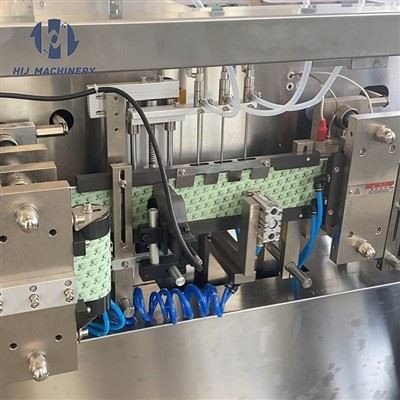
Cosmetic sample sachets are single-dose packs of cream, serum or lotion used for try-before-you-buy marketing, gift-with-purchase and travel sizes. The premium format is the easy-snap card sachet — rigid, one-hand open and brandable — produced by a machine like the HIJ CD120, which doses 0.5–20 ml of cosmetic product at ±0.1 g with high-barrier film, from about US$42,000.
Key Takeaways
- Sample sachets are a conversion tool — a premium-feeling sample sells the full product; a cheap one undermines it.
- Cosmetic creams and serums vary in viscosity; accurate dosing at ±0.1 g keeps every sample consistent and the cost controlled.
- High-barrier film protects active ingredients (vitamin C, retinol, peptides) from oxygen and light degradation.
- The easy-snap card format reads premium and is brandable — turning a sample into a mini billboard for the brand.
- The easy-snap sachet machine (CD120) and the dedicated cosmetic sachet packaging machine both produce sample-ready single doses.
About the author — Forester Xiang
Forester combines deep technical knowledge with 20+ years of global market experience. Having personally audited 100+ cosmetic, pharmaceutical and food packaging factories across 30+ countries, he helps clients buy not just a machine, but a complete, compliant, and profitable packaging solution.
Why Sample Sachets Are a Conversion Engine

Sample sachets convert because they remove the biggest barrier in beauty: the risk of buying a full-size product you haven’t tried. A well-made sample does three jobs at once:
Try-before-you-buy
A shopper who tries a serum and likes it converts at a far higher rate than one shown only an ad. The sample puts the formula on their skin — the most persuasive demo there is.
Gift-with-purchase & loyalty
Samples bundled with an order raise average order value, reward loyalty, and introduce customers to adjacent products in the range — a cross-sell in an envelope.
Travel & trial sizes
The same single-dose format serves travel minis and subscription-box trials, extending one packaging line across multiple revenue streams.
Brands ask me to make the cheapest possible sample, and I push back every time. A leaky, flimsy sample is worse than no sample — it tells the customer exactly what they’ll think of your full product. The sample is often the first physical contact someone has with your brand. If it smears in the envelope or tears badly, that’s the impression they keep. Spend the extra cent on a clean, premium pack; it is the cheapest brand advertising you will ever buy.
Same machine, more revenue streams. The CD120 also runs sports nutrition — see the energy gel packaging equipment & cost guide to add a food category on the same line.
What a Cosmetic Sample Sachet Needs
A sample sachet must protect the formula, dose consistently and present well. The requirements and how the machine delivers them:
| Requirement | Why It Matters | How It’s Met |
|---|---|---|
| Accurate dosing | Consistent samples; controlled cost per unit | ±0.1 g volumetric/pump dosing |
| High-barrier film | Protects vitamin C, retinol, peptides from oxygen/light | PET/AL aluminum laminate |
| Hermetic seal | No leaks in envelopes or gift bags | Three-side heat seal |
| Premium feel | Sample reflects full-product quality | Rigid easy-snap card format |
| Brandable face | Sample doubles as advertising | Printable card surface |
| Small, precise portions | Single-use try size, low cost | 0.5–20 ml range |
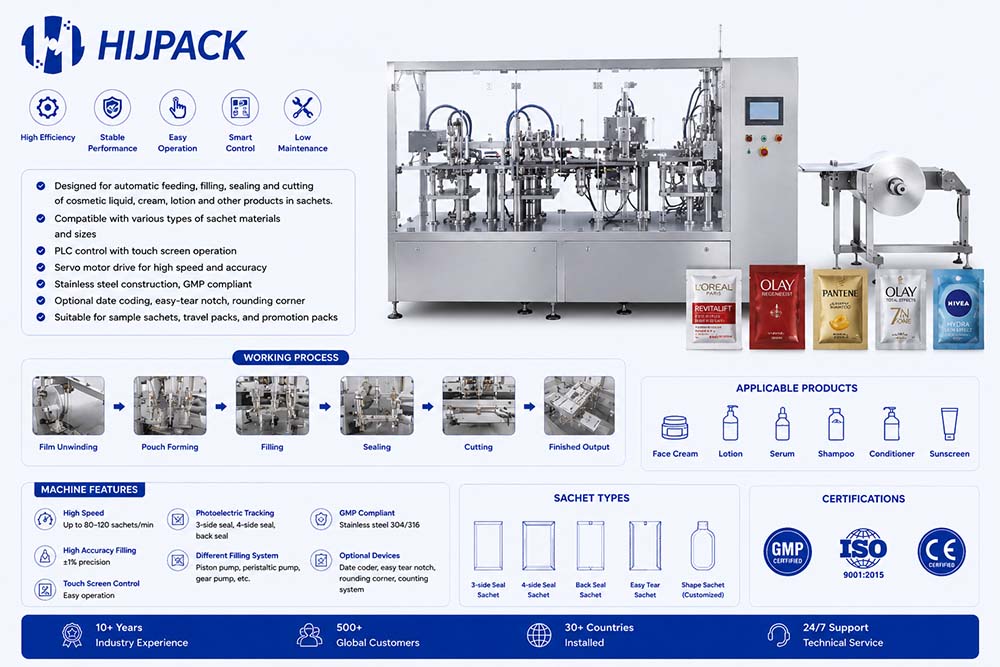
Both HIJ single-dose machines meet these: the easy-snap CD120 for premium rigid samples, and the general cosmetic sachet packaging machine for high-volume flat samples. Browse all cosmetic packaging machines to match your range.
Premium Card or Flat Sachet: Which Sample Format?
Go premium card for hero products
For your flagship serum, an anti-aging cream or a luxury line, the rigid easy-snap card sample matches the brand’s positioning. The customer’s first physical touch feels like the full product, and the printable card carries your branding. This is the sample that justifies a premium full-size price.
The smartest beauty brands I work with run two sample formats deliberately: a premium easy-snap card for the hero SKU they most want to convert, and a low-cost flat sachet for mass seeding at events and inserts. Matching the sample’s perceived value to the product’s price point is a lever most brands never pull — they pick one format for everything and either overspend on commodity samples or cheapen their hero.
Go flat sachet for volume seeding
For mass sampling — magazine inserts, event giveaways, broad trial campaigns — the flat sachet’s lower cost wins, and the general cosmetic sachet packaging machine produces it at high volume. The goal here is reach, not a premium unboxing moment.
One machine, both food and beauty
Because the CD120 handles viscous products generally, a contract packer or multi-category brand can run cosmetic samples, honey, gels and supplements on one machine with recipe and mold changes — maximizing utilization across product lines. See the easy-snap sachet machine for full specs.
Frequently Asked Questions
What machine makes cosmetic sample sachets?
A single-dose sachet machine such as the HIJ CD120 easy-snap sachet machine for premium rigid samples, or the general cosmetic sachet packaging machine for high-volume flat samples. Both dose creams and serums accurately into single-use sample packs.
How much product goes in a cosmetic sample?
Most cosmetic samples are 0.5–5 ml — one or two applications of a serum, cream or lotion. The CD120 covers 0.5–20 ml at ±0.1 g, so you can run tiny trial doses and larger travel minis on the same machine with a setting change.
What film protects active ingredients in samples?
A high-barrier PET/AL aluminum-laminate film. Active ingredients like vitamin C, retinol and peptides degrade with exposure to oxygen and light; the aluminum layer blocks both, preserving efficacy until the customer opens the sample. The CD120 runs PET/AL, PET/PE and PS/PE films.
Can one machine run cosmetic samples and other products?
Yes. The CD120 handles viscous products broadly, so a brand or contract packer can run cosmetic creams and serums, honey, energy gels and liquid supplements on one machine with recipe and mold changes — ideal for maximizing utilization across cosmetic and food single-dose lines.
Are easy-snap card samples better than flat sachets?
For premium and hero products, yes — the rigid card feels like the full product, opens cleanly with one hand, and carries print branding, so it converts better. For mass-volume seeding where cost and reach matter most, the flat sachet wins. Many brands run both: premium card for hero SKUs, flat sachet for broad campaigns.
Building a Sampling Program?
Send me your product, sample size and volume target. I’ll recommend the right format and machine — and run your actual cream or serum at the Factory Acceptance Test before you commit.
Get a Free Sampling Assessment