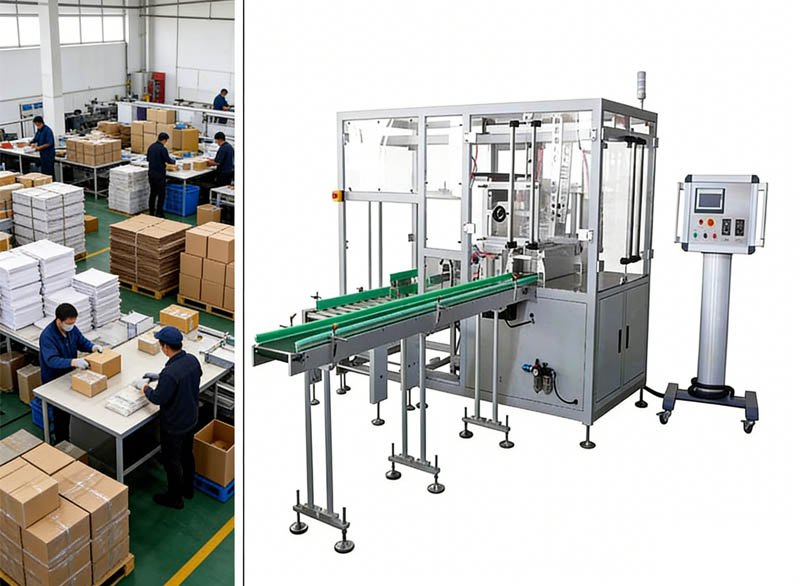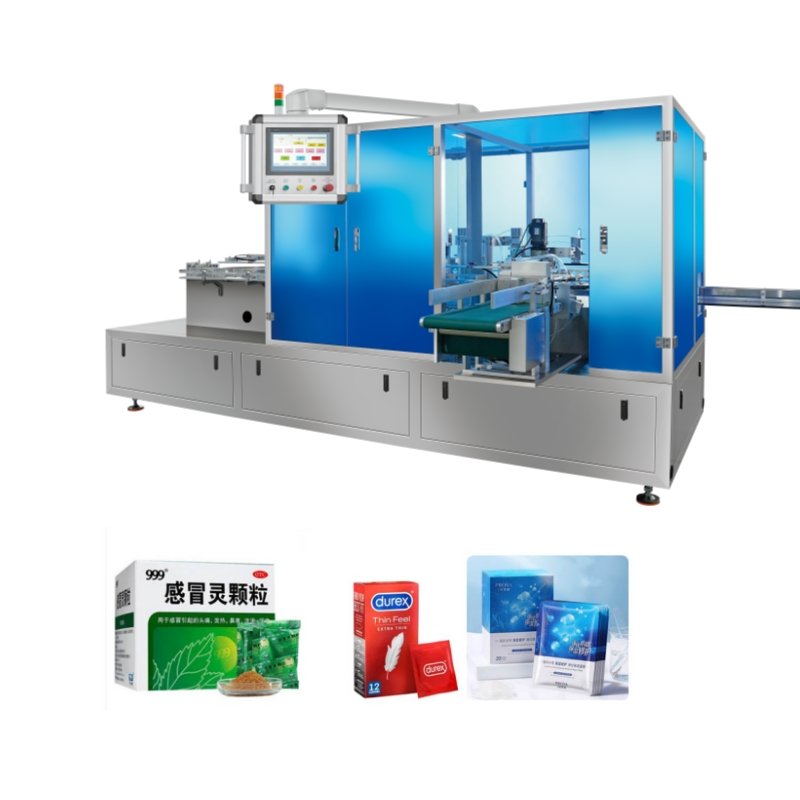
The Hook: Navigating the capital expenditure (CAPEX) for a new pharmaceutical packaging line is one of the most critical decisions a plant manager will face. A single miscalculation regarding your Active Pharmaceutical Ingredient (API) stability data or production throughput can lead to millions of dollars in wasted materials, catastrophic cGMP compliance failures, and relentless multi-vendor integration headaches. The industry is saturated with sales representatives pushing high-speed servo-driven thermoforming equipment or heavily cast cold-form machinery without truly understanding the unique barrier properties and mechanical rigidity required by your specific production environment. When evaluating a DPP blister machine comparison—specifically thermoforming vs cold form blister machinery—you are not just buying a piece of steel; you are securing the long-term clinical efficacy and profitability of your pharmaceutical product.
[🔥 Forester’s Insight: A 20-Year Engineer’s Perspective]
- The Direct Answer: Choose the DPP Servo for ultimate speed, rapid tooling changeovers, and precise indexing in standard PVC/ALU packaging; choose the DPP Cold-Form strictly when your API demands an absolute zero-permeability barrier against moisture and light (Alu-Alu), accepting the trade-off in production speed and higher material footprint.
- The Field Experience: In my 20 years of conducting FAT/SAT and troubleshooting lines across South America and SE Asia, I’ve seen countless buyers fall into the “over-specification trap.” They purchase a costly Cold-Form machine “just in case” for future products, only to bleed margins daily due to Alu-Alu’s 30-40% higher material waste and slower throughput.
- The Hidden Trap: But here is the darker hidden trap: Many buyers opt for a cheap “Servo” blister machine and try to run Alu-Alu on it. What the supplier won’t tell you is that these lightweight frames lack mechanical rigidity. After 6 months of continuous running, the servo indexing drifts by just a fraction of a millimeter—causing micro-leaks that will instantly fail your cGMP stability tests and lead to massive product recalls.
The Strategic Advice: Base your URS strictly on your API’s clinical stability data, not guesswork. Whether you need the heavy-duty mechanical reliability of cold-forming or the high-speed synchronization of a full servo drive, stop buying standalone blister machines and praying they will sync with your cartoner. At HIJ, our philosophy is simple: European-standard engineering with pragmatic pricing. We provide Turnkey integration from blistering to cartoning, ensuring flawless synchronization and effectively killing the multi-vendor finger-pointing game before it even starts.
Deep Dive 1: Core Technical Teardown – Thermoforming vs. Cold Forming Mechanics
To genuinely understand the DPP blister machine comparison, we must break down the core mechanical engineering principles that dictate the performance of both thermoforming (Servo) and cold-form blister machinery. A fully servo-driven thermoforming machine relies on heat to soften standard plastics (like PVC, PVDC, or PET) before using positive air pressure, vacuum, or mechanical assist plugs to form the blister cavity. The utilization of advanced closed-loop servo motors equipped with absolute encoders allows for unparalleled precision in indexing. This means the web tension is dynamically adjusted in real-time, enabling maximum Overall Equipment Effectiveness (OEE) while running at speeds exceeding 400-600 blisters per minute.
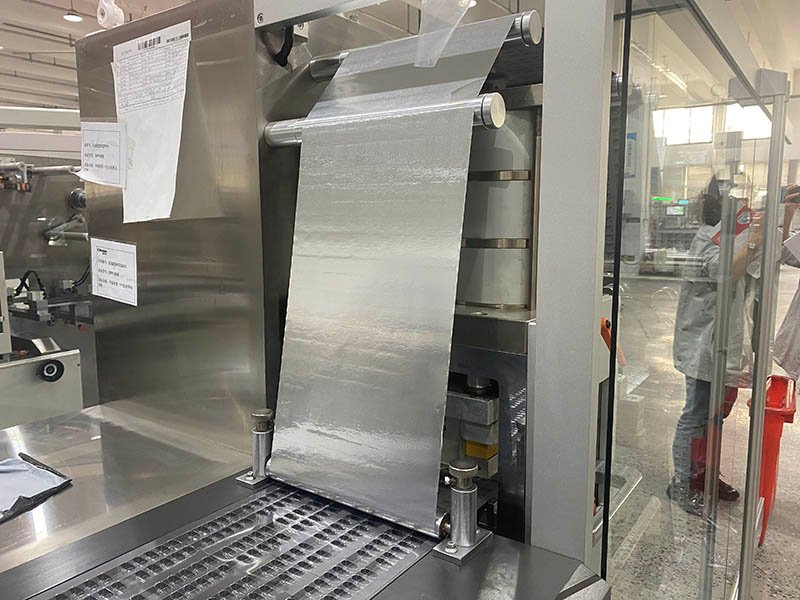
Conversely, cold forming (Alu-Alu packaging) is a completely different physical process. It does not use heat. Instead, it relies on brute mechanical force to deep-draw a specialized aluminum laminate film into a mold cavity. The physical elongation of the aluminum foil is an extremely delicate process; if the drawing pins apply uneven pressure or if the machine’s base frame lacks absolute rigidity, the foil will suffer from micro-fractures or pinholes. These pinholes are often entirely invisible to the naked eye but will completely compromise the zero-permeability barrier required to protect highly sensitive APIs from moisture and oxygen.
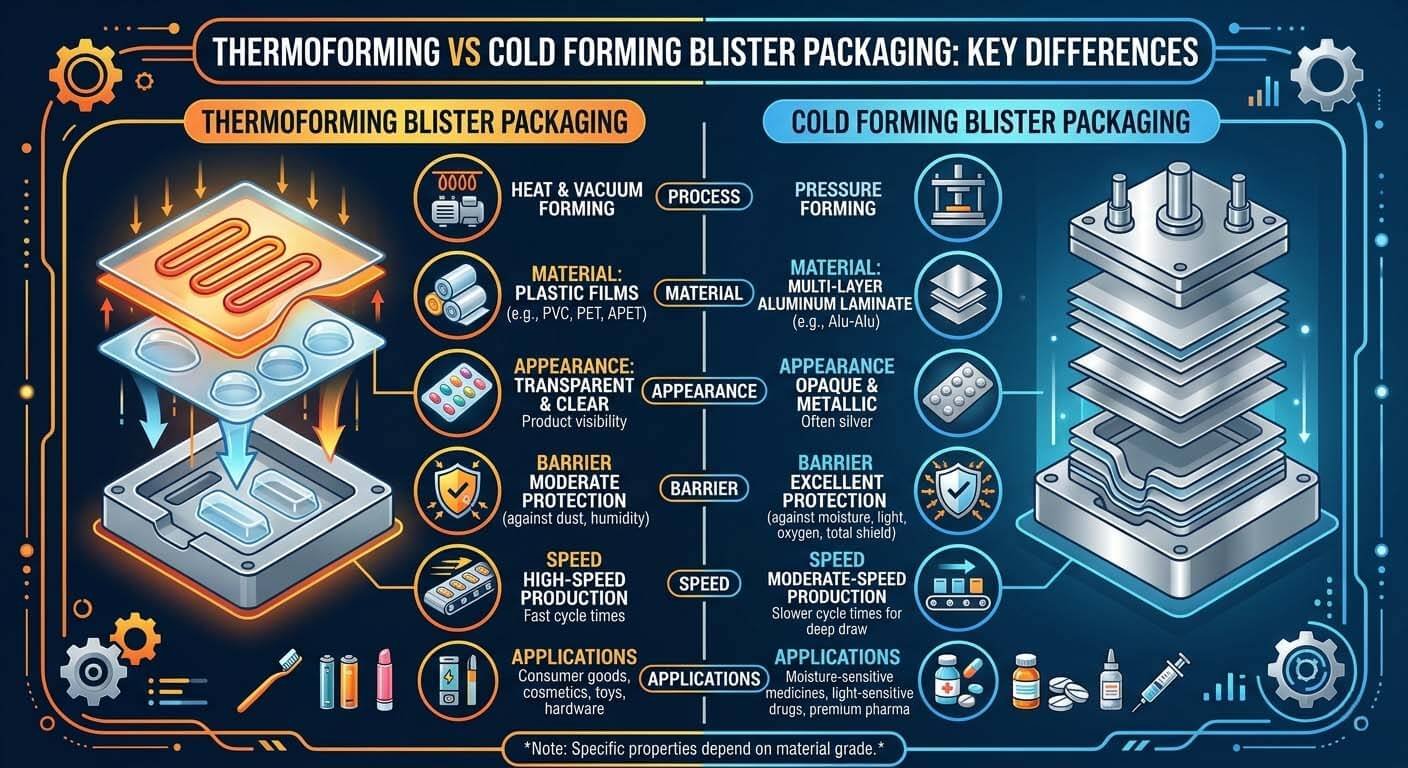
📸 HIJ Engineering Analysis: The structural and barrier property differences between Thermoforming and Cold Forming technologies.
This brings us to the critical engineering requirement of a cold-form machine: mass and structural integrity. A true Alu-Alu machine requires heavy-duty cast iron frames and mechanically synchronized cam-driven drawing stations. When buyers attempt to save CAPEX by purchasing a lightweight servo machine and retrofitting it with cold-forming tooling, the immense stamping pressure causes the machine frame to flex over time. This microscopic flexion disrupts the alignment between the forming, sealing, and punching stations. The result is uneven sealing pressure, compromised product stability, and failed cGMP validation protocols during the crucial Installation Qualification (IQ) and Operational Qualification (OQ) phases.
Deep Dive 2: The Multi-Vendor Nightmare vs. Turnkey Reality
One of the most destructive scenarios in pharmaceutical packaging occurs when plant managers attempt to integrate a standalone blister machine from one supplier with a cartoning machine from another. While on paper the mechanical throughputs might align, the reality of factory-floor integration is a nightmare of misaligned communication protocols, physical transfer bottlenecks, and relentless vendor finger-pointing.
- The Common Pitfall: When purchasing separate units, the blister machine’s PLC (Programmable Logic Controller) and the cartoner’s PLC often use different handshake protocols (e.g., trying to force Siemens Profinet to talk seamlessly to an older Modbus TCP system). When the blister outfeed jams or the cartoner experiences a missing leaflet fault, the lack of synchronized logic means the blister machine continues pushing cards into a bottleneck, resulting in crushed products, wasted materials, and massive downtime. When you call for support, Supplier A blames Supplier B’s infeed, and Supplier B blames Supplier A’s ejection timing.
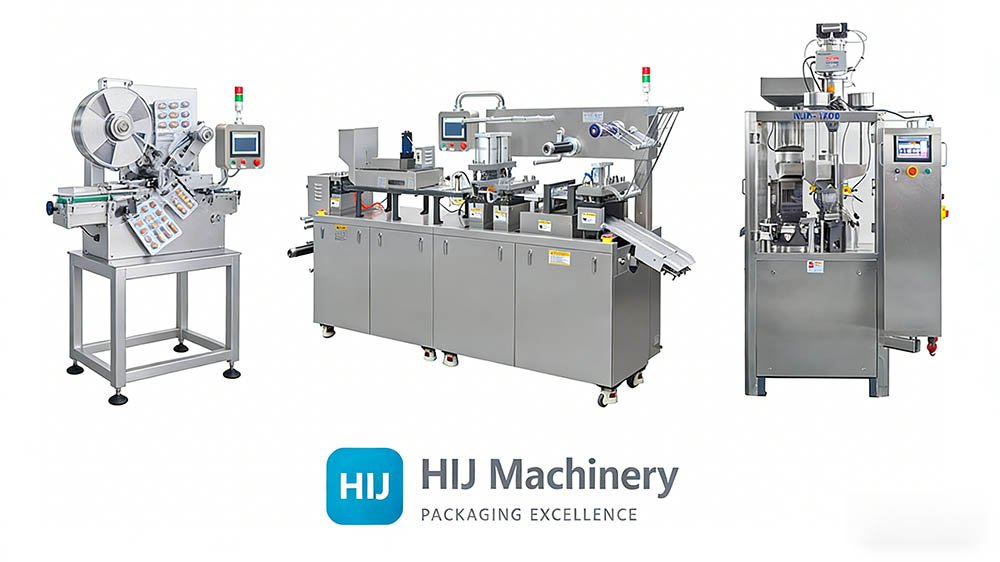
- The HIJ Standard: We eliminate this risk entirely by delivering integrated Turnkey Solutions. We design, engineer, and validate the entire line—from the primary blistering station to the secondary cartoning and final case packing. The mechanical transfer mechanism is engineered as a single cohesive unit, and a unified master control system governs the entire line’s synchronization. For high-speed thermoforming applications, our DPP-250 Pharma Blister Packaging Machine serves as the perfect primary packaging anchor, flawlessly transferring blister cards into our continuous motion cartoners without the need for complex, third-party buffer conveyors.

📸 Our HIJ DPP-250 model showcasing high-speed servo synchronization, perfect for seamless turnkey cartoner integration.
Sub-Technical Challenge: Tooling Changeovers and Material Footprint Realities
Another vital factor in the thermoforming vs cold form blister comparison is the reality of operational flexibility. In a modern high-mix, low-volume pharmaceutical manufacturing environment, the ability to execute rapid tooling changeovers is directly tied to the plant’s profitability. Servo-driven thermoforming machines excel here. With advanced HMI recipe management, operators can switch from a Size 0 capsule blister card to a 10mm round tablet blister card in approximately 30 to 45 minutes. The servo drives automatically adjust the indexing length at the push of a button.
Cold forming changeovers are inherently more complex and time-consuming. Because Alu-Alu requires exact physical drawing depths, tuning the machine after a mold change to ensure zero micro-pinholing can take several hours of meticulous adjustment by a senior technician. Furthermore, the material footprint must be factored into your Cost of Goods Sold (COGS). The deep drawing geometry of Alu-Alu dictates that the pockets cannot be placed as closely together as they can in thermoformed PVC. This inherent physical limitation results in blister cards that are noticeably larger, consuming 30% to 40% more packaging material per pill and necessitating a correspondingly larger secondary folding carton. If your API does not strictly require zero-permeability, choosing cold-form will permanently inflate your per-unit packaging costs.

📸 HIJ DPH-300 Cold Forming Machine: Engineered with heavy-duty cast rigidity to ensure absolute zero-permeability forming without foil micro-fractures.
Frequently Asked Questions
Q1: Can I purchase a standard Servo PVC/Alu blister machine now and upgrade it to run Alu-Alu later to save initial CAPEX?
A: While theoretically possible with certain modular machines, from a strict cGMP and engineering standpoint, it is highly discouraged. Cold forming requires significantly higher mechanical stamping pressure. If the original base frame was engineered purely for lightweight thermoforming, the added stress of Alu-Alu tooling will cause microscopic frame flexion. This leads to uneven sealing and devastating micro-leaks. It is always better to invest in a heavy-duty hybrid machine from day one if future Alu-Alu production is anticipated.
Q2: What is the optimal speed trade-off when running Cold-Form compared to Thermoforming?
A: Thermoforming (PVC/Alu) can comfortably achieve speeds of 400 to 600 blisters per minute, depending on the number of lanes and indexing length. Cold forming (Alu-Alu) must run significantly slower—typically between 150 to 250 blisters per minute. The reduced speed is physically mandated by the required dwell time to properly stretch and draw the aluminum laminate without causing structural fractures or pinholes.
Q3: How do we determine the exact barrier requirements for our User Requirement Specification (URS)?
A: Barrier requirements should never be guessed; they must be dictated by your API’s clinical stability test data (such as ICH Q1A guidelines for temperature and humidity). If your drug degrades rapidly under standard Zone IVb climactic conditions despite high-barrier PVDC or Aclar films, then absolute zero-permeability Alu-Alu (Cold Form) is mandatory. If the stability data shows acceptable shelf-life with standard moisture vapor transmission rates (MVTR), Thermoforming is the much more profitable choice.
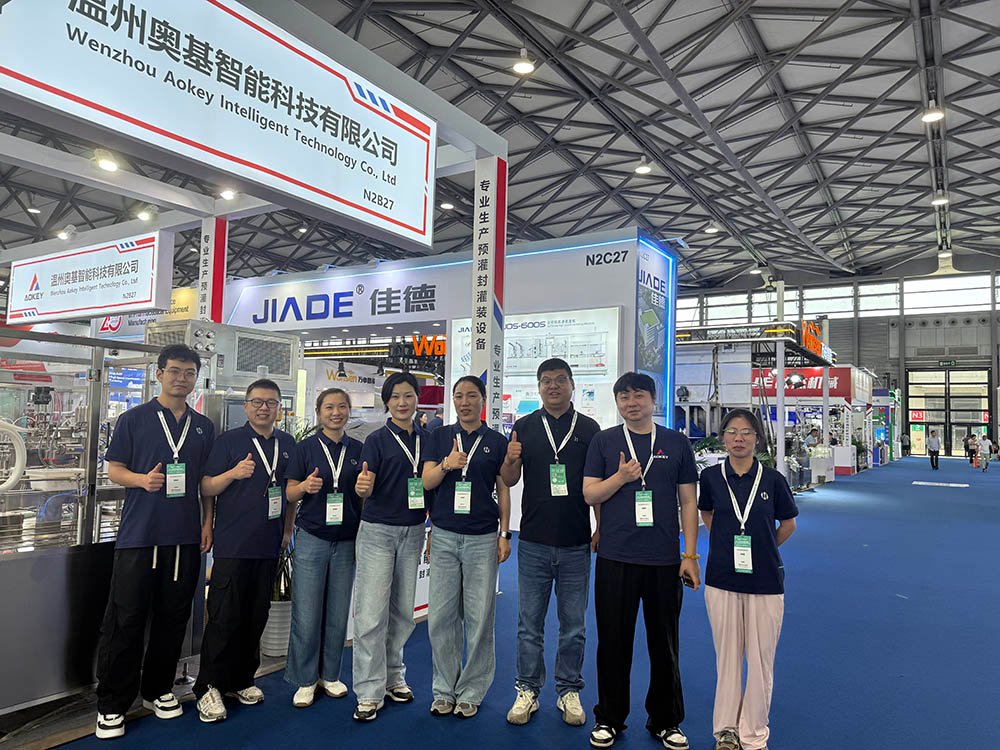
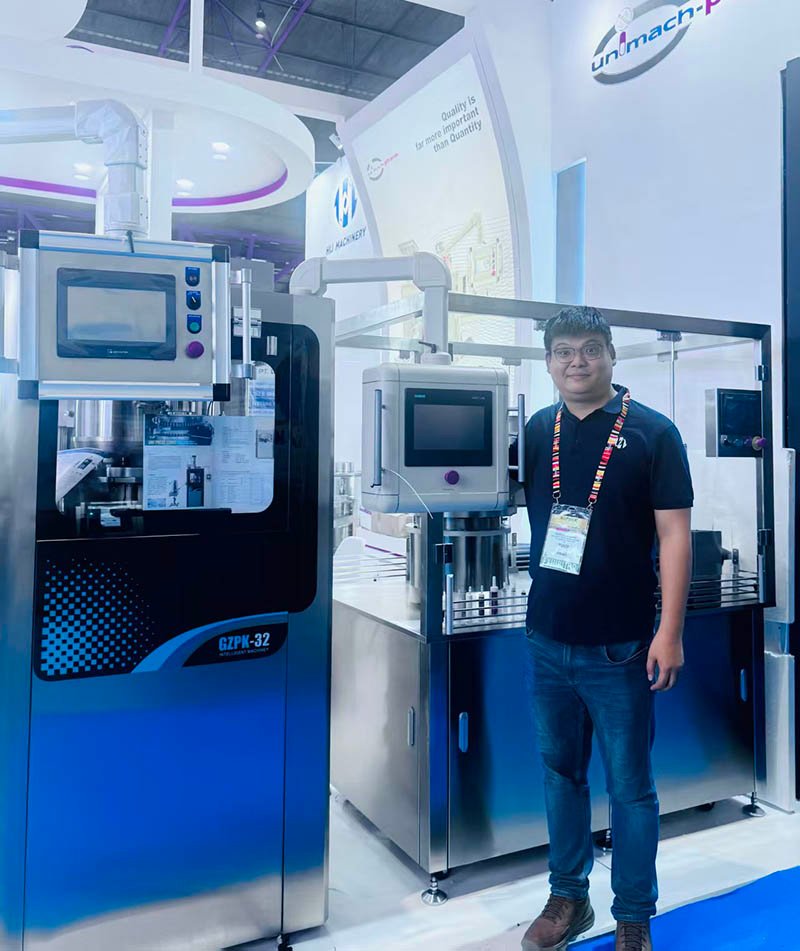
📸 Forester Xiang and the HIJ engineering team executing a rigorous Factory Acceptance Test (FAT) to guarantee turnkey synchronization.
Conclusion: Delivering Project Certainty
The decision between a DPP Servo Thermoforming machine and a Cold-Form blister machine ultimately dictates the operational rhythm, material costs, and cGMP compliance of your facility for the next two decades. Do not fall into the trap of over-specifying heavy machinery out of fear, nor under-specifying structural rigidity to save a few dollars upfront. You must align the physics of the packaging machine directly with the clinical stability requirements of your API.
At HIJ Machinery, I don’t just sell you a machine; I deliver project certainty.
From the initial URS consultation to the final Site Acceptance Test (SAT) and turnkey cartoner integration, our engineering team ensures that your packaging line runs flawlessly from day one. Stop guessing between Servo and Cold-Form. Let our engineers analyze your specific requirements today.