Choosing the right blister packing machine is a strategic investment that goes far beyond the initial price tag. To make a successful selection, you must evaluate seven critical factors: matching production capacity and speed, ensuring compatibility with your product and material types (like PVC, PVDC, or Alu-Alu), verifying full GMP compliance and documentation, scrutinizing the supplier’s after-sales support and validation assistance (IQ/OQ/PQ), and finally, analyzing the Total Cost of Ownership (TCO). Neglecting any of these areas in your blister machine buying guide can lead to compliance failures, operational downtime, and unforeseen expenses that dwarf any initial savings.
“After 20 years in pharmaceutical packaging machinery, I’ve watched countless buyers make the same costly mistake: they lead with price and treat everything else as secondary. I’ve seen production lines grind to a halt six months after commissioning because a ‘great deal’ machine couldn’t handle real-world GMP audits, or simply lacked proper after-sales support when it mattered most.”
“The right blister packer should align with your product format today and your production ambitions tomorrow. It should clear your regulatory hurdles—whether that’s WHO GMP, cGMP, or 21 CFR Part 11—without becoming a compliance headache. And critically, the supplier behind it should be someone who picks up the phone when your line goes down at 2am.”
— Forester, Founder of HIJ Machinery
Table of Contents
1. Production Capacity & Speed (plates/min)
Your first calculation should be a realistic assessment of your required output. Are you a contract manufacturer handling diverse, smaller batches, or a large pharmaceutical firm with high-volume, continuous production runs? Buying an overpowered machine is a waste of capital and floorspace. Buying an underpowered one creates a production bottleneck that stifles growth.
Look for a machine with a scalable speed range. A machine that performs efficiently at both lower and higher speeds offers the flexibility to handle current needs while accommodating future expansion.
How the DPP-260 Meets This: The DPP-260 Automatic Blister Packing Machine is engineered for this exact balance. With a variable speed of up to 50 punches per minute (for Alu/PVC), it comfortably serves both medium-scale operations and demanding high-speed lines. Its servo-driven system ensures consistent, high-quality output across the entire speed range, eliminating the quality drop-off seen in lesser machines when pushed to their limits.

2. Product & Format Compatibility
Your blister machine must accommodate the full range of your product sizes and shapes, from small round tablets to large oblong capsules or even medical devices. A key factor in this blister machine selection criteria is the tooling and format changeover time. In an environment where you’re frequently switching between products, a machine that requires hours of complex adjustments by a senior technician is a drain on productivity.
Evaluate the machine’s maximum forming area and depth. This determines the largest blister card you can produce and the deepest cavity you can form.
| Specification | DPP-260 Capability |
|---|---|
| Max. Forming Area (W x L) | 245 x 152 mm |
| Max. Forming Depth | 12 mm (Customizable up to 25mm) |
| Changeover Time | ~30-45 minutes (tool-less where possible) |
How the DPP-260 Meets This: We designed the DPP-260 with rapid, tool-free changeovers in mind. Its format parts are positioned with precision locators and quick-release clamps. An operator can switch between different product formats in under 45 minutes, a critical advantage for CMOs and companies with diverse product portfolios. The generous forming area and customizable depth ensure it can handle almost any standard pharmaceutical or nutraceutical product.

3. Material Compatibility (PVC/PVDC/Alu-Alu)
The choice of packaging material is dictated by your product’s sensitivity to moisture, light, and oxygen. Your blister machine must be able to handle these materials effectively.
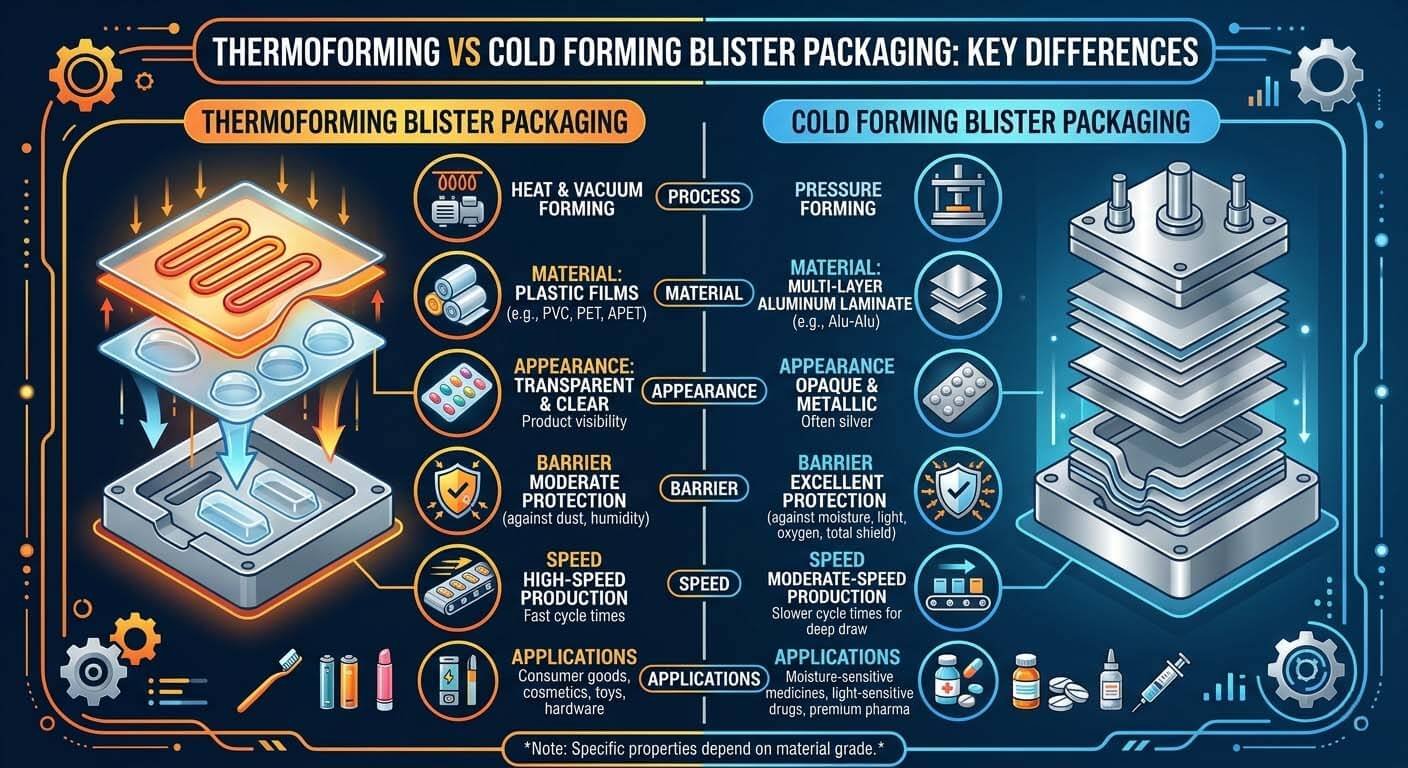
- Thermoforming (e.g., PVC, PVDC, PET): Used for most tablets and capsules. The plastic film is heated and formed into cavities using pressure or vacuum.
- Cold Forming (Alu-Alu): Used for highly sensitive or hygroscopic products. An aluminum-based laminate is “stamped” into a cavity without heat. This provides a near-perfect barrier.
“Choosing between a thermoforming and a cold-forming capable machine is a strategic decision. Thermoforming is cost-effective for stable products, but if your pipeline includes sensitive molecules, investing in a machine with cold-forming (Alu-Alu) capability from the outset, like our DPP-260, prevents the need for a second machine purchase later on. It’s about future-proofing your production line.”
How the DPP-260 Meets This: The DPP-260 is a versatile platform capable of handling a wide range of materials, including PVC, PVC/PVDC, PET, and, crucially, Alu-Alu for cold forming. This dual-capability ensures you are not limited in your product development or contract packaging opportunities.
4. GMP Compliance & Documentation
In the pharmaceutical world, compliance is non-negotiable. A machine that cannot meet Good Manufacturing Practice (GMP) standards is worthless. Look for designs that eliminate contamination risks: smooth, easy-to-clean surfaces (ideally SUS304/316L stainless steel), no dead corners where powder can accumulate, and a clear separation between mechanical and product-handling areas.
Equally important is the documentation package. Your supplier must provide a comprehensive set of documents to support your validation process, including material certificates, electrical diagrams, a functional design specification (FDS), and a user manual.
How the DPP-260 Meets This: The DPP-260 is built from the ground up to exceed cGMP standards. Its main body is constructed from SUS304 stainless steel, and all contact parts are made of SUS316L. The design features a cantilevered structure, keeping all drive components completely separate from the clean production zone. We provide a full documentation package that will satisfy the most stringent quality assurance teams and regulatory auditors.
5. After-Sales Service & Support Network
When your production line stops, every minute costs money. Before you buy, investigate the supplier’s after-sales support. Do they have a responsive service team? Can they provide remote diagnostics? How quickly can they ship critical spare parts? A low initial price is quickly eclipsed by the cost of extended downtime waiting for a part or a technician to arrive from overseas.
How the DPP-260 Meets This: At HIJ Machinery, we see the sale as the beginning of our partnership. Our founder, Forester, built this company on a service-first principle. We offer 24/7 remote support, a comprehensive stock of critical spare parts for immediate dispatch, and a network of global service engineers who can be on-site when you need them. We don’t just sell you a machine; we guarantee its uptime.
6. Machine Validation Support (IQ/OQ/PQ)
The machine is only one part of the equation. Can the supplier actively support your validation process? This involves providing protocols and on-site assistance for:
- Installation Qualification (IQ): Verifying the machine is installed correctly and all components match the specifications.
- Operational Qualification (OQ): Testing the machine to ensure it operates correctly within its defined ranges.
- Performance Qualification (PQ): Documenting that the machine consistently produces a quality product under real-world conditions.
Factory-Floor Case Study: The “Sticky” Vitamin Challenge
“A European nutraceutical client approached us with a problem. Their high-potency gummy vitamin was slightly sticky, causing it to occasionally misfeed in their existing blister packer, leading to a 5% empty-blister rate—unacceptable for PQ. During our pre-sale trials with their product on a DPP-260, we replicated the issue. Instead of just selling the machine, our engineering team designed a custom-coated, vibratory feeding track and implemented a dual-check sensor system. The first sensor confirms a gummy is in the track, and a second vision sensor just before sealing verifies its presence in the cavity. We wrote this specific modification and its testing parameters directly into the OQ protocol. The result? The client passed PQ on the first run with a documented empty-blister rate of less than 0.01%. This is the kind of partnership that goes beyond a simple equipment sale.”
— Forester, HIJ Machinery
How the DPP-260 Meets This: We don’t just hand you a manual. We provide comprehensive IQ/OQ protocol templates and can dispatch an engineer to your facility to assist with execution. As our case study shows, we are partners in solving your validation challenges, not just vendors.
7. Total Cost of Ownership (TCO)
The purchase price is just the tip of the iceberg. A true blister machine buying guide must focus on TCO. This includes:
- Initial Cost: The price of the machine and tooling.
- Operational Costs: Energy consumption, compressed air usage, and labor.
- Maintenance Costs: Price and availability of spare parts, and preventative maintenance schedules.
- Downtime Costs: The financial impact of lost production due to breakdowns or long changeovers.
Often, a slightly more expensive machine with higher efficiency, lower energy use, and robust reliability will have a significantly lower TCO over 5-10 years than a cheaper alternative.
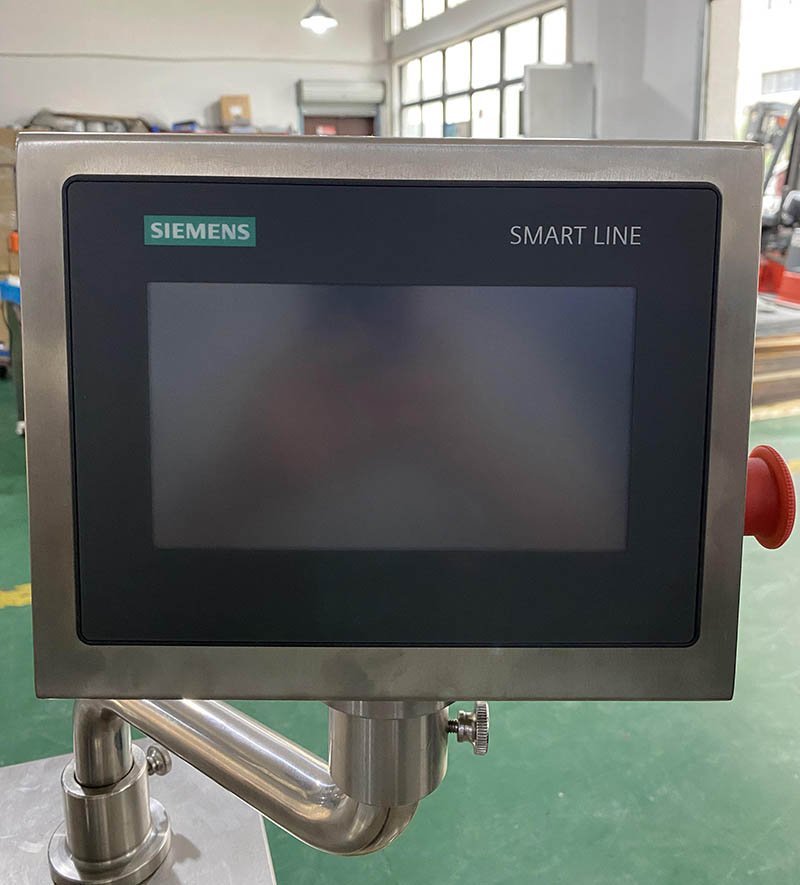
How the DPP-260 Meets This: The DPP-260 is designed for low TCO. It uses high-efficiency servo motors that reduce energy consumption by up to 20% compared to older mechanical models. Its robust construction and use of world-class components (like Siemens PLCs) minimize unplanned downtime. The quick changeover design directly reduces labor costs and increases available production time, delivering a faster return on your investment.
Ready to Make the Right Choice?
Choosing a blister packing machine is a critical decision. Let our 20 years of experience guide you to the perfect solution for your specific needs. Contact us for a no-obligation consultation and a detailed quote.
Get Free Turnkey QuoteFrequently Asked Questions
What is the main difference between thermoforming and cold forming?
Thermoforming uses heat to soften a plastic film (like PVC) which is then formed into a blister cavity. It’s cost-effective and suitable for most products. Cold forming uses mechanical pressure to “stamp” an aluminum-laminate film into a cavity without heat. It offers a superior barrier against moisture and light and is used for highly sensitive drugs.
How long does a typical format changeover take on the DPP-260?
Thanks to its tool-less design and precision quick-release mechanisms, a skilled operator can complete a full format changeover on the DPP-260 in approximately 30 to 45 minutes. This minimizes downtime between different product runs.
Can the DPP-260 be integrated with a cartoning machine?
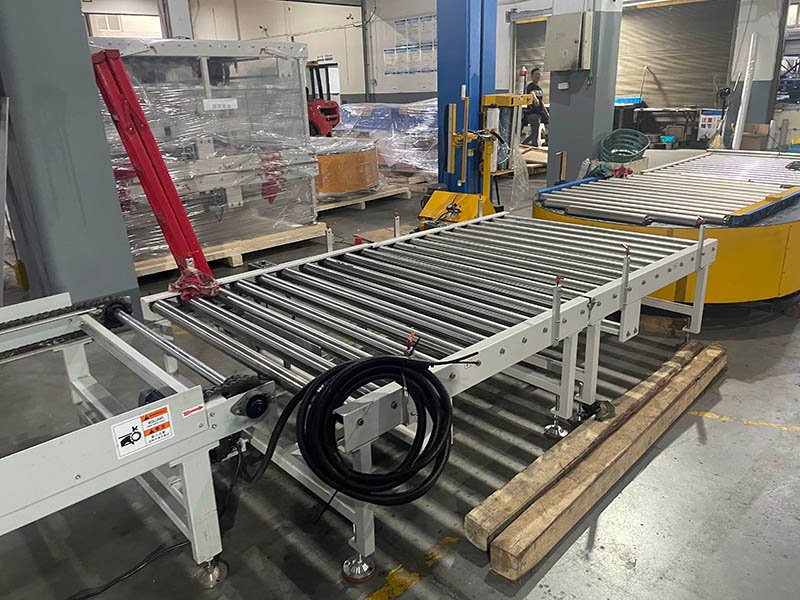
Absolutely. The DPP-260 is designed for seamless integration. Its output conveyor can be directly linked to the input of an automatic cartoning machine, creating a fully automated blister-to-carton packaging line. We provide complete turnkey solutions, including this integration.
What kind of warranty and support comes with a HIJ machine?
All HIJ Machinery machines come with a comprehensive warranty. More importantly, we provide lifetime technical support. This includes 24/7 remote diagnostics, a dedicated service team, readily available spare parts, and access to our global network of field engineers for on-site assistance.