An all-in-one case packing machine integrates the case erector, packer, and sealer into a single frame — saving roughly 60% of floor space, cutting operators from 2–4 down to 1, and replacing three control systems with one PLC. Separate machines still make sense for retrofits where an erector or sealer already exists, for very high speeds requiring parallel packers, or where stations must run independently. For new lines under ~400 cases/hour, the integrated architecture usually wins on both capital and operating cost.
Key Takeaways
- The honest comparison is one integrated machine vs. three machines plus transfer conveyors, integration engineering, and three commissionings.
- All-in-one wins on footprint (~60% saving), labor (1 vs 2–4 operators), controls (one PLC/HMI), and refill downtime (non-stop magazines).
- Separate machines win for retrofits, extreme speeds needing parallel packers, and lines that must keep running when one station is down.
- The “single point of failure” argument against integration is weaker than it sounds — in a serial line, any one of the three machines stopping halts the line anyway.
- Run the ROI on total cost: CAPEX difference is usually smaller than the 3–5 year labor difference.
Every end-of-line automation project reaches the same fork: buy a case erector, a case packer, and a case sealer as three machines — the way it’s been done for decades — or buy one integrated machine that does all three. Suppliers on each side of the fork will give you confident, opposite answers.
This analysis lays out where each architecture genuinely wins, using the HIJ-PMG600 all-in-one case packing machine as the integrated reference point. If you’re new to the category, our guides on case packing machine types and how a case packer works cover the fundamentals.
The Two Architectures, Defined
Separate machines: a case erector opens and bottom-seals blanks; loaded cases travel by conveyor to a packing station (manual, semi-automatic, or automatic); a case sealer closes the top. Each machine has its own frame, controls, and vendor — the sealer stage alone is available as a standalone automatic case sealing machine.
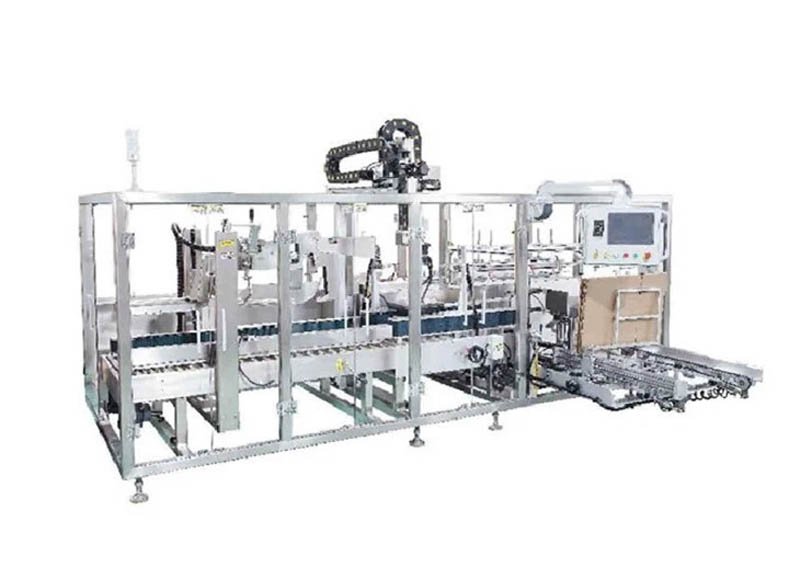
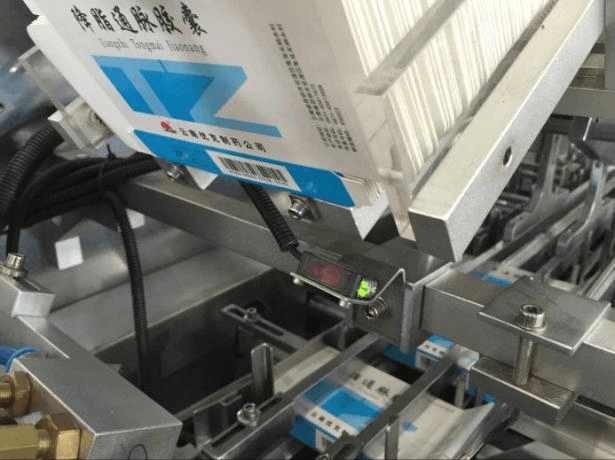
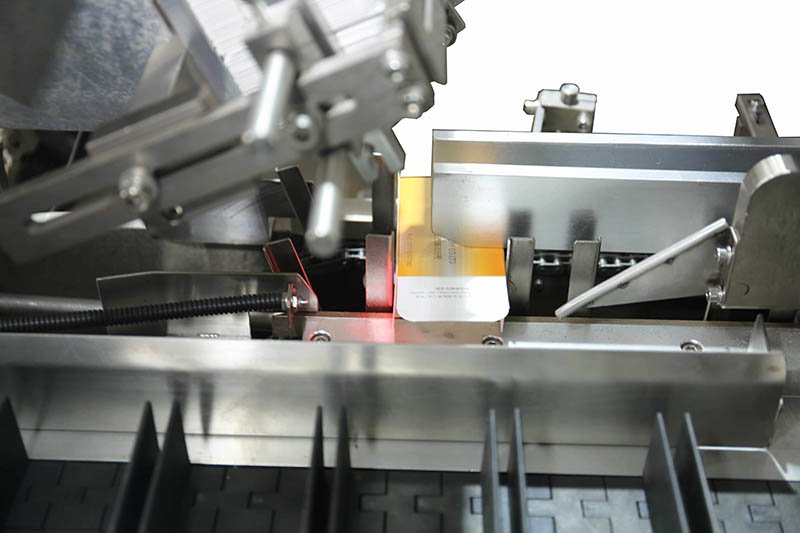
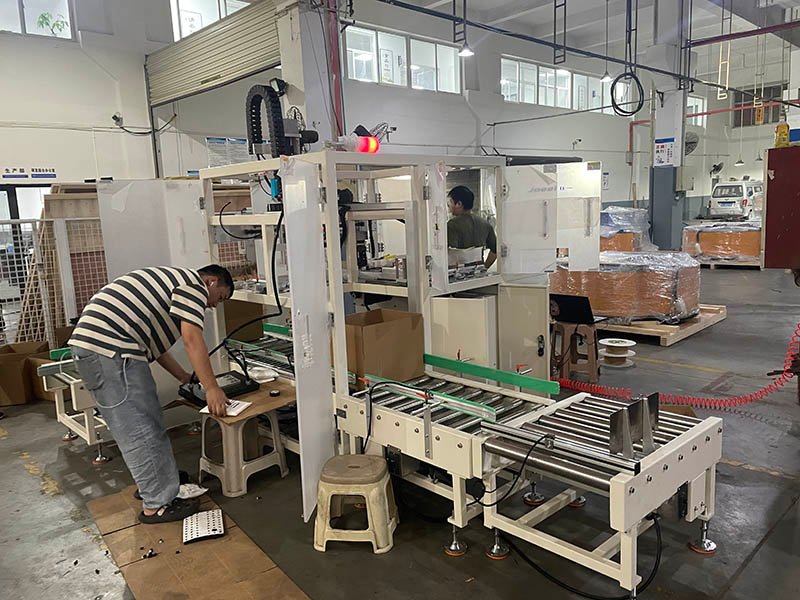
All-in-one: erecting, product loading, protective pad insertion, and sealing run as synchronized stations inside one frame under one PLC. On the HIJ-PMG600 this means a swing-arm stabilized erector, dual robotic arms at 12 cycles/min each, an independent pad robot, a buffer station, and a tape or hot-melt sealer — in a 5.0 × 2.0 m footprint at up to 400 cases per hour.
Head-to-Head Comparison
| Factor | All-in-One (e.g. HIJ-PMG600) | Separate Erector + Packer + Sealer |
|---|---|---|
| Floor space | ~5.0 m single frame; ~60% saving | Typically 12–15 m incl. transfer conveyors |
| Operators per shift | 1 supervisor | 2–4 (loading and pad placement) |
| Pad insertion | Automatic, dedicated robot, identical placement | Usually manual and inconsistent |
| Controls | One PLC, one HMI, one alarm list | Three systems + handshake programming |
| Magazine refill | Non-stop refilling | Line stops at every replenishment |
| Installation | One crate, one FAT, one commissioning | Three shipments, three FATs, integration on site |
| Vendors & spares | Single point of contact | Multi-vendor coordination |
| Transfer points (jam risk) | Internal, sensor-monitored indexing | 2+ open conveyor transfers between machines |
| Max speed ceiling | Up to ~400 cases/hour per machine | Higher — parallel packers can be added |
| Retrofit flexibility | Replaces the whole end-of-line at once | Can upgrade one stage at a time |
| Redundancy | One machine = one downtime domain | Stations can sometimes run in degraded mode |
When Separate Machines Are the Right Call
Choose separate machines if…
- You already own a working erector or sealer. Replacing functioning equipment rarely pays back; add only the missing stage — often just an automatic packer or a standalone sealer.
- Your speed exceeds a single integrated machine. Above roughly 400 cases/hour, lines typically split flow into parallel packers fed by one high-speed erector — an architecture integration can’t replicate in one frame.
- Stations serve multiple lines. One central erector feeding two packing lines, for instance, only works with separated stations.
- You need staged investment. Automating sealer-first, packer-later spreads CAPEX across budget years.
When the All-in-One Wins
Choose an all-in-one machine if…
- You’re building a new line or replacing the whole end-of-line. With no sunk equipment to protect, the integrated machine is cheaper than three machines plus conveyors and integration engineering — see our case packing machine price guide for the full cost breakdown.
- Floor space is tight. A 60% footprint reduction frequently decides the question by itself — many workshops simply cannot fit 12–15 m of end-of-line equipment.
- Labor is your cost driver. Going from 2–4 operators to 1 supervisor per shift is where the ROI lives, especially on multi-shift lines.
- Your products need pads. Automatic top and bottom pad insertion barely exists as an add-on for separate-machine lines; on integrated machines it’s native.
- You want one accountable vendor. One PLC, one alarm list, one phone number when something stops at 2 a.m.
The “Single Point of Failure” Argument, Honestly
The standard objection to integration: “if the all-in-one machine stops, everything stops.” True — but examine the alternative. In a serial three-machine line, if the erector stops, the packer starves; if the sealer stops, the packer blocks. Any single machine stopping halts the whole flow within minutes anyway. Separate machines only provide real redundancy when you buy duplicate stations, which doubles cost.
Meanwhile, the three-machine line adds failure modes the integrated machine doesn’t have: two or more open conveyor transfers (the classic jam points), and a vendor-to-vendor handshake in the controls. In practice, integrated machines with comprehensive sensor monitoring localize faults faster — one alarm list instead of three, and the fault is displayed at the exact station.
ROI Framework: Compare Total Cost, Not Line Items
Put both options through the same 5-year lens:
CAPEX side: integrated machine price vs. (erector + packer + sealer + transfer conveyors + integration engineering + 3 shipments + 3 commissionings). The gap is usually far smaller than the single-line-item comparison suggests — and often favors integration outright.
OPEX side: (operators saved × shifts × loaded annual labor cost) + (floor space value of ~7–10 m of line length) + (refill downtime recovered) + (transit damage claims avoided by consistent pads) − (any maintenance delta). On a two-shift line removing two packers per shift, the labor term alone typically dominates every other number in the calculation within the first two years.
For full-line projects, the math improves further when the case packer is quoted with upstream cartoning machines as a single turnkey packaging line — one vendor owns every machine-to-machine handshake.
Forester’s Insight
Buyers consistently overweight the redundancy argument and underweight the transfer points. In my facility audits, when I ask where the end-of-line actually jams, the answer is almost never inside a machine — it’s at the conveyor transfers between machines: a case skews entering the sealer, a blank hangs between erector and packing station. Three machines means at least two of these open handoffs, each one a daily jam candidate that no vendor owns.
Count the open transfers in any layout you’re quoted — every one is a future downtime entry nobody has priced. The strongest practical argument for integration isn’t the floor space; it’s that internal, sensor-monitored indexing replaces the handoffs where serial lines actually die.
About HIJ Machinery
HIJ Machinery (legal name: Wenzhou Trustar Machinery Technology Co., Ltd) is a packaging machinery manufacturer founded in 2004 in Rui’an, Wenzhou, Zhejiang, China, exporting pharmaceutical, cosmetic, and food packaging equipment to more than 30 countries. Engineering is led by founder and chief engineer Forester Xiang (20+ years, 100+ facility audits).
HIJ manufactures both architectures discussed here: the integrated HIJ-PMG600 all-in-one case packing machine and standalone machines across the case packing machine range — cGMP-ready, CE-marked designs built to ISO 9001 manufacturing standard — so our recommendation follows your line, not our catalog.
Frequently Asked Questions
What is the difference between a case erector and a case packer?
A case erector opens flat corrugated blanks into square cases and seals the bottom flaps; a case packer loads products into those erected cases. In a conventional line they are two separate machines connected by conveyor, with a third machine — the case sealer — closing the top afterward. An all-in-one case packing machine combines all three functions, plus protective pad insertion, inside a single frame under one control system.
Is an all-in-one case packer better than separate machines?
For new lines running up to roughly 400 cases per hour, usually yes: the integrated architecture saves about 60% of floor space, reduces staffing from two to four operators down to one supervisor, eliminates conveyor transfer points, and costs less than the combined price of three machines plus conveyors and integration engineering. Separate machines remain the better choice for retrofits where an erector or sealer already exists, for speeds requiring parallel packers, and for staged investment plans.
Isn’t a single integrated machine a single point of failure?
Less than it appears. In a serial three-machine line, any one machine stopping starves or blocks the others, halting the whole flow within minutes — separate machines only give true redundancy if you buy duplicate stations. Meanwhile, the three-machine layout adds its own failure modes: open conveyor transfers between machines, which are the most common jam points on real production floors, and a multi-vendor controls handshake. Integrated machines with full sensor monitoring typically localize and clear faults faster.
How much floor space does an all-in-one case packer save?
Approximately 60%. An integrated machine like the HIJ-PMG600 occupies a 5000 × 2000 mm footprint, while an equivalent separate erector, packing station, and sealer with their transfer conveyors typically consume 12 to 15 meters of line length. For workshops where end-of-line space is constrained, this difference alone often decides the architecture.
Can I automate my end-of-line in stages instead of all at once?
Yes — staged automation is the main reason separate machines still sell. A common sequence is to install an automatic case sealer first, add an automatic packer or robotic loading second, and replace the erector last. The trade-off is that you carry conveyor transfers, multiple control systems, and manual pad insertion until the final stage, and the accumulated cost of three staged purchases usually exceeds a single integrated machine bought once.
Which Architecture Fits Your Line?
Send us your carton sizes, current layout, and speed target. We’ll run both options through the same total-cost lens and tell you honestly which one wins — with an itemized quotation for it.
Get a Free Architecture Comparison