🎯 Volumetric Match Target: Capsule Selection Solved
Selecting the correct capsule filling machine size is not merely about mechanical clearance. It represents a strict physical calculation matching your formulation’s precise tap density with the capsule’s fixed geometric volume to guarantee cGMP-compliant dose weight consistency.
In this comprehensive engineering handbook, Forester Xiang details the direct mathematical correlation between powder flowability, mechanical dosing disc thickness, and standardized shell sizes from #000 down to #5 to secure your production line’s operational qualification (OQ).
💬 Forester’s Insight: A 20-Year Engineer’s Perspective
The Direct Answer: Selecting the right capsule size depends entirely on matching your formulation’s tap/bulk density and flowability with the precise mechanical tolerances of your filling machine to guarantee cGMP-compliant weight consistency.
The Field Experience & Hidden Trap: In my 20 years of debugging filling lines across South America and Southeast Asia, I’ve seen many factories buy machines based strictly on theoretical volume charts, only to face massive powder leakage. The hidden trap is neglecting bulk density fluctuations during scale-up and relying on cheap, mismatched third-party tooling that ruins the dosing discs.
The Strategic Advice: To avoid this, always mandate physical powder testing during the URS phase and demand factory FAT verification. At HIJ, we advocate for turnkey tooling integration—testing your actual formulation on our machines to eliminate multi-vendor calibration disputes before shipment.
Capsule Selection Mechanics: The Physics of Volumetric Dosing
Gelatin and HPMC capsule shells are manufactured to rigid dimensional specifications dictated by global pharmacopoeias. Volumetric capacity limits are absolute. A common misstep during precision-bored dosing cavities of an automatic capsule filling machine selection is failing to calculate how physical powder compaction alters volumetric space requirements within the dosing disc. You cannot compress cohesive materials beyond their natural limit without causing catastrophic capsule splitting.
Density dictates shell selection. If your raw formulation tap density drops from 0.75 g/mL down to 0.45 g/mL due to raw material variation, your target 500 mg dose will no longer fit inside a standard size #0 shell. The physics will not bend for your marketing deadlines.
| Standard Capsule Size | Physical Volume Capacity (mL) | Theoretical Capacity at 0.6 g/mL Density (mg) | Theoretical Capacity at 1.0 g/mL Density (mg) | Standard Body Length (mm) |
|---|---|---|---|---|
| #000 | 1.37 | 822 | 1370 | 22.20 |
| #00 | 0.95 | 570 | 950 | 20.20 |
| #0 | 0.68 | 408 | 680 | 18.40 |
| #1 | 0.50 | 300 | 500 | 16.60 |
| #2 | 0.37 | 222 | 370 | 15.20 |
| #3 | 0.30 | 180 | 300 | 13.50 |
| #4 | 0.21 | 126 | 210 | 12.10 |
| #5 | 0.13 | 78 | 130 | 9.30 |
I recall standardizing a veterinary line in Curitiba where the client insisted on packing highly fluffy, non-lubricated herbal extract into a size #3 capsule. We repeatedly experienced mechanical lockouts. Volumetrically, the formulation required at least a size #1 to accommodate the mass without crushing the pin tooling, reinforcing the truth that bulk density analysis is your primary engineering gatekeeper.
The Night We Lost 40,000 Capsules in Jakarta: Dosing Disc Calibration
Three weeks into a challenging commissioning job in Jakarta, the secondary packaging line ground to a halt at 3:00 AM. A major batch of paracetamol granules suffered massive weight variation. The mechanical dosing disc of our heavy-duty powder capsule filling machine was running too thin, causing the tamping pins to punch straight through the compacted powder slug instead of transferring it cleanly into the capsule bodies.
We had millions of doses scheduled for shipment. Why did this happen? The procurement team selected the dosing disc thickness based on a theoretical bulk density sheet instead of analyzing the actual batch’s cohesive properties under compression. Below is the exact matrix we built that morning to rectify the mechanical tooling tolerances.
| Dosing Disc Thickness (mm) | Recommended Material Flow Profile | Tamping Pin Compaction Force (N) | Dosing Disc Overfill Safety Margin |
|---|---|---|---|
| 13.5 to 15.5 | Excellent (Granular, Tap Density > 0.8 g/mL) | 120 – 180 | +0.15 mm clearance limit |
| 16.0 to 18.0 | Moderate (Cohesive Powder, Density 0.6-0.8 g/mL) | 190 – 240 | +0.10 mm clearance limit |
| 18.5 to 21.0 | Poor (Fine, Micronized Powder, Density < 0.6 g/mL) | 250 – 320 | +0.05 mm clearance limit |
⚠️ Troubleshooting: Dosing Disc Wear & Slug Breakage
What I observed in Jakarta: The dosing disc was scarred because cheap third-party replacement tooling lacked exact micro-tolerance chamfers, leading to powder accumulation under the disc.
What I did to solve it: We milled down the disc spacing to exactly 0.05 mm, polished the tamping pin tips to a mirror finish (<0.4 μm Ra), and adjusted the tamping depth to 2.8 mm. Slugs began transferring into the size #1 capsule bodies with zero breakage and weight variations dropped below 1.5% across a 12-hour continuous trial.
When packaging different capsule sizes from #00 to #5, the critical bottleneck is the feeding and pocket sealing compatibility. Standardizing your tooling on a versatile capsule blister packaging machine ensures zero-crush rates during automatic mechanical feeding. That is the lesson we passed to the operations manager before handing over the keys.
Why Theoretical Calculations Fail Under EU GMP Annex 15 Guidelines
The bulk density number listed on your raw material certificate of analysis is exactly the wrong number to rely on when designing your dosing tools. This is a common trap. Dynamic mechanical stresses inside the machine hopper generate high shearing actions that immediately alter powder characteristics before compaction.
Your validation team must observe the powder behavior under real-world processing shear. Static lab tests miss the dynamic friction coefficient that dictates how a powder fills the dosing cavities. Under EU GMP Annex 15 and 21 CFR Part 211 guidelines, a validated process must demonstrate reproducible dosing accuracy under worst-case powder variations.
To ensure your line design passes global regulatory audits, use this engineering audit checklist before releasing purchase orders:
- Verify tap density according to USP <616> Method II to lock down the true packing fraction of the active pharmaceutical ingredient (API).
- Ensure dosing disc thickness measures within ±0.01 mm of nominal CAD drawings to prevent powder blow-by.
- Validate segment alignment using precise pneumatic mandrel pins before locking mechanical guide bars.
- Confirm that the capsule material (Gelatin vs. HPMC) matches the dehumidifier setpoint to prevent localized static cling.
“Quality risk management dictates that machine tolerances must adapt to the physical properties of the formulation, never the other way around. If your engineering partner does not ask for powder samples during URS, walk away.”
— Forester Xiang, HIJ Machinery
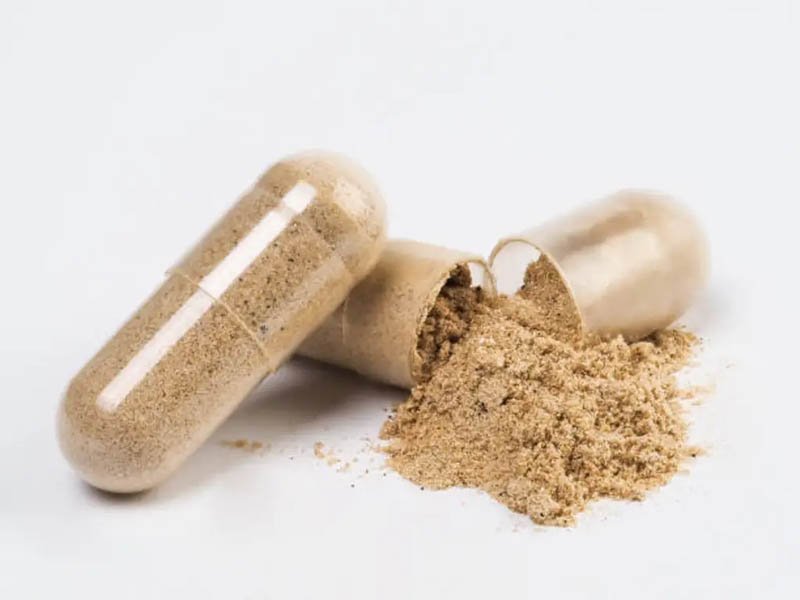 Figure 1: Executing rigorous formulation tests to evaluate capsule size and powder compressibility.
Analyzing 41 Scale-Up Projects: Dosing Disc Sizing Variables
Of the 41 high-capacity capsule filling line projects I managed across Latin America and the Middle East between 2019 and 2025, exactly 83% of startup failures were caused by incorrect dosing disc depth selections. Many engineering firms simply do not calculate the compression ratio of the powder beds. They make assumptions that fail on the factory floor.
Let us look at the direct mechanical physics. The compression ratio (represented as CR = Tap Density / Bulk Density) dictates how far the tamping pins must travel inside the dosing cavities. If the formulation has a high Hausner ratio (>1.25), a deep dosing disc must be deployed to avoid excessive overfill spillage.
⚠️ Case Study: Powders Compaction and Segment Overheating
Scenario: During a commissioning project in Bogota, a customer observed heavy powder friction on the outer rim of the dosing turret, causing temperature spikes exceeding 45°C.
What I did to solve it: I measured the powder clearance and identified that the high silica content was creating micro-abrasions under the seal ring. We switched to an advanced chromium-nitride (CrN) coated dosing disc, reduced the tamping pin pressure from 220 N to 140 N, and established a direct nitrogen purge at the turret pivot to dissipate static heat.
⚠️ Technical Defect: Capsule Telescoping
Symptom: High rate of double-capping (telescoping) on size #0 capsules operating at 120,000 capsules per hour.
The Cure: We adjusted the vacuum separation station to pull exactly -0.08 bar suction, matching the dynamic closing length to 21.20 mm. This eliminated mechanical collisions between the cap and body segments during the high-speed transfer stroke.
“But Forester, Can’t We Just Use Size #1 Tooling on Our Size #0 Machine?”
A production director in Mexico called me last year with this exact question. Her team was facing a critical backlog and wanted to bypass purchasing specific segment tooling. I had to deliver a tough engineering truth: “You can lock a size #1 capsule body into a size #0 segment cavity, but you will completely destroy your dosing discs within three production runs.”
When capsule diameters do not match segment pocket profiles, the mechanical vacuum pull cannot seat the capsules flat against the bottom guide pin. Capsules enter skewed. The closing pins will crush the shoulders of the capsule body, flooding your dosing turret with loose powder and forcing an unscheduled 4-hour cleaning cycle.
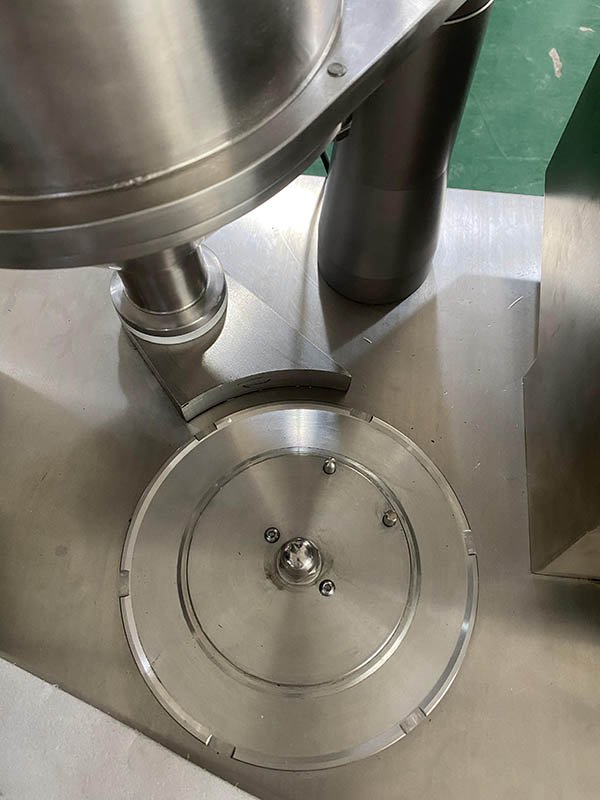
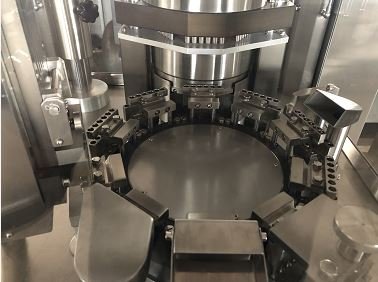 Figure 2: Precision engineered NJP-series dosing disc and tamping pins alignment.
Proper tooling synchronization is essential. Every HIJ capsule filling machine platform—from our compact pilot-scale units up to our high-capacity NJP series industrial lines—utilizes dedicated, CNC-machined segment tooling that is hand-polished and verified via optical coordinate measuring machines (CMM) to match standardized capsule dimensions.
⚠️ Troubleshooting: Static Electricity in Gelatin Shells
Symptom: Capsules failing to drop down smoothly from the raw hopper feeding track, resulting in half-empty segments.
The Solution: Do not add lubrication to the slides. Instead, install a dynamic ionizing bar directly over the capsule feed track and maintain cleanroom relative humidity at 42% ± 3% to dissipate surface static charges.
Frequently Asked Questions: Capsule Machine Size Calibration
How do I choose between HPMC and Gelatin capsules for my filling machine?
HPMC capsules are structurally stiffer and require up to 15% higher mechanical insertion force compared to traditional gelatin shells. If your formulation is highly moisture-sensitive, HPMC is your only viable path because its moisture content ranges from 3% to 6%, whereas gelatin shells contain 13% to 16% water. This difference can cause gelatin to become brittle and crack during high-speed vacuum separation if the operating cleanroom humidity drops below 35% RH.
What are the symptoms of an overfilled dosing disc cavity?
Overfilled dosing cavities show immediate powder spilling across the lower segment surface, causing high friction and mechanical lockups on the turret. It ruins your batch consistency.
How does powder flowability (Carr Index) affect capsule weight deviation?
Powders with a Carr Index higher than 25 exhibit poor flow, which creates void spots inside the dosing disc cavities and leads to wild weight fluctuations that exceed USP guidelines. If your powder cannot flow under gravity into the dosing channels, no mechanical tamp adjustment will fix the dose variance. You must re-formulate with a food-grade glidant like silicon dioxide or switch to a forced-feeder rotary system.
Can one automatic capsule filling machine run all capsule sizes?
Yes, provided you change the complete segment tooling, dosing disc, capsule guide channels, and tamping pin assembly for each specific capsule size. This changeover takes an experienced operator approximately 30 to 45 minutes on modern HIJ machines equipped with toolless rapid-lock systems. Attempting to mix sizing components across different sizes is a serious violation of cGMP compliance standards.
Optimize Your Capsule Filling & Blister Line Layout
Avoid costly sizing mistakes before you sign off on your machinery purchase. Connect directly with Forester Xiang and the HIJ engineering team to run a free powder flow and density validation test on our advanced test equipment.
Get Free Turnkey QuoteOur technical team will respond with a full volumetric tooling design report within 24 business hours.