Equipment budgeting · Corrugated shipping cases
A carton erector price depends on the case format, bottom-sealing method, output and what the quotation actually includes. Compare installed scope and operating costs—not just a base-machine number.
Below are two independently published examples, a scope-by-scope comparison and a practical way to budget your own project.
- Flat case blankConfirm dimensions, board and supply method.
- Erect and bottom-sealDefine the machine and closure boundary.
- Handoff to loadingInclude conveyors, controls and site work.
How much does a carton erector cost?
There is no reliable single price for every case-forming project. As reference points, on 27 October 2026 Cleveland Equipment’s public US listing showed the CE-12 automatic case erector at US$19,690 and the CE-15 at US$26,795. These are two third-party listed machine prices, not HIJ prices, negotiated quotations or a complete market range. The supplier’s case erector listing is the source; prices and available configurations can change.
What the examples do not tell you: they do not establish the shipping, tax, installation, format parts or interface cost for your site, nor do they prove either machine will handle your case. Ask the seller for current included and excluded items.
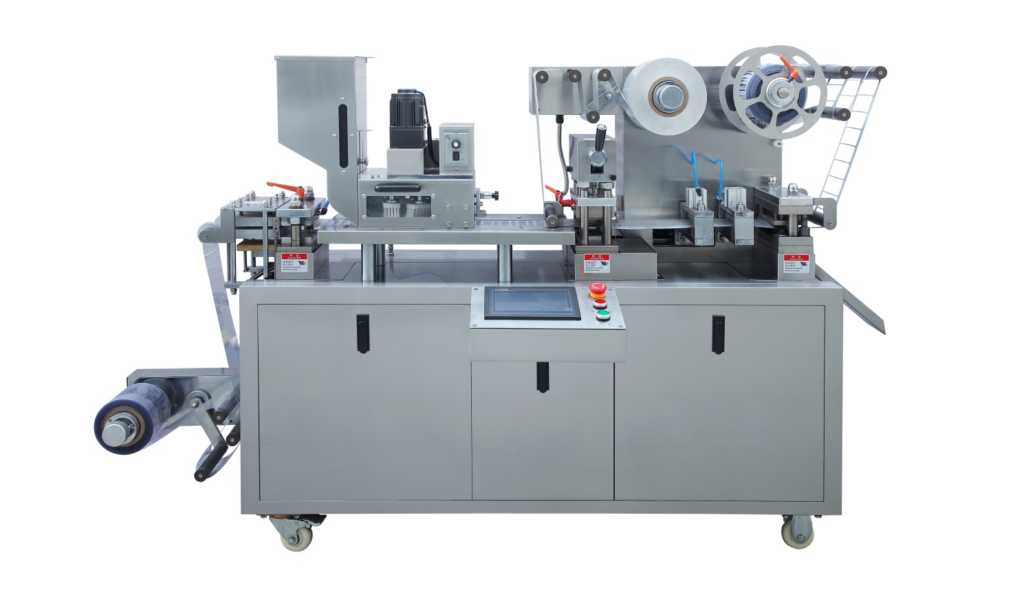
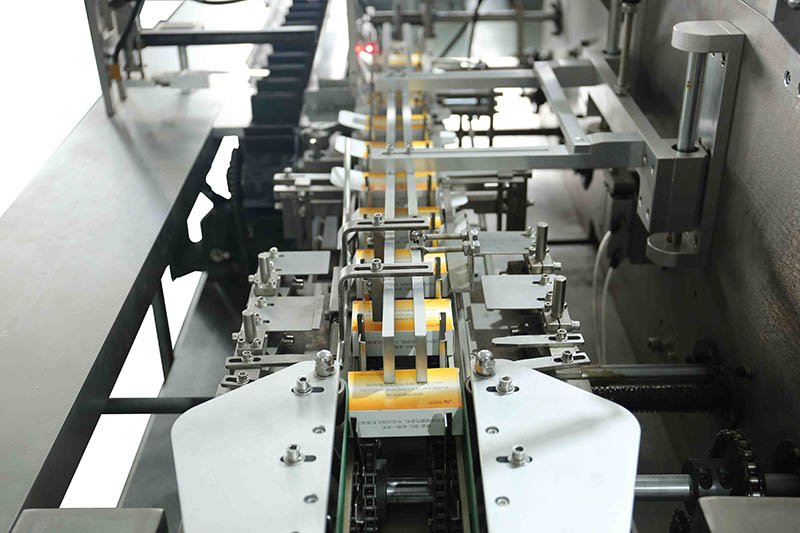
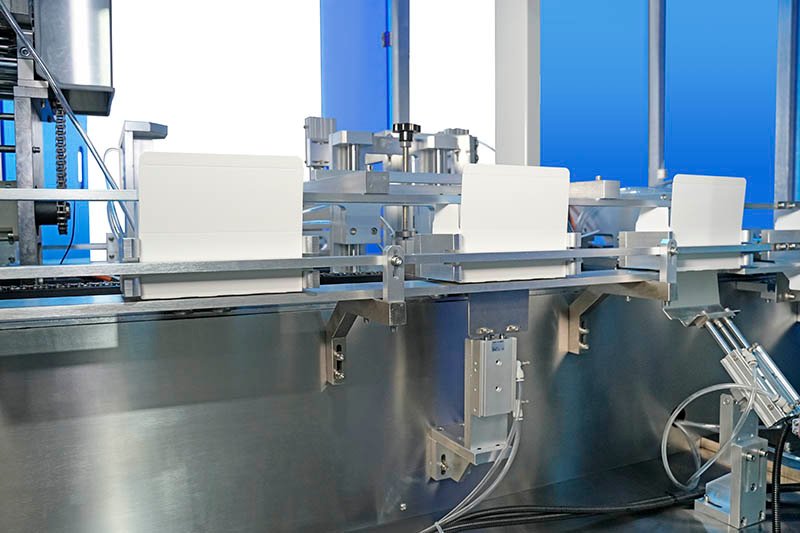
HIJ discusses a project-specific configuration and quotation. The picture and examples below are not a published price or offer for an HIJ standalone erector. For machine types and working sequence, start with the carton erector selection guide.
What is included in the price?
Define the unit of purchase before comparing amounts. A standalone case erector prepares an empty case for loading. An integrated system can add loading and final sealing, but its scope and output basis are different.
| Cost item | Ask each supplier to identify |
|---|---|
| Base equipment | Case magazine, forming mechanism, bottom closure, guarding, controls and discharge point. |
| Formats and change parts | Approved case-size range, adjustments, dedicated tooling, extra formats and demonstrated changeover. |
| Closure and consumables | Tape head or adhesive system, included components, supplies, application and inspection scope. |
| Integration | Infeed and discharge conveyors, accumulation, sensors, signals, interlocks and ownership of interfaces. |
| Delivery and site work | Trade terms, freight, insurance, unloading, utilities, installation, commissioning, training and local taxes where applicable. |
| Evidence and support | FAT, sample tests, documentation, spare parts, warranty terms and post-sale support actually offered. |
Mark every line included, optional, customer-supplied or excluded. A quote that omits a conveyor or installation is not automatically cheaper once both proposals have the same scope.
Six factors that change the quotation
- Case material and geometry. Specify drawing, outside dimensions, board grade, flute, flap design and physical blanks. Difficult or variable cases may require a different forming approach or additional trials.
- Required accepted output. Define good erected cases per minute at discharge, test duration, replenishment and reject rules. Empty cycles alone are not the complete production result.
- SKU mix and changeover. Compare the number of formats, size variation, frequency, repeatable adjustments and dedicated parts. Automatic adjustment is a specified function, not an assumption.
- Bottom closure. Identify tape or adhesive, approved material, access, inspection and replenishment. The correct process depends on board, packed weight, environment and acceptance criteria.
- Line architecture. Decide whether the operator loads cases manually or another machine connects to the erector. Conveyors, buffering, safety interfaces and restart logic may be separate line items.
- Acceptance and services. Decide which case samples, test runs, documents, training, delivery and installation responsibilities belong in the proposed price.
Build the installed budget, not just the purchase price
Use the same currency, destination and trade terms for each alternative. Keep one-off costs separate from annual costs, and enter each cost only once.
Installed project budget = scoped machine + purchased options + delivery + site preparation + installation and integration + other agreed one-off costs
Then add the planned ownership period for consumables, electricity, service, spare parts and future format sets. Include downtime or extra labor only when your operation can actually attribute a cost to it. The budget is a planning tool, not a formal landed-cost or tax calculation.
Illustrative comparison: same final scope
Assume Proposal A lists a machine at US$20,000, with US$4,000 of required options and US$6,000 of site and integration costs. Its illustrated project total is US$30,000.
Assume Proposal B lists a machine at US$24,000 and includes those options, with US$3,000 of comparable site and integration costs. Its illustrated project total is US$27,000.
These figures are invented for arithmetic only—not quotations, external prices, product performance or a guarantee that either proposal will meet your requirements. They show why the lower machine price can produce the higher project budget.
Compare standalone and integrated investment
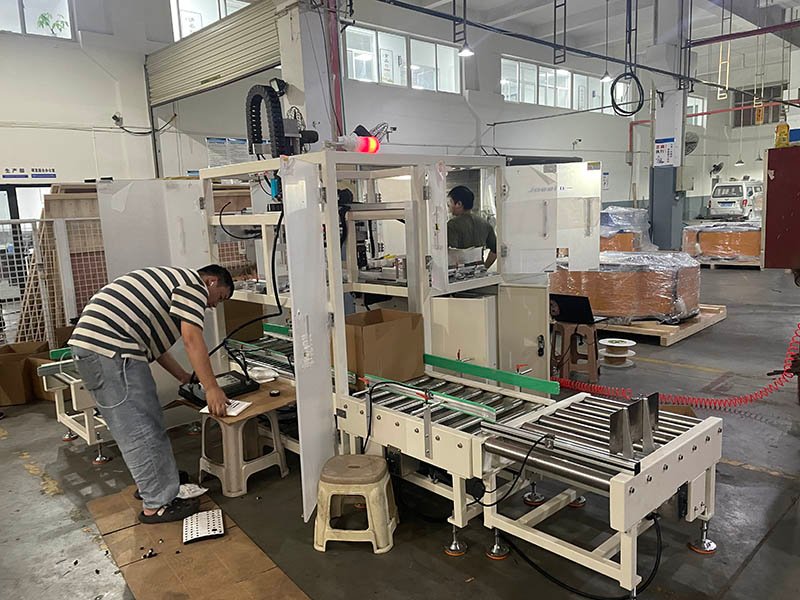
A standalone erector is a defined project when the loader or manual packing station already exists. An integrated system can combine erection, loading and sealing; compare the full line boundary, not the price of an erector alone against a complete packer.
Compare the filled-product flow, handoff, floor layout, required good cases per minute, changeover responsibility and service access. An integrated frame may reduce some interfaces but also changes the scope of the test and the impact of a stop; site-specific design determines the outcome. The integrated opening, loading and sealing equipment page shows the wider project route.
What about payback?
Calculate net annual benefit using actual avoidable costs and additional operating costs. Divide the relevant investment by a positive, documented annual net benefit only as a simple payback estimate. An hour released is not automatically an hour of payroll saved; confirm staffing change, output demand and working schedule. Do not promise a fixed payback period.
Get a comparable quotation
Provide a case drawing and representative flat blanks, the intended bottom closure, target good cases per minute, case formats and change frequency. Identify the next station and any required conveyor or controls interface.
- Ask for the exact included machine, closure module, adjustments and format tooling.
- Request a format-by-format sample test with agreed input, duration, rejects and accepted discharge.
- Separate freight, trade terms, installation, utilities, training, warranty and support from equipment pricing.
- Identify exclusions and any unresolved item that must be priced before approval.
For the broader equipment route, compare the case packing machine range. If your need is only to close a filled case, review the separate case sealing machine scope.
Carton erector price questions
Is a listed case erector price the installed project cost?
Not necessarily. Confirm which options, format parts, conveyors, freight, taxes, site preparation, installation and commissioning are included. Compare suppliers at the same destination and scope.
Does one erector price cover every carton size?
No. A quotation should identify the approved case formats, adjustment range and any dedicated parts. Confirm the smallest, largest and difficult intermediate formats with representative samples.
Are tape and hot-melt machines priced the same?
Do not assume they are. Compare the quoted closure equipment, consumables, utilities, maintenance, inspection and the required bond or seal test for the actual board and distribution environment.
Is an integrated case packer directly comparable to a standalone erector?
Only after the boundaries are made equivalent. An integrated machine may add product loading and final case sealing, while a standalone erector normally prepares an open, bottom-sealed case for a separate loading step.
How can I estimate carton erector payback?
Compare the relevant installed investment with documented annual net benefit from avoidable costs and any additional operating costs. Use the actual working schedule and demand; released operator time does not automatically become a cash saving.
What should I send to request a quotation?
Send case drawings and representative flat blanks, board and closure details, the format range, required accepted output, loading method, line layout and the requested test, delivery and service scope.
Define your case and project boundary
Share the case dimensions, board, bottom closure, required output and whether loading is separate or integrated. HIJ can review the application and configuration scope for a project-specific quotation.
Discuss My Case Packing Project