Sustainable packaging · Blister material changes
For blister-line teams, sustainable pharmaceutical packaging starts with three separate checks: product protection, machine performance and the intended recovery route. A mono-material proposal must be assessed as a complete base-and-lid system, not approved from a polymer name or recycling symbol alone.
Define what changes in the complete blister
Pharmaceutical monomaterial packaging aims to simplify the material combination in the finished pack. In a mono-material blister concept, the forming web and lid may share the same base polymer. That does not mean every coating, ink, barrier layer or additive disappears.
Request the complete base and lid constructions, their material codes and the basis for the supplier's recycling claim. Distinguish a recyclable forming film from a complete recyclable blister system. The lid, printed areas, seal system and contents remaining after use may affect the assessment.
Current base + current lid
Proposed base + matching lid
This guide focuses on material changes on blister lines. For the wider roles of containers, closures, flexible packs and cartons, use the pharmaceutical packaging materials guide. A sustainable-packaging project may also change outer packaging, but that is a separate part of the scope.
- 1. Protect the productShow that the defined finished package meets its product-contact, protection and opening requirements.
- 2. Run the packageDemonstrate forming, sealing, coding, cutting and accepted output on the configured line.
- 3. Verify the recovery claimIdentify the complete-pack assessment and the intended collection, sorting and recycling route.
Compare supplier concepts without assuming interchangeability
PP, PET and HDPE-based pharmaceutical blister films are present in material suppliers' portfolios. They are material families, not a universal list of approved substitutes for a particular drug or HIJ machine.
| Concept to review | Published supplier example | Keep this question open |
|---|---|---|
| Matched PP-based blister | SÜDPACK Medica describes PharmaGuard with coordinated PP-based forming and lidding webs. | Which exact grades, barrier construction and seal pairing are proposed for this product? |
| PET-based forming film | Klöckner Pentaplast identifies kpNext R1 as a PET-based pharmaceutical blister film. | What lid and full-pack construction accompany it, and what does the assessment cover? |
| Other polyolefin-based films | The kpNext portfolio also lists PP-based RB5/RB5.1 and HDPE-based RB2 families. | What differs in forming, barrier, sealing and the intended recovery stream for the selected grade? |
These examples come from SÜDPACK Medica's PharmaGuard description and the kpNext pharmaceutical blister film portfolio. They identify options to discuss with material specialists; they do not establish a supply partnership, a HIJ trial result or a guarantee that no machine changes are needed.
Obtain current technical data and representative rolls for the exact proposal. Do not transfer a trial result from one grade, cavity drawing or machine configuration to another simply because the base polymer has the same name.
Check the operations affected by a material change
A film can feed acceptably and still fail at forming, sealing, opening or cutting. Review the line station by station so the trial records which function is satisfactory and which needs adjustment.
| Operation | What to observe | Evidence to retain |
|---|---|---|
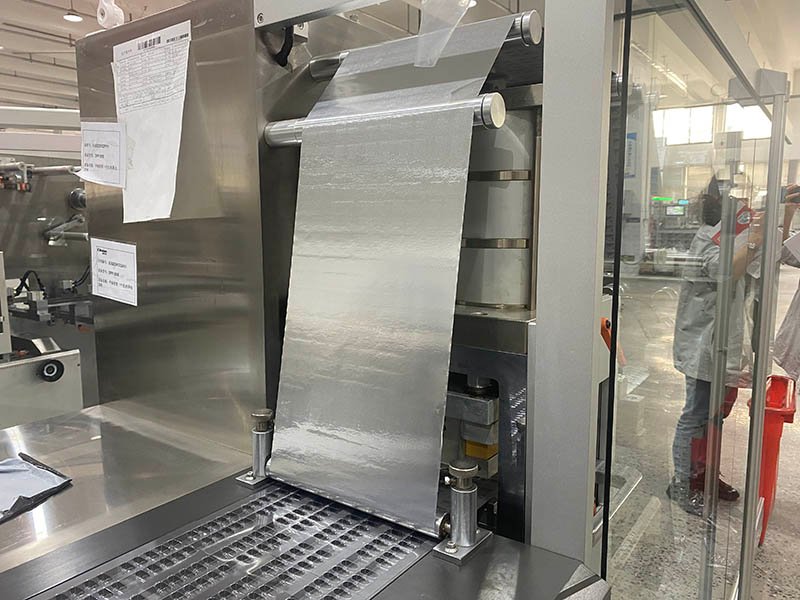
| Unwinding and web transport | Roll presentation, tracking, tension response, traction, splices and visible surface marking. | Roll identity, winding data, configured web path and observations through relevant starts and stops. |
| Heating and forming | Cavity detail, demoulding, distribution of material, distortion and fit around the actual product. | Tool identification, settings, formed samples and the agreed dimensional or performance results. |
| Lidding and sealing | Base/lid pairing, registration, seal continuity, contamination and the intended opening action. | Both material codes, process conditions, accepted seal tests and opening results. |
| Printing and coding | Print response, contrast, code position and readability after handling and separation. | Actual printed samples, code content and the specified inspection or verification results. |
| Cutting and separation | Cut edges, tear or perforation features, trim removal, pack dimensions and handling damage. | Cutting-tool reference, finished samples and records of unacceptable units. |
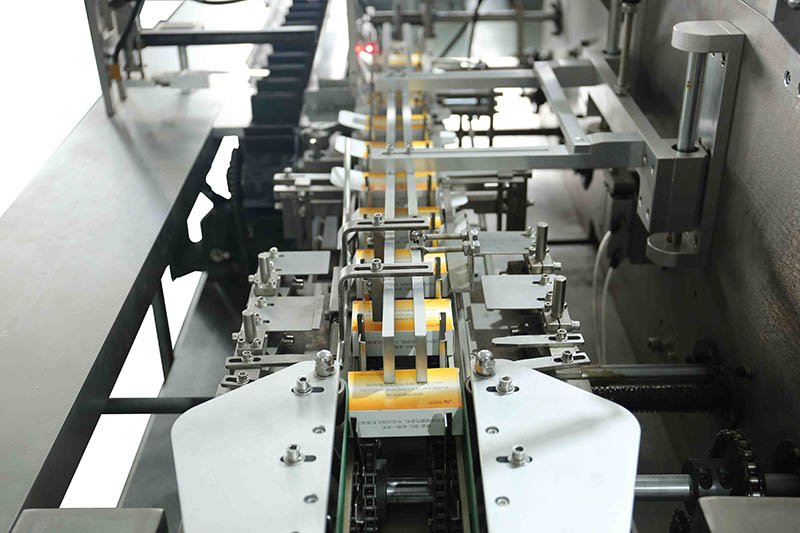
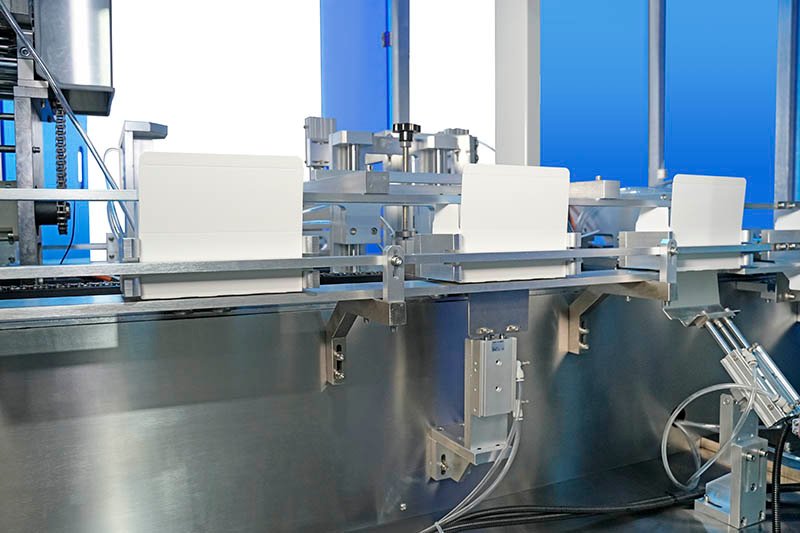
| Discharge and cartoning | Pack stiffness, curl, stacking, counting, transfer and fit within the approved carton layout. | Accepted line output and representative packs after downstream handling. |
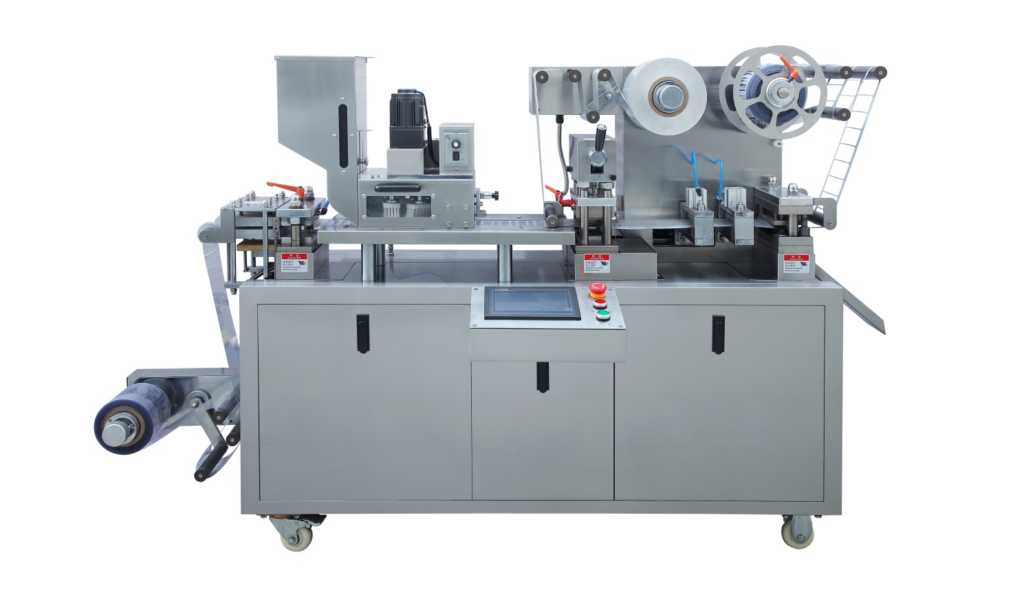
The DPP-100 Alu-PVC document provides a simple equipment example: PVC forming film and PTP aluminium lidding are separate inputs, and forming, feeding, sealing and cutting are separate operations. That existing specification is not evidence that PP, PET or another proposed system is approved for DPP-100.
Use the HIJ blister machine range to identify the relevant equipment route. If the change involves cavity geometry, seal area or final card dimensions, include the blister tooling and format-change review in the project scope.
Keep finished-pack protection separate from film data
A material supplier's flat-film result answers a different question from the performance of a filled, formed, sealed and cut blister. Request the evidence needed for the actual product, cavity shape, storage conditions and intended use.
Review product-contact compatibility, relevant protection requirements, seal integrity, opening performance and the evidence supporting the proposed shelf life. Identify the applicable methods and acceptance limits with the product and quality teams; do not replace these with a generic “high barrier” label.
For US drug manufacturing, 21 CFR 211.94 addresses container/closure suitability and protection. This is one jurisdiction-specific reference, not a complete global regulatory checklist or an approval of a new material system.
Keep each approval question attached to its evidence owner. A film supplier can explain the proposed structure; the machine supplier can assess and demonstrate its configured process; the product owner must resolve the applicable product-quality and market requirements.
Measure material use per accepted pack
A lighter film or smaller card can reduce nominal material consumption while extra rejects, start-up scrap or trim offset that gain. Compare alternatives at the same accepted-pack count and with the same accounting boundary.
Record base web, lidding, start-up loss, trim and rejected packs consistently. State whether the comparison includes all consumed material or only the part remaining in finished packs. Also compare accepted production time and the downstream output unit.
If the project requires a carbon or broader environmental comparison, obtain an assessment with a defined functional unit, boundary and assumptions. A difference in polymer mass alone cannot answer all those questions.
Run a controlled material-change trial
- Freeze the comparison. Identify the current and proposed base/lid codes, complete structures, drawings, product and performance requirements. Keep a known reference pack.
- Review the configuration. Confirm which tools, controls, process ranges, utilities or downstream interfaces need assessment. Record changes rather than hiding them inside a “drop-in” claim.
- Agree the trial conditions. Define representative material lots, run duration, sampling, starts/stops, roll changes and the acceptance methods for the actual process.
- Record both pack and line results. Retain formed and finished samples, dose or count checks where relevant, seal/opening results, code samples and accepted-output accounting.
- Resolve deviations. Identify whether material specification, tooling, settings, product behaviour or handling needs attention. Retest the affected requirements after an agreed change.
- Complete the approval path. Update the controlled specifications and operating instructions, and let the product owner's quality team determine the qualification, stability and market work required.
A machine trial is most useful when its boundaries are explicit. A successful short run does not prove an entire campaign's material yield, long-term product stability or the performance of all future incoming lots.
Verify what the recycling claim actually covers
Ask for the assessment scope: the forming film alone, a defined base/lid pair, or the complete printed and used pack. Identify the proposed collection, sorting and recycling route in the destination market, including how remaining product or separated components are handled.
Keep different claims distinct. A design compatible with a named material stream is not proof that every local collection system accepts pharmaceutical blisters. Recycled content is not the same as recyclability, and neither establishes medicinal-product compatibility or a carbon reduction by itself.
Have the relevant material, quality and market specialists review the wording that will be used in a tender, specification or label. This equipment guide does not prescribe recycling percentages, regulatory deadlines or a universal definition of “mono-material.”
For the existing PVC, coated-film and Alu-Alu options, the blister packaging materials guide remains the focused comparison. The change review should document why a new proposal meets the actual project requirements rather than assuming one material family is best for every medicine.
Questions about mono-material blister changes
Does mono-material mean there are no coatings or barrier layers?
Not necessarily. Request the complete structure and the specific basis of the supplier's claim. A common base-polymer concept does not, by itself, establish that the pack contains only one chemical substance.
Can a mono-material film replace PVC and aluminium without a machine change?
That must be assessed for the proposed base/lid pair, drawing and machine configuration. Review forming, sealing, coding, cutting and downstream handling, then demonstrate the agreed pack and output requirements.
Can the DPP-100 run any recyclable blister film?
The available DPP-100 document specifies an Alu-PVC route. It does not approve every PP, PET, HDPE or other recyclable-film proposal. Provide the exact material specifications and samples for a project-specific equipment review.
Is a mono-material pharmaceutical blister recyclable everywhere?
No universal local acceptance follows from the name. Check the complete-pack assessment and the actual collection, sorting and recycling arrangements in the intended destination market.
Does a successful machine trial approve the new pharmaceutical pack?
No. A machine trial demonstrates its agreed equipment and pack functions under recorded conditions. The product owner must separately resolve the applicable compatibility, protection, stability, qualification and market requirements.
Review the proposed material pair before converting the line
Share the current machine model and pack drawing, proposed base-and-lid specifications, representative rolls and the acceptance requirements. Include a reference of the current finished pack so the review compares the same product and sales format.
HIJ can assess the relevant equipment and tooling questions. This is a packaging-machine review, not a material approval, recycling certification or offer to supply every film listed.
Review My Blister Material Change