Equipment selection · One portion, several machine routes
Single dose packaging machines produce separately closed portions. Blisters, sachets, liquid cavities, plastic ampoules and snap cards use different processes. Choose by the finished pack, product and opening method, then compare accepted output on the same basis.
Start with the package the user will open
A portion size describes the amount of product; it does not describe how the pack is made. Specify whether the user pushes through a lid, peels a seal, tears a sachet, opens an ampoule or snaps a dispensing card. That opening action helps define the package construction and the operations the machine must perform.
In this guide, “single dose” means a separately closed portion package for equipment selection. It does not mean that one tablet, capsule or container necessarily equals a prescribed therapeutic dose. Patient-specific pharmacy repackaging and medication-dispensing systems are a different procurement task.
Form a cavity, place the product, seal a lid and cut the card or individual pack.
Form or present the pouch, meter the product, make the required seals and separate the pack.
Thermoform the base web, meter liquid into it and close with a specified lidding system.
Form a three-dimensional container from sheet, fill it, close it and cut the finished unit.
Match the formed portion, laminate, seal and designed opening feature as one tooling task.
The flexible-pack usage is established industry terminology: Omag describes single-dose sachet and stick-pack machine families. The term alone therefore cannot identify a blister or ampoule line, or establish that suppliers are quoting the same scope.
Compare the machine architecture, not just the fill volume
| Finished format | Equipment route | Decisive quotation inputs |
|---|---|---|
| Tablet or capsule blister | Forming, product feeding, lidding, sealing and card cutting. | Actual solid product, cavity drawing, base/lid specification and units per card. |
| Flexible sachet or stick | Pouch forming or presentation, product-specific metering, sealing and separation. | Product behaviour, target mass or volume, film structure, seal layout and opening feature. |
| Liquid-filled cavity | Base-web thermoforming, liquid filling, lidding, sealing and cutting. | Cavity depth and shape, dose, lid opening action and clean seal-land requirement. |
| Plastic ampoule | Roll-fed container forming, filling, closing and unit cutting. | Container drawing, neck/opening geometry, sheet construction, print position and dose. |
| Easy-snap portion card | Card-format forming, dosing, sealing and opening-feature tooling. | Card drawing, laminate, dispensing direction, product cut-off and opening test. |
These are alternative architectures, not attachments that turn one standard machine into every other type. A thermoforming line for single-dose packaging also needs a defined base material, cavity arrangement, product-loading method and finished-unit layout before output can be compared.
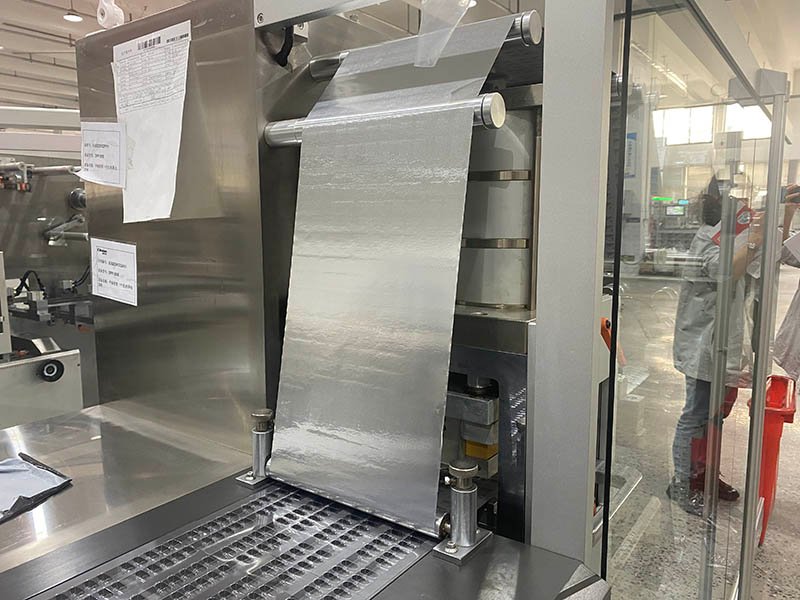
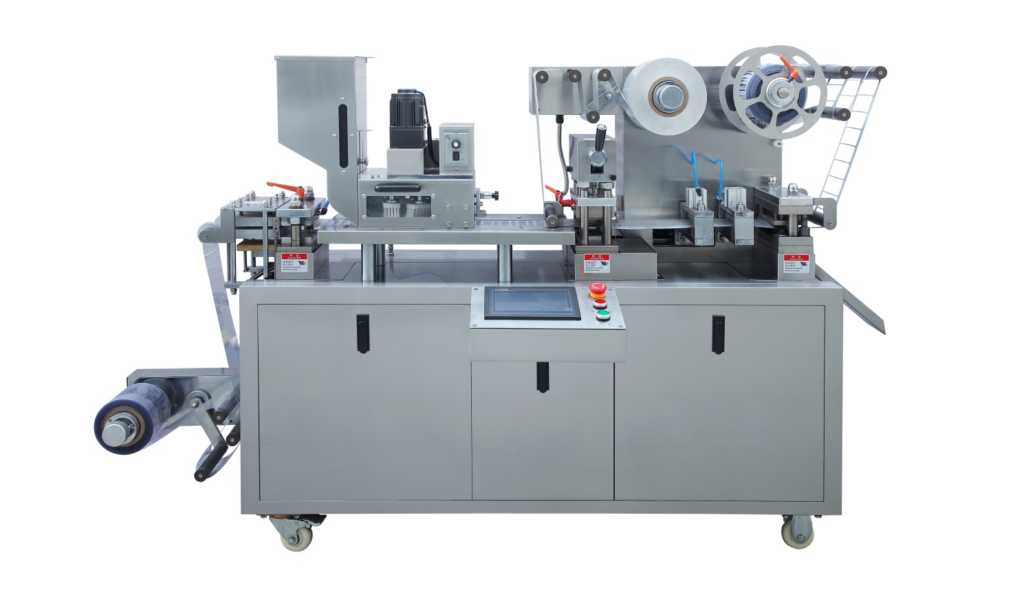
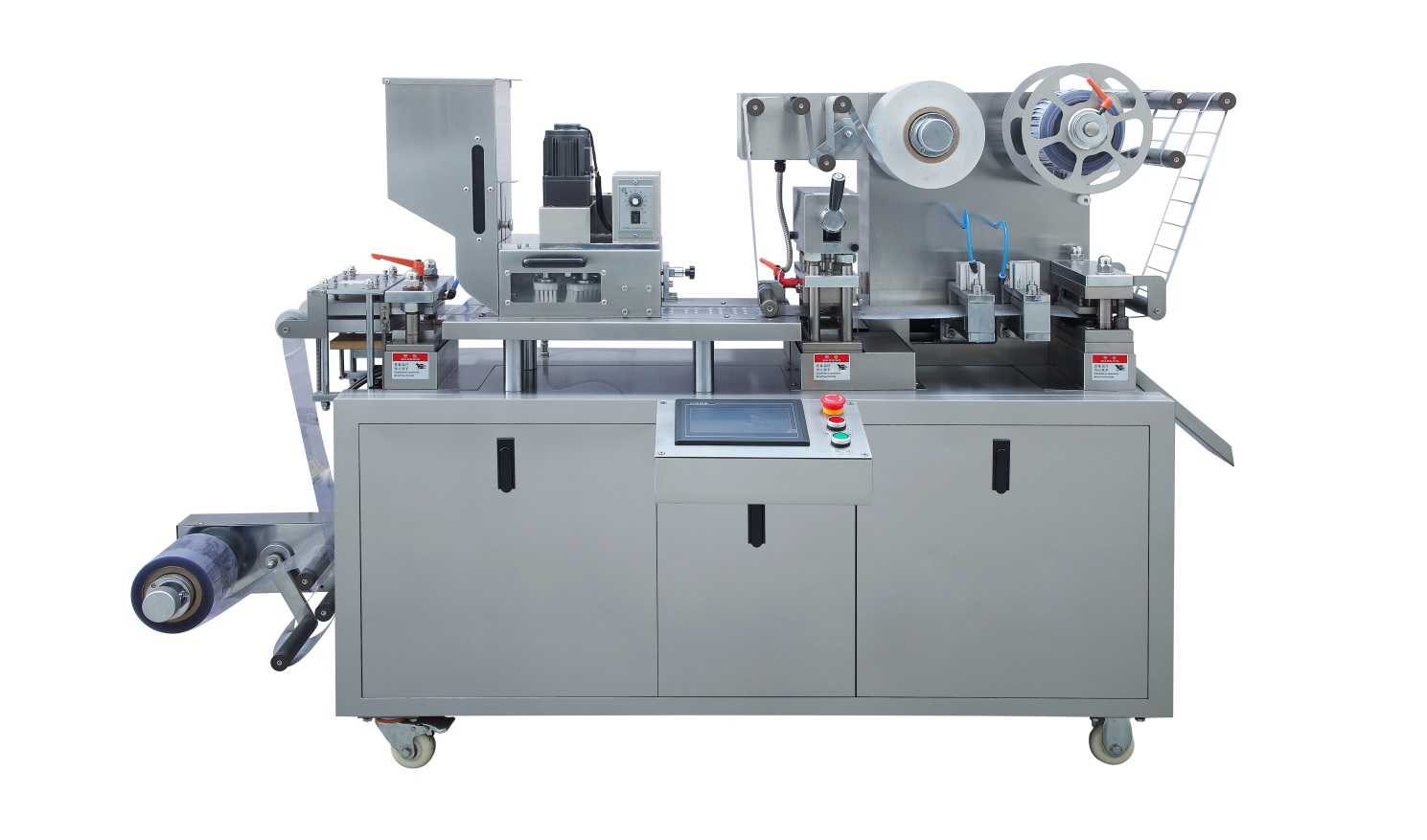
For the solid-product route, start with the HIJ blister packing machine range. DPP-100 documentation separates PVC hard-film forming, product feeding, PTP aluminium lidding, heat sealing and cutting; its existence does not establish liquid-filling capability for that model.
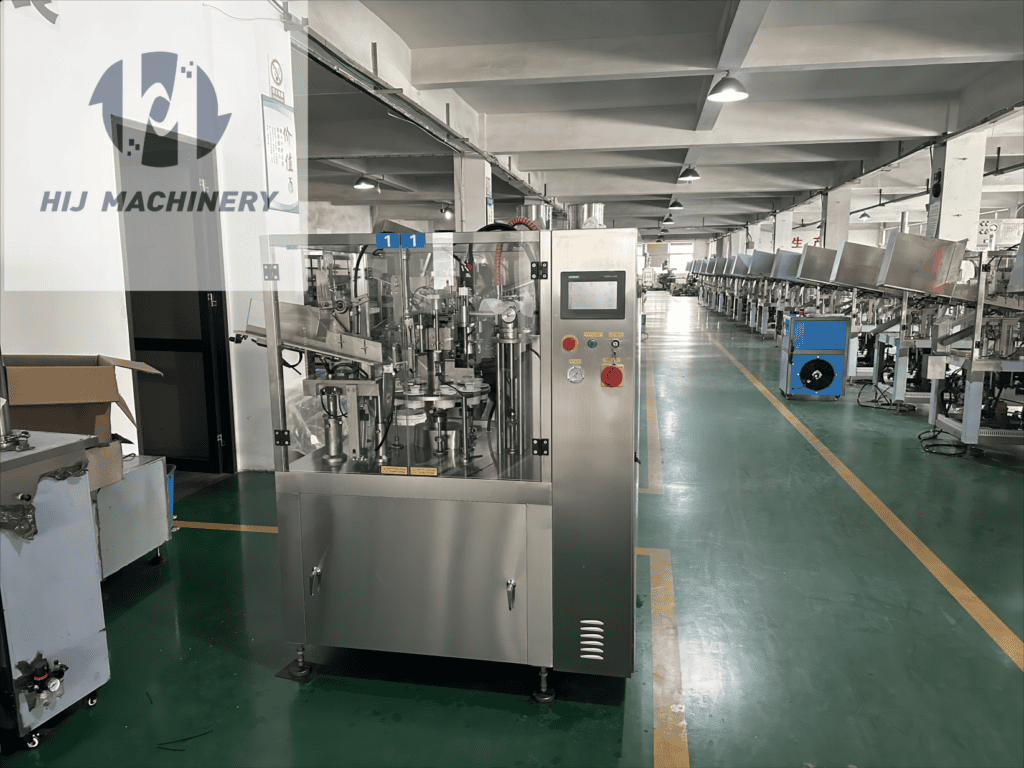
For a flexible cosmetic portion, review the cosmetic sachet machine route. Medicine-contact, containment and cleaning requirements need their own project assessment rather than being inferred from a cosmetic demonstration.
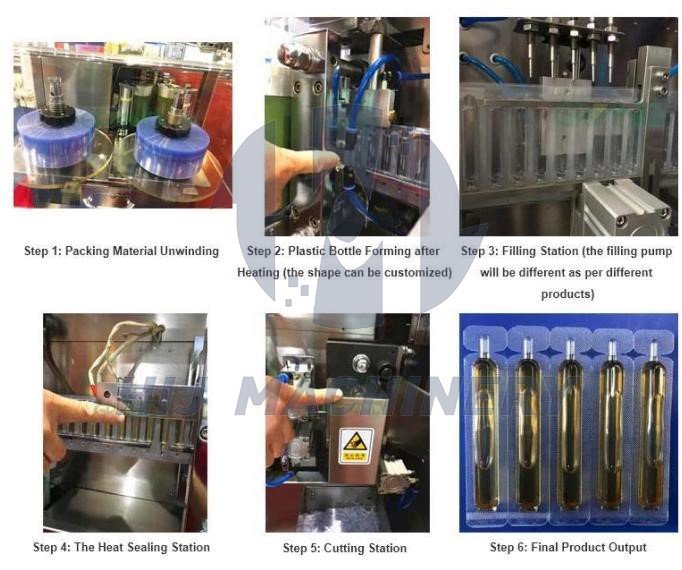
Use the roll-fed plastic ampoule forming, filling and sealing route when that container construction matches the drawing. It is not the same process as moulding a container by blow-fill-seal or filling a supplied glass ampoule.
Match feeding and metering to the real product
For an already manufactured tablet or capsule, the packaging task is to present and place an accepted solid unit without mixing, damaging or omitting it. The packaging machine is not manufacturing or dosing the contents of that tablet or capsule.
Liquids, creams, powders and granules instead require a metering operation. The nominal portion is only one input. Viscosity at the actual process temperature, foaming, stringing, particle content, bulk-density variation or powder flow can change the suitable product path.
- Free-flowing liquid: review the pump, nozzle cut-off, small-dose repeatability, air inclusion and drip management.
- Cream or gel: review feed stability, temperature conditions, stringing, trapped air and residue near the sealing area.
- Powder or granules: evaluate the dosing principle with representative product, including flow, dust, segregation and cleaning access.
- Solid units: review geometry, fragility, orientation, feeder presentation and missing-product detection.
Ask for results from representative product at the agreed conditions. Water trials can check some liquid-path functions, but they do not establish how a thick gel or foaming formulation will fill. A multi-product proposal should identify the parts, settings, cleaning steps and evidence needed for each change.
For flexible-pack details, the pharmaceutical sachet packaging guide goes deeper into the pack specification. This page's purpose is to choose between machine routes, not to replace that detailed material and seal review.
Freeze the seal and opening design before tooling
A good portion pack must contain the product and open as intended. The formed body, matching lid or sealant, sealing area, notch or opening feature and final cut geometry belong in one controlled drawing set.
Provide the complete material construction and roll presentation, not only “plastic,” “foil” or a nominal gauge. For printed packs, include the artwork repeat, register mark, winding direction and variable-code area. Decide what information must remain on each unit after separation from a strip or card.
For a peelable cavity, specify the intended opening action and how it will be assessed. For an easy-snap card, evaluate the designed break and dispensing path with the actual laminate and product. The HIJ-CD120 card-style portion route is a separate equipment choice, not a conventional stick-pack conversion.
Keep the quality boundary explicit. A sealed portion is not automatically sterile, child-resistant, compatible with every formulation or approved for a medicinal use. Identify the product owner's applicable pack requirements and who will supply the corresponding evidence.
Convert cycles, portions, cards and cartons to the same unit
Supplier speeds are not comparable until their counting units match. “Packs per minute” might mean a sealed cavity, a multi-cavity card, a strip or a finished carton. Count the independently closed portions, then convert to the required sales pack.
If a planning assumption retains 85% of that theoretical flow after all defined losses, the average becomes 240 × 0.85 = 204 accepted portions/min, or 17 cartons/min at twelve portions per carton. The 85% is an illustrative combined factor, not measured efficiency; do not deduct the same downtime or rejects again elsewhere.
At quotation and acceptance, specify the output unit, pack drawing, active lanes or tools, run duration, product and materials, allowed interventions and reject accounting. Confirm whether upstream preparation, roll changes, replenishment, cleaning and downstream packing fall inside or outside the measured period.
For comparing layouts, also state the minimum and maximum portion sizes. A large-dose fill, deep cavity or difficult product can change cycle time even when the machine name and lane count stay the same.
Ask the trial to prove the difficult parts of your format
A useful factory acceptance test links the actual product and pack specification to recorded results. Agree the methods and acceptance limits before the run, rather than accepting an unlabelled video as proof of every requirement.
- Identify the inputs. Record product identity, condition, material lots, drawing revisions, tooling and configured options.
- Check portion content. Use the agreed dose or solid-unit checks, including sampling across relevant heads, lanes and times.
- Assess the closed pack. Evaluate the specified seals, contamination, appearance, opening action and relevant integrity criteria.
- Challenge the planned exceptions. Include agreed starts, stops, replenishment, missing product, code faults and reject handling where those functions are in scope.
- Account for accepted output. Separate total production, rejected units and accepted units. Convert them to the same portion or sales-pack unit.
- Demonstrate a relevant changeover. Identify format parts, cleaning boundaries, adjustment tasks and how the line returns to an accepted setup.
Coding is a separate acceptance item. Specify the information, data source, print location, legibility or verification requirement and reject response. Do not treat the presence of a printer as evidence of a complete serialization or barcode-compliance system.
For regulated products, agree the equipment documentation and qualification responsibilities separately from the performance trial. A single successful FAT does not establish product stability or replace the site's required qualification and approval work.
Compare the complete scope and cost per accepted portion
Request an itemized configuration: product feed or dosing, pack-forming tools, sealing and cutting tools, coding, inspection, utilities, discharge and the interface to grouping or cartoning. Mark what is included, optional, customer-supplied or excluded.
For a small batch, changeover, cleaning and start-up loss can matter as much as the running speed. For a long campaign, material handling, replenishment and downstream accumulation may become the constraints. Evaluate the actual product schedule rather than a general “small” or “high-speed” label.
Use the same accounting boundary for cost per accepted portion: packaging materials, product loss, direct operating costs and the agreed allocation of equipment or tooling costs. A cheaper machine quote is not automatically a cheaper finished portion if its format, included scope or accepted output differs.
HIJ proposals are configuration-based. Share the intended package and operating requirement so the relevant route can be reviewed; this guide does not establish a standard price or promise availability of every format listed.
Questions about single dose packaging equipment
What is a single dose packaging machine?
It is equipment for preparing separately closed portions. The term can refer to sachet or stick-pack machines, blister equipment, liquid-cavity systems or plastic-ampoule forming and filling routes. The finished package and product determine which architecture is relevant.
Can one machine make blisters, sachets and ampoules?
Do not assume this. These formats use different forming, feeding or dosing, sealing and cutting arrangements. A supplier should identify the exact supported formats, change parts and demonstrated boundaries of the proposed configuration.
Is a blister card one single dose?
A card can contain several separately sealed cavities. Specify the number of portions per cavity, cavities per card and cards per carton for equipment counting. The physical count does not determine a prescribed therapeutic dose.
Are single-dose packs automatically sterile?
No. Portion size and separate closure do not establish sterility. A sterile-product project requires its own defined product, environment, process, package and qualification requirements.
How should I compare machine output quotations?
Convert each quotation to the same accepted-output unit using the agreed pack drawing and test conditions. Separate cycles, portions, cards and cartons, and state how downtime, changeovers, rejects and downstream handling are counted.
Start with one product and one finished-pack drawing
Send the actual product, target portion, preferred opening method, material or container details and required accepted output. If the format is still undecided, identify the two routes you want to compare and the decision each must satisfy.
HIJ can review the relevant packaging-machine configuration and the sample or test evidence needed for a useful proposal.
Discuss My Single-Dose Packaging Route