Container choice · Packaging equipment scope
For equipment selection, the key ampoule vs vial difference is the closure: a conventional glass ampoule has a fused glass seal; an injectable vial uses a separate closure system. That distinction changes the process and the finished container the packaging line must handle.
Illustrative profiles, not scale drawings, specified dimensions or an approved container-closure design.
Ampoules vs vials: a packaging-focused comparison
The comparison below concerns conventional glass ampoules and injectable vials. The names are not interchangeable specifications, and the illustrated shapes are not substitutes for the actual container and closure drawings.
| Decision | Glass ampoule | Injectable vial |
|---|---|---|
| Primary closure concept | The glass itself forms the sealed closure. | The container works with the specified stopper and outer closure components. |
| Process to define | Preparation, filling and the applicable glass-sealing process. | Preparation, filling and the specified stoppering and closing sequence. |
| Finished geometry | Review body, shoulder, narrow neck and sealed-tip envelope. | Review body, neck, closure diameter and finished overall height. |
| Handling interfaces | Define supported surfaces, orientation and permitted contact for the actual profile. | Define guides, transfer and retention around the actual closed container. |
| Secondary pack | Approve the count, tray or divider, retention and carton-loading arrangement. | Approve the same pack functions against its own container and closure envelope. |
| Approval evidence | Product/container suitability, primary-pack integrity and the agreed handling trial. | Product/closure compatibility, primary-pack integrity and the agreed handling trial. |
Neither column establishes a universally cheaper, safer or faster option. The comparison is useful when it identifies different equipment, components and tests; it becomes misleading when a container name is treated as an automatic approval.
Why the closure changes the fill-and-finish scope
SCHOTT Pharma's ampoule overview describes conventional glass ampoules as sealed by melting. Its injectable-vial explanation distinguishes the container, stopper and cap, with crimping commonly used for the outer cap. These are different closure concepts, not two names for the same filling station.
For a proposed line, establish the incoming container condition, product presentation, required environment, preparation steps, filling method, closing operation and inspection. Ask which operations are supplied by each vendor and which are responsibilities of the manufacturing site.
Do not transfer a filler quotation from one container to the other by changing only the name. A proposal may need different presentation, transport, nozzles, closing equipment and controls. Even where a supplier offers a flexible platform, the required format set and demonstrated operating boundary must be stated.
Use the pharmaceutical filling machine selection guide to separate filling routes from subsequent packaging. It does not establish that every glass-ampoule filling or sterile-vial fill-and-finish system is included in HIJ's supply range.
Compare the complete container envelope, not nominal millilitres
A nominal capacity does not tell the equipment designer the finished outside dimensions. Containers with similar fill volumes can present different diameters, heights, contact areas, mass distribution and closure clearances. Start from the supplier's drawing and the representative finished container.
For the format matrix, record the approved body diameter and tolerance, total height, relevant neck or closure envelope, mass, label position and incoming orientation. Identify which surfaces the equipment may contact and which must remain protected. Where a tray or nest is used, include that assembly and its tolerances.
Distinguish the bare container, the filled and closed container, the labelled container and the final tray or carton group. Each is a different handling object. A successful test with an empty, unlabelled sample cannot by itself approve the finished production format.
Use the difficult approved format in the trial. Identify the format that challenges the actual transfer, clearance or retention concept, rather than assuming that the smallest or largest nominal fill volume must be the worst case.
What changes in handling, trays and cartoning?
Downstream equipment receives an already closed primary container or an approved group. Define how that object arrives: loose, oriented, in a tray, in a nest or in another specified presentation. Then define the transfers required before carton closing.
The loading concept should show the support and contact points through accumulation, transfer, grouping and insertion. Specify permitted contact, visible-damage criteria and the response to a blocked or misoriented item. Do not assume that an additional tray automatically solves every retention or transfer problem.
A single-container carton and a multi-container tray are different formats. The loaded tray, divider, leaflet and any accessories must fit and remain retained as a complete assembly. Review usable carton interior dimensions and the loading direction as well as the external box size.
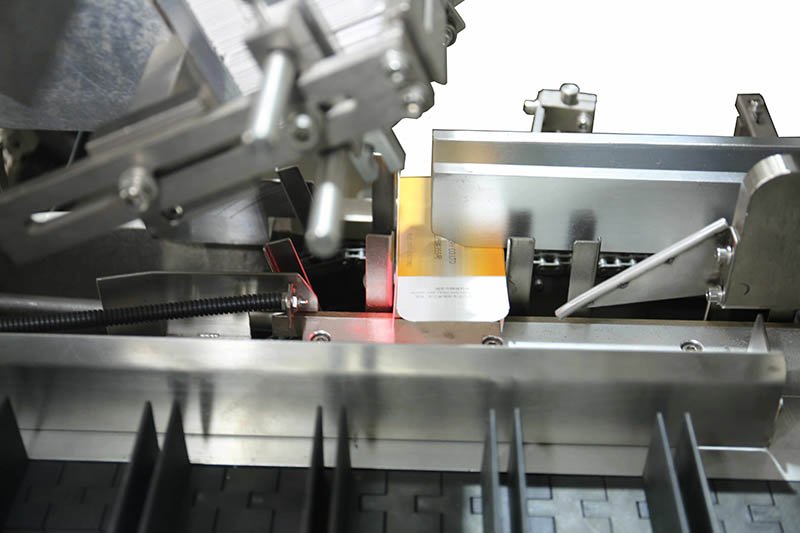
For the vial route, HIJ's vial cartoning project page identifies the sample-based discussion around closed containers, grouping, inserts and inspection. Suitability for a different ampoule presentation needs its own assessment; a vial trial does not automatically approve ampoule feeding.
The cartoning machine range concerns secondary packaging. It should not be confused with the equipment that forms, fills or seals the primary container.
Plastic unit-dose “ampoules” need a separate process description
In commercial enquiries, “ampoule” can also refer to a plastic single-dose presentation. State the material, pack drawing, opening feature and manufacturing route explicitly instead of relying on the word alone.
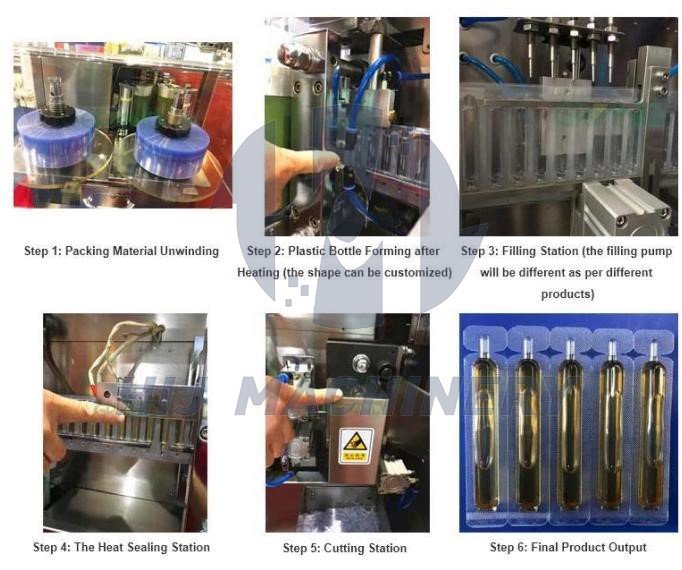
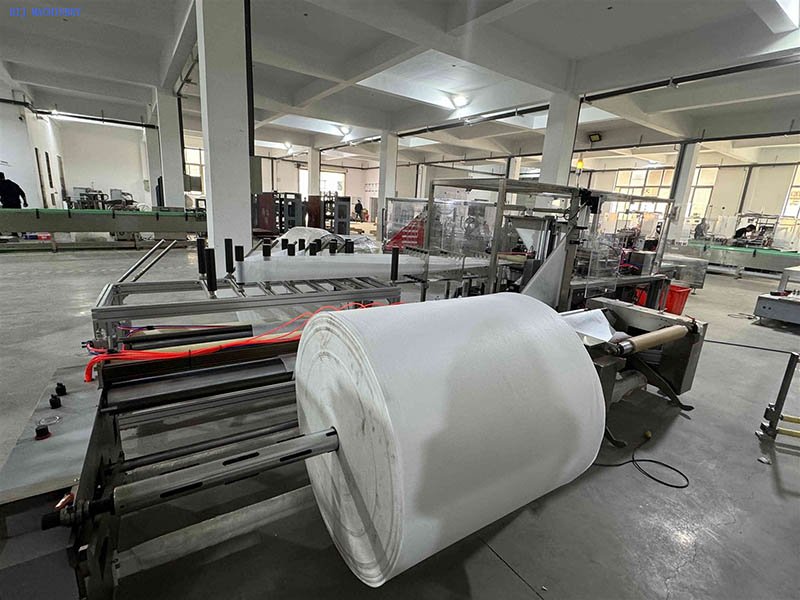
HIJ's GGS-118P5 reference describes a packaging web that is unwound, formed, filled, heat-sealed and separated. That is a different equipment route from sealing a preformed glass ampoule. The reference also makes pump and tooling selection dependent on the product and format.
Use the plastic ampoule and oral-liquid filling/sealing platform only for that defined route. Do not call it a glass-ampoule sealing machine, an injectable-vial filling system or extrusion blow-fill-seal because the package has a similar commercial name.
Material substitution is also a product-development decision, not simply a machine change. The responsible product and quality teams must establish the relevant compatibility and package-performance requirements before equipment is approved.
Keep primary-container integrity separate from carton inspection
A closed folding carton is not evidence that the primary container is intact. The packaging project needs a clear boundary between primary-pack requirements, visible-damage or presence checks and the functions that the downstream machine actually provides.
SCHOTT Pharma's container-closure discussion explains the importance of a compatible vial, stopper and seal combination. This supports assessing the complete assembly; a catalogue photograph or an outer-pack presence sensor does not demonstrate integrity of that assembly.
For the production project, ask who defines the test method, acceptance criteria, sampling basis and records. Identify which checks occur before downstream handling and what evidence addresses any relevant handling effects. The quality team should determine the required investigation and release decisions if damage or closure concerns arise.
None of the diagrams in this guide establishes sterility, shelf life, drug compatibility or approved use. These remain product- and process-specific decisions rather than properties conferred by the container name.
Compare accepted containers and cartons on the same basis
Separate the primary-container rate from the finished-carton rate. Record containers per carton, grouping arrangement, format, inspection scope and the elapsed production period next to every output target.
Compare alternatives against the same production requirement. A quote stated in containers per hour cannot be compared directly with a quote in cartons per minute, and a short peak-speed demonstration does not establish accepted output across a planned production run.
Include changeovers, replenishment, line clearance and recovery within a clearly defined time boundary. Avoid subtracting downtime twice if the reported elapsed-run output already includes it.
What should a sample-based equipment review demonstrate?
Send representative finished containers and packaging components with their drawing revisions. Agree what the review will test before the trial; a motion demonstration and an acceptance test are not necessarily the same thing.
| Review area | Question to resolve | Evidence to retain |
|---|---|---|
| Presentation and transfer | Can the specified container or loaded group move through the proposed interfaces? | Container condition, orientation, support/contact points and observations at each agreed transfer. |
| Pack contents and retention | Are the required count, insert, leaflet and container positions maintained? | Approved complete and incomplete challenge packs, inspection decisions and the finished pack condition. |
| Accepted output | Does the complete configuration meet the target over the defined run? | Accepted units, rejects, stops, format identity and the elapsed-time boundary. |
| Changeover and recovery | Can the authorised team restore the approved configuration after the defined change? | Tooling identity, settings, required checks, first-off results and any open actions. |
Keep primary-pack integrity and qualification requirements within the responsible team's approved protocol. Use controlled challenge samples and reconcile them; do not introduce uncontrolled defective containers into saleable output.
Compare the quotation boundary, not just the container price
A useful commercial comparison separates the container and closure components from filling, closing, inspection, format tooling, transport, grouping and secondary packaging. Identify which operations are already available at the site and which must be supplied or changed.
Include the approved format matrix, document scope, utilities and interface responsibilities. Clarify whether trials, installation support and qualification-related work are included, optional or outside the quotation. Do not assume that “complete line” assigns every responsibility to one vendor.
Neither ampoules nor vials are universally the lowest-cost route. Evaluate the actual container/closure supply, demonstrated process, accepted output, changeover burden and agreed support requirements. Generic price ranges cannot replace comparable project scopes.
Buyer questions about ampoules and vials
Can the same filling machine handle ampoules and vials?
Not as a general assumption. The proposed platform must cover the actual presentation, transport, filling and closure operations, with the required tooling and trials. Confirm each format and the included process boundary rather than relying on the machine name.
Are plastic ampoules the same equipment route as glass ampoules?
No. The GGS-118P5 reference uses a packaging web that is formed, filled, heat-sealed and separated. Define that route separately from processing a preformed glass container; the word ampoule alone does not identify the material or machine.
Does successful cartoning prove the primary container is sound?
No. Count, presence, coding and carton closure checks address specified secondary-pack functions. The responsible team must separately define primary-container integrity requirements and evidence.
Is nominal fill volume enough to select the format tooling?
No. Use the finished container drawing, closure envelope, tolerances, mass, label condition and incoming presentation. Include the loaded tray, divider and carton assembly where applicable.
Can a vial cartoning trial approve an ampoule format?
Only if the ampoule format itself is included in the agreed assessment and acceptance scope. Different geometry, presentation, support points and retention can require a different feeding or loading arrangement.
Which container gives the lowest packaging-line cost?
There is no universal answer. Compare the same required output and complete process boundary, including components, tooling, inspection, changeover and secondary-pack operations, using project-specific proposals.
Define the container and the finished secondary pack
Send the closed-container drawing, representative samples, containers per carton, tray or insert arrangement and required accepted output. State whether the request concerns primary filling/closing or the handling of already closed containers.
HIJ can review the relevant documented equipment route and the downstream packaging requirement. Glass-ampoule fill-and-seal or sterile-vial fill-and-finish supply must not be assumed from a cartoning or plastic unit-dose platform.
Discuss My Container Packaging Project