How to Choose the Right Packaging Material: A Guide to PVC, PVDC, PET, and Alu-Alu
Selecting the right material for your pharmaceutical blister pack is one of the most critical decisions you’ll make. It directly impacts your product’s shelf life, stability, cost, and even the machinery required for production. This decision is a careful balance of protection, cost-effectiveness, and regulatory compliance. Let’s break down the most common options to help you make an informed choice.
To choose the right packaging material, you must balance barrier protection against cost and transparency. For general-purpose, low-sensitivity products where cost is key, standard PVC is the go-to. For products needing moderate moisture protection, PVDC-coated PVC offers a significant step up. PET provides excellent transparency and good barrier properties, suitable for premium non-pharma products. For highly sensitive or hygroscopic drugs requiring absolute protection from moisture, light, and oxygen, Cold Form (Alu-Alu) is the non-negotiable gold standard.
First, Understand the Process: Thermoforming vs. Cold Forming
Before diving into materials, it’s vital to understand the two core processes used in blister packing machines, as this dictates which materials you can use.
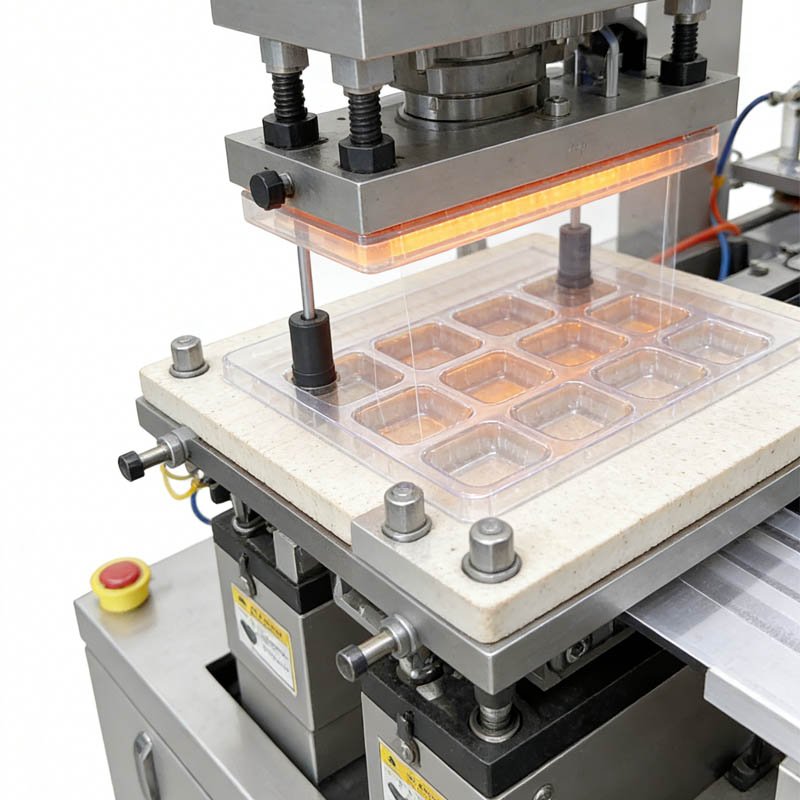
- Thermoforming: This process involves heating a plastic film (like PVC, PET) until it’s soft and pliable, then using compressed air or a plug-assist to form it into the blister cavity shape in a mold. It’s cost-effective and allows for transparent packs.
- Cold Forming: This process uses purely mechanical force (no heat) to press and stretch a laminate foil (Alu-Alu) into a mold. It creates a deeper, more robust cavity and offers a superior barrier but results in an opaque pack.
A Closer Look at the Materials
Polyvinyl Chloride (PVC)
- Barrier Properties: Low. It provides a good physical barrier but offers minimal protection against moisture and oxygen.
- Best For: Dry, stable products like hardy tablets and capsules that are not sensitive to moisture. Ideal for products with a short shelf life or sold in stable climate zones.
- Pros: Lowest cost, excellent formability, high clarity (transparent), widely available.
- Cons: Poor moisture and oxygen barrier, environmental concerns in some regions regarding chlorine.
Polyvinylidene Chloride (PVDC) Coated PVC
- Barrier Properties: Medium to High. The PVDC layer is applied to a PVC base film. The thickness of the coating (measured in gsm, e.g., 40gsm, 60gsm, 90gsm) determines the barrier level. It dramatically improves moisture and oxygen resistance compared to plain PVC.
- Best For: Products that are moderately sensitive to moisture and require a longer shelf life than what PVC can offer.
- Pros: Excellent balance of cost and protection, good transparency (though slightly less than pure PVC).
- Cons: More expensive than PVC, the PVDC coating can make recycling more complex.
Polyethylene Terephthalate (PET)
- Barrier Properties: Good. Offers a better moisture and gas barrier than standard PVC, along with excellent strength and rigidity.
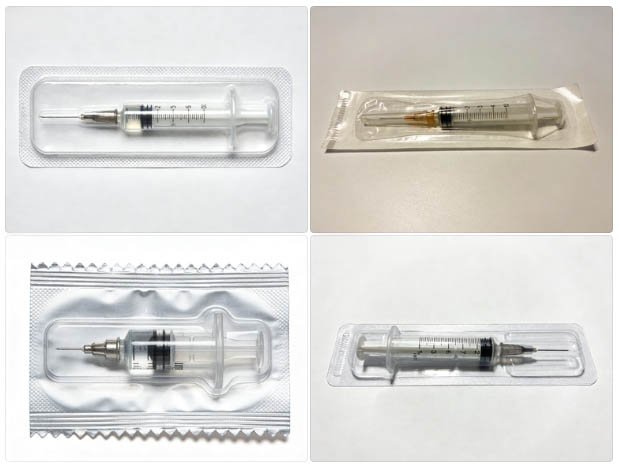
- Best For: Commonly used for consumer goods, food items (like chocolates), and some medical devices. It offers superior aesthetics due to its high clarity and stiffness.
- Pros: Superior transparency and gloss, very strong and thermoforms well.
- Cons: Generally more expensive than PVC/PVDC options for similar applications.
Cold Form Foil (OPA/Alu/PVC or “Alu-Alu”)
- Barrier Properties: Total/Absolute. The aluminum foil layer is completely impermeable to moisture, light, oxygen, and all gases.
- Best For: Highly hygroscopic (moisture-absorbing) drugs, light-sensitive APIs, and any product destined for tropical or high-humidity zones (Climate Zone IV). It is the ultimate protection for high-value or unstable pharmaceuticals.
- Pros: Provides a 100% barrier, extending product shelf life to its maximum.
- Cons: Highest material cost, pack is opaque (cannot see the product), requires a dedicated Alu-Alu blister packing machine with a cold-forming station.

At-a-Glance Comparison Chart
| Material | Barrier Level | Clarity | Relative Cost | Forming Process |
|---|---|---|---|---|
| PVC | Low | Excellent | $ (Lowest) | Thermoforming |
| PVC/PVDC | Medium – High | Good | $$ | Thermoforming |
| PET | Good | Excellent | $$$ | Thermoforming |
| Alu-Alu | Total / Absolute | Opaque | $$$$ (Highest) | Cold Forming |
A Word from the Field: The Machine-Material Connection
“In my 20 years of navigating global pharmaceutical packaging, I’ve seen countless clients obsess over material costs—weighing PVC against PVDC—only to overlook how these choices impact their machinery. Here’s the truth from an engineering perspective: your material dictates your production setup. Upgrading from PVC to Alu-Alu isn’t a simple material swap; it requires completely different tooling and forming stations. Before you finalize your material choice, we help you reverse-engineer the entire line to ensure the machine you invest in is perfectly matched to the protection your product demands and the budget you have.”
– Forester, Founder of HIJ Machinery
The HIJ Solution: Versatility and Expertise
Choosing the right material is half the battle. The other half is ensuring you have machinery that can handle it with precision, stability, and efficiency. At HIJ Machinery, our equipment is engineered for versatility.
Whether your URS (User Requirement Specification) calls for the cost-efficiency of high-speed PVC thermoforming or the uncompromising protection of a dedicated cold-form Alu-Alu line, we have a solution. Our machines are built with the flexibility to handle a wide range of materials, and our team provides the expert consultation to ensure the material you choose and the machine you buy are in perfect alignment for success.
Frequently Asked Questions
Can one machine handle both Thermoforming and Cold Forming?
While some high-end machines offer interchangeable stations, it’s generally not optimal. The mechanics and forces involved are very different. Thermoforming requires precise heating control, while Cold Forming requires immense mechanical pressure. For high-efficiency production, it is best practice to have dedicated machines for each process to ensure optimal performance and longevity.
What is the biggest mistake companies make when choosing a material?
The most common mistake is choosing a material based solely on cost without conducting proper stability studies. Using PVC for a moisture-sensitive drug to save a few cents can lead to failed batches and product recalls worth millions. The second biggest mistake, as our founder Forester points out, is choosing a material without considering the capabilities and costs of the required machinery.
Are there more environmentally friendly options?
Yes, the industry is moving towards more sustainable options. Recycled PET (rPET) is gaining traction, and new mono-material films (made from a single type of plastic) are being developed to improve recyclability. HIJ Machinery is constantly monitoring these trends and can advise on machine compatibility with newer, greener materials as they become commercially viable.