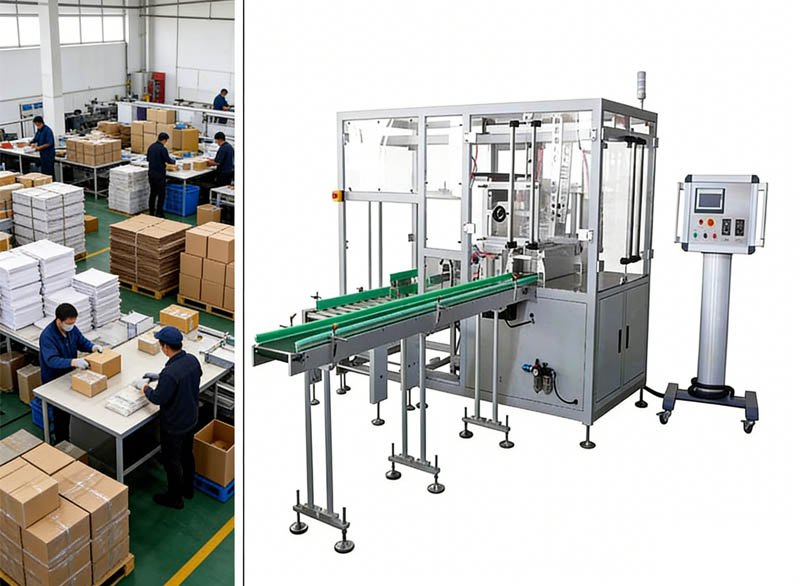
GMP Compliance for Blister Packaging:
What Every Pharma Manufacturer Must Know
WHO GMP · FDA cGMP · EU GMP · 21 CFR Part 11 · IQ/OQ/PQ Validation — all the standards that determine whether your blister line passes or fails an audit, explained plainly by someone who has spent 20 years on production floors across four continents.
GMP compliance for blister packaging requires pharmaceutical manufacturers to meet four interconnected obligations: first, the blister packaging machine itself must be constructed from non-reactive, cleanable materials (typically 316L stainless steel) with no contamination-prone dead zones; second, all critical process parameters — sealing temperature, pressure, and dwell time — must be monitored, recorded, and traceable through a validated control system; third, where electronic records replace paper, those systems must comply with 21 CFR Part 11 (FDA) or equivalent EU Annex 11 requirements, meaning audit trails, access controls, and e-signature integrity cannot be disabled; and fourth, the equipment must pass a three-stage validation protocol — Installation Qualification (IQ), Operational Qualification (OQ), and Performance Qualification (PQ) — before any commercial product is released. Failure on any one of these four pillars is enough to trigger a 483 observation or a WHO audit finding, regardless of how capable the machine is mechanically.
Table of Contents
- Why GMP Compliance Starts at Equipment Selection
- WHO GMP Requirements for Blister Packaging Equipment
- FDA cGMP: What 21 CFR Parts 211 & 820 Demand
- 21 CFR Part 11: Electronic Records & Audit Trails
- EU GMP Annex 1 & 11: The European Dimension
- Equipment Validation: IQ / OQ / PQ Explained
- The 5 Most Common GMP Failures on Blister Lines
- How the HIJ DPP-260 Is Engineered for GMP
- FAQ
“After 20 years walking production floors from Southeast Asia to South America and the Middle East, I can tell you that most GMP failures on blister lines are not caused by operator negligence. They are caused by machines that were never designed with compliance in mind — surfaces that can’t be properly cleaned, control systems with no audit trail, and sealing parameters that drift without being logged. The checklist gets filled out after the fact, but by then, the inspector has already found the gap.”
— Forester, Founder & General Manager, HIJ Machinery
Why GMP Compliance Starts at Equipment Selection
Every pharmaceutical manufacturer knows that blister packaging is the final guardian standing between your product and the patient. A seal failure, a contaminated forming die, or a batch printed with the wrong lot number — these are not just production headaches. They are regulatory events. And when an FDA investigator or a WHO pre-qualification auditor walks onto your packaging floor, the question they are really asking is not “did you pass your last internal audit?” It is: “was this machine designed to be compliant, or was compliance retrofitted onto it?”
The distinction matters enormously. A machine designed with GMP in mind from day one will have stainless steel contact surfaces that are electropolished and crevice-free, a control system that logs every parameter change with a timestamp and operator ID, and a physical layout that allows full disassembly and cleaning without special tooling. A machine where compliance was an afterthought will have bolted-on printers with unlogged data, manual parameter dials with no recording capability, and frame cavities that are impossible to swab for residue.
This guide walks you through exactly what WHO, FDA, and EU regulators expect from your blister packaging equipment — and where the gap between a capable machine and a compliant machine most often appears.
WHO GMP Requirements for Blister Packaging Equipment
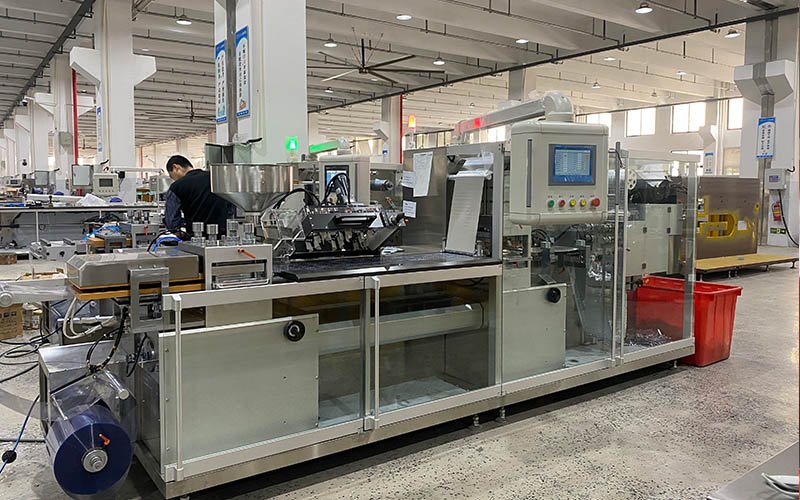
The World Health Organization’s Good Manufacturing Practice guidelines — primarily referenced through WHO Technical Report Series 986 Annex 2 (2014) and the updated 2023 revision — establish a framework that applies to any pharmaceutical packaging line supplying products to markets that require WHO pre-qualification (most low- and middle-income countries, UN procurement channels, and generic exporters seeking European market access).
For blister packaging specifically, WHO GMP focuses on four key equipment-level requirements:
Equipment Design for Cleanability
All product-contact surfaces must be smooth, non-reactive, non-absorptive, and designed to prevent contamination accumulation. WHO explicitly requires that machines be easy to clean, maintain, and, where necessary, sanitize or sterilize.
Equipment Qualification Records
All packaging equipment must have documented qualification records (IQ/OQ/PQ). Equipment that has not been formally qualified cannot be used for commercial production under WHO GMP.
Preventive Maintenance Programs
Written maintenance schedules with records must be maintained for all critical equipment. Calibration of temperature, pressure, and speed controls must be traceable to national or international standards.
In-Process Control & Reject Systems
Automated vision inspection and reliable rejection mechanisms are expected for detecting empty blisters, damaged seals, or missing labels. Manual checks alone are generally insufficient for high-speed lines.
One area where WHO auditors frequently raise findings is cross-contamination prevention during product changeover. A blister machine that requires more than one hour to fully disassemble and clean — with documented clean-hold times — will attract scrutiny. Machines with integrated die sets that cannot be fully dismantled for cleaning are a particular risk.
FDA cGMP: What 21 CFR Parts 211 & 820 Demand
For manufacturers selling into the United States market — or sourcing equipment from suppliers whose customers do — the FDA’s current Good Manufacturing Practice regulations under 21 CFR Part 211 (finished pharmaceuticals) and 21 CFR Part 820 (medical device QSR) represent the most detailed equipment-level requirements in the world.
Key 21 CFR Part 211 Sections That Directly Affect Blister Equipment
What the regulation does not prescribe in detail is exactly how these requirements are met — that interpretation is left to the manufacturer and is typically governed by internal SOPs and the equipment’s technical design. This is precisely why equipment selection is a compliance decision, not just a production decision. A machine with a manual sealing pressure dial that is not linked to the batch record creates an automatic gap under §211.68.
21 CFR Part 11: Electronic Records & Audit Trails on Blister Machines
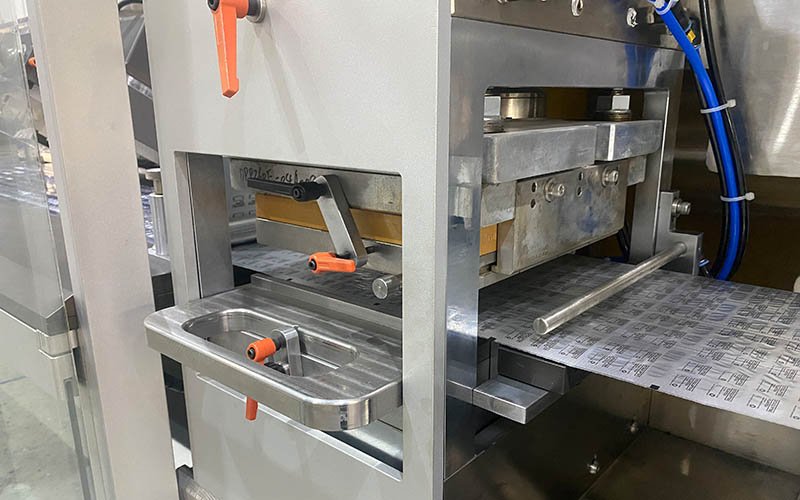
This is the regulation that most equipment suppliers either ignore entirely or implement incompletely — and it is the one that catches manufacturers off guard during inspections. 21 CFR Part 11 governs electronic records and electronic signatures in pharmaceutical manufacturing. If your blister machine creates electronic records (batch data, parameter logs, alarm histories), those records must comply with Part 11 requirements regardless of whether paper records are also kept.
In practical terms, a blister packaging machine that includes a PLC or HMI with data logging is almost certainly creating electronic records. The following requirements then apply:
Audit Trail Integrity
The system must automatically generate a time-stamped audit trail that records the date and time of operator entries and actions, the identity of the operator making the entry, and the previous and new values when a record is changed. Critically, the audit trail must be computer-generated, not manually maintained, and must be accessible to inspectors independently of the production record.
Access Controls & User Authentication
System access must be limited to authorized individuals. Each operator must have a unique user ID and password. Shared login credentials (“supervisor” used by everyone) are a direct Part 11 violation. The system must also control the ability to alter, destroy, or falsify records by role-level permissions.
Electronic Signature Requirements
If electronic signatures are used in lieu of handwritten signatures (e.g., batch release, parameter approval), each signature must consist of at least two distinct identification components: a combination of ID code and password, or a biometric component. Signatures must be linked to their respective records to prevent removal, copying, or transfer.
System Validation & Documentation
The computerized system itself — the HMI software, PLC firmware, and any connected MES or SCADA — must be validated to demonstrate that it consistently performs the intended functions. This validation must be documented and kept available for inspection.
A real-world note from the floor: I have personally seen facilities where blister machines had perfectly capable HMI systems — but the supplier had left the audit trail feature disabled by default, and no one had turned it on. The machine was fully capable of Part 11 compliance. The facility just didn’t know to activate it. This is exactly why operator training and supplier documentation support matter as much as the hardware itself.
EU GMP Annex 1 & Annex 11: The European Dimension
European pharmaceutical manufacturers and exporters to EU markets must comply with the EudraLex Volume 4 GMP guidelines. Two annexes are particularly relevant to blister packaging:
Annex 1 (Manufacture of Sterile Medicinal Products, 2022 revision) — while primarily aimed at sterile manufacturing, its requirements for contamination control strategy, environmental monitoring, and equipment qualification have set a new benchmark that regulators across the world increasingly reference even for non-sterile solid dosage packaging. For blister lines in sterile areas (pre-filled syringes in unit-dose blisters, for example), Annex 1 requires full cleanroom integration, HEPA filtration, and environmental monitoring data linked to each batch.
Annex 11 (Computerised Systems) — this is the EU equivalent of 21 CFR Part 11, and in some respects it is more detailed. Annex 11 requires:
- A formal supplier assessment — you must document that your blister machine supplier has adequate quality systems before purchase;
- A User Requirements Specification (URS) written before equipment selection, against which the machine is later validated;
- Data integrity controls — records must be attributable, legible, contemporaneous, original, and accurate (ALCOA+ principles);
- Backup and recovery procedures documented and tested for all electronic systems;
- Procedures for handling system incidents (alarms, system failures) that could affect batch data integrity.
The 2022 EU Annex 1 revision also introduced explicit requirements for a Contamination Control Strategy (CCS) — a risk-based document that maps all contamination risks in the production environment, including those arising from packaging equipment surfaces, moving parts, and exhaust systems. For manufacturers dual-qualifying to both FDA and EU GMP, this CCS document is increasingly being reviewed by FDA inspectors as well.

Equipment Validation: IQ / OQ / PQ Decoded
Validation is the bridge between a machine that can perform and a machine that is proven to perform consistently within defined limits. All three major regulatory frameworks (WHO, FDA, EU GMP) require that blister packaging equipment be validated before use in commercial production. Here is what each stage actually involves in practice:
Installation Qualification (IQ)
Phase 1 — Before First UseIQ documents that the machine has been delivered as specified, installed correctly, and connected to the proper utilities. A thorough IQ protocol for a blister machine will verify:
- Equipment model, serial number, and specification versus purchase order;
- Material certificates for product-contact components (mill certificates for stainless steel, polymer compliance documents);
- Electrical connections, earthing, and utilities (compressed air pressure, quality);
- Calibration certificates for all measuring instruments (thermocouples, pressure transducers, speed sensors);
- Software version and configuration documentation;
- Availability of spare parts list, maintenance manuals, and cleaning SOPs from the supplier.
Operational Qualification (OQ)
Phase 2 — Worst-Case TestingOQ demonstrates that the machine operates as intended across its defined operating range, including at worst-case conditions. For a blister packaging machine, OQ typically tests:
- Sealing temperature accuracy and uniformity across the sealing plate at high, nominal, and low set-points;
- Sealing pressure range and consistency across multiple tool changes;
- Machine speed range and effect on blister quality at minimum and maximum settings;
- Alarm and interlock function testing (e.g., does the line stop correctly when a seal temperature deviation alarm triggers?);
- Vision inspection system accuracy at rated speed — false rejection rate and missed defect rate;
- Audit trail capture — does the system correctly log every parameter change with timestamp and user ID?
Performance Qualification (PQ)
Phase 3 — Product-Specific ProofPQ is where you prove that the specific machine, running your specific product, on your production line, in your facility, consistently produces blister packs that meet all product specifications. PQ requires:
- Three consecutive successful production runs at commercial batch size;
- Seal integrity testing on samples from each run (dye penetration, vacuum leak, or bubble emission test);
- Tablet/capsule damage rate at commercial speed — the machine must not compromise product integrity;
- Print verification — batch number, expiry date legibility and accuracy on every pack;
- Reject system verification — confirmed rejection of pre-seeded defective blisters;
- Environmental condition records (temperature, humidity) correlating to batch outcomes.
A critical point that many manufacturers overlook: re-validation is required after any significant change to the machine, product, or environment. This includes changes to forming die geometry, sealing foil specification, PLC software version, or facility HVAC modifications. Change control documentation must be in place before any post-change production run.
The 5 Most Common GMP Failures on Blister Packaging Lines
Based on FDA 483 observations, WHO audit reports, and direct site experience across dozens of facilities, these are the failures that appear most consistently — and most predictably:
1. Unsealed or Partially Sealed Blisters Reaching the Market
The sealing temperature had drifted over a shift but was not alarmed. No in-line seal integrity check was installed. Batch was not rejected until a complaint was received. Root cause: no continuous sealing parameter monitoring with automated line hold on deviation.
2. Audit Trail Gaps or Manually Overwritten Records
Operators had administrator access to the HMI and could change or delete parameter entries. No secondary audit log was maintained. One of the most common Part 11 violations observed across all market regions.
3. Cleaning Validation Gaps — “We Clean It Every Day” Is Not Enough
Cleaning SOPs existed but had never been validated. Swab sampling locations were not defined. No maximum hold-time between cleaning and next production run had been established. Found frequently on machines with complex die geometries or enclosed frame sections.
4. No Rejection Verification for Vision Inspection Systems
Vision inspection was installed but the reject mechanism had not been validated. Challenge testing with seeded defective blisters had never been performed. The inspector asked for this test on the spot — it failed to catch 3 out of 10 seeded empty pockets.
5. OQ/PQ Not Repeated After Significant Changes
The machine had been re-qualified on a previous product, but when a new forming die was installed for a new product, no re-qualification was performed. Change control records showed the change but no re-validation protocol was initiated. This is a recurring observation in facilities with high product turnover.
How the HIJ DPP-260 Is Engineered for GMP from Day One
The HIJ DPP-260 Automatic Blister Packaging Machine was designed with one philosophy: compliance should not be an afterthought that an engineer retrofits with a software patch and a data logger bolted to the frame. It should be built into the machine’s architecture before the first weld.

Siemens PLC with Full Audit Trail
Every parameter change — sealing temperature, pressure, speed — is automatically time-stamped and logged with operator ID. The audit trail is write-protected and accessible to inspectors independently of the production batch record.
Role-Based Access Control
Operator, Supervisor, and Administrator access levels are configurable and factory-set. Unique user credentials are required. Recipe parameters cannot be modified during a production run without supervisor-level authorization — logged automatically.
Continuous Sealing Parameter Monitoring
Temperature and pressure at the sealing station are monitored in real time with high/low alarm thresholds. Deviation beyond set limits triggers an automatic line hold and generates an alarm event in the batch record — no manual intervention required.
Cleanroom-Ready Construction
316L stainless steel product-contact surfaces, electropolished to Ra ≤0.8μm. Enclosed frame sections have access panels for swabbing. No exposed threads or crevices in product zones. Designed to meet WHO GMP and EU GMP cleanability requirements.
Integrated Vision Inspection & Validated Rejection
Camera-based vision system detects empty blisters, damaged seals, and missing tablets at full production speed. The rejection mechanism is physically separated and interlock-protected — confirmed-reject blisters cannot bypass the rejection gate.
Full Validation Package Included
HIJ provides a complete documentation package: material certificates, DQ/IQ/OQ template protocols, FAT checklist, calibration certificates, and cleaning SOP templates — everything an inspector needs to see on day one.
Ready to See the DPP-260 GMP Documentation Package?
Our technical team can walk you through the complete compliance documentation — audit trail configuration, IQ/OQ/PQ template protocols, and material certification — matched to your specific regulatory requirements (WHO, FDA, or EU GMP). No generic datasheets. We speak your inspector’s language.
Explore the Full HIJ Blister Packaging Equipment Range
Whether you need a standard pharma blister line, cold-form alu-alu for moisture-sensitive molecules, or a specialized syringe blister packer, HIJ offers a complete GMP-ready portfolio. Each model is supported by the same validation documentation framework described in this guide.
Frequently Asked Questions

Forester
Founder & General Manager — HIJ Machinery Co., Ltd.
With 20 years of hands-on experience in pharmaceutical and packaging machinery across Southeast Asia, South America, the Middle East, and Europe, Forester founded HIJ Machinery to give global pharma manufacturers access to European-quality equipment with the responsiveness and value of a dedicated partner. He has supported customers through WHO pre-qualification audits, FDA inspection readiness reviews, and EU GMP site assessments on four continents.