Blister Packing Machine Guide
Semi-Automatic vs Fully Automatic Blister Packing Machine: Which Do You Need?
A practical decision framework built on 20 years of real-world conversations with pharmaceutical manufacturers across South America, Southeast Asia, Africa, and beyond.
By Forester, Founder & GM, HIJ Machinery | March 2026 | 10 min read
The choice between a semi-automatic and fully automatic blister packing machine comes down to four concrete variables: your daily output target, your available workforce, your regulatory compliance requirements, and your capital allocation strategy. Semi-automatic machines — running at 3,000–8,000 units per minute with 2–3 operators — are the right fit for small-batch R&D, pilot production, or early-stage manufacturers who need flexibility and a shorter payback window (typically 1–2 years). Fully automatic machines, such as the HIJ DPP-260, run at 8,000–25,000 units per minute with a single monitoring operator, deliver built-in GMP data recording, and pay back in 2–3 years for operations producing at scale. The right answer is always the one that matches your current production reality — not the most impressive spec sheet.
1. What Is a Blister Packing Machine — and Why Does the Level of Automation Matter?
Blister packaging is the dominant format for solid oral dosage forms — tablets, capsules, soft gels — across the global pharmaceutical industry. It offers tamper evidence, moisture protection, individual dose integrity, and patient compliance features that bottle packaging simply cannot match. A blister packing machine performs four fundamental operations in sequence: heating and forming a cavity in a base film (typically PVC or PVDC), loading product into those cavities, sealing a lidding material (aluminum foil) over the top, and punching individual blister cards.
Where the machines diverge — dramatically — is in who performs each of those steps and at what speed. That single distinction cascades into profound differences in labor cost, output consistency, regulatory documentation, and long-term profitability. Choosing incorrectly doesn't just mean a machine that's "not ideal" — it means capital tied up in equipment that either can't meet demand or runs at 30% capacity because the volume never justified the investment.
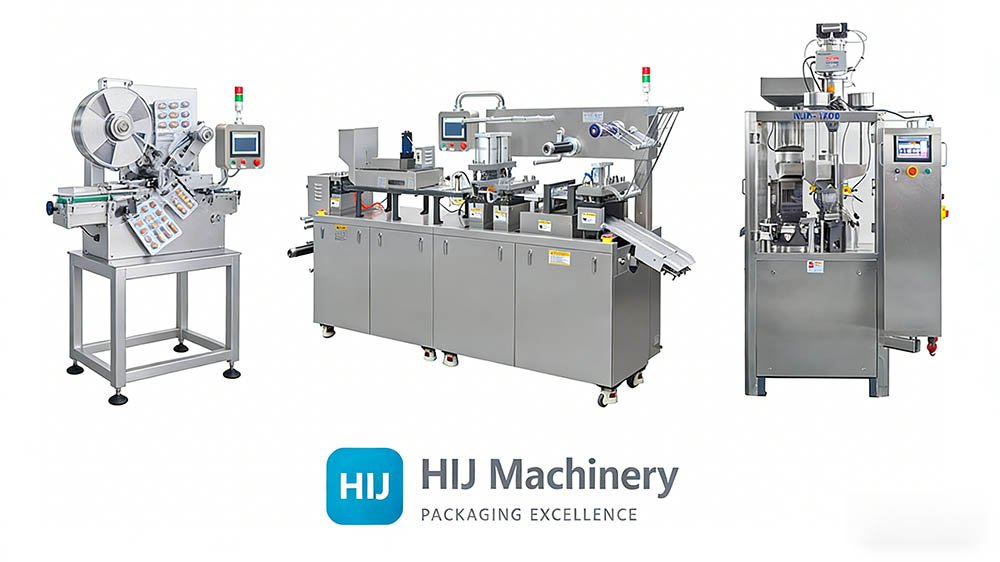
A complete pharmaceutical blister packing line — from film forming to sealed, punched blister cards.
2. Semi-Automatic Blister Packing Machines: A Closer Look
A semi-automatic blister packing machine automates the film forming, sealing, and cutting stages — but relies on human operators to place products into the formed blister cavities. Depending on the cavity layout and product type, this manual loading step typically requires 2–3 dedicated operators running alongside the machine.
Where Semi-Auto Wins
- Lower initial capital expenditure
- Faster changeover between product formats
- Well-suited for R&D and pilot production
- Simpler operator training requirements
- Better for fragile or irregularly shaped products that benefit from manual placement
- Lower risk for early-stage contract packagers
- Shorter ROI window (1–2 years)
Where Semi-Auto Falls Short
- Ongoing labor costs accumulate significantly over time
- Human placement introduces inconsistency and damage risk
- Output ceiling limits scale-up potential
- GMP documentation requires more manual effort
- Not viable for high-speed regulated markets without upgrades
- Operator-dependent quality means batch-to-batch variability
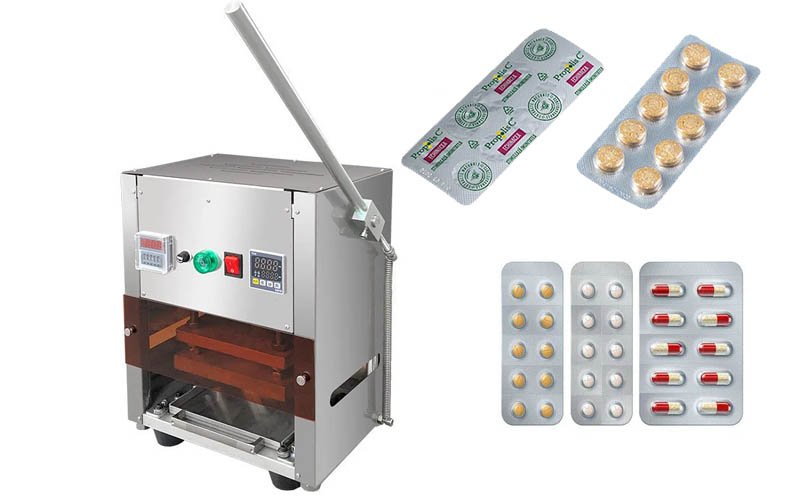
Semi-automatic blister machine: automated forming and sealing, manual cavity loading — the optimal entry-level configuration.
Industry context: Semi-automatic blister machines are the machine of choice for contract packaging organizations (CPOs) in emerging markets — particularly in Southeast Asia, West Africa, and Latin America — where labor costs are moderate and product SKU diversity demands frequent format changes.
3. Fully Automatic Blister Packing Machines: What Changes?
In a fully automatic blister packing machine, the entire sequence — forming, product feeding, sealing, and punching — runs as one uninterrupted, machine-controlled cycle. Product is fed into the cavities via an automated feeder system (brush-type, vibratory, or pick-and-place depending on the product), eliminating the manual loading bottleneck entirely. One trained operator monitors the line; they don't touch the product.
The operational implications go far beyond speed. Automated product feeding means consistent cavity fill rates, dramatically reduced tablet breakage, and batch-to-batch repeatability that is nearly impossible to achieve manually. PLC control systems log every production parameter — sealing temperature, pressure, speed, batch number — creating an audit trail that makes regulatory inspections significantly smoother.

The HIJ DPP-260 fully automatic blister packing machine — servo-driven, GMP-compliant, capable of 8,000–25,000 units per minute.
Where Full Auto Wins
- Output of 8,000–25,000+ units/minute
- One-operator supervision model
- Automatic batch record generation (21 CFR Part 11 ready)
- Consistent fill rates — zero manual placement variability
- Lower per-unit labor cost at scale
- Seamless integration into downstream cartoning lines
- Servo motor precision for seal integrity
Where Full Auto Has Trade-offs
- Higher capital investment
- Longer ROI window (2–3 years)
- More complex maintenance requirements
- Format changeover takes more time (tooling changes)
- Not cost-effective if volume doesn't justify the spend
4. Side-by-Side Comparison: Every Dimension That Actually Matters
This decision matrix is built on the real variables our team at HIJ works through with clients during every pre-sale consultation. Print it out. Use it as a checklist against your own production data.
| Decision Dimension | Semi-Automatic | Fully Automatic (e.g. DPP-260) |
|---|---|---|
| Output Capacity | 3,000 – 8,000 units/min | 8,000 – 25,000 units/min |
| Operators Required | 2 – 3 per shift | 1 (monitoring only) |
| Best Production Stage | R&D, pilot batches, small commercial runs | Full-scale commercial production |
| Typical ROI Payback | 1 – 2 years | 2 – 3 years |
| GMP Compliance Difficulty | Medium — manual records, more operator-dependency | Easy — automatic PLC batch records, audit trails |
| Product Placement Method | Manual (operators place into cavities) | Automated feeder (brush, vibratory, pick-and-place) |
| Format Changeover Speed | Faster — simpler tooling | Longer — tooling changes required |
| Batch-to-Batch Consistency | Variable (operator-dependent) | High (machine-controlled parameters) |
| Capital Investment | Lower | Higher |
| Long-Term Labor Cost | Ongoing and significant | Minimal — 1 operator per shift |
| 21 CFR Part 11 / WHO GMP Ready | With additional procedures | Built-in with PLC logging |
| Integration with Cartoning Line | Possible, but may require manual buffer | Seamless — designed for inline integration |
Common mistake: Many buyers compare machines purely on output speed. The real financial lever is per-unit cost at your actual production volume. A fully automatic machine running at 40% capacity due to insufficient orders can be far less economical than a semi-automatic at full load. Always model the decision against your real 12-month output forecast — not your aspirational one.
5. The 5 Decision Criteria You Should Use (Not Just Output Speed)
After two decades of helping clients make this call, I've condensed the decision to five concrete criteria. If you can answer these honestly, the right machine choice becomes obvious.
Daily Output Target
What is your confirmed daily production target — not your capacity dream, but your actual purchase orders over the next 12 months?
Available Workforce
What is the realistic cost of skilled blister-line operators in your facility, and how does it compound over 3 years?
Regulatory Environment
Are you supplying regulated markets (EU, US, WHO prequalified tenders)? Automated record-keeping isn't optional in those channels.
Capital Allocation Strategy
Is your capital better deployed in equipment now, or in market development — and what payback window does your CFO approve?
5-Year Growth Roadmap
Will you outgrow a semi-auto in 18 months? Can you fund a second machine then, or is it cleaner to invest in a full-auto now?
Notice that "output speed" only appears as one input into criteria #1. Speed is a specification; the above five are business decisions. Any supplier who leads with specs before asking these questions is selling equipment, not solving problems.
6. ROI Analysis: Where Each Machine Wins Financially
Let's make this concrete with a simplified cost model. Assume a pharmaceutical facility in an emerging market producing a standard tablet in a 10-cavity blister format, running a single 8-hour shift, 250 days per year.
The financial tipping point — the daily output volume at which fully automatic becomes more economical on a total cost of ownership basis — typically falls between 400,000 and 600,000 units per day depending on local labor rates. Below that threshold, semi-automatic is often the wiser capital decision. Above it, every month of delay in upgrading to full automation is a margin erosion event.
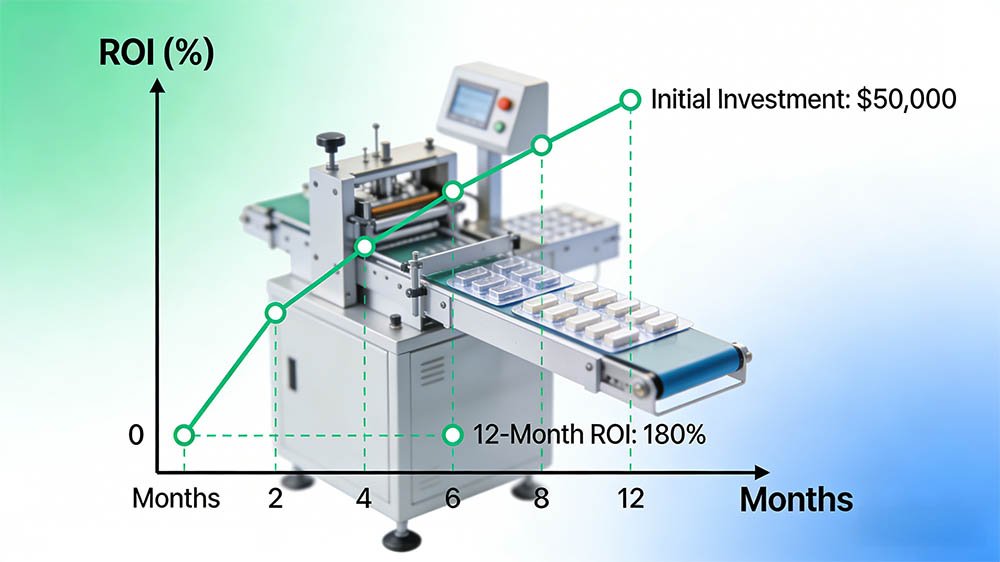
The ROI crossover: beyond the volume threshold, fully automatic machines deliver compounding cost advantages that semi-auto cannot match.
7. GMP Compliance: A Factor Most Buyers Underestimate
In pharmaceutical manufacturing, the machine you choose is also a compliance infrastructure decision. Many procurement teams focus entirely on output and price — and discover mid-audit that their semi-automatic line requires a significant volume of manual SOPs and supplementary documentation to satisfy WHO GMP or cGMP inspectors.
Fully automatic machines with integrated PLC control systems — like the Siemens or Allen-Bradley PLC platforms used across HIJ's lineup — generate electronic batch records automatically. Parameters including sealing temperature, dwell time, foil tension, and punching pressure are logged in real time and can be exported for batch release documentation. This is not a luxury for FDA-regulated or EU-regulated supply chains; it is a baseline expectation.
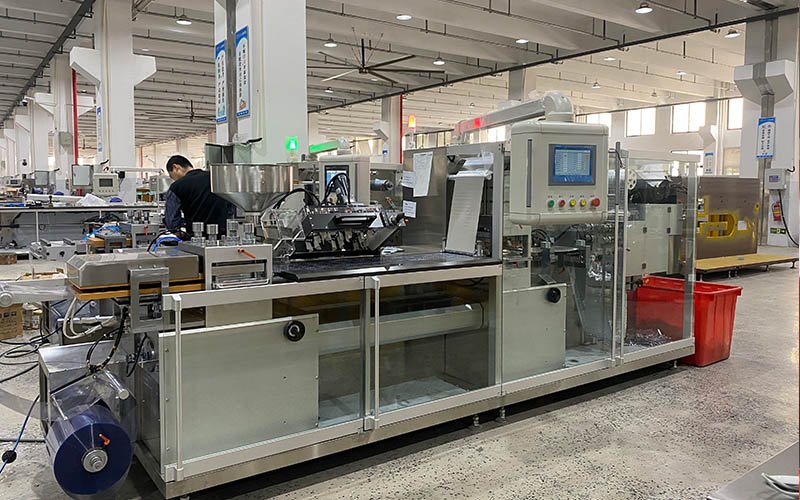
GMP-compliant structural design: smooth, crevice-free surfaces, stainless steel contact parts, and integrated PLC logging are standard on HIJ's automatic blister machines.
If you supply WHO prequalified tenders or export to the EU/US: The documentation burden of manual record-keeping on a semi-automatic line can consume significant QA staff time. When modeled properly, the cost of QA labor associated with a semi-auto line often reduces the capital cost advantage of the lower-priced machine by 40–60% over a 3-year period.
8. Forester's Field Insight: The Mistake I See Buyers Make Most Often
"After 20 years of conversations with pharmaceutical manufacturers across South America, Southeast Asia, Africa, and beyond, I've noticed that the 'semi vs. fully automatic' question is almost never really about the machines themselves — it's about where the buyer is in their business journey.
I've seen too many clients over-invest in a fully automatic line before their output volume justified it, leaving expensive equipment running at 30% capacity. I've also seen the opposite: a growing operation that clung to semi-automatic equipment too long, watching their per-unit labor costs quietly eat into their margins year after year.
The right machine is the one that matches your current reality while leaving a clear path to your next stage. At HIJ, we don't push either option. What we do is sit down with your URS, your production data, and your five-year roadmap, and help you make the call with full clarity. Because a machine is a long-term commitment, and the worst outcome isn't buying the wrong brand — it's buying the wrong fit."
 — Forester, Founder & General Manager, HIJ Machinery
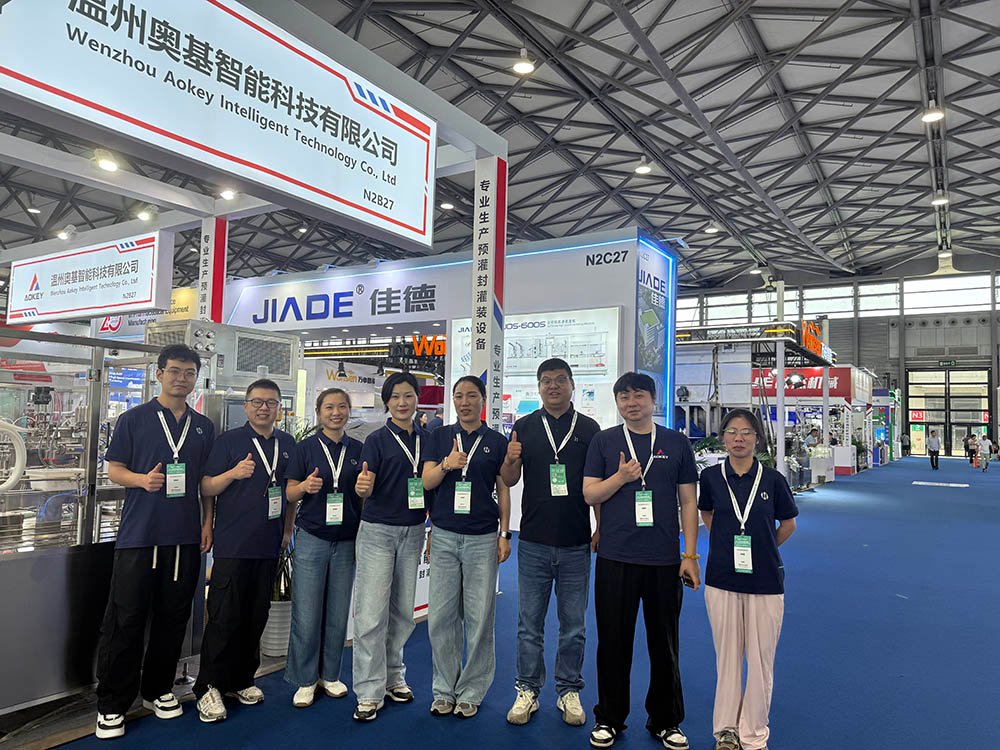
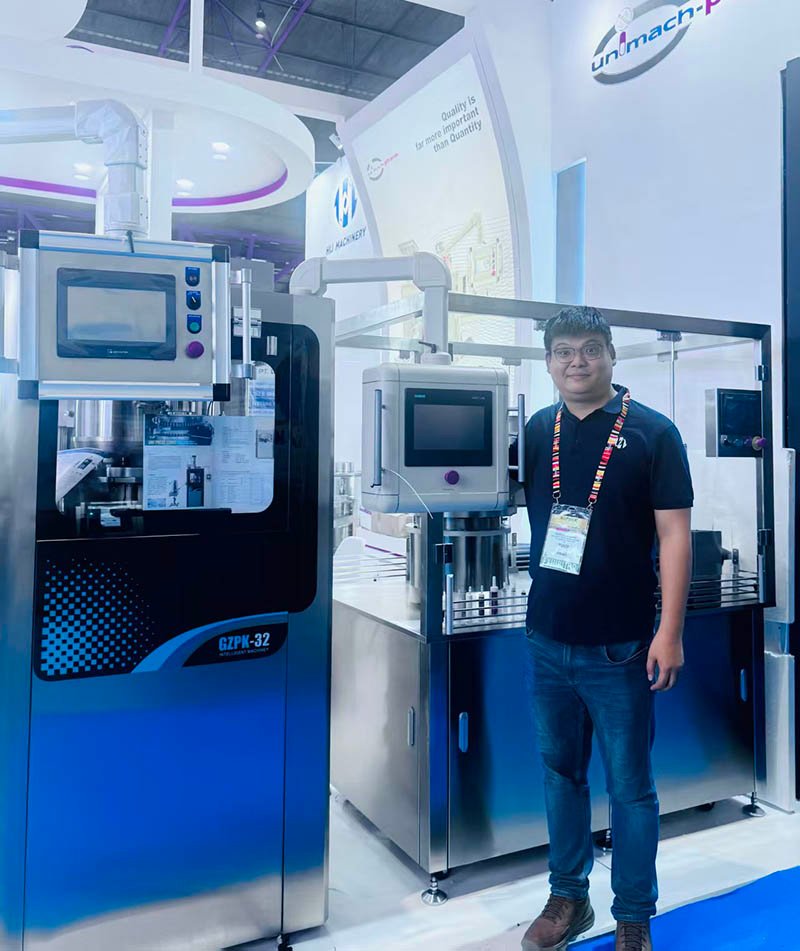
Forester and the HIJ Machinery team — 20 years of application experience translated into every pre-sale consultation.
9. Product Spotlight: HIJ DPP-260 Fully Automatic Blister Machine
For operations ready to move to full-scale automated production, the HIJ DPP-260 Automatic Blister Packing Machine represents our most capable thermoforming solution for pharmaceutical tablets and capsules. It is engineered to the same operational standard as European benchmark machines — at a price point that reflects the efficiency of our Wenzhou manufacturing base.
DPP-260 Fully Automatic Blister Packing Machine
The DPP-260 features a servo motor control system for precision film advancement, an integrated Siemens PLC with touchscreen HMI, automatic batch record generation, a dual roll holder for continuous operation, and a waste removal system that keeps the production environment GMP-clean. It handles PVC, PVDC, and standard aluminum lidding foil in a continuous thermoforming cycle.
For facilities also requiring cold-forming Alu-Alu packaging for moisture-sensitive APIs, HIJ offers the companion HIJ DPH-300 Alu-Alu Blister Packing Machine.
Request DPP-260 Specifications & Quote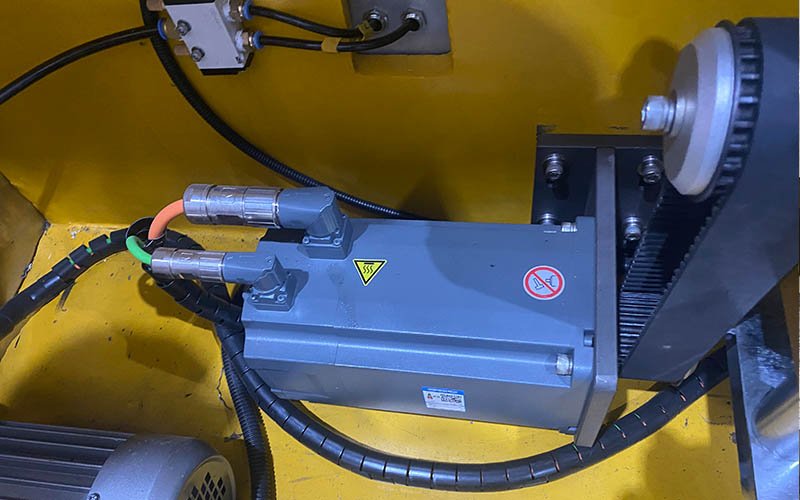
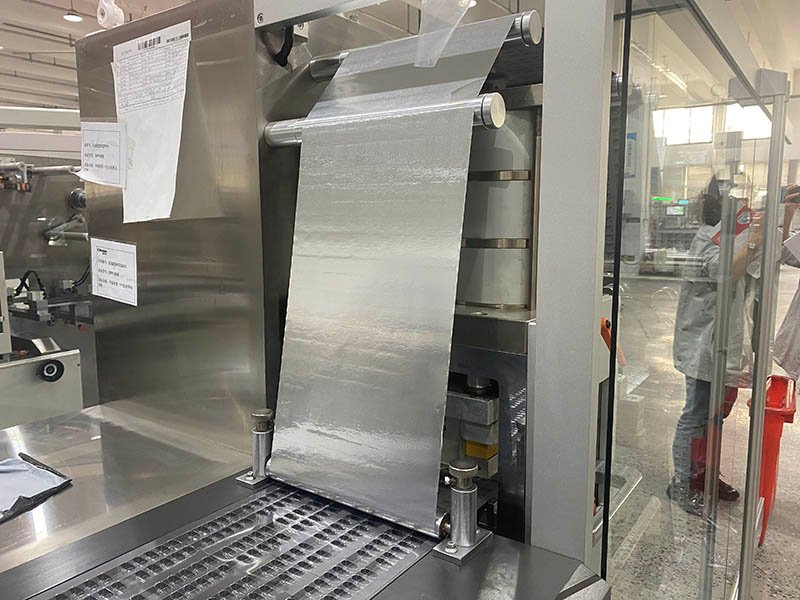
Servo motor drive system — precision film advancement, zero slip.
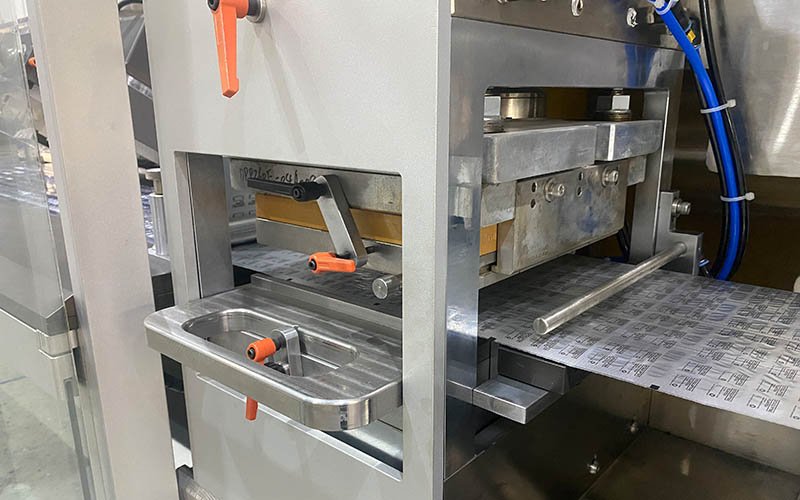
Precision sealing station — temperature and pressure PLC-controlled and logged.
Also worth considering as complementary solutions in a complete blister packaging line:
- HIJ DPP-250 Pharma Blister Packaging Machine — an excellent mid-range option for facilities between pilot and full commercial scale
- HIJ Blister Cartoning Machine — for seamless downstream secondary packaging integration
- Tablet Blister Packing Machine and Capsule Blister Packing Machine variants for product-specific configurations
10. Frequently Asked Questions
What is the main difference between a semi-automatic and fully automatic blister packing machine?
A semi-automatic blister packing machine requires 2–3 operators to load products manually into the formed blister cavities, while a fully automatic machine handles forming, product loading, sealing, and cutting in a continuous, integrated cycle requiring only one operator for monitoring. The core difference lies in throughput, labor dependency, and GMP data-recording capability.
How many tablets per minute can a fully automatic blister machine produce?
A fully automatic blister packing machine like the HIJ DPP-260 can produce between 8,000 and 25,000 tablets (or capsules) per minute depending on product type, blister cavity layout, and film material. Semi-automatic models typically run at 3,000–8,000 units per minute.
Is a semi-automatic blister machine GMP compliant?
Semi-automatic blister packing machines can be used in GMP environments, but meeting compliance requirements demands additional manual documentation procedures and operator training. Fully automatic machines — especially those with integrated PLC data logging and batch record functions — make GMP compliance significantly easier and more consistent, and are the standard expectation in regulated export markets.
What is the ROI payback period for a fully automatic blister packing machine?
For most pharmaceutical manufacturers operating at medium-to-high volume, a fully automatic blister packing machine typically achieves ROI within 2–3 years, driven by reduced labor costs, lower waste rates, and higher throughput. Semi-automatic machines often see a shorter payback period of 1–2 years due to lower capital investment, making them suitable for early-stage or R&D operations.
Which blister packing machine is better for small batch pharmaceutical production?
For small batch or R&D pharmaceutical production, a semi-automatic blister packing machine is generally the more practical choice. It offers greater flexibility for format changes, lower capital commitment, and acceptable throughput for pilot-scale runs. Once batch sizes and daily output targets scale up consistently, transitioning to a fully automatic machine becomes the financially sound decision.
Can the HIJ DPP-260 handle both PVC and Alu-Alu blister formats?
The HIJ DPP-260 is a thermoforming automatic blister packing machine optimized for PVC/PVDC and aluminum lidding formats. For cold-forming Alu-Alu (aluminum-aluminum) packaging — required for highly moisture-sensitive APIs — HIJ offers the dedicated HIJ DPH-300 cold-forming machine. Contact HIJ's team for a format-specific recommendation based on your product and regulatory requirements.
Not Sure Which Machine Fits Your Operation?
Share your production data and we'll walk you through the decision — no sales pressure, just an honest answer from a team that's been doing this for 20 years across 100+ client sites worldwide.