Why Siemens and Omron PLCs Power the Most Reliable Blister Machines
A deep dive into the core components that define uptime, compliance, and peace of mind in pharmaceutical packaging.
The simple answer is this: the most reliable blister packing machines use Siemens and Omron PLCs because these systems guarantee unparalleled operational stability, worldwide parts and service availability, and seamless integration into production lines. Crucially for the pharmaceutical industry, they provide the robust data integrity and audit trails required for cGMP and 21 CFR Part 11 compliance, which directly minimizes costly downtime and secures your long-term investment.
The “Brain” of Your Production Line: What is a PLC?
Before we go further, let’s clarify what we’re talking about. A Programmable Logic Controller (PLC) is a ruggedized industrial computer that acts as the central nervous system of your blister machine. It’s the “brain” that controls every single action with millisecond precision: from the heating of the forming film and the feeding of tablets, to the sealing of the lidding foil and the cutting of the final blister pack. If the PLC freezes, hesitates, or makes a mistake, your entire packaging operation grinds to a halt.
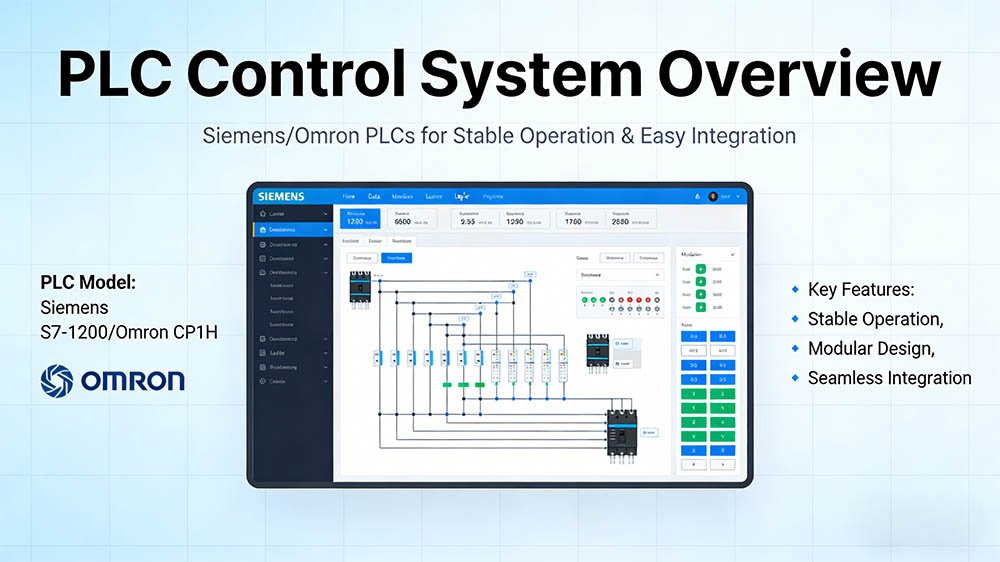
The 4 Pillars of Reliability: Why We Trust Siemens & Omron
When you’re producing pharmaceuticals, “good enough” is never good enough. You need certainty. Siemens and Omron have built their global reputations on providing exactly that. Here’s why they are the non-negotiable choice for any serious blister machine manufacturer.

1. Unwavering Uptime & Performance
Siemens and Omron PLCs are engineered for the harshest industrial environments. They are built with high-quality components designed for 24/7 operation, offering extreme resistance to electrical noise, vibration, and temperature fluctuations. This translates directly into fewer random faults, less troubleshooting, and most importantly, higher Overall Equipment Effectiveness (OEE).
2. Global Support, Local Peace of Mind
Imagine your machine goes down in Brazil, but the proprietary PLC is from a small, unknown factory in a remote province. How long will it take to get a replacement part? Who can service it? With Siemens and Omron, this problem disappears. They have a massive global distribution and support network, meaning that spare parts and qualified technicians are available in virtually every major market. This is a critical assurance for any company with a global production footprint.

3. Seamless Integration for Turnkey Lines
A blister machine is rarely a standalone unit. It needs to communicate flawlessly with upstream feeders and downstream equipment like cartoning machines and case packers. Siemens and Omron PLCs use standardized communication protocols (like PROFINET or EtherNet/IP) that make this integration straightforward and reliable. This is essential for building a cohesive and efficient turnkey solution, eliminating the finger-pointing that happens when different vendors’ equipment can’t “talk” to each other.
4. Bulletproof Compliance (cGMP & 21 CFR Part 11)
This is arguably the most important factor for the pharmaceutical industry. Regulatory bodies demand strict control and documentation. Siemens and Omron’s advanced PLC platforms offer built-in features that are indispensable for compliance:
- Data Integrity: Secure storage of critical process parameters (temperature, pressure, sealing time).
- Audit Trails: Automatic logging of all operator actions, parameter changes, and alarms.
- Electronic Signatures: Multi-level user access control to ensure only authorized personnel can operate the machine or change settings.
Using a non-compliant PLC puts your entire operation at risk of failing an FDA or EMA audit, a consequence far more expensive than the cost of a premium controller.
The HIJ Advantage: World-Class Brain, Smart Investment
At HIJ Machinery, our philosophy is simple: we give you the world-class reliability your pharmaceutical production demands, without the inflated European price tag. We standardize our entire range of blister packing machines with Siemens or Omron PLCs as the default.
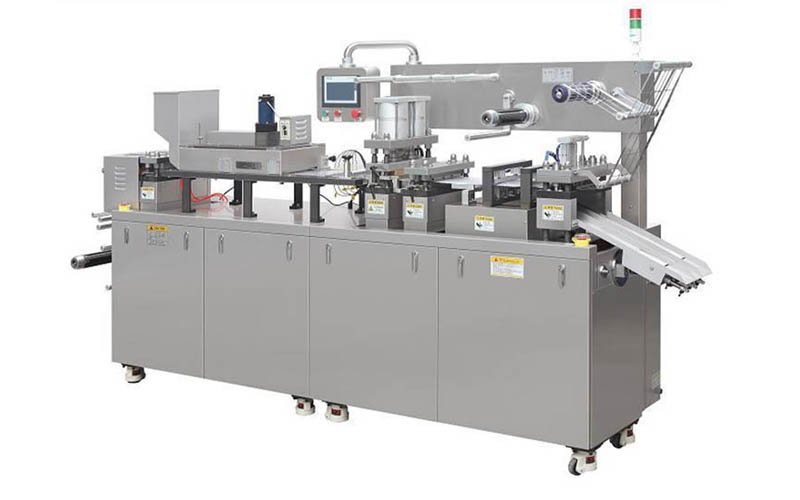
We pair this “European-level brain” with our efficient Chinese manufacturing capabilities and two decades of process expertise. This allows us to engineer machines that are robust, compliant, and intuitive, while offering a total cost of ownership that provides a much faster return on investment. True cost-efficiency isn’t about buying the cheapest machine—it’s about buying a machine that simply works, every single shift.
Ready for Uninterrupted Production?
Stop gambling with downtime. Choose a blister machine built with the reliability you can count on. Contact our experts to discuss your project needs.
Get Your Free Turnkey QuoteFrequently Asked Questions
Can I request a different PLC brand for my HIJ machine?
While we standardize on Siemens and Omron for their proven reliability and global support, we can accommodate requests for other major brands like Allen-Bradley (Rockwell) to match your factory’s existing standards. Our goal is to provide a solution that integrates seamlessly into your operations. We strongly advise against using obscure or unproven PLC brands due to the risks outlined in this article.
How do Siemens/Omron PLCs specifically help with validation (IQ/OQ)?
They help immensely. During Installation Qualification (IQ), the clear documentation and global recognition of these PLCs make component verification straightforward. For Operational Qualification (OQ), their precise control and ability to log data prove that the machine operates consistently within specified limits. The features required for 21 CFR Part 11, such as secure data logging and audit trails, are critical evidence for your validation package.
Are machines with these advanced PLCs harder for my team to operate?
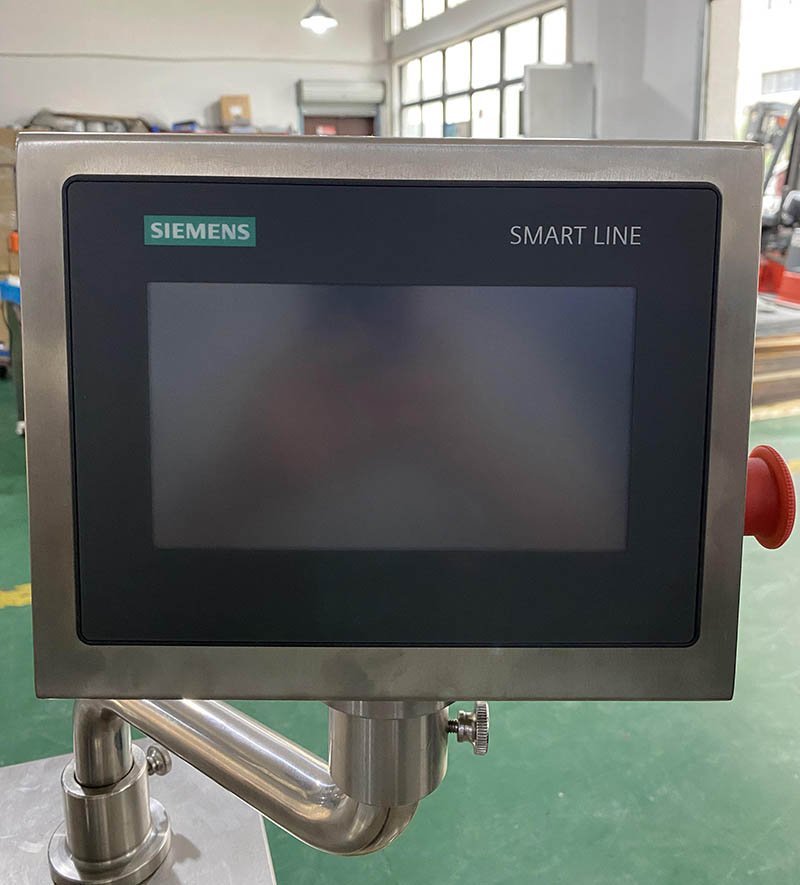
Quite the opposite. While the underlying programming is more sophisticated, the operator experience is far better. Siemens and Omron PLCs are paired with high-resolution, intuitive Human-Machine Interfaces (HMIs) or touch screens. We design our interfaces with clear graphics, simple recipe management, and extensive diagnostic information, making operation, changeovers, and basic troubleshooting easier and faster for your staff.