Cartoner purchasing · Inspection and project scope
Buy a used cartoning machine only after you can connect its installed configuration, included format parts and demonstrated output to your actual product. Compare the cost of a ready-to-run project with the equivalent new-machine offer, not an equipment listing with a complete line quotation.
This guide helps procurement, engineering and quality teams compare used cartoners, documented rebuilds and new equipment. It is not a used-machine stock list or a promise that HIJ can refurbish another manufacturer's machine.
Define what the used-cartoner offer includes
A machine described as “available” may be an installed asset, a dismantled machine in storage or a rebuilt system ready for a specified application. Those are different purchases. Ask the seller to identify the exact unit, its current location, its physical condition and the work included before dispatch.
Start your comparison with the same application brief for every supplier: product dimensions and orientation, products per carton, the carton drawing, leaflet requirements, closure style, required accepted output and the upstream and downstream interfaces. A previous bottle application does not establish suitability for your blister stack or flexible multipack.
- Used, as presented: establish what can be inspected and tested, what is missing and which work remains the buyer's responsibility.
- Inspected or serviced: request the inspection findings and completed work. An inspection does not itself mean that components were replaced.
- Rebuilt or refurbished: request the actual rebuild scope, parts replaced, control changes, tests, exclusions and written support terms.
- New equipment: confirm the ordered feeder, format sets, options, documentation and acceptance requirements. “New” does not eliminate the need to define the application.
For example, Uhlmann describes separate used-machine, rebuild and in-house upgrade routes. Its rebuild description includes inspection and component or electronics work. That is evidence of a defined manufacturer's programme, not a universal meaning of “refurbished” and not an HIJ service promise.
Put the included machines and accessories on one schedule. A photograph can show a leaflet unit, printer, glue system or conveyor that is excluded from the sale. Identify each supplied item and its interface before comparing the price with another offer.
Inspect the identified machine, not just its model name
Request a readable nameplate photograph and match the model and serial number across the quotation, drawings, manuals and test records. Record known modifications. A catalogue for the original model may not describe the feeder, controls or closure system fitted today.
On a phone, swipe the table sideways to see the inspection evidence.
| Check | Evidence to obtain | What remains unresolved without it |
|---|---|---|
| Identity and history | Serial number, present configuration, maintenance records and known modifications. | Whether the records and spare-part references describe the offered machine. |
| Carton pickup and transport | Condition assessment of the magazine, opening system, guides and transport; a run using production cartons. | Whether the carton can be opened and held consistently for the proposed format. |
| Product and leaflet feeding | Installed feeder details, included tooling and loaded trials with the required product arrangement and leaflet. | Whether the application works beyond empty-carton cycling. |
| Closing equipment | Actual tuck or glue configuration, included components, condition report and closed-pack samples. | Whether the sale includes the closure equipment required by the carton drawing. |
| Controls and software | Hardware references, software versions, available backups and legitimate access or licence arrangements. | Whether qualified personnel can maintain, restore or modify the installed system. |
| Detection and rejection | List of fitted functions, documented responses and reconciled challenge-test results. | Whether a detected problem results in the intended physical containment or rejection. |
| Site installation | Layout, access envelope, utilities, transfer heights and agreed line signals. | Whether the installed machine will fit and operate with the surrounding equipment. |
A tidy exterior, a recent repaint or a video of moving cartons cannot replace the condition assessment. Ask the responsible engineer to distinguish wear requiring attention, missing components and application changes. Each finding needs an owner and a cost or a clearly marked unresolved item.
Check format parts and control-system support separately
The machine's advertised carton-size range is not the same as the set of formats supplied with it. Ask for an inventory of the actual change parts, their identification marks and the drawings or recipes they belong to. List the parts required for every planned SKU, including the first product you intend to run.
Product guides, pushers, carton supports, leaflet tooling and closing tools may have different format dependencies. A carton that fits inside the stated size envelope can still require a different loading arrangement. Confirm usable carton clearance with the actual product group rather than relying only on the external box dimensions.
Photograph each supplied set and reconcile it with the shipment list. Where identification is incomplete, obtain confirmation before treating a box of loose tooling as a usable format kit. The cartoning machine parts guide explains the difference between replacement parts, format tooling and complete assemblies.

Record supportability before accepting a controls upgrade allowance
Identify the PLC, HMI, drives, safety-related controls and any coding or inspection devices by their full installed references. Ask the relevant supplier about support and replacement options for those exact items. Age alone does not prove obsolescence, and a currently available component does not prove that a compatible machine program is available.
Confirm who holds the program backups, configuration records and legitimate access credentials, and whether any software or licence transfer needs agreement. Do not assume that copying a file establishes the right to use or modify it. If an upgrade is proposed, request its engineering scope, interfaces, revised documentation and acceptance tests.
Syntegon's modernization overview distinguishes format changes, rebuilds and customised upgrades, with qualification-related services as additional scope. The useful purchasing distinction is between a replacement component and a machine-level change; neither should be priced as an undefined “minor repair.”
Require a product-loaded trial with measurable acceptance
Define the trial before paying for a machine that is expected to meet a production target. Use representative product, production cartons and the actual leaflet or insert where required. Record the exact format parts and options installed during the demonstration so the tested configuration can be reconciled with the delivered equipment.
- Run the required pack: verify the product count, orientation, leaflet and closure against the agreed drawing.
- Measure accepted output: record accepted cartons, rejects, stops and elapsed time. Separate a mechanical speed setting from demonstrated good cartons.
- Challenge included inspection functions: agree controlled samples and expected responses, then reconcile where each sample ended up. Do not infer code reading or count verification from a simple presence sensor.
- Review restart and line interaction: demonstrate the agreed response to interrupted supply and downstream blockage, without bypassing protective functions.
- Test another required SKU: where several formats are part of the purchase, verify the supplied kit and record the changeover and accepted restart against the agreed scope.
Use the cartoning machine FAT checklist to structure the evidence. A test at the seller's premises and acceptance after installation have different boundaries; document which conditions each test covers and which remain to be verified at your site.
If a dealer cannot run product, state that limitation explicitly. Consider whether a qualified inspection, a separately arranged trial or a conditional acceptance arrangement can close the gap. A trial that cannot be performed is unresolved evidence, not a passed test. Your purchasing and technical teams must decide whether that uncertainty is acceptable before commitment.
Compare complete project costs on the same basis
A lower equipment price can be meaningful, but only after both offers include the work needed for your application. Ask for separate scope lines for the machine, missing format parts, refurbishment, controls, inspection options, packing and transport, installation, training, documentation and acceptance work. Identify what your own team must provide.
Keep commercial assumptions consistent: currency, quotation date, delivery boundary and the treatment of freight, duties and taxes. Mark any unpriced requirement as unknown, not zero. The cartoning machine price guide addresses broader quotation factors; this comparison focuses on the extra scope that can be hidden in a used-machine purchase.
Forester’s My Insight
Worked comparison: a purchase-price saving is not the completed-project saving. The following amounts are deliberately hypothetical USD inputs for checking the arithmetic. They are not HIJ quotations, market prices or a customer case.
| Assumed scope | Used option | New option |
|---|---|---|
| Machine purchase | 40,000 | 70,000 |
| Required format kit | 12,000 extra | Included in the assumed machine price |
| Defined refurbishment | 10,000 | Not required in this example |
| Packing and transport | 6,000 | 6,000 |
| Installation and acceptance work | 8,000 | 6,000 |
| Sum of the listed scope | 76,000 | 82,000 |
The purchase-price gap is 70,000 − 40,000 = 30,000. After the listed work, the gap is 82,000 − 76,000 = 6,000. Used remains lower in this example, but the difference is much smaller than the listing alone suggests.
This is a comparison of the listed scope, not a total ownership-cost or ROI model. It excludes unlisted controls work, operating costs, downtime, financing, duties, taxes and other project-specific items. An actual unresolved item must remain unknown until quoted; the table's inclusions cannot be assumed for a real machine.
Time also needs a scope comparison. “Ready for collection” is not the same as ready for qualified production at your factory. Obtain a sequence covering format manufacture, corrective work, trial availability, shipping, installation and site acceptance. Do not assume either used or new equipment has the shorter usable lead time without that sequence.
Choose used, rebuilt or new from the remaining gaps
A used cartoner can be a reasonable candidate when its documented configuration fits the application, the required parts and technical support are available, and a suitable trial demonstrates the agreed result. A documented rebuild can close specific condition or controls gaps, provided the contract identifies the work and evidence.
A new-machine proposal deserves closer comparison when the existing feeder does not suit your product, several required format sets are missing, the control system needs extensive redesign or the offered machine cannot be tested against your acceptance requirements. This is a scope judgement, not a rule that every old machine is unsuitable or every new machine is automatically better.
Before approval, keep one short open-item register: requirement, evidence received, remaining work, responsible party, quoted amount and acceptance point. Close the items that materially affect suitability. A complete-looking quotation with unresolved feeding, format or controls questions is not yet a complete technical decision.
For a new HIJ project, the automatic cartoning machine page is the relevant equipment route. Send the same product, carton and output brief used for the used-machine comparison. Ask for the included feeder, tooling and inspection scope so the two options can be assessed fairly.
Questions about buying used cartoning equipment
What should I check before buying a used cartoning machine?
Confirm the serial number and installed configuration, the included format parts, control-system support, maintenance and modification records, and a test with your product and cartons. Compare the complete delivered and commissioned scope, not just the advertised machine price.
Will a used cartoner run any carton within its advertised size range?
Not necessarily. The stated range does not prove that the required tooling is included or that your product can be fed and loaded. Confirm each SKU against the machine-specific format list, carton drawing, product arrangement and sample-test results.
Is refurbished cartoning equipment the same as an inspected used machine?
No universal scope follows from either label. Ask for the actual inspection report, replaced components, control upgrades, outstanding defects, test results and written warranty terms. Compare the documented work rather than relying on the listing description.
Can an empty-carton demonstration prove production speed?
No. It does not demonstrate product feeding, leaflet insertion, loaded-carton closing or inspection performance. Agree a product-loaded run and record accepted cartons, rejects, stops, the elapsed test time and the exact configuration.
Is a used cartoning machine always cheaper than a new one?
No. Tooling, refurbishment, controls, transport, installation and acceptance work can change the comparison. Put both offers on the same scope and show unpriced items as unknown. The worked cost example in this guide is illustrative, not a market-price estimate.
Does this guide list HIJ used cartoners for sale?
No. It is a procurement comparison guide, not a used-machine inventory or an offer to refurbish another manufacturer's equipment. Contact HIJ with your product, carton drawing and output requirement to discuss a new cartoning machine project.
Sources and scope
The linked Uhlmann and Syntegon pages describe those manufacturers' own rebuild and modernization services. They support the distinction between inspection, refurbishment and application changes; their terms, performance and support commitments do not apply to HIJ or to another seller's used equipment.
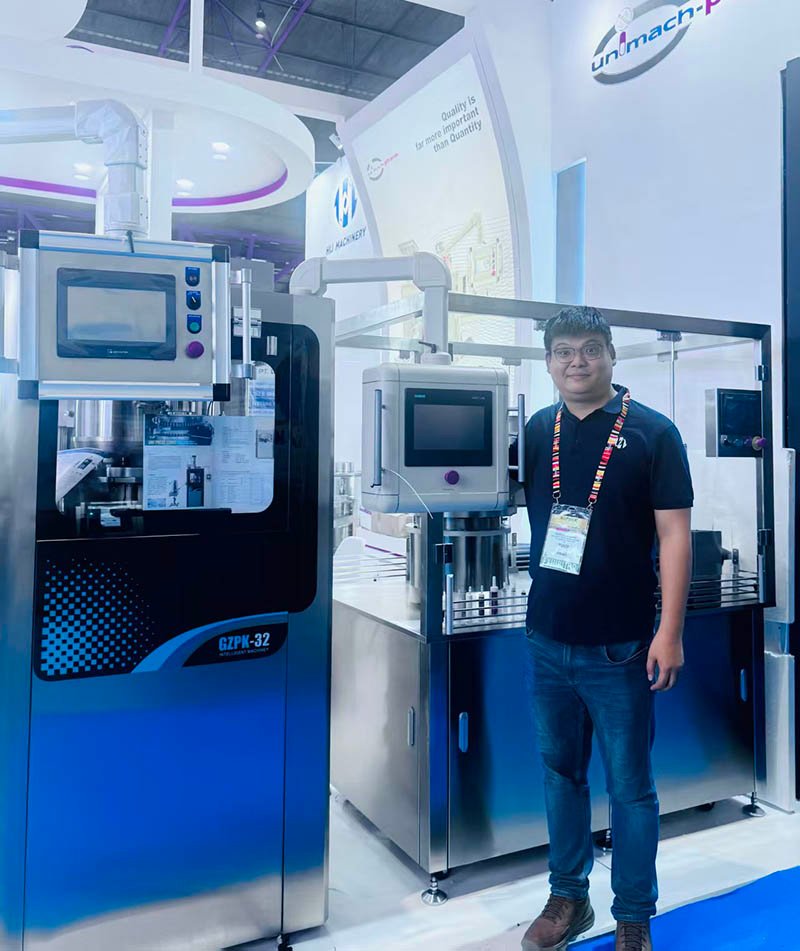
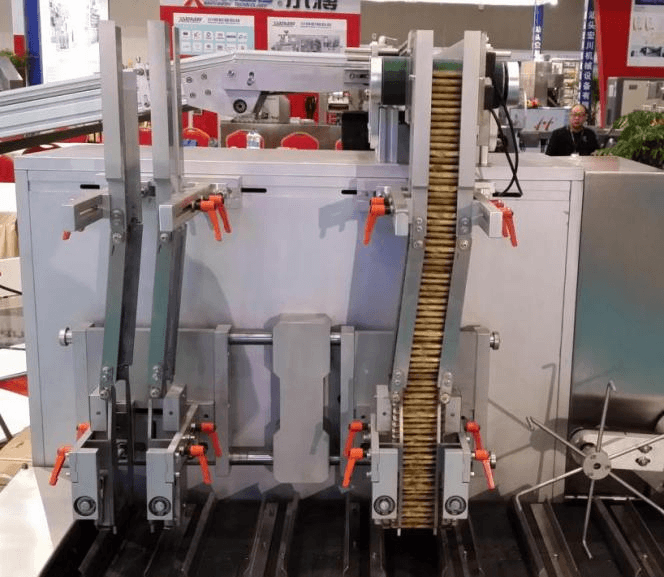
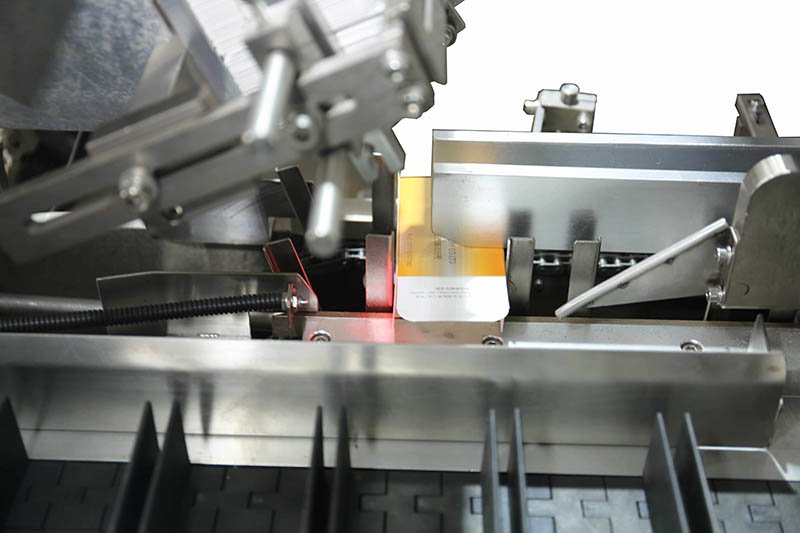
The checklist and comparison are an editorial procurement framework. The calculation uses declared hypothetical inputs. The photographs show HIJ cartoning mechanisms for reference, not a second-hand inventory, a completed rebuild or a documented inspection result. Machine suitability must be established for the actual unit and product.
Comparing a used offer with a new cartoner? Send your product photo, carton drawing, quantity per carton and required accepted output. HIJ can discuss a new-machine configuration against that brief; this article does not offer third-party machine inspection, refurbishment or trade-in.
Discuss a New Cartoning Machine