Get Quote
U.S. cosmetic packaging project planning

Cosmetic Packaging Machine USA

Configure filling, closing, coding, inspection and downstream packaging around your actual cosmetic product, package, U.S. site requirements and acceptance plan.

Liquids & serumsCreams & lotionsTubes & jarsAmpoules & sachets
Application reviewproduct, dose and pack
U.S. site inputselectrical, utilities and access
FAT evidenceaccepted output and rejects
Itemized scopemachine, options and services
Compare Machine Families
U.S. regulatory boundary

Define the Equipment Evidence Without Calling the Machine “FDA Approved”

FDA regulates cosmetic products and the facilities that manufacture or process them; it does not approve cosmetic packaging machines. For a U.S. project, translate your product, facility and quality requirements into an equipment specification, document list and acceptance plan.

Buyer and facility responsibilities

  • Classify the product and its intended use
  • Own formula safety, labeling and market compliance
  • Determine facility registration and product-listing duties
  • Approve cleaning, procedures and production controls

Equipment project responsibilities

  • Define product-contact materials and certificates
  • Document product path, access and cleanability
  • Identify controls, alarms, inspection and reject logic
  • State utilities, electrical and environmental requirements

Evidence to agree before purchase

  • Controlled drawings and configuration list
  • Representative product and package trials
  • FAT protocol, samples, duration and records
  • Manuals, parts, training and site-service boundary

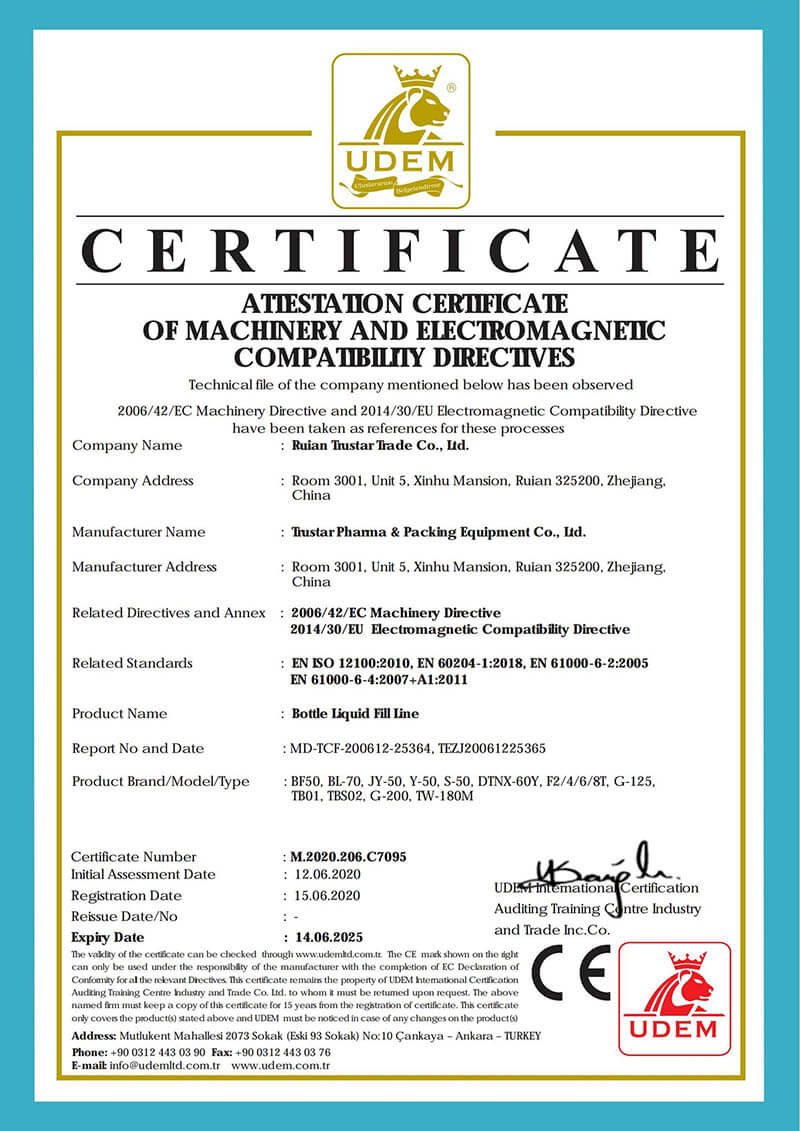
Current U.S. context: MoCRA includes facility-registration and product-listing obligations for covered businesses. FDA also states that registration or listing is not a cosmetic approval program. Confirm your own obligations with qualified U.S. regulatory counsel.

Review FDA’s MoCRA Information
Cosmetic packaging equipment families

Match the Product and Package to the Correct Machine Route

“Beauty packaging machine” can describe very different processes. Select the family from the actual formula, container or web, closure, dose range, output and required downstream operations.

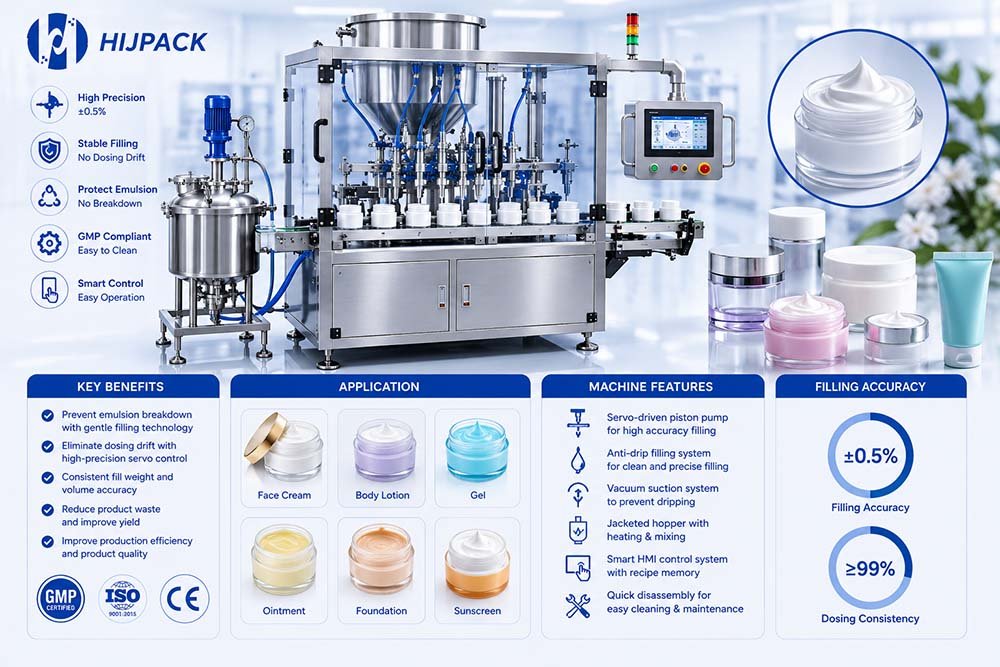
Cosmetic cream filling machine for viscous products

Cream & Lotion Filling

Creams, lotions, masks and gels requiring controlled feeding, clean cut-off and repeatable container handling.

Review cream filling machines →
Cosmetic tube filling and sealing machine

Tube Filling & Sealing

Plastic, laminate or metal tubes where filling, orientation, sealing or folding, coding and trimming must work together.

Review tube filling and sealing →
Automatic cosmetic filling and packaging line

Integrated Packaging Lines

Filling connected to closing, labeling, coding, inspection, cartoning or case packing under one defined interface plan.

Review automatic cosmetic lines →
Application routing matrix

Start With Formula Behavior, Pack Format and Closure

A U.S. destination does not determine the dosing system. Send representative product and packaging samples so the quotation can distinguish shared equipment, dedicated change parts and combinations that still require trials.

Product and packBehavior to verifyPackage inputsMachine decisions
Serum, toner or oil in bottlesDrip, foam, volatility, particulates and low-volume repeatabilityContainer and neck drawings, closure, fill range, headspace and samplesPump, nozzle shut-off, infeed, container control, capping and inspection
Cream or lotion in jarsViscosity, stringing, trapped air, temperature sensitivity and cleanabilityJar, cap, liner, fill profile, product temperature and surface finishHopper, feed assistance, agitation, dosing route, cut-off and lid handling
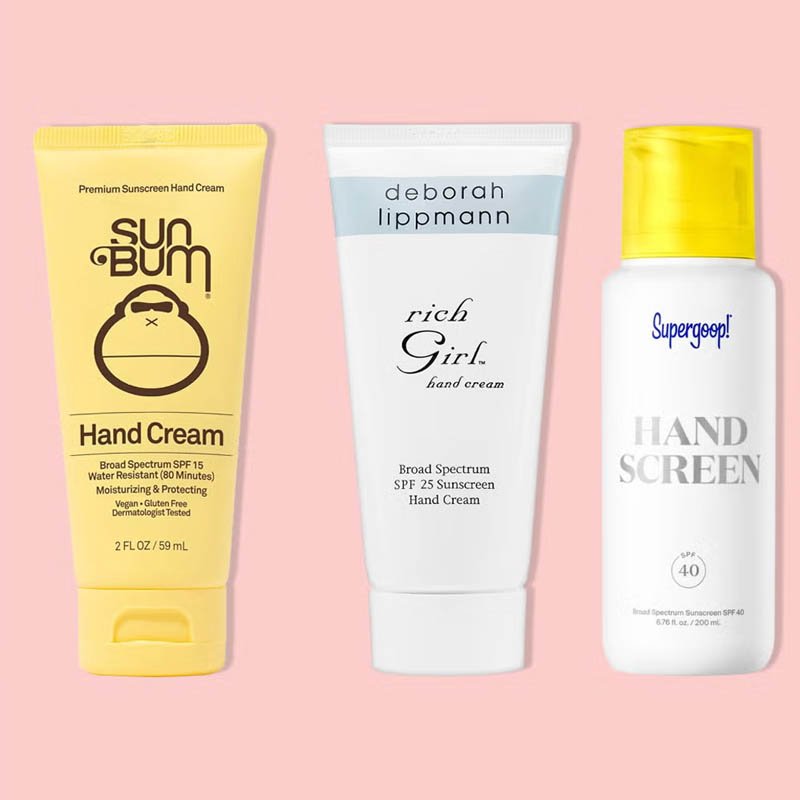
Cream, gel or sunscreen in tubesProduct feed, air, tail formation and contamination near the sealTube material, diameter, length, cap, artwork and orientation markLoading, orientation, dosing, heat sealing or folding, coding and trimming
Serum or cream in sachetsDose stability, migration, seal contamination and opening performanceFilm structure, roll width, repeat length, artwork and final sachet drawingLane count, web handling, dosing, registration, sealing, coding and cutting
Single-dose cosmetic ampouleForming behavior, small-dose control, seal window and opening methodWeb or container material, cavity drawing, dose, product and finished samplesPreformed versus form-fill-seal route, tooling, dosing, sealing and leak checks
Mixed-SKU beauty packaging lineChangeover losses, cleaning sequence, restart stability and campaign sizeComplete SKU matrix, drawings and samples from every product/pack familyShared versus dedicated parts, storage, line balance and unsupported formats

Fastest technical review: send one representative product, one empty pack, one filled pack, the controlled drawing and your accepted-output target.

U.S. site and electrical scope

Freeze Facility Requirements Before the Machine Design Is Released

Do not specify only “110/220 V, 60 Hz” or “UL components.” The purchase specification should state the complete site, electrical, utility, safety and certification boundary required by the destination facility and authority having jurisdiction.

Electrical supply

Power and control

State voltage, phase, frequency, available current, grounding, disconnect, control voltage and approved component preferences.

Certification boundary

Complete machine status

Identify any required NRTL certification, field evaluation or local inspection. Listed components alone do not certify the complete machine.

Utilities

Air, water and exhaust

Document pressure, flow, quality, connection points, drainage, extraction and any conditioned services required by the process.

Facility access

Move-in route

Confirm door, aisle, elevator, floor-load, ceiling, rigging, installation clearance and maintenance-access constraints.

Safety interface

Plant standards

Define guarding, interlocks, lockout needs, e-stops, signals, risk-assessment inputs and site acceptance responsibilities.

Operating environment

Room and cleaning

State temperature, humidity, washdown, dust, solvent, containment and cleaning conditions that affect design and materials.

Why this matters: OSHA’s NRTL program covers testing and certification of specified products. Define the required approval route before ordering rather than treating a component brand as proof for the complete machine.

Review OSHA NRTL Guidance
Quotation, import and delivery scope

Make the U.S. Landed Scope Comparable Before Comparing Price

Two suppliers can quote different boundaries while using similar machine names. Record what is included, excluded, provisional and buyer-supplied from factory release through installation.

Scope itemInformation the buyer providesWhat the quotation should stateOpen questions to close
Commercial termRequested Incoterm, named place/port and importer-of-record planExact Incoterm version, included freight, insurance, handling and exclusionsCustoms broker, duties, taxes, inspection, demurrage and inland delivery
Packing and preservationTransport method, storage conditions and destination restrictionsCrate, moisture protection, blocking, marks, dimensions and gross weightsISPM-15 treatment, opening plan, disposal and long-term storage
DocumentationImport, quality, electrical and language requirementsInvoice, packing list, drawings, manuals, certificates, FAT records and parts listDocument format, approval dates, originals, translations and revision control
Delivery and riggingFinal address, receiving hours, dock, rigging route and site constraintsShipment release basis, handover point, notification and transport exclusionsUnloading, crane/forklift, placement, utilities and installation readiness
Commissioning and trainingSite dates, operators, products, packs and utilities availableRemote or on-site scope, duration, personnel, travel and acceptance boundaryVisas, travel, local labor, repeat visits, production materials and sign-off
Spares and lifecycle supportPlanned operating hours, criticality and local inventory policyStartup spares, recommended spares, consumables, lead-time basis and support routeWarranty terms, response process, software backup and obsolete-part planning

Final freight, delivery timing, import charges, installation and certification scope belong in the signed quotation. They should not be inferred from a generic web-page statement.

Factory acceptance testing

Turn the Cosmetic Packaging Equipment Quote Into Measurable FAT Evidence

Rated speed is not accepted output. Agree the production materials, sample quantity, run duration, defect definitions, stops and records that determine whether the configured machine meets the project.

Freeze controlled inputs

Identify the exact formula or qualified substitute, containers, closures, films, labels, codes, drawings and configuration revision.

Approve the test basis

Define sample quantity, run duration, staffing, replenishment, planned stops, accepted output and calculation method.

Run normal production

Record settings, output, rejects, fill or seal results, alarms, interventions and product/pack observations.

Challenge critical functions

Test agreed conditions such as low product level, missing pack, closure error, code failure, restart and reject handling.

Verify changeover

Use the approved SKU matrix to check parts, tools, settings, cleaning, line clearance, restart and first-good-pack criteria.

Close evidence and actions

Retain samples, counts, data, photographs or video, deviations, corrective actions and a signed open-item list with owners and dates.

Accepted output: calculate good packs at discharge after the limiting machine stage, agreed rejects and documented stops. Do not multiply a headline cycle rate by shift hours.

Itemized quotation engineering

Compare the Total Project Scope, Not a Bare Machine Price

A useful quotation separates confirmed equipment, change parts, options, documentation and services. It also identifies assumptions and items that still need samples, drawings or site confirmation.

Comparable U.S. project scope

Use one RFQ input set for every supplier. Compare the same product, package, output, electrical, test, delivery and support boundary.

Base equipmentMachine family, frame, product path, control platform and standard guarding.
Product handlingHopper, pump, mixer, heating, vacuum, hoses, nozzles and transfer.
Packaging change partsInfeed, guides, stars, holders, tooling, seal parts and every quoted SKU.
Quality controlsCoding, vision, fill checks, closure checks, alarms, rejects and records.
Line integrationConveyors, accumulation, signals, data, labeling, cartoning and case packing.
Documents and testingDrawings, manuals, certificates, FAT, training and qualification support.
U.S. destination scopeElectrical/certification boundary, packing, freight, rigging and commissioning.
Lifecycle supportSpares, consumables, remote response, site service and warranty terms.
U.S. buyer questions

Cosmetic Packaging Machine USA FAQ

Are cosmetic packaging machines FDA approved?

No. FDA regulates cosmetics and covered manufacturing or processing facilities; it does not approve cosmetic packaging machines. A machine project should instead document product-contact materials, cleanability, controls, inspection, records and acceptance evidence against the buyer’s requirements.

What does MoCRA change for a cosmetic packaging machine project?

MoCRA includes obligations such as facility registration and cosmetic product listing for covered businesses, subject to the law’s scope and exemptions. Those are business and facility responsibilities, not machine approvals. Translate the facility’s procedures, records and cleaning needs into the URS and FAT plan.

Can HIJ configure a machine for U.S. electrical requirements?

The project can be configured only after the buyer states voltage, phase, frequency, grounding, disconnect, control standard, preferred components and any required NRTL certification or field-evaluation route. Component listings alone do not establish certification of the complete machine.

Which cosmetic packaging equipment should I choose?

Choose from the actual product behavior and package. Liquids may need controlled nozzle shut-off, viscous creams may need feed assistance, tubes require a defined sealing or folding route, and sachets depend on the approved film, registration and sealing window. Representative trials remain necessary.

What should a U.S. buyer send for a quotation?

Send product data and representative samples, minimum/normal/maximum fill volumes, empty and filled packs, closures, controlled drawings, artwork and codes, accepted-output target, utilities, site constraints, documentation list and required FAT evidence.

How should machine output be specified?

Specify accepted packs per minute at the final discharge under stated conditions. Record the product, package, format, staffing, duration, replenishment, planned stops, rejects, changeovers and downstream interruptions behind the result.

What should the landed quotation include?

It should identify the Incoterm and named place, packing, freight boundary, insurance, documents, importer and customs responsibilities, inland delivery, unloading, rigging, installation, training, spares, warranty and support. Unstated items should not be assumed to be included.

What should be tested during FAT?

Test normal production plus agreed challenges such as low product level, missing or mis-presented packs, closure or code failures, restart, inspection and reject behavior. Retain settings, counts, samples, alarms, deviations and the signed open-item list.

U.S. project inquiry

Get a Cosmetic Packaging Machine Proposal Built Around Your U.S. Project

Send the actual product, pack, accepted output, U.S. site inputs and required evidence. HIJ can map the machine family, configuration, open trials and quotation boundary for review.

Product and dose

Formula behavior, temperature, particulates, fill range, product-contact and cleaning requirements.

Package and SKU matrix

Containers, tubes or films, closures, drawings, artwork, codes, samples and planned changeovers.

Production target

Accepted output, campaign size, shift pattern, staffing, inspection, rejects and downstream line boundary.

U.S. site data

Electrical supply, utilities, certification route, room conditions, access, rigging and installation plan.

FAT and documents

Samples, duration, challenges, acceptance criteria, drawings, manuals, certificates and record format.

Commercial boundary

Incoterm, named place, packing, freight, spares, commissioning, training, warranty and service expectations.

View All Cosmetic Packaging Machines

Engineering review by HIJ Machinery

This page helps U.S. buyers prepare a comparable cosmetic packaging equipment project. Final configuration, performance, materials, documents, commercial terms and services come from the signed quotation and technical agreement.

Meet HIJ Machinery

Let's Design Your Production Line

Share your requirements and I'll personally craft a solution that maximizes your efficiency and profitability.