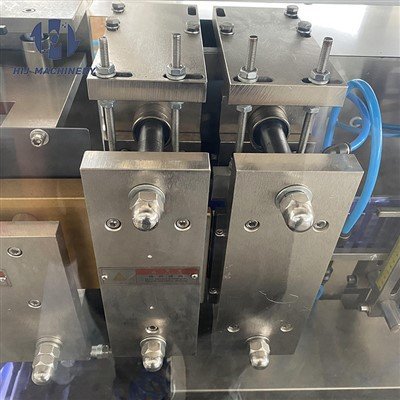
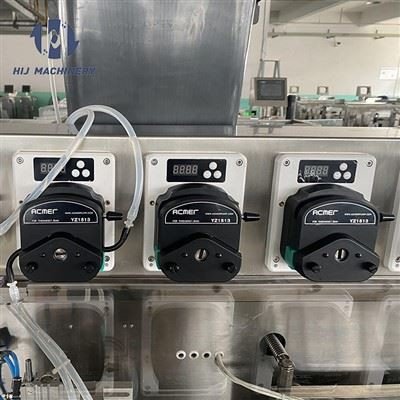
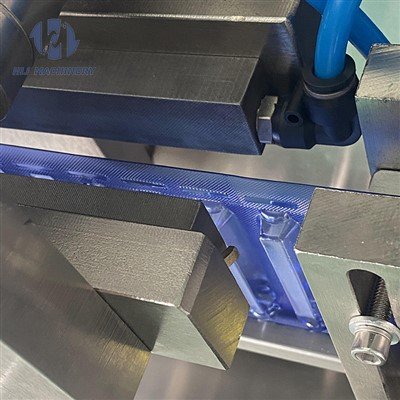
What you'll see in this demo
Film unwinding → thermoforming → 5-head peristaltic filling → heat sealing & batch number coding → back-end crop → slitting into ampoule strips (or single-ampoule cut).
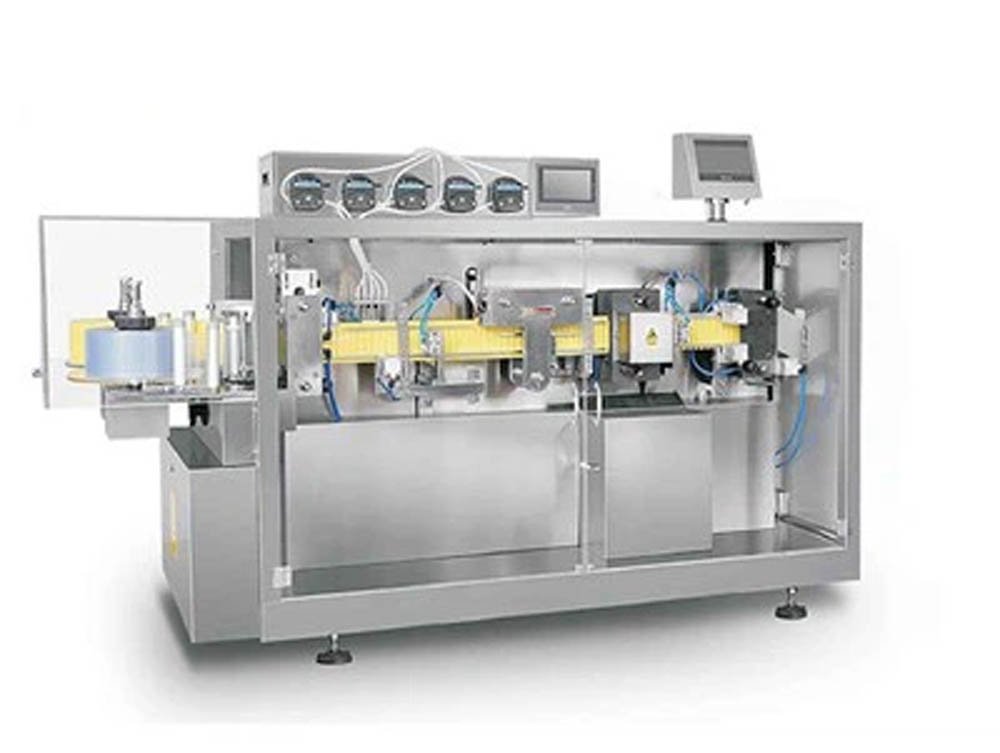
Compact 5-head form-fill-seal machine that forms, fills, seals, batch-codes and cuts plastic monodose ampoules from PVC/PE or PET/PE roll film in one continuous cycle. The published reference range is 0.3–200 ml, with output up to approximately 100 ampoules/min at 10 ml. Pump selection and operating settings must be confirmed with your liquid, film and ampoule samples.
Seal quality depends on film structure, temperature, pressure, dwell time and ampoule geometry. Define the seal test and acceptable sample criteria before FAT rather than relying on a headline machine speed.
— Forester Xiang, Founder & Chief Engineer

HIJ Machinery · Project and application review
The GGS-118P5 is an FFS platform for projects that need plastic monodose containers formed from roll film. It is not an aseptic blow-fill-seal system. Confirm viscosity, foaming behavior, target dose, film structure, seal test, mold geometry and required clean-zone controls before selecting the pump and final configuration.
A plastic ampoule oral liquid filling sealing machine is a form-fill-seal (FFS) machine that thermoforms plastic monodose ampoules from PVC/PE or PET/PE roll film, fills them with liquid, heat-seals, batch-codes and cuts them in one automated cycle. The HIJ GGS-118P5 uses six automatic stations, has a published filling range of 0.3–200 ml and reaches approximately 100 pcs/min at 10 ml or 40 pcs/min at 200 ml under reference conditions. Final output depends on the approved liquid, film, mold and process settings.
Source: HIJ Machinery GGS-118P5 published reference specification. Final contractual values and deliverables follow the approved quotation, URS and FAT protocol.
These are published reference values for the GGS-118P5 platform. Use them to prepare the URS, then confirm the contractual values with representative liquid, film and ampoule samples.
Swipe the table horizontally →
| Parameter | GGS-118P5 | What This Means For You |
|---|---|---|
| Filling Heads | 5 (peristaltic pump, HUIYU) | Five ampoules filled per cycle. Rotary valve or UBA pumps available for different product viscosities. |
| Production Capacity | ~100 pcs/min @ 10 ml · ~40 pcs/min @ 200 ml | Reference output varies with filling volume, liquid behavior, film, mold geometry and operating settings; confirm the accepted rate during FAT. |
| Filling Volume | 0.3 – 200 ml | The published range spans small monodoses to larger liquid portions; each format requires an approved mold and process setup. |
| Max. Forming Depth | 12 mm | Defines the ampoule profile depth your custom molds can form. |
| Cutting Speed | 0 – 25 cycles/min (stepless) | Stepless frequency adjustment lets you dial in speed to match product foaming behavior and film type. |
| Packing Material | PVC/PE, PET/PE (0.2–0.4 mm) | Standard pharma and cosmetic monodose films; other suitable films on request. |
| Control System | Schneider PLC (TM200C40U) + Schneider HMI | The published control configuration uses Schneider components; confirm the final bill of materials and approved substitutions in the quotation. |
| Product-Contact Parts | SUS 316L stainless steel | SUS 316L is published for product-contact parts. Your quality team should define surface, cleaning and documentation requirements in the URS. |
| Power | 4.5 kW · 220V/380V 50Hz (customizable) | Confirm the selected voltage, frequency, phase and site protection requirements before manufacture. |
| Dimensions / Weight | 2300 × 850 × 1500 mm · 750 kg | Use these reference dimensions and weight for layout planning; the customer must verify floor loading, access and service clearances. |
| Automatic Stations | 6: film release → forming → filling → batch coding → cropping → slitting | The six stations automate the normal production sequence; operator loading, monitoring, sampling, cleaning and fault recovery remain part of the operating plan. |
| Line Integration | Connects with labeling machine | Extend into a fill-seal-label line, or a full turnkey line with cartoning downstream. |
Custom mold geometry, voltage, pump type (peristaltic / rotary valve / UBA), and line integration — engineered to your product.
Request a Technical ReviewSee roll-film release, thermoforming, 5-head filling, heat sealing with batch coding, cropping and slitting into finished ampoule strips. Use a trial with your own product and film to confirm project settings and output.
The GGS-118P5 completes six working stations automatically through its Schneider PLC program: roll film release → PVC/PE forming → filling → batch number pressing → back-end crop → slitting.
The ampoule is formed, filled and sealed in one roll-film operation, so the project does not need a separate pre-made-container feeding system. This can simplify container inventory and line handling, but film compatibility, product protection, cleaning, environmental controls and validation still require project review. The GGS-118P5 is a thermoforming FFS machine; it should not be represented as an aseptic blow-fill-seal system.
Compare container supply, handling, format and project requirements before selecting the packaging route.
Swipe the table horizontally →
| Factor | Plastic Ampoule (FFS) | Glass Ampoule | Conventional Bottle |
|---|---|---|---|
| Process | One-step form-fill-seal | Multi-step (wash, fill, flame-seal) | Multi-step (feed, fill, cap) |
| Container Supply | Formed in-line from roll film | Purchased, washed, sterilized | Purchased & fed |
| Breakage Risk | No glass-shard risk; film puncture and seal integrity still require control | Glass-breakage controls required | Depends on container material |
| Cost Drivers | Film, mold, yield, utilities and validation | Ampoules, washing, inspection and sealing | Containers, caps, feeding and labeling |
| Dosing Format | Single-dose (0.3–200 ml) | Single-dose (small volumes) | Multi-dose |
| Brand Customization | Custom mold shapes & embossing | Supplier format range and printing | Container, closure, label and print options |
| Typical Selection Question | Does roll-film monodose packaging meet product and seal requirements? | Does the product require a glass ampoule process? | Is a pre-made multi-dose container preferred? |
Source: HIJ Machinery engineering team comparison for oral liquid and cosmetic serum packaging formats. Read the full guide: Plastic Ampoule vs Glass Ampoule.
Compare container supply, handling, format and project requirements before selecting the packaging route.
Swipe the table horizontally →
| Factor | Plastic Ampoule (FFS) | Glass Ampoule | Conventional Bottle |
|---|---|---|---|
| Process | One-step form-fill-seal | Multi-step (wash, fill, flame-seal) | Multi-step (feed, fill, cap) |
| Container Supply | Formed in-line from roll film | Purchased, washed, sterilized | Purchased & fed |
| Breakage Risk | No glass-shard risk; film puncture and seal integrity still require control | Glass-breakage controls required | Depends on container material |
| Cost Drivers | Film, mold, yield, utilities and validation | Ampoules, washing, inspection and sealing | Containers, caps, feeding and labeling |
| Dosing Format | Single-dose (0.3–200 ml) | Single-dose (small volumes) | Multi-dose |
| Brand Customization | Custom mold shapes & embossing | Supplier format range and printing | Container, closure, label and print options |
| Typical Selection Question | Does roll-film monodose packaging meet product and seal requirements? | Does the product require a glass ampoule process? | Is a pre-made multi-dose container preferred? |
Source: HIJ Machinery engineering team comparison for oral liquid and cosmetic serum packaging formats. Read the full guide: Plastic Ampoule vs Glass Ampoule.
One FFS platform, configured precisely for your industry. Explore the dedicated solution for your liquid product type.
Single-dose syrups, pediatric meds, herbal tonics.
ExploreVitamin C, hyaluronic acid, anti-aging serums.
ExploreVolatile liquids, anti-overflow filling, fragrance dosing.
ExploreFood-contact compliant honey, syrup, energy shot filling.
ExploreFull technical guide: how BFS works, types, applications.
Learn MoreReal cost breakdown, options pricing, payment terms.
View PricingUse the quotation, sample trial and FAT protocol to make the technical and commercial scope comparable.
The supplier should review the ampoule drawing, forming depth, opening method, print registration, film structure and cut format. Included and additional molds must be itemized in the current quotation.
List the required drawings, manuals, component records, available material certificates, FAT protocol and qualification-support documents in the URS and quotation. Do not assume a generic package includes every deliverable. Learn about our service support →
If labeling or downstream cartoning machines are required, define accumulation, transfer, coding, inspection, reject and data-interface responsibilities for the complete line. Explore turnkey solutions →
Use these answers to prepare samples, URS inputs and an itemized quotation request.
The quotation is based on the GGS-118P5 platform plus the selected pump, ampoule mold, film trials, coding and cutting format, auxiliary devices, electrical configuration, documents, FAT, installation and line-integration scope. Ask for each item, exclusion, commercial term and delivery basis to be listed separately.
For 10 ml liquid filling, the GGS-118P5 produces about 100 ampoules per minute. For 200 ml filling, capacity is about 40 pieces per minute. Actual output depends on your bottle size and shape. The machine has 5 filling heads and a stepless frequency-adjustable cutting speed of 0 to 25 cycles per minute.
The GGS-118P5 fills oral liquid, perfume, essential oil, olive oil, syrup, fruit paste, and liquid health-care products for the pharmaceutical, herbal, cosmetic, food, and supplement industries. It forms ampoules from PVC/PE or PET/PE film of 0.2 to 0.4 mm thickness, or other suitable packing films. The standard peristaltic pump handles water-like liquids; rotary valve or UBA pumps can be configured for products with different flow behavior.
Ampoule geometry can be developed within the platform's forming limits, subject to drawing and sample approval. Confirm the included mold quantity and additional-mold price in the current quotation. Flat-bottom containers or registered-position printing should be reviewed against the GGS-240 series before machine selection.
SUS 316L is published for product-contact parts, but the customer must define surface finish, cleaning, environmental controls, material records, software and alarm expectations, FAT challenge tests and the required qualification-support documents. Compliance and validation remain project- and site-specific.
Warranty duration and start point, spare-parts coverage, response method, installation, commissioning, travel costs, customer site obligations and delivery period must be confirmed in the formal quotation and contract. If a labeling machine is included, also define transfer and line-acceptance responsibilities.
Send the liquid specification, target dose and output, film data, ampoule drawing, coding, cleaning, environmental controls, utilities, documents and FAT acceptance criteria.
The technical team will review feasibility and identify any missing inputs needed for an itemized quotation.
Request a Project ReviewHIJ Machinery is a packaging machinery supplier based in Wenzhou, Zhejiang, China. Its product scope includes plastic ampoule filling and sealing machines, blister packing machines, capsule filling machines, cartoning machines and integrated packaging-line projects. The GGS-118P5 on this page is a thermoforming form-fill-seal platform; final specifications, documents, commercial terms and acceptance criteria are defined in the approved quotation, URS and contract.