Get Quote
Plastic Ampoule vs Glass Ampoule

About Forester

As the founder of HIJ Machinery (Wenzhou) and a former R&D engineer, Forester Xiang combines deep technical knowledge with 20+ years of global market experience. Having personally audited 100+ pharmaceutical factories across 30+ countries, he provides clients not just a machine, but a complete, compliant, profitable pharmaceutical packaging solution.

Glass has packaged medicine for over a century — so why are eye drops, respiratory doses, and a growing share of oral liquids now in plastic? The plastic-vs-glass ampoule decision quietly shapes your cost, your shelf life, your sterility risk, and even your brand. Here is the honest, side-by-side comparison, plus a clear rule for choosing — from someone who has specified both for factories worldwide.

About the author — Forester Xiang

Founder & former R&D Engineer, HIJ Machinery (Wenzhou)

Forester combines deep technical knowledge with 20+ years of global market experience. Having personally audited 100+ pharmaceutical factories across 30+ countries, he helps clients buy not just a machine, but a complete, compliant, and profitable packaging solution.

Plastic vs glass ampoule: the short answer

Plastic ampoules win on safety, cost, and aseptic single-dose production; glass ampoules win on barrier protection, chemical inertness, and premium presentation. Plastic (usually formed by blow-fill-seal) is unbreakable, lighter, and cheaper at volume; glass is near-impermeable to oxygen and moisture and feels more premium, but it’s breakable, heavier, and more expensive to handle.

Rule of thumb

Choose plastic for single-dose, high-volume, safety-critical products (eye drops, respules, oral doses). Choose glass when your molecule is highly oxygen/moisture-sensitive, or when a premium glass presentation is part of the brand.

Plastic ampoule vs glass ampoule: full comparison

FactorPlastic Ampoule (BFS)Glass Ampoule
Breakage & safetyNo shards, unbreakable; safe for children & clinicsCan shatter; glass-particle risk on snapping
Sterility / contaminationFormed, filled & sealed in one sealed cycleMultiple open steps; wash & depyrogenate first
Barrier (oxygen/moisture)Permeable — may need foil overwrap for sensitive drugsNear-impermeable, excellent barrier
Light protectionNeeds additives or secondary packagingAmber glass blocks UV well
Chemical compatibilityLow extractables with right resin; check leachablesVery inert, but delamination/flaking risk for some pH
Weight & shippingLight, low freight costHeavy, higher freight & breakage in transit
Unit cost at volumeLower (resin + on-demand forming)Higher (container + washing + capping)
Design freedomTwist-off, dropper, luer molded inFixed snap-neck format
Premium lookFunctional, less luxuriousPremium, high-end feel
SustainabilityLess material/weight; single-use plastic concernsRecyclable, but heavy & energy-intensive to make
Best fitEye drops, respules, oral liquids, monodose cosmeticsOxygen-sensitive injectables, premium multi-dose

When to choose a plastic ampoule

  • You need single-dose, tamper-evident units at scale (oral liquids, eye drops, respules).
  • Safety matters — clinics, pediatrics, field use — and you can’t risk glass shards.
  • You want lower unit cost and lighter freight at volume.
  • Your product isn’t strongly oxygen/moisture-sensitive (or you’ll add a foil overwrap).
  • You want to mould the dispensing feature (dropper, twist-off, luer) into the container.

When to choose a glass ampoule

  • Your molecule is highly sensitive to oxygen, moisture, or light and needs the best barrier.
  • Regulatory or stability data already exists for glass and re-validating isn’t worth it.
  • A premium glass presentation is part of the product’s brand and price point.
  • The product is incompatible with available polymer resins.

The production side: how plastic ampoules are made

If you go plastic, the container and the fill happen together. A plastic ampoule filling machine forms each ampoule from pharma-grade PE or PP, doses the exact volume, and heat-seals it in one enclosed cycle — which is also where plastic’s sterility and cost advantages come from. Glass, by contrast, needs a separate supply chain of bought, washed, and depyrogenated containers plus a capping line.

Weighing plastic ampoules for your product?

Get a free format & machine recommendation

Key takeaways

  • Plastic wins on safety (no shards), cost at volume, weight, and aseptic single-dose production.
  • Glass wins on barrier (oxygen/moisture/light), chemical inertness, and premium presentation.
  • The deciding question is usually whether your active is oxygen/moisture-sensitive.
  • Glass isn’t automatically “safer” — delamination is a real risk for some formulations.
  • Plastic ampoules are formed, filled, and sealed together, which drives their cost and sterility edge.
Frequently asked questions

Is a plastic ampoule as sterile as a glass one?+
Yes — and often the sterility process is cleaner. Plastic ampoules are typically made by blow-fill-seal, where the container is formed, filled, and sealed in one enclosed cycle with no operator contact, removing several contamination-prone steps that a glass line requires.
Why are eye drops usually in plastic, not glass?+
Plastic eye-drop ampoules are unbreakable, lightweight, can have the dropper tip moulded in, and are produced as preservative-free single doses by blow-fill-seal. For most ophthalmic solutions the barrier advantage of glass isn’t critical, so plastic’s safety and cost benefits win.
Does plastic protect the product as well as glass?+
For oxygen- or moisture-sensitive products, glass has a better barrier. Plastic is permeable, so sensitive formulations may need a resin upgrade or a foil overwrap. For products that aren’t barrier-critical, plastic protects perfectly well.
Which is cheaper, plastic or glass ampoules?+
At volume, plastic is usually cheaper. It is formed on demand from resin and avoids buying, storing, washing, and depyrogenating glass plus a separate capping line. Glass can still be cost-effective at low volumes or where a premium look justifies the price.

Need a Technical Opinion?

Don’t guess. Tell me your material and speed requirements, and I’ll configure the exact HIJ specification for you.

Chat With Forester

2026 Product Catalog

Download the full technical specs for our B-F, K-S, and P-J series presses.

Download PDF

You Might Also Find Helpful

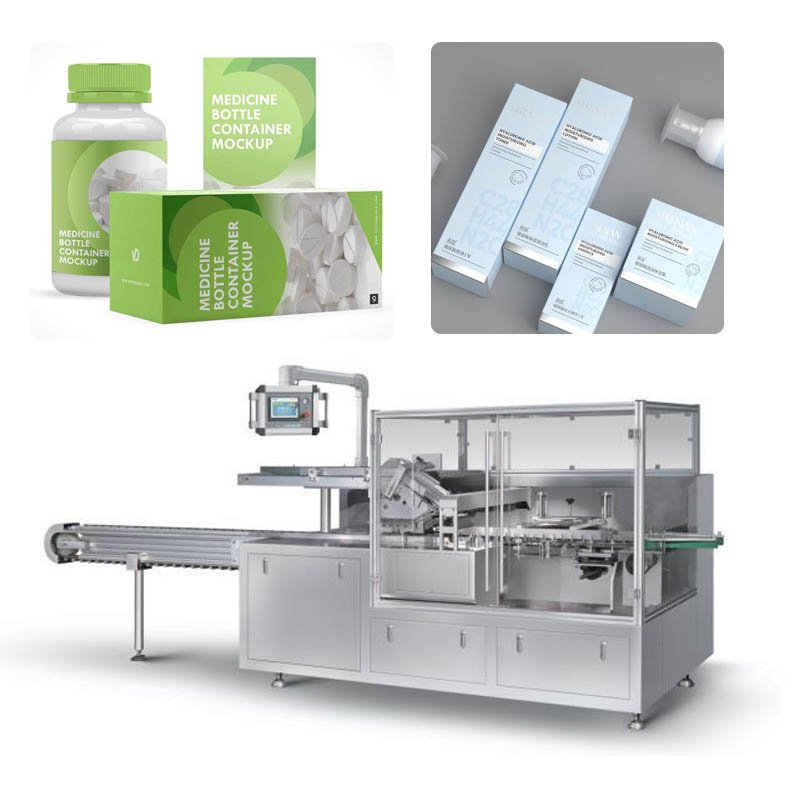
Automatic multi-purpose cartoning machine by HIJPACK with sample pharmaceutical medicine bottles, supplement boxes, and cosmetic hyaluronic acid skincare carton packaging.
HIJPACK versatile automatic cartoning system designed for secondary packaging efficiency across pharmaceutical, nutraceutical, and cosmetic industries.

Chinese vs European Cartoning Machines: The B2B Buyer’s Comparison

Quick Answer For production speeds of 10–200 cartons per minute — where most pharmaceutical, food and cosmetic plants operate —…
Read Article ->
Automatic multi-purpose cartoning machine by HIJPACK with sample pharmaceutical medicine bottles, supplement boxes, and cosmetic hyaluronic acid skincare carton packaging.
HIJPACK versatile automatic cartoning system designed for secondary packaging efficiency across pharmaceutical, nutraceutical, and cosmetic industries.

8 Best Cartoning Machine Manufacturers in 2026 (Honest Comparison)

Quick Answer The leading cartoning machine manufacturers fall into two camps. European premium builders — Marchesini Group and IMA (Italy),…
Read Article ->

How to Choose a Cartoning Machine: The 7-Step Buyer’s Framework

Quick Answer To choose a cartoning machine, match seven factors in this order: product format (flat products need a horizontal…
Read Article ->
Fully automatic capsule filling machine model NJP-1200 made of pharmaceutical-grade stainless steel with gelatin capsule close-ups.
Industrial fully automatic capsule filler provides precise high-speed powder and pellet dosing under a compliant sealed safety enclosure.

Chinese vs European Capsule Filling Machines: An Honest Comparison for B2B Buyers

Quick Answer The honest answer: the country of origin is no longer the deciding variable — the individual manufacturer is.…
Read Article ->

Capsule Filling Machine Validation: A Practical DQ/IQ/OQ/PQ Guide for B2B Buyers

Quick Answer Validation of a capsule filling machine is a four-stage qualification executed by the buyer — Design Qualification (DQ),…
Read Article ->

Tamping Pin vs Dosator: Choosing the Right Capsule Dosing System for Your Powder

Quick Answer Tamping pin systems compress powder into the bores of a rotating dosing disc in successive stages, forming a…
Read Article ->

Let's Design Your Production Line

Share your requirements and I'll personally craft a solution that maximizes your efficiency and profitability.