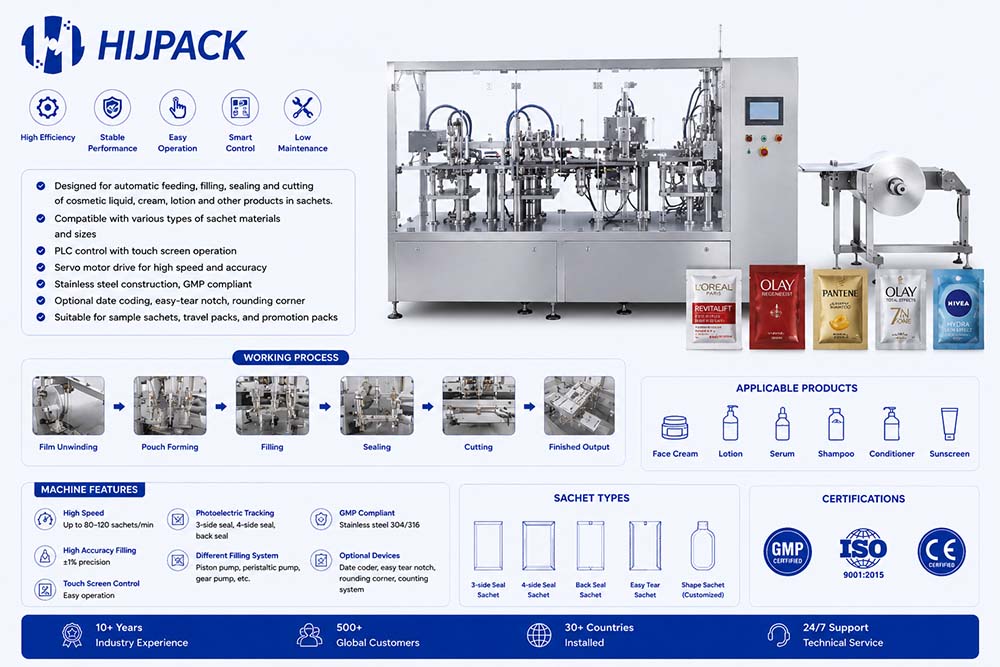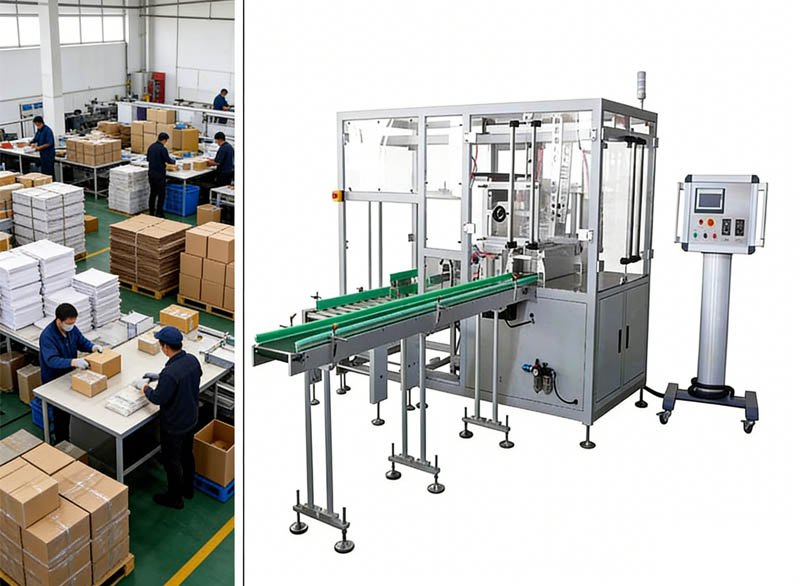
A buyer-focused guide to preprinted foil, inline variable printing, print verification, data flow, rejection and FAT for pharmaceutical blister packaging.
Printing is often treated as an accessory added after the blister machine is selected. That is risky. The print method affects foil purchasing, web handling, line layout, recipe control, vision inspection, reject timing and the evidence collected during qualification.
This guide defines the decisions that belong in a line URS. For the complete forming-to-cutting process, first review how an automatic blister packing machine works. The sections below focus only on the printing and verification layer.
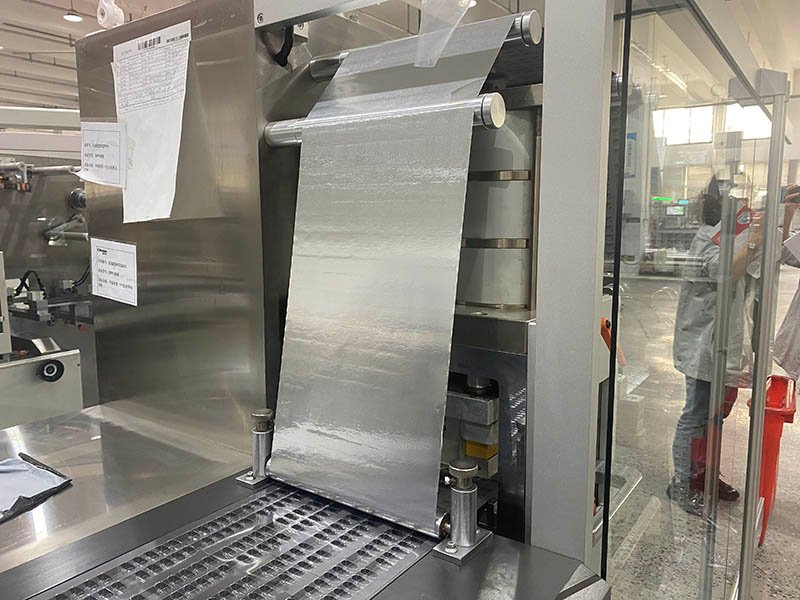
What does blister packaging printing include?
Separate the content into fixed, batch-variable and unit-variable fields. The categories may be produced by different systems and controlled by different approved data sources.
Product name, strength, branding, required statements and other content that does not change during a defined packaging version.
Lot or batch number, manufacturing or expiry information and other fields selected for a particular packaging order.
A unique identifier or serialised code when required by the product, market and packaging level.
Registration marks or control features used to position, inspect or process the web; these are not automatically consumer-facing content.
Do not assume every item must be printed directly on each blister cavity. Define the approved packaging artwork and regulatory requirements for the target market, then specify which information belongs on the blister, carton or another packaging level.
Four printing architectures buyers should compare
| Architecture | How it works | Best fit | Main URS risk |
|---|---|---|---|
| Preprinted lidding foil | Approved fixed artwork is printed by the packaging-material supplier; the roll is issued to the line. | Stable artwork and predictable, longer campaigns. | Wrong-roll selection, obsolete inventory and material reconciliation. |
| Preprinted foil + online batch coding | Fixed artwork is supplied on the roll; variable lot/date fields are applied during packaging. | Stable product artwork with routine batch changes. | Code position, legibility, job selection and verification. |
| Near-line or offline digital printing | Blank or partly printed material is customised in a controlled step before it reaches the packaging line. | High product variety where printing and packaging do not need one combined cycle. | Maintaining identity and status between printing, storage and line issue. |
| Inline on-demand printing | More fixed and variable content is generated within the connected packaging process. | Short batches, many market variants or late-stage customisation. | Data integration, inspection, line speed, curing/drying and validated recovery. |
Preprinted foil versus inline printing: make the decision with production data
Preprinted foil simplifies the amount of content generated on the packaging line. Inline printing postpones customisation and can reduce the number of product-specific rolls, but it moves more responsibility into software, printing, inspection and line validation.
| Decision factor | Preprinted foil tends to favour | More on-demand printing tends to favour |
|---|---|---|
| Campaign profile | Fewer SKUs and longer stable runs | Many variants and short or volatile campaigns |
| Material inventory | Product-specific rollstock held under controlled status | More generic material with later customisation |
| Artwork change | Supplier lead time and disposition of superseded rolls | Controlled digital job update and revalidation/change control as applicable |
| Line complexity | Less artwork generated online | More printer, data, inspection and reject integration |
| Failure exposure | Wrong roll, mix-up or obsolete printed material | Wrong job/data, poor print quality or unverified output |
| FAT scope | Web handling, registration and variable-code station | End-to-end data, print, inspection, rejection and recovery |
Calculate with your own roll prices, order quantities, shelf-life constraints, campaign plan and changeover losses. A printer supplier’s inventory-saving example is not a substitute for the user’s SKU-level model.
Substrate compatibility comes before print technology
“Aluminium foil” is not a complete print specification. The printable surface may have primers, lacquers or other treatments selected for the approved material system. Ink or laser interaction, adhesion, contrast, abrasion resistance and any curing process must be evaluated on the actual supplied substrate.
Give the printer and line supplier the exact lidding-material specification, roll construction, printable side, width, maximum diameter, core, web direction and artwork. If the packaging material is still being selected, use the blister packaging materials guide to separate forming web from lidding foil before requesting tests.
Do not use an online article to set ink, laser or adhesion acceptance criteria. Define the required test method, environmental conditioning and pass/fail limits with the approved material and quality teams.
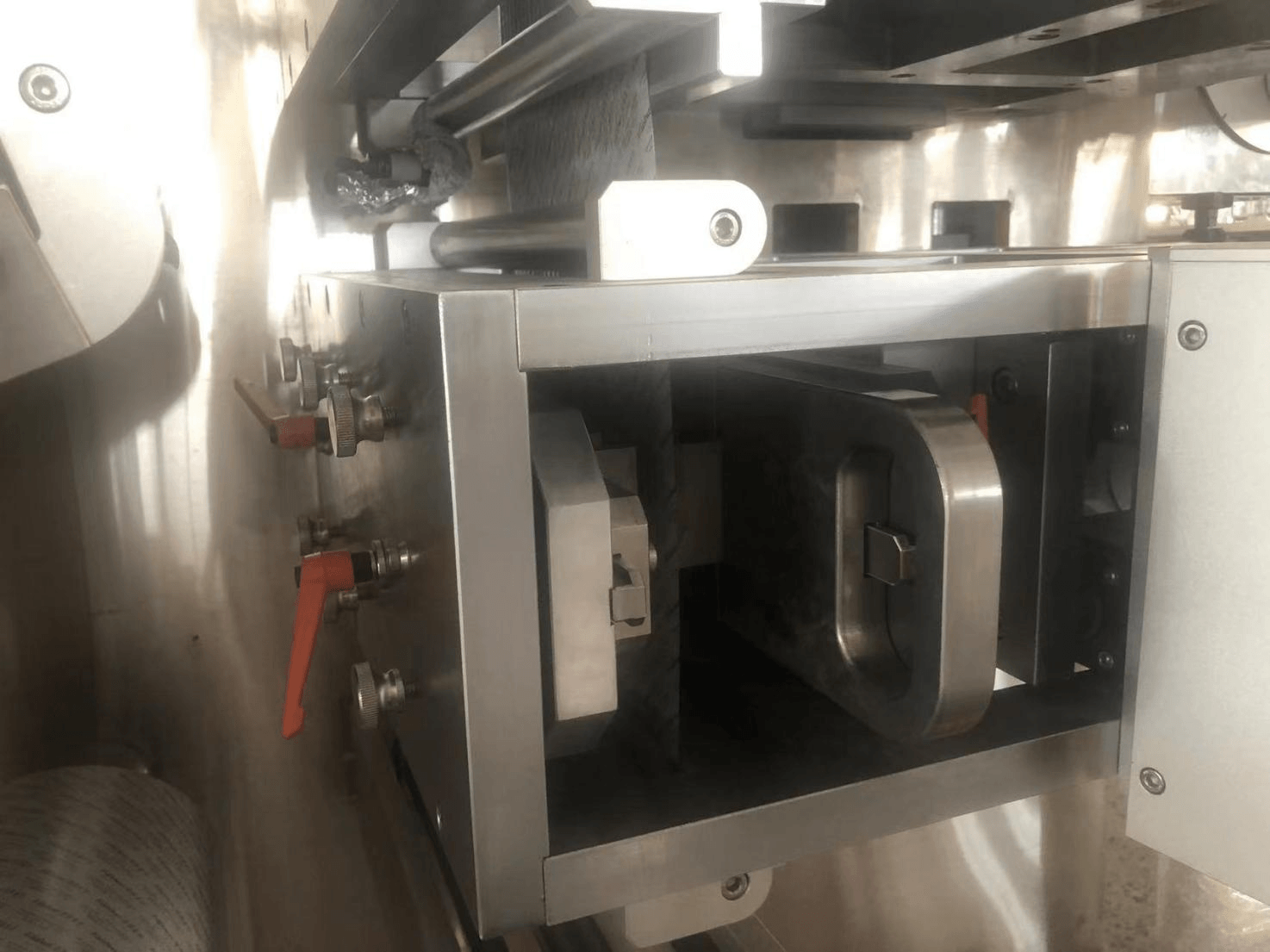
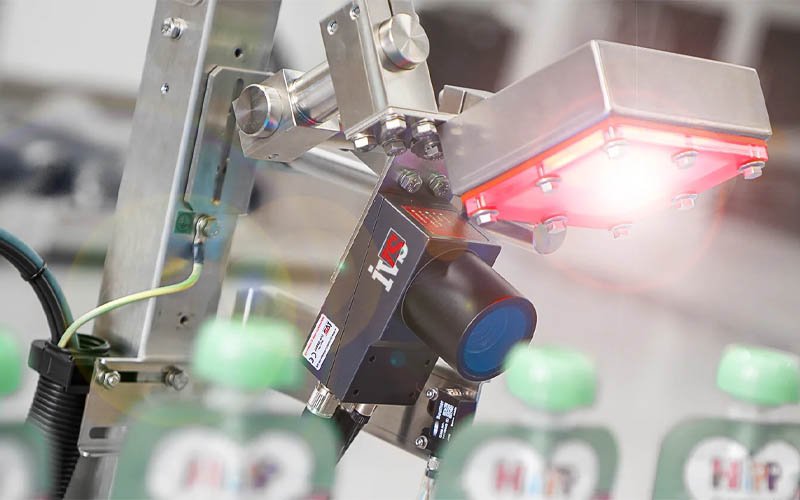
Place printing, inspection and rejection on one product map
The camera does not merely need to “see the code.” The specification should distinguish four questions:
- Presence: is a mark present in the expected area?
- Legibility or print quality: does the mark meet the agreed visual or machine-readable acceptance method?
- Data correctness: does the decoded content match the approved job?
- Pack association: can the system connect that inspection result to the physical blister that is later accepted or rejected?
See the separate blister machine vision inspection guide for camera functions. In this project, the critical addition is the print-to-pack tracking path after the camera has made its decision.
Map the data owner before selecting the printer
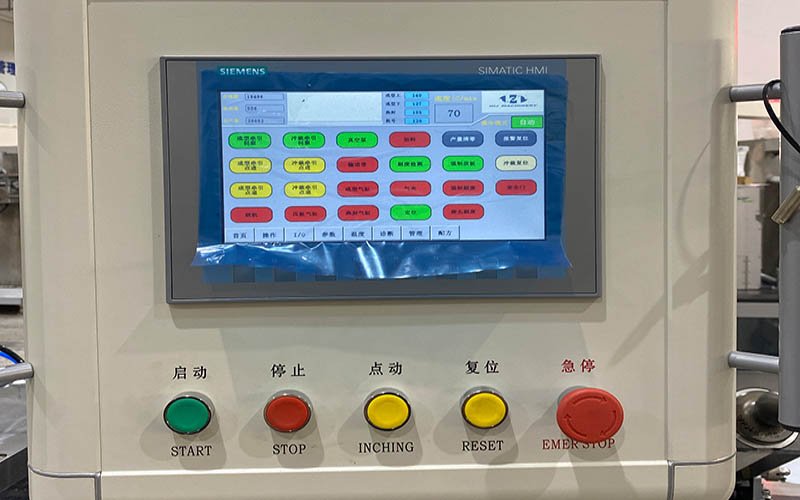
Write down which system creates, approves, sends, receives and records each field. Depending on site architecture, the data may originate in an ERP, MES, packaging-line system, serialisation system or controlled local recipe. The equipment quotation should not silently choose the data owner.
| Data function | URS question | FAT evidence |
|---|---|---|
| Job selection | Who selects the order and what prevents selection of an incompatible foil, format or product? | Approved and deliberately incorrect selection attempts. |
| Variable fields | Which fields are imported, calculated or manually entered? | Source-to-print comparison for each field. |
| User access | Who may create, edit, approve, start or abort a print job? | Role challenge and denied-action records. |
| Version control | How are artwork and recipes identified, released and withdrawn? | Current, obsolete and mismatched version challenges. |
| Records | Which events, changes, rejects and results must be retained? | Report review, export and backup/restore test. |
If the configured system creates electronic records or electronic signatures for an FDA-regulated process, evaluate the intended use against the current 21 CFR Part 11 text. A printer or HMI is not compliant merely because a brochure lists an audit trail.
Print verification is not the same as barcode verification
An OCR/OCV camera may confirm characters or compare printed content with a master. A barcode reader may decode data. Formal barcode verification evaluates symbol quality against the specified method and application. State which function is required rather than using “camera inspection” as a catch-all term.
GS1 identifies GS1 DataMatrix as the 2D carrier used for healthcare product identification and lists data such as GTIN, batch/lot, expiry or manufacturing date and serial number when relevant. GS1 also publishes barcode print-quality and verification guidance. Use the current GS1 healthcare DataMatrix guidance and barcode quality plan guidance for the applicable packaging level and market.
Calculate the in-flight exposure between inspection and rejection
When inspection and rejection are separated, several packs may be moving between them. The controls must track the result for every physical pack through stops, speed changes and recovery.
In-flight time (seconds) = cards between camera and reject ÷ cards per minute × 60If 12 cards are in the path and the line is producing 180 cards per minute, the transport time is four seconds. This does not define the reject delay by itself, but it exposes the minimum tracking problem: twelve individual results may exist in the pipeline simultaneously.
Do not approve a printing proposal from a sample code alone. Ask the supplier to draw the exact path from print trigger to camera to physical reject and write the number of in-flight blisters at the proposed rate.
The 12-card example above produces a four-second transport window. A stop or encoder loss inside that window is where a system can reject the wrong card even though the printer and camera each work correctly. FAT must challenge the tracking, not just the image quality.
Engineering insight based on the reproducible pipeline calculation above; it is not a machine-performance claim.15 URS inputs for blister foil printing
- Packaging level: identify whether data is required on the lidding foil, finished blister, carton or multiple levels.
- Content map: classify every field as fixed, batch-variable or unit-variable.
- Artwork: provide approved files, print area, quiet zones, orientation and version identifier.
- Substrate: specify the actual foil or web construction, surface treatment and supplier samples.
- Roll geometry: width, core, maximum diameter, winding direction and splice rules.
- Format matrix: list every blister pitch, card layout, SKU and market variant in scope.
- Accepted output: state good printed blisters per minute for each defined format—not printer-only speed.
- Print method: identify preprinted, online batch coding, near-line or inline on-demand scope.
- Data source: define the owner and transfer method for each variable field.
- User workflow: define creation, approval, selection, start, edit and abort permissions.
- Acceptance criteria: define legibility, adhesion, position and code-quality methods without invented universal limits.
- Inspection: specify presence, OCR/OCV, decoding, verification and challenge samples separately.
- Reject strategy: locate the reject, confirm actuation and define full-bin, fault and reconciliation responses.
- Records: list job data, changes, counts, rejects, alarms, reports, backup and retention needs.
- Qualification: define DQ/FAT/SAT/IQ/OQ deliverables, test responsibilities and required supplier documentation.
FAT tests that expose integration gaps
Build FAT from the approved URS and actual material samples. EU GMP Annex 15 says the URS should remain a reference through the validation lifecycle and applicable equipment may be evaluated at the vendor before delivery. The official European Commission Annex 15 also expects predefined acceptance criteria and documented deviations.
- Run every agreed substrate and representative worst-case format at the specified operating range.
- Verify fixed, batch-variable and unit-variable data from approved source to printed output.
- Challenge wrong job, obsolete version, incompatible recipe and unauthorised edit attempts.
- Insert controlled missing, unreadable, low-contrast and incorrect-data samples.
- Prove print-result tracking through normal run, slow speed, stop, restart, E-stop and recovery.
- Challenge reject confirmation, reject-bin full and loss of inspection communication.
- Reconcile produced, inspected, rejected and accepted pack counts.
- Review reports, event records, audit trail where applicable, backups and restoration.
- Inspect print after the agreed handling, abrasion or conditioning method for the actual material.
- Record every deviation, owner, corrective action, retest and final disposition before shipment approval.
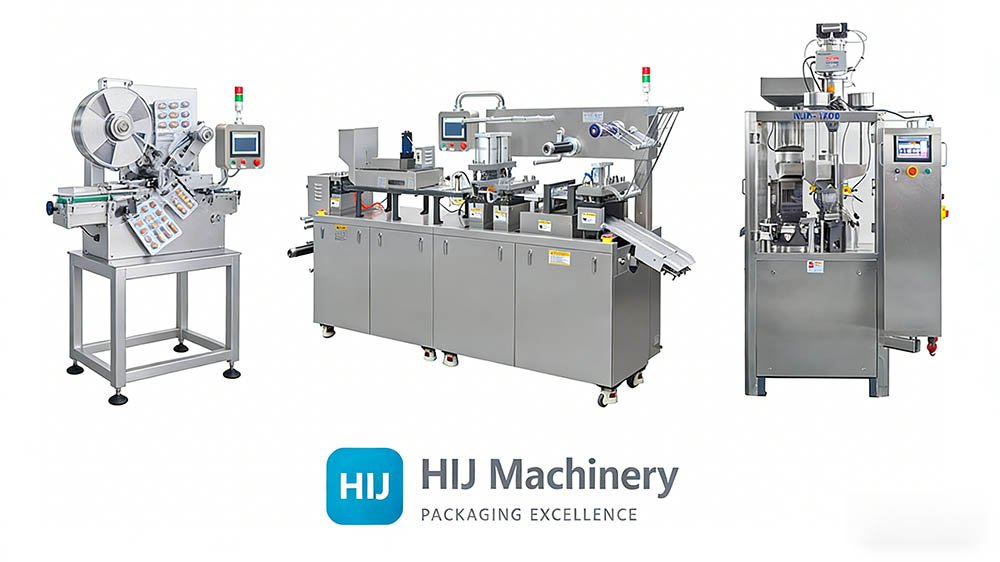
When comparing the print and controls scope with the base equipment, use the pharmaceutical blister packing machine range as the commercial next step. The page in this guide remains the technical decision layer; the category page owns machine-selection intent.
For U.S. drug manufacturing, 21 CFR 211.130 requires written procedures designed to assure correct labels, labeling and packaging materials are used and to prevent mixups and cross-contamination. EU GMP Chapter 5 likewise gives special control attention to printed packaging materials and packaging operations. Apply the requirements and procedures relevant to the destination market and manufacturing site; this page is an engineering guide, not regulatory advice.
Frequently asked questions
What is printed on pharmaceutical blister foil?
The approved content depends on the product, market and packaging level. Separate fixed artwork from batch-variable fields such as lot and expiry information and from any unit-variable identifier. The packaging specification should define the exact content.
Is preprinted foil better than inline blister printing?
Neither is universally better. Preprinted foil suits stable artwork and longer campaigns. More on-demand printing can support short batches and many variants but requires stronger data, inspection, reject and validation integration.
Where is the printer installed on a blister packaging line?
The location depends on whether the system prints rollstock, the sealed web or finished cards and on the required curing, inspection and reject path. The supplier should show the print trigger, camera and reject positions on the line drawing.
Can a vision camera verify the blister code?
A camera may check presence, characters or decoded data, depending on its configuration. Formal barcode verification is a separate defined process. State the required inspection and verification functions and their acceptance methods in the URS.
What information should be sent for a blister printing quotation?
Send approved artwork, field definitions, actual foil specification and samples, roll geometry, blister drawings, format matrix, output requirement, data source, inspection and reject needs, electronic-record scope and required qualification documents.
What should be tested during FAT?
Test actual substrates, all data paths, approved and wrong-job challenges, print defects, inspection, physical rejection, count reconciliation and recovery after stops or faults. Agree acceptance criteria and evidence before FAT.
Specify the printing path before the machine quotation
Send the blister drawing, foil sample, artwork, variable fields, output and validation scope. HIJ can review how printing, inspection and rejection fit the proposed blister line.