Flexible Packaging · Engineering Selection Guide
Define the product, dose, pack drawing, film, seal, output and inspection boundary before choosing a sachet packing machine.
What sachet packing means in practical terms
A sachet project begins with a finished-pack requirement: what the pack must contain, protect, display and deliver to the user. That requirement controls the dosing technology, seal geometry, film structure, web width, number of lanes, coding, inspection and downstream handling.
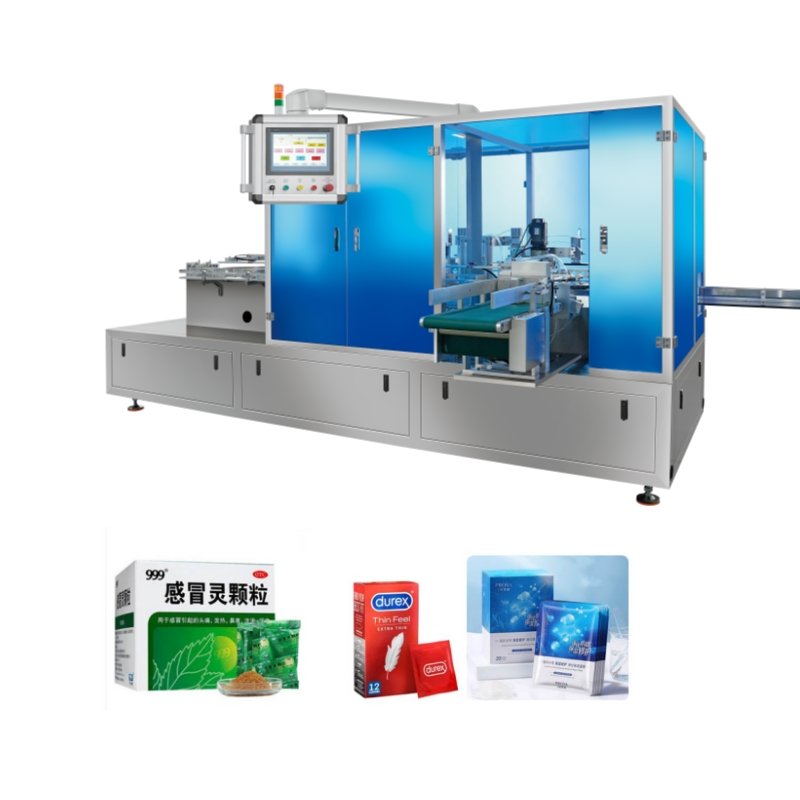
This article answers the information-stage questions. If your application is serum, cream, gel or lotion samples, move from the general framework to the cosmetic sachet packaging machine page for the relevant commercial platform.
How a sachet packing machine works
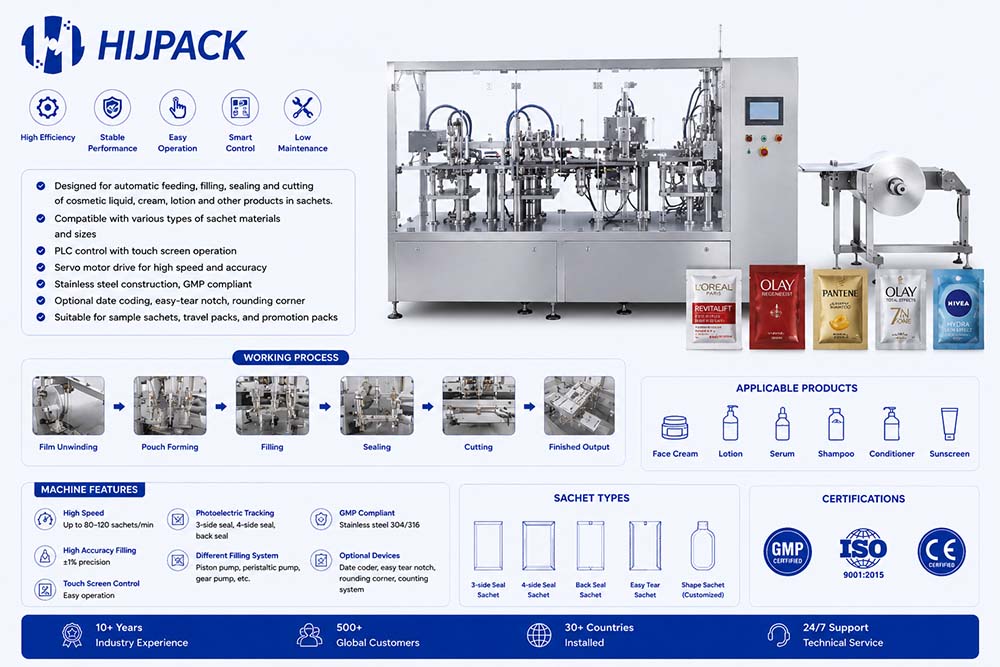
The exact architecture varies, but a roll-fed form-fill-seal process normally follows these controlled steps:
- Unwind and guide the film. The machine controls roll tension, edge position, splice condition and the printable face.
- Register the artwork. A print mark provides the reference for pack length, artwork position, coding and cutting.
- Form the pack geometry. The web is folded, split or paired according to the selected three-side, four-side or stick format.
- Create the initial seals. Sealing jaws produce the sides or longitudinal seam while leaving the required filling path open.
- Meter the product. A product-specific dosing system delivers the defined target quantity without contaminating the seal area.
- Close, code and inspect. The final seal is made; batch or date information and any agreed checks are applied.
- Cut and discharge. Finished sachets leave as individual packs, strips or another agreed presentation for counting or cartoning.
The process description is not an acceptance test. Your URS must turn each step into measurable inputs, alarms, reject logic and FAT checks.
Sachet, stick pack or premade pouch: choose the format first
These names are often mixed together, but their geometry and machine routes are different. Freeze the consumer format before comparing machine quotations.
| Format | Typical geometry | Engineering implication | Best question to ask |
|---|---|---|---|
| Four-side-seal sachet | Flat rectangular pack with seals around four edges. | Needs controlled web alignment, seal width, dose position and cut geometry. | What finished pack drawing and lane layout will be approved? |
| Three-side-seal sachet | One folded edge and seals on the remaining edges. | Film folding behavior and product clearance from the sealing area are critical. | Which edge is folded, and where are the print mark and opening feature? |
| Stick pack | Long, narrow pack, commonly with a longitudinal seam. | Uses a different forming geometry and may suit small controlled portions. | Does the product flow and dose consistently through the narrow format? |
| Premade pouch | A converted pouch supplied to the filling machine. | Moves forming and some sealing work to the pouch supplier; opening and pouch feeding become key. | Is roll-fed forming or premade-pouch handling the better project boundary? |
| Rigid easy-snap portion | Card-like single-dose pack opened along a designed snap feature. | Requires format-specific forming, sealing and opening geometry. | Is one-hand dispensing worth the different material and tooling route? |
For a premium rigid single-dose format, compare the easy-snap sachet machine. For flat cosmetic samples, the roll-fed cosmetic sachet platform is the more relevant route.
Match the dosing system to how the product behaves
Product category names are not enough. Two creams, powders or granules can behave differently during feeding and dosing. Supply representative samples and define the conditions under which they will be tested.
| Product behavior | Possible dosing route to evaluate | Evidence required before selection |
|---|---|---|
| Free-flowing liquid | Pump or time/flow-based metering appropriate to the product. | Viscosity range, foaming, temperature, dose, drip control and cleanability. |
| Viscous cream, gel or paste | Positive-displacement or piston-type metering may be evaluated. | Viscosity at process temperature, stringing, inclusions, feed pressure and seal contamination risk. |
| Free-flowing granules | Volumetric cup or weighing route may be evaluated. | Bulk density range, particle size, breakage, segregation, dust and target mass. |
| Non-free-flowing powder | Auger or another controlled powder-dosing route may be evaluated. | Bulk density, flowability, aeration, dust, compaction, cleaning and containment. |
| Mixed or particulate product | Project-specific metering and product path. | Maximum particle, distribution uniformity, shear sensitivity, blockage risk and sample trial. |
The table defines evaluation routes, not a promise that one standard machine handles every material. Final selection depends on the actual sample, hygienic boundary, pack drawing and FAT acceptance criteria.

Define the film and seal as one package system
Film inputs
- Complete layer structure and nominal thickness.
- Roll width, diameter, core and winding direction.
- Print repeat, eye mark and artwork orientation.
- Coefficient of friction, stiffness and curl.
- Supplier tolerances and change-notification rules.
Seal inputs
- Seal width, pattern and opening requirement.
- Temperature, pressure and dwell operating window.
- Leak, peel, burst or other applicable tests.
- Product contamination challenge where relevant.
- Finished-pack stability and distribution evidence.
A film name such as laminate, foil or mono-material does not establish compatibility. Approve the exact structure on the intended equipment and validate the finished package with the actual product.
Calculate required good packs—not headline machine speed
Start with saleable demand and work backward through scheduled time, expected efficiency, planned stops and quality loss. This keeps the quotation tied to business output.
Required nominal packs/min = required good packs per shift ÷ scheduled production minutes ÷ planned line efficiency ÷ planned quality yield
Use decimal factors for efficiency and yield. Then challenge the result against lane count, dose time, seal dwell, coding, inspection, cutting, discharge and downstream accumulation.
A multi-lane machine can multiply output, but it also multiplies lane-specific dosing, sealing and inspection points. Ask how every lane is sampled, adjusted and reported during the FAT.

Put these 12 inputs into the URS and quotation
- Product definition: formulation, physical behavior, operating temperature and representative sample.
- Dose range: target, tolerance, minimum and maximum SKU.
- Finished pack drawing: dimensions, seals, opening, cut and strip presentation.
- Film specification: structure, roll, print repeat, eye mark, winding and tolerances.
- Required output: good packs per shift plus planned efficiency and quality assumptions.
- Lane strategy: number of lanes, lane pitch and lane-by-lane acceptance.
- Coding and data: lot, date, artwork version, barcode and record requirements.
- Inspection and rejection: detectable defects, reject point, confirmation and reconciliation.
- Cleaning and changeover: product-contact boundary, tools, recipes, line clearance and evidence.
- Utilities and environment: electrical supply, compressed air, extraction and room constraints.
- Downstream interface: counting, collating, cartoning, case packing and accumulation.
- Documentation and FAT: drawings, manuals, material records, challenge tests, samples and acceptance report.
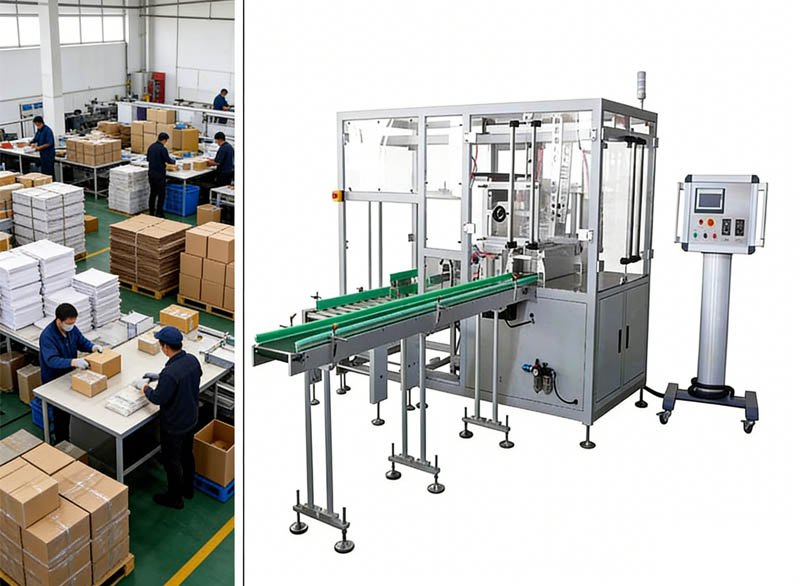
If finished sachets go directly into cartons, define orientation, count and transfer with the automatic cartoning machine supplier before either machine is frozen.
Build an FAT that proves the connected process
Run representative product and production-equivalent film. Record settings, inputs and every accepted or rejected pack during an agreed sustained test. The FAT should include:
- Start-up, normal running, controlled stop and restart.
- Dose results across the agreed range and every active lane.
- Registration, seal, code, cut and finished-pack appearance checks.
- Alarm and reject challenges with recovery and reconciliation.
- Changeover between agreed products, doses or pack formats.
- Interface behavior with the specified downstream equipment.
- Open actions, evidence ownership and conditions for closure.
The FAT confirms the agreed factory test. It does not replace site commissioning, product stability work or qualification responsibilities defined by the buyer’s quality system.
Frequently asked questions
What is sachet packing?
Sachet packing is the process of placing a measured product into a small flexible pack and closing it with controlled seals. In roll-fed form-fill-seal equipment, the machine forms the pack from film, doses the product, seals it, codes it and cuts it in one coordinated process.
How does a sachet packing machine work?
It unwinds and registers film, forms the package geometry, creates initial seals, meters the product, closes the remaining seal, applies agreed coding or inspection, then cuts and discharges the finished sachet. The exact sequence depends on the pack design and machine architecture.
What is the difference between a sachet and a stick pack?
A sachet is commonly a flat rectangular three-side- or four-side-seal pack. A stick pack is longer and narrower and normally uses a different forming geometry. Choose between them from dose, product flow, consumer opening, artwork and required shelf presentation.
Which products can be packed in sachets?
Liquids, creams, gels, pastes, granules and powders may be suitable when the dosing, product path, film and seal system are designed for their actual behavior. Suitability must be confirmed with representative samples and the finished-pack specification.
Which dosing system should a sachet machine use?
It depends on product behavior. Pumps or positive-displacement systems may suit liquids and viscous products; cups, weighing or auger routes may suit suitable granules or powders. The decision requires data on flow, density, viscosity, particles, dust, temperature, accuracy and cleanability.
How do I calculate the required sachet machine speed?
Divide required good packs per shift by scheduled production minutes, planned line efficiency and planned quality yield. Then check whether dosing, sealing, lane count, coding, inspection, cutting and downstream equipment can sustain that nominal rate.
What information is needed for a sachet machine quote?
Provide the product sample, dose range, finished pack drawing, film roll specification, artwork and print mark, required good-pack output, coding, inspection, cleaning, utilities, downstream interfaces, documentation and FAT acceptance criteria.
What should be tested during a sachet machine FAT?
Test production-equivalent product and film through start, sustained running, stop, restart and changeover. Record dose, registration, seal, code, cut, lane consistency, alarms, rejects, output and downstream transfer against the approved protocol.
Turn your sachet concept into a testable machine specification
Send HIJ your product sample, dose range, finished pack drawing, film roll data and required good packs per shift. Our team will identify missing inputs and define the machine, tooling and FAT boundary.
Request a Sachet Project Review