Secondary packaging · Inspection selection
A carton inspection machine checks specified features of a carton or its contents and routes nonconforming packs according to the agreed control logic. Choose the method by the defect: a presence sensor, vision camera, code reader and checkweigher answer different questions. None should be assumed to verify the complete pack alone.
This guide helps engineering, quality and purchasing teams define inspection for filled folding cartons. It is not a catalogue of HIJ standalone inspection machines, and it does not cover print inspection of flat carton blanks at a carton converter.
Start with the carton and the inspection boundary
First establish what passes the inspection point: an empty printed blank, an open carton receiving products, a closed retail pack or a shipping case. Equipment described with the same “carton inspection” label can serve different operations. A camera checking a blank's print does not establish that the finished pack contains the correct leaflet.
For a cartoning project, write one requirement per defect. State the SKU, the feature to inspect, when it is visible or measurable, the pass condition and what must happen when no valid result is available. This gives suppliers a testable application instead of a broad request for “100% inspection.”
Compare three possible boundaries:
- Inside the cartoner: inspection can take place before a feature becomes hidden by loading or closure. The result needs to remain associated with the correct carton through subsequent machine movements.
- After the cartoner: a separate station can inspect accessible surfaces or a measurable finished-pack property. It needs controlled transfer, carton spacing and a defined reject path.
- Combined inspection: upstream component checks and downstream pack checks can cover different risks. Define which result controls each release decision and how uncertain packs are contained.
For example, MGS describes a carton inspection module for printing, vision and reject verification. That illustrates a particular inspection scope, not a universal list of functions included in every cartoner or an HIJ product specification.
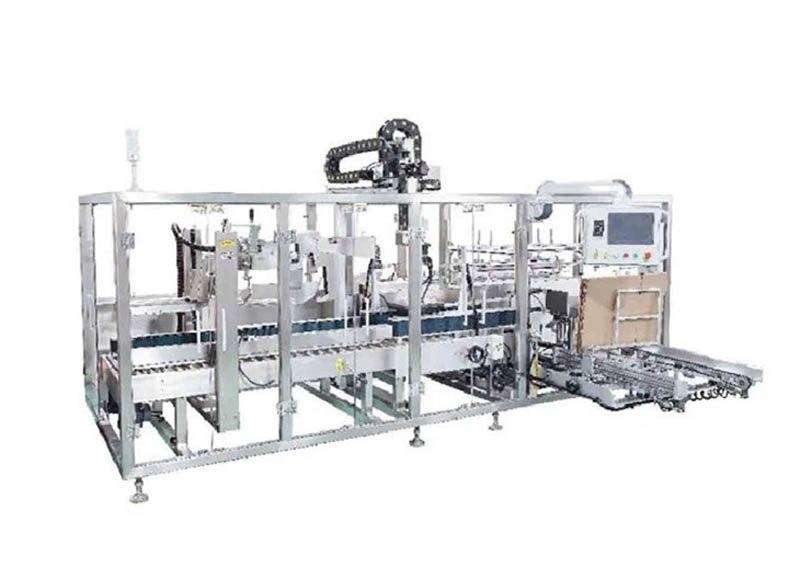
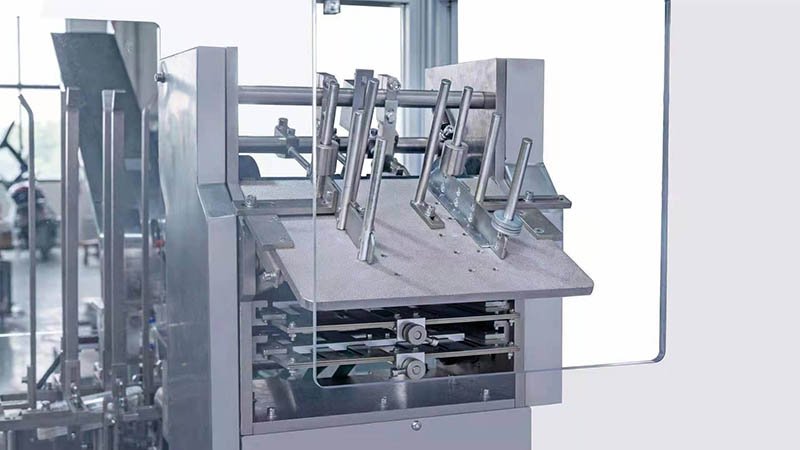
For a new packaging line, use the HIJ pharmaceutical cartoning machine page as the equipment route. Inspection options, third-party responsibilities and interfaces must be identified in the actual proposal. Do not assume that an accessory shown in a photograph is included.
Match each defect to a suitable inspection method
Use the table to prepare application questions, not to select a device without trials. A method is a candidate only when the installed sensor, product presentation and agreed challenge samples demonstrate the required distinction.
On a phone, swipe the table sideways to compare methods and limits.
| Required check | Candidate method | What must not be assumed |
|---|---|---|
| Carton at a position | A suitable presence sensor, with a defined trigger and timing window. | Carton presence does not prove correct contents, code or closure. |
| Visible product or leaflet | Presence sensing or vision before the item becomes hidden. | A visible edge may not establish item identity, total count or final insertion. |
| Printed text or code | Vision or a code reader matched to the print and comparison task. | A readable mark can still contain the wrong data. |
| Finished-pack weight | A checkweigher challenged with the actual complete and defective packs. | Weight cannot identify equal-weight substitutions or reliably separate overlapping weight ranges. |
| Visible flap or closure condition | A suitable sensor or vision view of the defined feature. | Flap position alone does not prove adhesive bond strength. |
| Removal of a failed carton | Tracked reject command, physical rejection and confirmation appropriate to the design. | An alarm or reject command does not prove the correct carton left the accepted stream. |
Require separate evidence for each row included in the purchase. A successful code-reading demonstration cannot close an open missing-product requirement. Likewise, a complete pack passing a checkweigher does not establish the detection limit for a very light missing insert.
Inspect products and leaflets before they become hidden
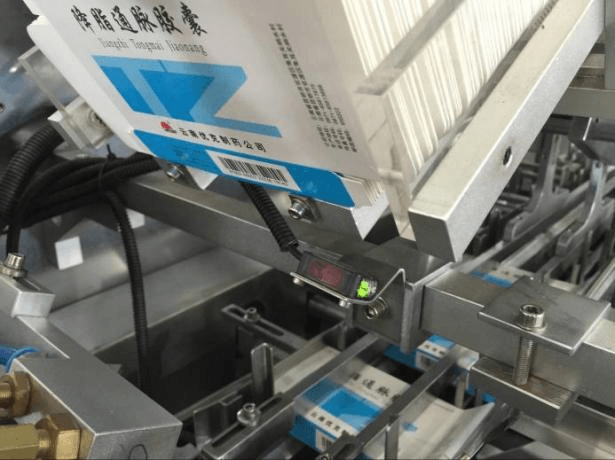
Choose the inspection location around the feature, not only around available space. A leaflet can be present at the feeder and still fail to arrive in the intended carton. Ask which point the sensor observes and what evidence connects that observation to successful insertion.
For multiple blister cards, sachets or other grouped products, define whether the requirement is presence, count, orientation or identity. These are separate checks. A single object interrupting a beam does not by itself show how many objects are in a stack, and two products with similar external appearance may require an identity check elsewhere.
- Before loading: identify the actual item or group and the conditions under which it is accepted for transfer.
- During transfer: specify how a missed transfer or uncertain result affects the associated carton.
- After loading: define any remaining visible check before the flaps hide the contents.
- After closure: use only a method demonstrated to distinguish the specified defect through a finished-pack property.
A downstream weight check can be useful in an appropriate application. Anritsu identifies carton completeness, including leaflets and blister counts, as pharmaceutical checkweighing applications. Whether that works for your pack depends on the weight difference and the variation of the complete package. It is not a guarantee that any missing leaflet can be detected.
Bring representative carton batches, product variants and leaflets to the trial. Include the formats likely to create the most difficult discrimination. Define the sample selection with your quality and engineering teams rather than treating a short run of one easy SKU as proof for the full range.
Separate readable codes, correct data and traceability
A buyer's request to “check the barcode” needs more detail. Ask whether the system must find a mark, decode it, compare its content with the expected value, assess print quality using an agreed verification method, or manage a serial number's status. These requirements lead to different equipment, software and evidence.
For printed text, distinguish recognising the characters from comparing the result with the approved batch or product data. Define the source of that expected data, who can change it and how a change becomes active for the correct production order. Avoid free-text operator entry where the agreed process requires a controlled data source.
For a failed or uncertain read, specify a deliberate disposition. “No read” must not silently become an accepted result simply because a carton is present. Conversely, the criteria must be tested with acceptable production print so a setting does not reject normal variation without justification.
Assess the real print location, carton orientation, surface finish, illumination and presentation at the agreed running conditions. Ask for examples of accepted and rejected marks and the exact reason for each classification. Do not accept a saved image from a different carton as the whole application test.
Serialization and aggregation extend beyond reading the carton. They involve identifiers, records and relationships between packaging levels. Keep that scope in the pharmaceutical track and trace integration guide; a barcode reader alone does not establish a functioning traceability system or regulatory compliance.
Verify the decision, the carton and the reject path together
Inspection is incomplete if a failed result is recorded but the affected carton remains in the accepted flow. Ask the supplier to explain how the inspected carton is tracked from the decision point to the reject point, including changes in speed, gaps between cartons and stops.
Agree a challenge plan with authorised personnel. Introduce only controlled, identifiable samples using the approved test method. Keep guards and interlocks operational. Do not reach into moving equipment, bypass sensors or create faults through an improvised production procedure.
- Identify the challenge: record the SKU, known defect and the inspection function being tested.
- Observe the decision: retain the result and the expected control response, including an uncertain or unavailable reading where applicable.
- Follow the physical carton: confirm that the intended pack reaches the designated reject or containment location.
- Reconcile samples: account for every introduced challenge and any associated cartons before releasing the line.
- Test agreed recovery conditions: verify what happens after a stop or a loss of inspection availability, and how normal acceptance resumes.
Where the purchased design includes reject confirmation, a container-full signal or monitoring of the reject mechanism, test those functions through the supplier's approved procedure. The required response may be rejection, a controlled stop or another defined containment action. Do not assume a universal response from a device name.
The cartoning machine FAT checklist covers the broader machine acceptance programme. Keep this guide's inspection matrix as an input to that programme, rather than treating a sensor-selection exercise as a completed FAT or qualification.
Check weight discrimination before accepting a completeness claim
Compare the distribution of complete-pack measurements with the distribution for each relevant defect. Carton, leaflet and product variation can obscure a small missing component. The detector's quoted resolution alone does not show that production packs can be separated into the required groups.
Forester’s My Insight
A simple overlap calculation can expose an unproven inspection assumption. The following inputs are hypothetical, not HIJ test data, a machine specification or recommended acceptance limits.
Assume complete cartons can weigh between 48.8 g and 51.2 g, and the missing leaflet in this simplified example weighs exactly 0.8 g. Removing it shifts the possible range to 48.0 g to 50.4 g:
48.8 − 0.8 = 48.0 g
51.2 − 0.8 = 50.4 g
The ranges overlap from 48.8 g to 50.4 g, a width of 1.6 g. A reading of 49.5 g could belong to either group. A weight-only threshold cannot perfectly distinguish these two assumed populations, even before adding measurement uncertainty.
This example is deliberately simplified and does not predict your false-accept or false-reject rate. Replace the assumed ranges with representative measurements at the intended operating conditions. If the actual populations cannot be separated as required, review a direct leaflet check or a combination of controls with the supplier.
Keep detection results separate from production acceptance. In the trial record, identify known defective samples accepted in error and known acceptable samples rejected in error, each with its own denominator. Do not combine them into an unexplained “accuracy” percentage. Sample counts and challenge selection need a justified test plan; zero failures in a small demonstration is not proof of zero production risk.
What to include in the supplier review
Send the carton drawing, pack contents and quantity, leaflet details, print examples, required output and the defects you need to detect. Ask the proposal to identify each device's purpose, location, detection boundary, reject responsibility and required trial evidence. Mark requirements not yet demonstrated as open items.
For an existing line, add the machine identity, layout and available interfaces. Compatibility and retrofit responsibility require specific review; this guide does not promise an HIJ retrofit service for another manufacturer's equipment.
Questions about carton inspection equipment
What does a carton inspection machine check?
It checks the features specified for its application, such as accessible print, product or leaflet presence, finished-pack weight or a visible closure condition. Confirm each installed function and its detection limits. The name does not imply that every carton defect or hidden component is inspected.
Can a checkweigher detect a missing leaflet?
Only if the actual complete and missing-leaflet packs can be distinguished under the agreed operating conditions. Carton and product weight variation can hide a light missing leaflet. Use representative pack measurements and challenge tests, not only the checkweigher resolution.
Does a barcode reader verify the correct carton contents?
No. Reading a carton code does not inspect hidden contents. Comparing the code with expected data can address a defined identity requirement, but product presence, count, leaflet insertion and any traceability records need their own specified controls.
Can inspection happen after the carton is closed?
Yes, for features accessible to the selected method, such as external print or finished-pack weight. An external camera does not directly see components hidden by an opaque carton. Select and test a suitable method for each required check.
Why is reject confirmation important?
A failed inspection result or reject command does not prove that the affected carton left the accepted stream. Verify carton tracking, physical rejection or containment, confirmation where included, and recovery after the agreed fault conditions.
Is HIJ offering a standalone carton inspection machine here?
No. This is an inspection-selection guide for cartoning projects, not a standalone inspection product offer. Ask HIJ to review the inspection requirements, included options and integration responsibilities for a proposed new cartoning configuration.
Sources and application limits
The linked MGS module demonstrates a print, vision and reject-verification scope. The linked Anritsu page describes pharmaceutical checkweighing and pack-completeness applications. These are those suppliers' descriptions, not specifications, certifications or service commitments for HIJ.
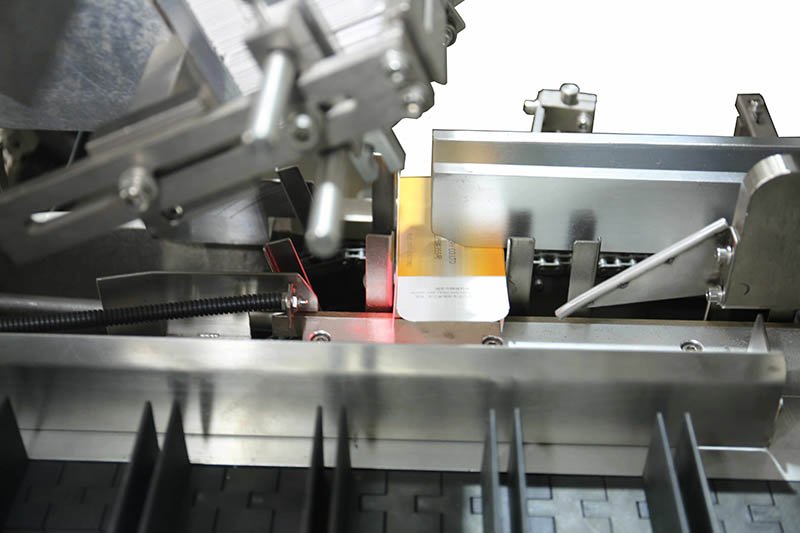
The selection matrix and hypothetical weight calculation are decision aids. Final detection limits, challenge methods and acceptance criteria belong to the actual pack, equipment configuration and approved test plan. Photographs show existing HIJ mechanisms; they do not document a specific inspection performance result.
Defining inspection for a new cartoning project? Share your carton, product count, leaflet and code requirements. Start with the pharmaceutical cartoning configuration and identify the checks that need sample trials.
Discuss Cartoning Inspection Requirements