Line planning · case packing automation
End-of-line packaging automation coordinates the steps that turn finished products into closed shipping cases. Start with the incoming product and required case pattern, then define equipment, transfers, controls and an accepted-output test as one project.
What does an end-of-line packaging system include?
A typical case-packing route receives finished cartons, bottles or other approved packs, arranges them into a defined group, loads that group into a shipping case and closes the case. Case forming, product grouping, loading, closing and inspection may be separate machines or combined in a single configuration. Labeling, palletizing and other operations are separate scope items unless expressly included.
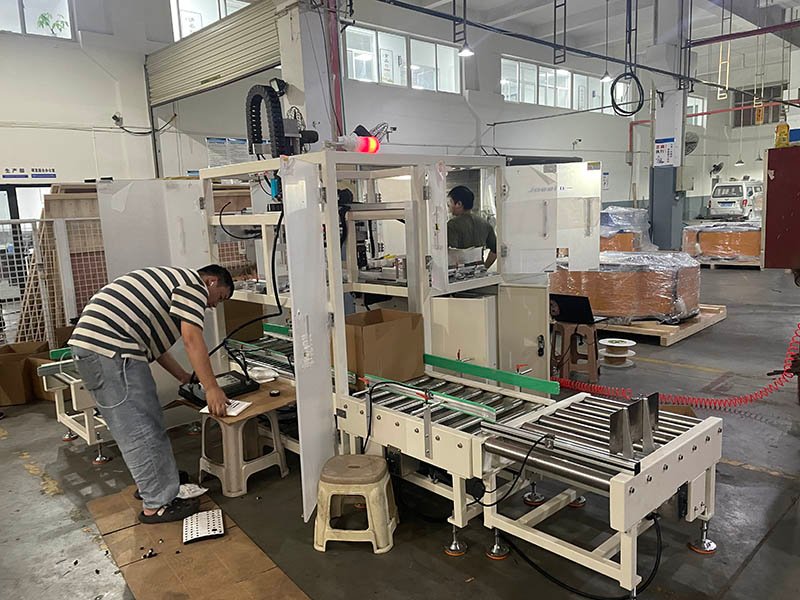
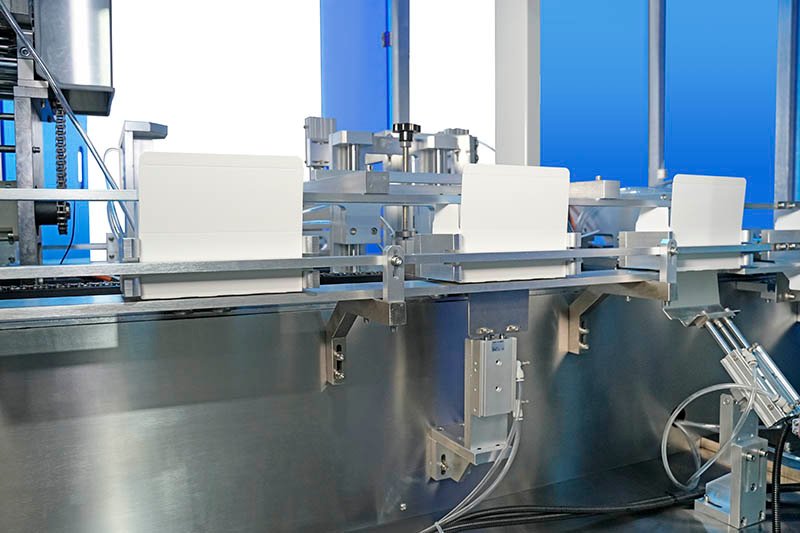
The physical handoffs between stations can be as important as each machine. An unbalanced transfer may interrupt the line even when each quoted machine has an adequate individual rating.
Start with the product and finished case
Document what arrives at the proposed boundary: product dimensions and weight, orientation, surface sensitivity, stability and presentation rate. Supply representative products, including the actual retail cartons or bottles rather than only a dimensional drawing. For flexible or unstable packs, discuss how the grouping device will hold them before loading.
Define the finished shipping case using its blank drawing, board specification, internal dimensions, pack pattern, orientation, permitted headspace and closing method. A pattern that fits on paper still needs checks for product protection, loading clearance and reliable case closing. The packaging owner approves the final pack and relevant transit tests.
One SKU or frequent changeover?
List every planned product and case combination in a format matrix. Note whether dimensions, product orientation, pack count, case style or tape width changes. Ask the supplier to identify adjustments, physical format parts, tools, storage and first-case checks for each combination. A machine range alone does not prove all combinations within that range are compatible.
Choose an integrated machine or separate stations
| Decision | Integrated equipment | Separate stations |
|---|---|---|
| Footprint and layout | A combined scope can simplify some transfers; confirm access, infeed and discharge space. | May permit a different layout; include conveyors, guards and access in the drawing. |
| Formats and changes | Review the full format matrix and each included change part. | Check compatibility and changeover at every machine and transfer. |
| Stops and service | Define how a fault affects the combined sequence and safe recovery. | Agree stop signals, accumulation, restart and responsibility between machines. |
| Procurement | Request the complete included boundary, options, tests and exclusions. | Assign ownership for interfaces, controls, integrated testing and unresolved faults. |
Neither architecture is automatically better or cheaper. Compare layout, format coverage, actual scope and acceptance evidence for the same project. For individual functions, see case erector vs case packer vs case sealer; for equipment configurations, review case packing machines.
Calculate line requirements in the same units
Before comparing quotations, convert the incoming product demand and shipping-case capacity to a common basis. State whether the target is products per minute or accepted cases per minute, and specify where the measurement is taken. A case contains a defined number of products, but rejects, short groups and stops affect how many finished cases are accepted.
Forester’s My Insight · transparent planning example
If a line must handle 120 finished cartons per minute and the approved pattern contains 12 cartons per case, the simple theoretical requirement is 10 filled cases per minute: 120 ÷ 12 = 10. This assumes a steady supply and no losses. It is not a HIJ machine rating or guarantee; stops, rejects and the agreed test conditions must be considered separately.
Ask for a complete operating definition: actual product and case, rate, run duration, planned and unplanned stops, staffing, sample quantities and accepted-case criteria. A single station’s peak speed cannot establish the final accepted output of the whole line.
Buffers and recovery
If the downstream station stops briefly, decide whether the upstream line stops immediately or whether products accumulate within an approved space. Define where a full buffer sends its stop signal, how it clears, what happens to partially grouped product and who can restart the system. Buffer size is a layout and controls decision to validate against product stability, rate and allowable stop behaviour—not a universal number of minutes.
Define the interfaces before requesting a quote
Mechanical handoff
Show transfer height, conveyor direction, product orientation, case movement and points where packs can tip, scuff or become trapped. Include operator access, change-part handling and safe maintenance clearance in the line drawing. Confirm which supplier provides each conveyor, guard and support.
Controls and line states
List run permissives, upstream and downstream ready signals, stop requests, faults, reset and controlled restart. Agree the behaviour for an empty case magazine, product shortage, full discharge and a rejected case. The required safety design and validation must be established by the responsible project specialists; a normal control signal is not automatically a safety function.
Inspection, rejection and traceability
Specify what is checked, where the check takes place, how a defective unit or case is diverted, and how the line confirms the reject when required. If labeling, coding or data exchange is part of the project, define the required information, interface and acceptance method. Do not assume an option is included just because it appears in a generic line diagram.
How to plan an acceptance test
- Agree the reference materials: approved products, case blanks, closure materials and format drawings, including the relevant revisions.
- Run the defined pattern: confirm product orientation, case squareness, count, closure and the agreed appearance criteria.
- Measure accepted output: count accepted cases at the agreed discharge point over the specified test period, recording stops, rejects and staffing.
- Challenge exceptions: test agreed conditions such as missing product, missing case, full discharge and a controlled stop and restart.
- Test a representative changeover: document format parts, adjustments and first-case checks for the formats included in the agreed scope.
- Close the evidence: retain settings, results, deviations, open actions and agreed documentation; decide what will be rechecked after installation.
A FAT is useful when the product and packaging samples and the pass/fail rules are agreed in advance. Site acceptance may need separate tests after transport, installation and connection to the actual upstream equipment.
What determines an end-of-line automation quotation?
The price depends on the functions included, product presentation, case design, pack patterns, speed, change parts, controls, inspection, conveyors, guarding, documentation and test scope. Compare itemized proposals using the same sample and operating assumptions. Ask whether transport, installation, site utilities, training, spare parts and third-party interfaces are included or excluded.
For a practical discussion, send a line layout, representative products and case blanks, target accepted output, pack pattern, formats and the operations that must be integrated. Describe existing equipment and its signal boundary if the new equipment must connect to an operating line.
Frequently asked questions
What is end-of-line packaging automation?
It coordinates the handling, grouping, loading and closing operations that prepare finished products for shipping. The specific equipment and interfaces depend on the approved project scope.
Is a case packer the same as a complete end-of-line system?
Not necessarily. A case packer performs a defined case-loading function; a complete system may also include case forming, conveyors, closing, inspection and other agreed operations.
How do I calculate cases per minute?
Divide the required product rate by the approved number of products per case for a theoretical starting point, then define stops, rejects and accepted-output measurement separately.
Can one system run several case sizes?
It may be possible with suitable adjustments or format parts. Review each product and case combination with drawings and samples before confirming the configuration.
What should be tested before acceptance?
Agree a test of product handling, case formation and closure, accepted output, exceptions and representative changeover using the approved product and packaging samples.
Discuss your end-of-line packaging project
Share your product, case drawing, pack pattern and required accepted output. We can review the equipment boundary and define the samples and tests needed for a quotation.
Discuss Your Case Packing Line