IQ, OQ and PQ should turn an approved equipment scope into documented evidence. The tests, responsibilities and records are not universal templates: they must follow the user’s requirements, quality-risk assessment, machine configuration, product and pack process, applicable market requirements and the buyer’s pharmaceutical quality system.
What Do IQ, OQ and PQ Mean?
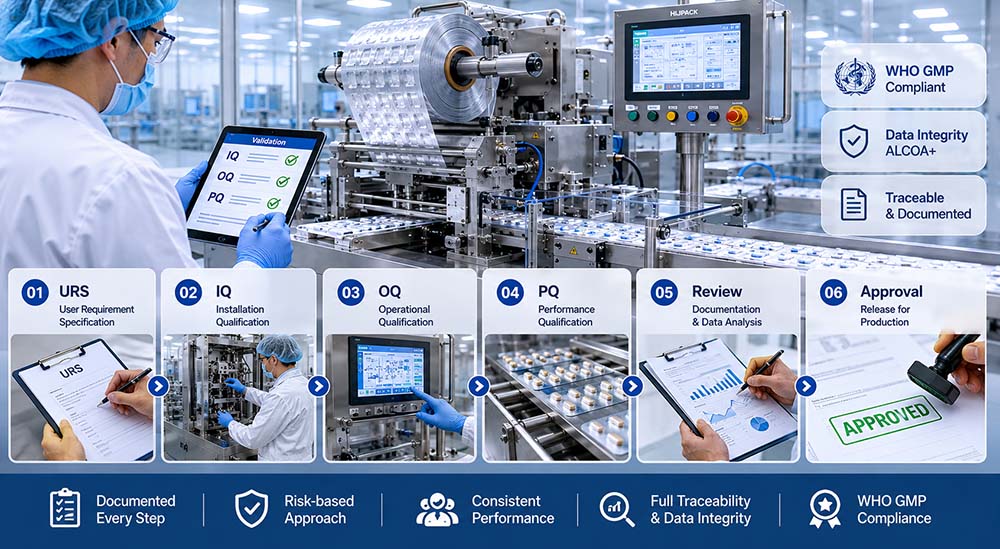
Installation Qualification (IQ) records whether the installed equipment, utilities, components and documentation match the approved design and purchase scope. Operational Qualification (OQ) challenges functions, controls, alarms and operating limits against an approved protocol. Performance Qualification (PQ) provides evidence that the configured equipment can perform its intended use under defined production conditions.
The three terms describe linked qualification stages, not certificates that a supplier can grant to a factory. A useful package traces each critical requirement from the user requirement specification (URS) to design review, testing, deviations, approval and the released configuration.
| Stage | Question answered | Typical evidence | Approval gate |
|---|---|---|---|
| IQ | Was the approved system received and installed as specified? | Identification, drawings, component checks, utilities, calibration status, manuals, software version and installation records | Installation discrepancies assessed and the released baseline recorded |
| OQ | Do functions and controls operate as intended across the justified test range? | Functional tests, operating-limit challenges, alarms, interlocks, recipes, access controls, inspection and reject checks | Results meet predefined criteria; deviations are closed or formally accepted |
| PQ | Can the configured system support the intended process under defined production conditions? | Approved product or justified challenge material, pack-quality results, accepted output, rejects, stops, sampling and run records | The buyer’s authorized functions approve the report and release decision |
Equipment Qualification Is Not the Same as Process Validation
Regulatory language differs by region and document. EU GMP Annex 15 and WHO guidance expressly describe qualification stages such as URS, DQ, FAT/SAT, IQ, OQ and PQ as appropriate. FDA’s process-validation guidance uses a lifecycle model and places facility and equipment qualification within process qualification. It does not prescribe one universal three-document template for every packaging machine.
This distinction matters when buying equipment. A supplier can provide design information, test procedures, certificates in the contracted scope, factory-test records and technical support. The pharmaceutical manufacturer must decide how that evidence fits its quality system, approve protocols, manage deviations and determine whether the equipment and process may be released.
Important boundary: a machine marketed as “GMP-ready” or supplied with protocol templates is not automatically qualified at the buyer’s site. Site utilities, installed configuration, approved materials, operating procedures, training, test methods and quality approvals remain project-specific.
What Must Be Defined Before IQ Starts?
Qualification becomes expensive when the protocol is expected to repair an unclear purchase scope. Before the equipment reaches site, define the intended use and the evidence needed to accept it. The depth of work should follow documented risk rather than a copied checklist.
- Approve the URS. State the products, packaging materials, formats, accepted-output target, utilities, controls, inspection, data, cleaning, changeover, safety and documentation needs.
- Assess quality risk. Identify functions and process parameters that can affect product identity, pack integrity, traceability, contamination control or release decisions.
- Freeze the configuration boundary. Record machine modules, options, tooling, inspection devices, software versions, interfaces and exclusions.
- Create traceability. Map each critical requirement to design evidence and a FAT, SAT, IQ, OQ or PQ test, with no requirement left unverified by accident.
- Approve protocols before execution. Name prerequisites, responsibilities, instruments, sampling, test steps, raw-data expectations, acceptance criteria and deviation handling.
For a blister project, the blister packing machine URS guide provides machine-specific inputs. A separate FAT checklist helps define which evidence should be collected before shipment.

Installation Qualification: Build an Accurate Installed Baseline
IQ should describe the equipment that actually arrived, not the equipment expected from the quotation. Verify identity, location, utilities and the documentation package against approved sources. Record differences rather than editing the protocol after the fact to make the result appear compliant.
- Model, serial number, module and asset identification
- Approved general arrangement, wiring and pneumatic drawings
- Installed components, options, tooling and interfaces
- Electrical, air, vacuum, extraction and other required utilities
- Materials of construction where they are part of the URS
- Instrument list, ranges, IDs and calibration status
- PLC, HMI, drive, vision and recipe-software versions
- Manuals, spare-parts list, backups and supplier certificates in scope
- Guards, emergency stops and required safety documentation
- Installation punch list, deviations and released baseline
A certificate should be checked for identity, scope, revision, traceability and relevance; its presence alone is not evidence that the installed function meets the URS. Likewise, IQ should not be used to approve an undocumented design change. Route the change through the agreed deviation or change-control process.
Operational Qualification: Challenge Functions and Operating Limits
OQ demonstrates operation against an approved functional scope. Test normal modes and justified challenges, including alarms, interlocks and recovery behavior. The protocol should distinguish a machine setting from a verified operating limit and should state what data will prove acceptance.
For packaging equipment, an OQ plan may include:
- start, stop, manual, automatic and controlled-recovery sequences;
- setpoint entry, displayed values, recipes and permitted access levels;
- sensor, alarm, guard, interlock and reject-system challenges;
- operation at justified low, nominal and high conditions where applicable;
- temperature, pressure, timing, motion, registration or dosing functions relevant to the machine;
- inspection decisions, rejected-item segregation and event records;
- power loss, compressed-air loss or other defined recovery tests;
- cleaning, line clearance and changeover steps that require operational verification.
Do not copy acceptance limits from another machine or a sales brochure. Limits should come from the URS, approved design, component capability, packaging-material requirements, process knowledge and risk assessment. Record actual results and raw observations, not only “pass”.
How Do You Write Testable Acceptance Criteria?
An acceptance criterion should state what is tested, under which condition, how the result is measured and what constitutes acceptance. “Machine operates correctly” is not testable. “When the defined guard is opened during automatic operation, hazardous motion stops and the named alarm is recorded” identifies the condition, expected response and evidence.
Start from the requirement and risk, then choose an observable result. Avoid copying a supplier’s rated speed into the protocol if the business need is accepted packs over time. Avoid writing “all alarms work” when the alarm list, challenge method and required response have not been approved.
| Requirement area | Weak wording | Testable approach | Evidence |
|---|---|---|---|
| Output | Machine reaches full speed | Run the approved configuration for the defined period and evaluate accepted output, rejects, waste, stops and interventions against agreed limits | Time log, counters, reject record and reconciled result |
| Pack quality | Seals are good | Sample finished packs by the approved plan and test them with the named, suitable method against the approved pack criterion | Sample identity, instrument, raw results and disposition |
| Inspection | Reject system works | Introduce the approved challenge set, record detection and rejection, and confirm segregation and event handling | Challenge log, inspection result and reject confirmation |
| Access control | Passwords are secure | Verify each defined role against permitted and prohibited actions, including recipe or setpoint changes where applicable | Role matrix, challenge results and audit record if in scope |
Where a criterion uses a tolerance, sampling level or statistical rule, identify its approved source. That source may be a product specification, drawing, validated method, quality procedure, regulatory commitment or justified protocol decision. This prevents a convenient but unsupported number from becoming a permanent qualification requirement.
Performance Qualification: Prove the Intended Use, Not a Demonstration Run
PQ should represent the approved intended use and should be planned with the people who own production, quality, engineering and the product process. The protocol defines the product or justified challenge material, packaging components, tooling revision, operating conditions, sampling, test methods, run duration or batch boundary, acceptance criteria and required records.
There is no universal FDA rule that every equipment PQ must use exactly three runs. The number of runs and the amount of evidence should be scientifically justified from process knowledge, risk, variability and the applicable quality system. Where a company or market procedure calls for a particular number, name that source in the protocol instead of presenting it as a worldwide rule.
| PQ input | What to define | Evidence to retain |
|---|---|---|
| Product and pack | Approved product or justified challenge product, component grades, drawings, artwork and tooling revision | Material identification, batch or lot records, approved specifications and line setup |
| Operating conditions | Approved settings, range or challenge conditions and trained operators | Recipe, actual readings, start/stop times, interventions and environmental records where relevant |
| Sampling and tests | Locations, frequency, sample size, test method and data owner | Raw data, instrument identity, test results and calculations |
| Accepted output | Good-pack criteria, rejects, waste, stops and disposition rules | Total output, accepted packs, rejects, defect categories, waste and stoppage log |
| Release decision | Required reports, deviation closure and approval roles | Approved PQ report, open-item status and authorized release decision |
Who Owns IQ, OQ and PQ?
The answer should be written in a responsibility matrix before the purchase order or protocol approval. “Supplier supports validation” is too vague to price, schedule or audit. Separate document preparation, approval, execution, witnessing, raw-data ownership, deviation investigation and final release.
| Work item | Equipment supplier | Pharmaceutical manufacturer |
|---|---|---|
| URS and intended use | Review feasibility, respond to requirements and identify exclusions | Own, approve and maintain the requirements and quality-risk basis |
| Design and configuration evidence | Provide agreed drawings, specifications, component data and configuration records | Review suitability and approve the design boundary through authorized functions |
| Protocol documents | Draft or supply templates only if included in contract | Approve site protocols, methods, acceptance criteria and execution governance |
| IQ/OQ execution | Perform or support agreed technical steps and provide records | Control site execution, witnesses, deviations, data review and approval |
| PQ | Support equipment operation and investigation within contracted scope | Own product, process, sampling, test methods, batch records and release decision |
| Lifecycle control | Notify agreed supplier changes and provide service/configuration records | Own change control, maintenance, calibration, periodic review and requalification decisions |
Can FAT and SAT Evidence Be Reused in IQ or OQ?
FAT and SAT can reduce duplicated work when the earlier test is approved, controlled and relevant to the installed configuration. Reuse should be a documented decision, not an assumption. Record the requirement covered, protocol and result referenced, test instruments, witnesses, deviations and the reason the evidence remains valid after shipment and installation.
A function may need to be retested when the configuration, software, tooling, utility, interface, environment or acceptance criterion changed. Site-dependent items—such as installed utilities, room interfaces, network connections, exhaust, product handling or downstream transfers—normally require site evidence even if the machine passed factory testing.
Practical traceability rule: each URS requirement should point to one or more approved evidence records. If FAT evidence is credited in IQ or OQ, the traceability matrix should identify the exact record and the documented assessment supporting reuse.
What Should the Qualification Document Package Contain?
The required package depends on risk and contract scope. Ask for a document index early and identify format, language, revision and approval status. A useful index may include:
- URS response and requirement traceability matrix
- Approved configuration, drawings and component list
- Risk-review inputs and critical-function list
- FAT/SAT protocols, raw records and reports
- IQ/OQ protocol templates or executed records as contracted
- Instrument list and applicable calibration certificates
- Software, recipe, access and backup information in scope
- Operating, cleaning and maintenance manuals
- Training records or materials where contracted
- Deviation, punch-list and open-item registers
- Spare-parts list and released configuration baseline
- Service and change-notification boundaries
The list is not a promise that every item is supplied by every manufacturer. Put the final document index, responsibilities and exclusions in the quotation and contract.
Translate the Framework into Packaging-Equipment Tests
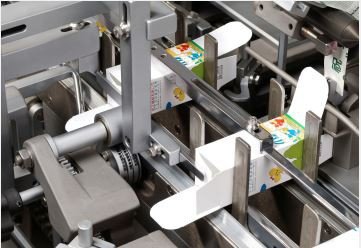
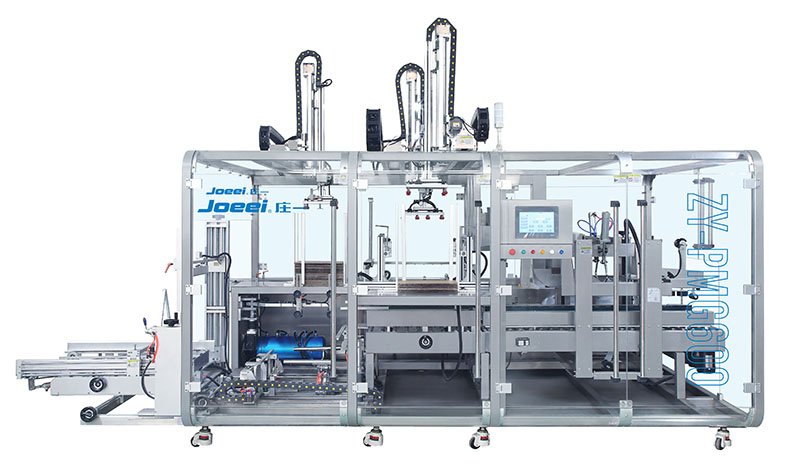
Generic qualification structure should lead to machine-specific evidence. A blister line may need forming, feeding, sealing, registration, cutting, inspection and reject checks. A cartoner may need product and leaflet insertion, carton erection, coding, inspection and closure checks. A syringe-filling line may require container handling, filling, closure, environmental and in-process control evidence.
Use the relevant route for detailed planning:
How Should Deviations, Changes and Requalification Be Handled?
A deviation is evidence, not an inconvenience to hide. Record what occurred, affected requirements and data, immediate controls, investigation, correction and approval. State whether a test must be repeated and why. Open items should have an owner, due date, impact assessment and release status.
After release, evaluate changes against the qualified baseline. Examples include relocation, software or recipe-control changes, replacement of critical components, new tooling, new packaging materials, major maintenance, altered utilities or a sustained adverse performance trend. The impact assessment determines whether documentation updates, targeted testing or broader requalification are required.
Do not promise a universal annual requalification interval. Define periodic review and requalification using the applicable regulation, site procedure, equipment criticality, calibration and maintenance history, deviations, performance data and change history.

Questions to Ask Before Comparing Qualification Support
Send the same information to every supplier and ask for written answers. This makes document scope and technical support comparable rather than relying on labels such as “full validation package”.
- Which URS requirements are met, conditional, excluded or still open?
- What document index is included, in which language, format and approval status?
- Which FAT, SAT, IQ and OQ tests will the supplier prepare, execute or witness?
- Which buyer-supplied product, packaging materials, tooling and test methods are required?
- How are raw data, deviations, retests, punch-list items and final reports controlled?
- Which instruments will be used and what calibration evidence will be available?
- What software versions, access controls, recipes and backups are documented?
- What on-site support, training, travel, translation and revision work is included or excluded?
- How are post-order design changes and post-delivery supplier changes communicated?
- What information is required before a firm schedule and price can be confirmed?
Procurement rule: compare named documents, named tests and named responsibilities. A low quotation may simply exclude protocol preparation, site execution, travel, retesting, translations, data review or revision support.
Frequently Asked Questions
What is IQ OQ PQ validation?
IQ, OQ and PQ are linked equipment-qualification stages. IQ verifies the installed baseline, OQ challenges operation against approved requirements and justified limits, and PQ demonstrates the intended use under defined production conditions. The protocols, evidence and approvals must fit the equipment, process, risk and pharmaceutical quality system.
What is the difference between equipment qualification and process validation?
Equipment qualification shows that facilities, utilities and equipment are suitable for their intended use. Process validation addresses whether the manufacturing process can consistently deliver output meeting predetermined quality requirements. Equipment qualification supplies part of the evidence needed for process validation, but it does not replace product- and process-specific validation.
Does FDA require documents called IQ, OQ and PQ?
FDA regulations require suitable equipment, written procedures, controls and documented evidence, while FDA’s process-validation guidance uses a lifecycle approach that includes equipment qualification. The exact document names and structure are not a universal FDA template. EU GMP Annex 15 and WHO guidance more explicitly describe IQ, OQ and PQ terminology.
How many PQ runs are required?
No single number applies to every equipment and process qualification project. The protocol should justify the number and duration of runs from process knowledge, risk, variability, intended use and the applicable site or market procedure. A fixed number should not be presented as a worldwide rule without its governing source.
Can a packaging-machine supplier approve IQ OQ PQ?
A supplier may prepare documents, execute technical tests or support investigations within the contract. The pharmaceutical manufacturer normally controls protocol approval, site execution governance, deviation disposition and the final release decision through its authorized quality system.
What should a machine supplier provide for qualification?
The contracted scope may include a URS response, drawings, specifications, component and instrument lists, calibration evidence, FAT records, manuals, configuration information and protocol templates. Availability, format, language, revision, execution support and exclusions should be named before purchase.
When is requalification needed?
Requalification may be triggered by changes, relocation, critical-component replacement, software updates, major maintenance, new materials or formats, adverse trends or periodic review requirements. The scope should follow a documented impact and risk assessment rather than an automatic universal interval.
Can FAT replace OQ at the buyer’s site?
FAT evidence may support later qualification and can avoid unnecessary repetition when justified, but it does not automatically replace site verification. The buyer should assess what changed after FAT, including shipment, installation, utilities, interfaces, software, tooling and the approved site protocol.
Regulatory and Technical References
- FDA, Process Validation: General Principles and Practices.
- FDA Process Validation guidance, final PDF.
- EU GMP Annex 15, Qualification and Validation.
- WHO TRS 1019 Annex 3, Guidelines on Validation.
- 21 CFR 211.63, Equipment design, size and location.
- 21 CFR 211.68, Automatic, mechanical and electronic equipment.
- 21 CFR 211.100, Written procedures and deviations.
Turn the Qualification Plan into a Testable Machine Scope
Send the intended use, URS, products and packaging materials, machine modules, inspection needs, document expectations and site-support boundary. HIJ can review the equipment configuration and identify the technical evidence that can be included in the quotation.
Discuss My IQ OQ PQ Scope