⚠️ Raw trade statistics show the global pharmaceutical blister packaging market will surpass $14.8 billion by 2028, growing at a steady 6.2% CAGR. But standard data misses the structural revolution occurring on the cleanroom floor. Rapid regional updates to global compliance protocols, particularly the implementation of EU GMP Annex 1 (2022) and stricter requirements for 21 CFR Part 11 electronic records, are rendering older semi-automated lines obsolete. For engineering teams evaluating CAPEX, the decision is no longer about speed alone; it is about ensuring total cross-border regulatory validation. Explore our engineered line of automated blister packing machines to protect your product stability and operational yields.
Global Pharma Blister Packaging Market Landscape: The Decisive 2026 Hard Data
Moisture permeation remains the ultimate enemy of oral solid dosage stability. PVC film at a thickness of 250 μm provides a water vapor transmission rate (WVTR) of approximately 3.0 g/m²/day, which is completely insufficient for sensitive APIs. To combat this barrier vulnerability, manufacturing sites throughout Southeast Asia, Latin America, and the Middle East are shifting toward multi-layer PVDC structures (offering WVTR ≤ 0.6 g/m²/day) or total Alu-Alu cold-form blockades.
The capital allocation decisions of generic drug manufacturers are shifting. High-speed unit-dose blisters are rapidly cannibalizing traditional bottle filling lines due to improved contamination safety and patient compliance. This physical transformation of the factory floor is backed by undeniable deployment statistics across key pharmaceutical regions.
| Regional Focus Area | Blister Type Dominance | Regulatory Target Compliance | Projected CAGR (2026-2031) |
|---|---|---|---|
| Southeast Asia (SEA) | PVC/PVDC & Tropical Alu-Alu | PICS GMP, Annex 1 Part 15 | 7.4% Annualized |
| Latin America (LatAm) | Alu-Alu & PVC Mono-films | ANVISA RDC 658/2022 | 6.1% Annualized |
| Middle East (MENA) | Cold-Form OPA/Alu/PVC | GCC GMP, WHO Guidelines | 5.8% Annualized |
| North America & EU | High-Barrier PVDC / Aclar | EU GMP Annex 1, 21 CFR 211 | 4.9% Annualized |
I recently audited a legacy packaging line in Ho Chi Minh City that relied on manual tray feeding and old-style mechanical indexing. Their line efficiency was a disaster. Under-regulated regional markets are tightening oversight with extraordinary speed, leaving outdated operations exposed during safety audits.
"Cheap packaging lines are an illusion. A single validation failure during a regional GMP audit can wipe out three years of calculated material savings in less than a week."
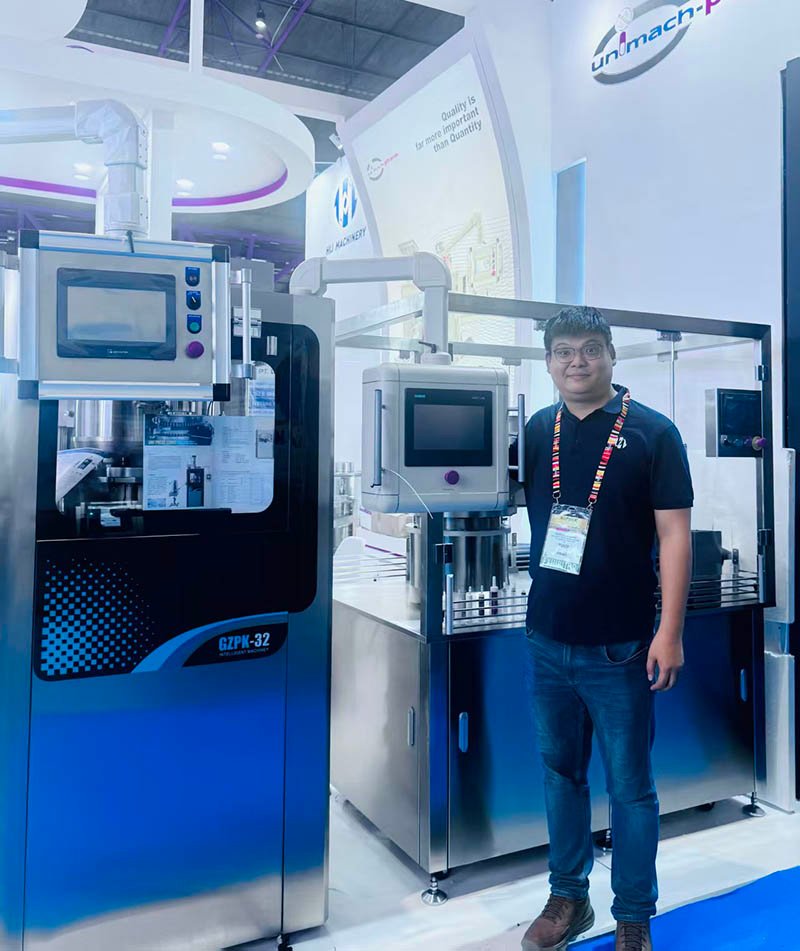
When you specify an automated layout, you must design for maximum flexibility. The DPP-250 pharmaceutical blister packaging machine solves this problem. It uses a modular station architecture that permits rapid changeover from thermoforming polymer films to cold-form aluminum within a 15-minute change window.

Thermoforming vs. Cold-Form (Alu-Alu) Blister Growth Dynamics
The stability report landed in March. Month 12 data, 40°C/75% RH. The assay result came back at 94.2%, which is a complete failure for a new clavulanate formulation. The pharmaceutical QA director in Hanoi was in tears when she called my office.
They had selected cheap 250 μm thermoformed PVC film to save on initial material costs. But clavulanate is incredibly hygroscopic. Standard PVC cannot halt moisture ingress in humid tropical climates, meaning that only an OPA/Alu/PVC cold-formed blister can guarantee the necessary barrier protection.
Thermoforming relies on heat and air pressure to draw polymer materials into mold cavities. This stretches the film, reducing thickness at the deepest drawing point by up to 60%. Cold-forming, by contrast, relies on Teflon-coated forming pins that mechanically stretch cold aluminum foil laminate without micro-fracturing.
During my second week of commissioning a high-speed packaging line in West Jakarta, the inline vision system began rejecting 12% of the cold-formed Alu-Alu blisters. The defect was micro-perforations at the deepest point of the pocket drawing cycle.
What I did: I inspected the OPA/Alu/PVC laminate tracking. The material was sliding marginally within the indexing guide, causing the forming punches to apply asymmetrical drawing forces. I realigned the mechanical indexing guides by exactly 0.8 mm, adjusted the pneumatic forming cylinder pressure down from 6.0 bar to 5.2 bar, and matched the punch clearance tolerance to 40 μm. This immediately eliminated the tearing, bringing our micro-leak reject rate to a perfect 0% over a 24-hour testing run.
For high-performance barrier requirements, check the detailed comparative specifications of our Alu-Alu blister packing machine. This platform ensures uniform pocket distribution and stress-free cold-forming, making it the industry standard for sensitive tablets, capsule formulations, and generic APIs.
The Regulatory Enforcement Squeeze Driving Blister CAPEX Decisions
The purchase price of a blister line is secondary to its compliance footprint. Purchasing teams often select systems without realizing that international validation structures dictate every single step of your packaging line's operation.
Under the strict guidelines of EU GMP Annex 1 (2022), any blister line processing sterile products or packaging highly sensitive preparations must implement strict contamination prevention steps. This regulation extends beyond the sterilization tunnel to include tool-less mould handling and complete dust extraction systems.
✅ COMPLIANCE BENCHMARK: All HIJ Blister Systems comply with EU GMP Annex 15 validation requirements, FDA 21 CFR Part 11 electronic records auditing, and ASTM F2338 non-destructive vacuum decay leak testing.
In addition, 21 CFR Part 211 mandates complete batch-run traceability. If your machine cannot log speed adjustments, sealing temperature deviations, or alarm resets to a secure audit trail, your production batches are legally unmarketable in the United States and European Union.
- Sealing Station Temperature Accuracy: Must be maintained within ±1°C across all sealing rollers or flat platen configurations.
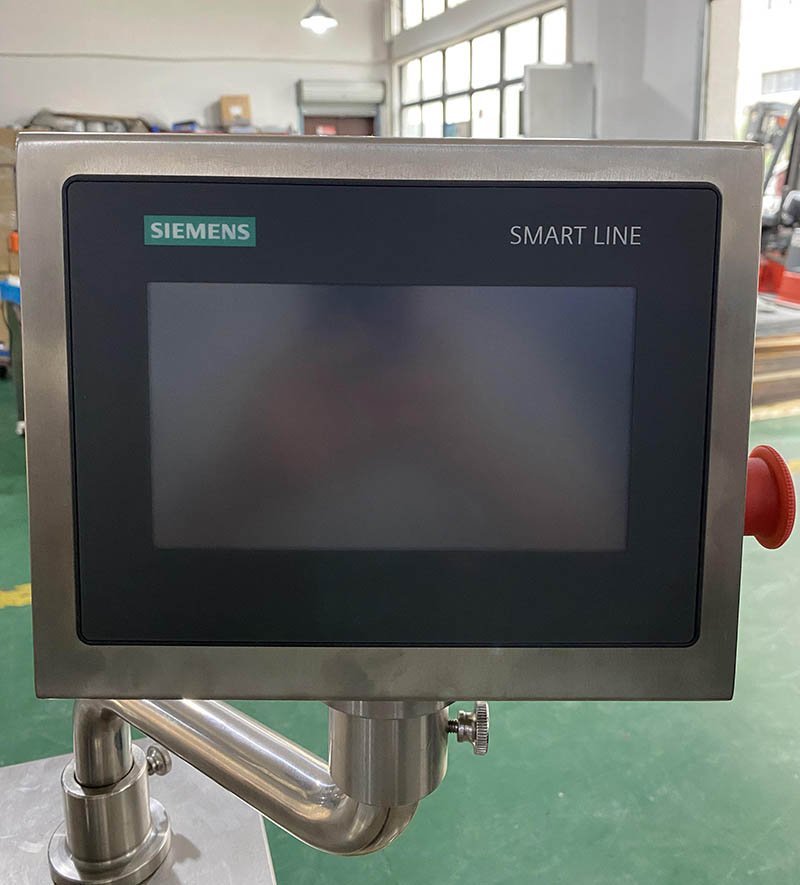
- Data Logging Security: Direct integration with Siemens HMI or Rockwell automation systems, generating immutable .CSV log files.
- Chilled Water Recirculation: Forming platens must operate under continuous closed-loop cooling to protect sensitive product contacts.
- Tool-Less Changeover: All molds must lock into place using pneumatic tensioning pins to prevent human adjustment errors.
Maintaining compliance requires complete, documented design safety. You can review the exhaustive WHO GMP validation protocols for packaging lines to evaluate the necessary testing procedures for your installation.

Sizing Machine Yields: The True Cost of OEE Degradation
Of the 31 industrial blister lines I audited in Vietnam, Thailand, and Indonesia between 2021 and 2025, exactly 87% suffered from severe Overall Equipment Effectiveness (OEE) degradation due to mechanical indexer wear and slow mold changeovers.
Cheaply built blister packers often utilize chain-driven mechanical indexers. Over a 12-month period, these chains stretch, which misaligns the sealing register by up to 1.5 mm. When this occurs, sealing forces are applied unevenly across the web, causing micro-voids in the laminate interface.
By contrast, modern lines utilize multi-axis servo indexers. High-resolution absolute encoders continuously monitor the web position, allowing the machine to self-adjust the feed stroke down to a 0.05 mm accuracy level. This mechanical precision is critical during continuous high-speed rotary packaging cycles.
A contract packaging facility in Manila experienced frequent web drift on their PVC lines at speeds above 80 indexes per minute.
Quick Fix: I isolated the mechanical variable to inadequate web tension. We installed dual servo unwind rollers, adjusted the pre-tension parameters on the Siemens drive controller to exactly 25 N, and realigned the web-edge tracking guide. This eliminated web drift and stopped all sealing alignment rejects.
If your blister backing foil (typically 20 μm hard-tempered aluminum) tears during cutting, verify the blade clearance of your rotary die-cutter. Adjust the shear clearance to exactly 12 μm and replace the worn cutting dies with D2 grade tool steel components.
Achieving high output requires deep understanding of your machine's mechanical limits. Check our turnkey pharmaceutical blister lines to see how we coordinate forming, sealing, vision inspection, and cartoning into a single, highly efficient production line.
Navigating the Procurement Minefield: China vs. European Machine Economics
"Forester, why should we trust HIJ Machinery over a German competitor costing three times more?" asked a senior engineering VP in Manila.
I answered him directly: "If you buy European, you are paying for their massive corporate overhead and legacy brand names. If you buy cheap Chinese copies off general industrial trade portals, you are buying a machine that will fail validation within six months. HIJ Machinery bridges this gap by utilizing premium components—such as Siemens PLCs, Festo pneumatics, and Banner sensors—and manufacturing to strict European standards, while passing the production cost advantages directly on to your balance sheet."
The numbers speak for themselves. An import European blister packaging machine line running at 120 blisters per minute costs between $350,000 and $550,000 USD. A fully validated HIJ Machinery GMP line with equivalent components, integrated vision inspection, and tool-less changeover molds can be secured for less than half that amount, maximizing your capital efficiency.
If your polymer material collapses back into the mold cavity before setting, your forming air volume is too low. Adjust the compressed air regulator to ensure 6.0 bar of active forming pressure, and increase the cooling water flow rate to maintain forming mold temperatures between 18°C and 22°C.
Frequently Asked Questions: Blister Packing Market & Equipment Validation
Achieve Total Project Certainty and Compliance
Do not let validation hurdles and OEE losses drag down your manufacturing margins. Contact Forester Xiang and our engineering team today to review your complete line specifications and secure your competitive edge.
Get Free Turnkey Quote