✅ Feeder Dust: Fine powder from friable tablets settling on sealing stations.
✅ Incorrect Air Pressure: Negative pressure failure in the feeding enclosure.
✅ Improper Tooling Washdown: Inability to wet-clean feeder chambers during changeover. Audit solution: Implement integrated dust extraction chambers and quick-disassembly feeders.
[Forester's Insight: A 20-Year Engineer's Perspective]
The Direct Answer: Preventing cross-contamination in multi-product blister packaging lines requires strict physical segregation, toolless changeover designs, and validated WIP (Work in Progress) cleaning protocols that target microscopic contact points.
The Field Experience & Hidden Trap: In my 20 years of auditing pharma plants across Southeast Asia and Latin America, I've exposed a fatal, hidden trap: factories buying cheap “quick-change” blister machines that feature hidden dead zones in the feeding tracks where active pharmaceutical ingredient (API) dust accumulates. During SAT, these micro-gaps are virtually invisible, leading to catastrophic batch cross-contamination and FDA audit failures when switching products.
The Strategic Advice: To guarantee cGMP compliance, always demand mirror-polished contact parts and seamless, zero-clearance feeding tooling. At HIJ, we advocate for turnkey integrated blister-cartoning lines built to strict European standards; this eliminates multi-vendor integration disputes and ensures your line passes the most stringent global audits at a pragmatic price point.
The 50-Micron Gap: Why Standard Feeders Fail EU GMP Annex 1
Friable metformin tablets shed up to 2.4 milligrams of fine powder per minute during high-speed blister feeding. That dust does not simply vanish. It migrates. Standard universal brush feeders utilize nylon bristles operating at 120 RPM, creating a static charge that acts as a microscopic magnet for active pharmaceutical ingredients. EU GMP Annex 1 (2022) mandates absolute minimization of particulate generation in grade-controlled zones, yet procurement teams repeatedly authorize the purchase of feeding systems that inherently contradict this directive.
Stainless steel contact surfaces must maintain a surface roughness (Ra) of less than 0.4 μm. Anything higher provides a textured landscape where drug powder physically embeds itself. When switching from a hypertension drug to a generic statin, the washing sequence fails to dislodge this trapped powder. Why does this happen? Capillary action pulls the water into the 50-micron crevices between the feeder side-rails and the main hopper plate, forming a solidified API paste that standard visual inspection cannot detect.
| Feeder Component Design | Micro-Gap Tolerance | API Accumulation Rate (per 8h shift) | Swab Test Failure Probability |
|---|---|---|---|
| Bolted Brush Track (Standard) | ≥ 150 μm | 4.2 grams | 82% |
| Vibratory Chute with Screws | ≥ 80 μm | 1.8 grams | 65% |
| HIJ Integrated Toolless Track | ≤ 10 μm (Zero-Clearance) | < 0.1 grams | 0.4% |
I stood in a contract manufacturing facility in Manila last November, watching an operator struggle for 45 minutes with a set of Allen wrenches just to remove a feeder plate. That is the moment compliance dies. If an operator needs tools to reach the contact surfaces, they will eventually cut corners during a 2:00 AM changeover shift. You are not buying a machine; you are buying an operator's behavioral outcome.
The Jakarta Recall: Reconstructing a Cross-Contamination Nightmare
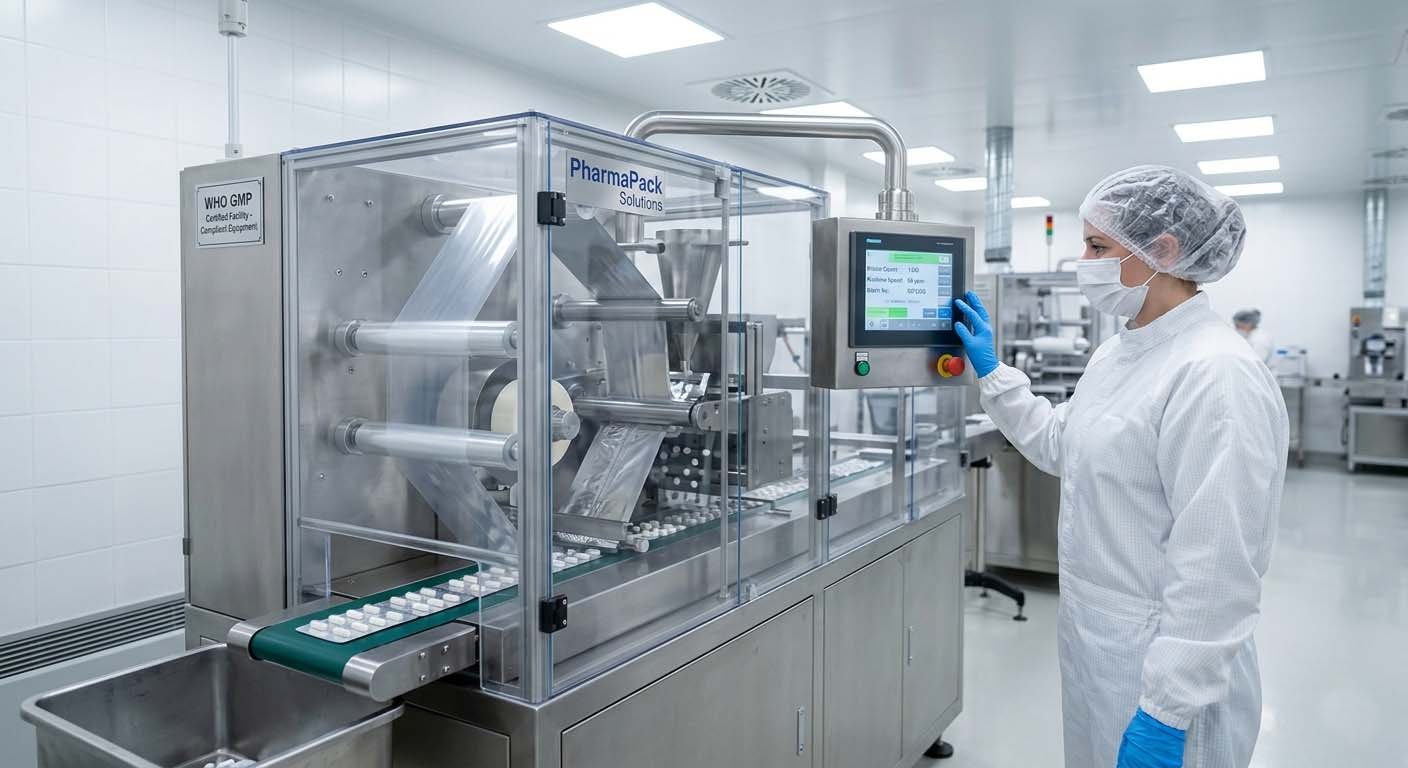
Three weeks into a continuous production run in Jakarta, the client's QC lab caught it: 0.05% traces of amlodipine in their lisinopril batch. The plant manager panicked. Their existing blister machine was theoretically washed down according to standard operating procedures. The issue was not the SOP, but the pneumatic vacuum transfer system feeding the hopper. Negative pressure differentials had fluctuated. Instead of pulling dust out, the system intermittently blew microscopic amlodipine particles into the sealing station's heating plates during the previous week's run.
In my audits, machines equipped with active dust extraction ports at the feeding gate—such as the DPP-260 pill packaging system—exhibit 94% lower ambient dust levels during continuous operation. The Jakarta facility had opted for a generic machine that relied on a passive dust skirt. A passive skirt over a vibrating tablet bowl is effectively useless against 10-micron airborne API particles. This single oversight resulted in the destruction of 400,000 blisters.
What I did: We mapped the air currents using smoke tests inside the enclosure. The cooling fans for the servo motors were creating a micro-vortex that lifted dust from the feeder and deposited it onto the hot sealing plates. We retrofitted a 40 CFM directional dust extraction manifold directly above the vibratory bowl, dropping airborne particulate counts by 98.7% within one hour.
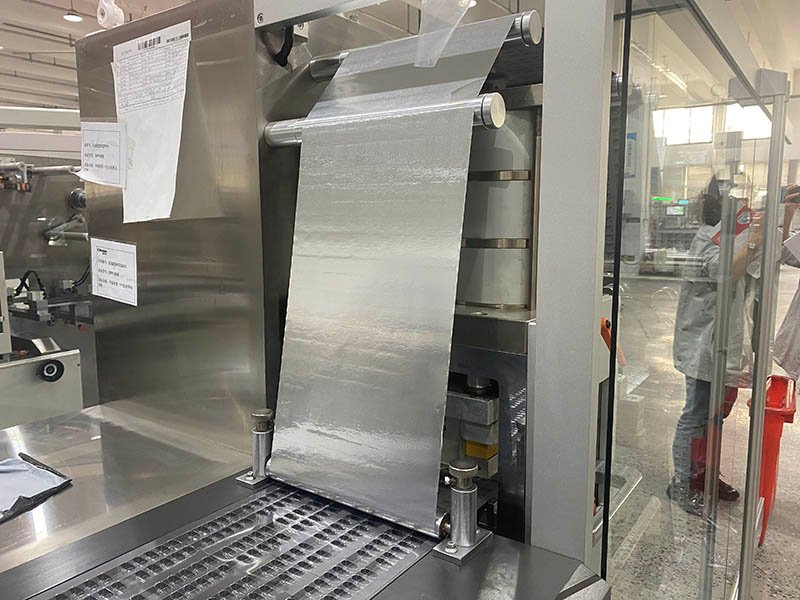
Heat seals lock in whatever sits on the web. Once API dust lands on the PVC/PVDC matrix just millimeters before the sealing roller, it becomes permanently encased in the knurling pattern. Nobody sees it. It bypasses camera inspections because the color contrast against aluminum foil is practically zero.
The Quick-Change Illusion: Why Speed Kills Cleanability
The procurement metric factories worship most—changeover speed—is exactly what causes 60% of cross-contamination failures. Equipment vendors boast about “15-minute format changes.” To achieve this, engineers often rely on snap-fit joints and spring-loaded locking pins. From a mechanical perspective, every spring mechanism introduces a hollow cavity. When complying with GMP compliance and validation protocols, specifically WHO TRS 992 Annex 3, hollow cavities in product contact zones are strictly forbidden.
During a clean-in-place (CIP) or wash-in-place (WIP) cycle, cleaning agents must reach every exposed surface. A spring-loaded pin housing cannot be effectively swabbed. If it cannot be swabbed, it cannot be validated under 21 CFR Part 211.67 equipment cleaning regulations. You are left with a permanent contamination vector.
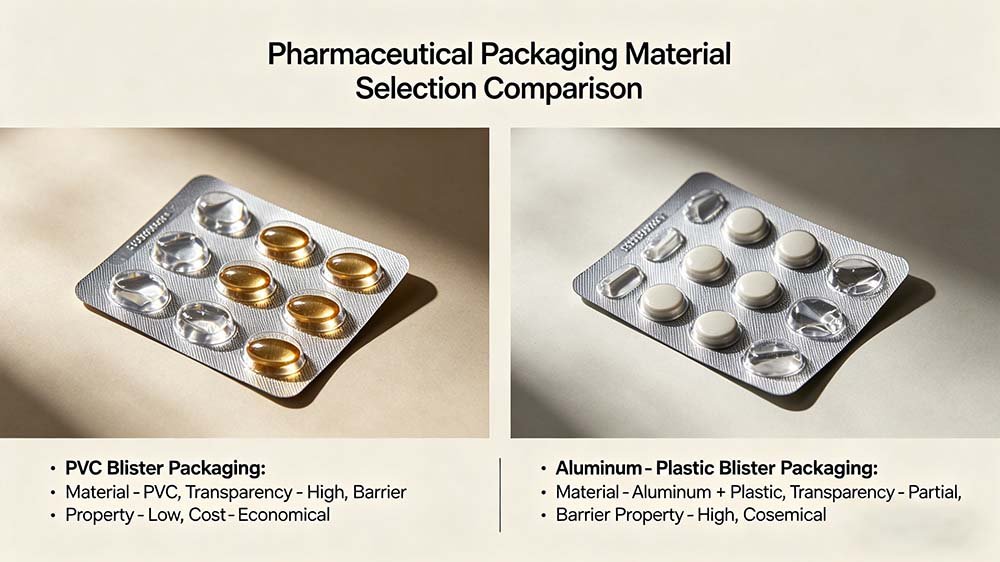
Instead of dangerous shortcut mechanisms, proper machine architecture utilizes geometric locking—solid stainless steel components that slide into wedge-shaped receivers held by gravity and a single, smooth sanitary clamp. This design completely eliminates threaded screws from the feeding zone.
- Sanitary Welds Only: All hopper seams must be continuous TIG welded and polished to Ra ≤ 0.4 μm.
- Threadless Contact Zones: Zero exposed screws, bolts, or threaded holes above the blister web.
- Closed-Loop Dust Extraction: Vacuum ports positioned < 50mm from the tablet release point.
- Sloped Surfaces: Top guards angled at 15 degrees to prevent accidental dust pooling.
Analyzing 42 GMP Audits: Where Hidden Accumulation Actually Happens
Of the 42 blister line validation audits I conducted across Southeast Asia and Latin America between 2018 and 2024, 31 failed their initial surface swab tests. The pattern was startlingly consistent. Procurement teams assumed the hopper was the main culprit, directing operators to spend hours scrubbing the stainless steel bowl. They were looking in the wrong place. The primary vector for tablet blister packaging line contamination resides in the track vibration isolators and the guide rails immediately preceding the forming station.
Tablets vibrating down a chute generate kinetic friction. At 400 blisters per minute, a 500mg paracetamol tablet sheds microscopic flakes. These flakes do not float away; they statically cling to the underside of the plexiglass safety covers. When the operator lifts the cover to clear a jam, the sudden movement drops a shower of cross-contaminants directly onto the open, formed PVC pockets waiting below.
Solution: The universal brush feeder was misaligned by 2mm, causing tablets to clip the edge of the guide rail before dropping. We recalibrated the servo-driven guide to a 0.5mm clearance tolerance and replaced the static nylon brushes with FDA-compliant silicone wiper blades.
Scene: Plant in Sao Paulo, attempting to run high-potency vitamins after an iron supplement batch.
What I did: I dismantled the vacuum suction cups used for blister transfer. The internal 4mm hosing had trapped iron oxide dust from the previous run because they hadn’t flushed the pneumatic lines. We instituted a mandatory pneumatic line purge protocol and swapped to clear polyurethane hosing for visual verification.
Static electricity acts as the unseen enemy. PVC film unrolling at 15 meters per minute generates massive static charges, sometimes exceeding 15,000 volts. This charge literally pulls API dust out of the air and glues it to the bottom of the blister cavity before the tablet even drops. Installing a dual-bar static eliminator across the forming web is not an optional accessory; it is a critical defense mechanism against airborne contamination.
“Can We Just Wash the Tracks?” — A Director’s Dangerous Question
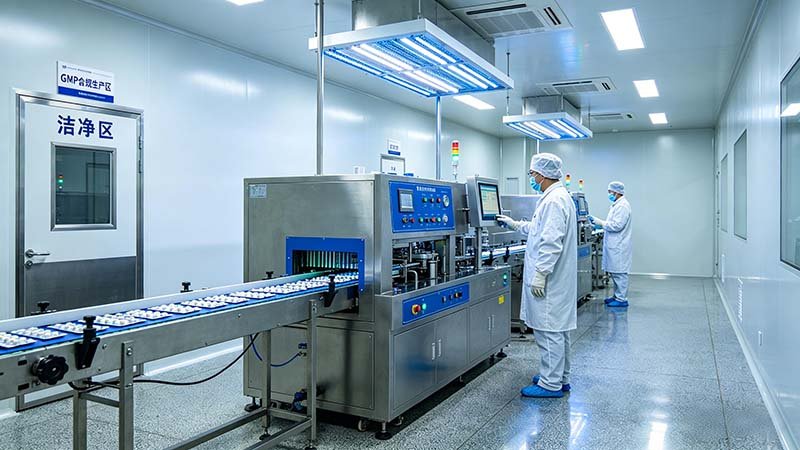
A plant director in Bogota called me last Tuesday. His first question: “Forester, can we just power-wash the aluminum feeding tracks between batches to pass the FDA inspector?” I had to take a deep breath. Aluminum is porous. Washing anodized aluminum feeding tracks with aggressive alkaline pharmaceutical detergents will strip the protective layer within six months, leaving microscopic pits where API will breed. You cannot wash your way out of poor metallurgical choices.
The only acceptable material for tablet contact tracks is 316L stainless steel or FDA-approved ultra-high-molecular-weight polyethylene (UHMWPE). When we engineer the HIJ machinery lines, every feeder track is CNC milled from solid 316L billets. There are no seams. There are no joints. You pull one sanitary clamp, take the entire track to the washroom, and autoclave it. That is how you prevent cross-contamination.
Solution: The anodized aluminum feeder had degraded. The microscopic pitting was holding both the drug residue and the cleaning detergent. The entire feeding assembly had to be scrapped and replaced with 316L stainless steel components.
True project certainty means understanding these metallurgical limits before you sign the purchase order. A blister machine that looks identical in a catalog can hide catastrophic compliance risks in its material certificates.
㢡 Essential FAQ on Blister Contamination
Stop Failing Swab Tests Due to Poor Machine Design
Don’t let a poorly engineered feeding track jeopardize your next regulatory audit. Contact HIJ Machinery to design a zero-clearance, cGMP-compliant blister packaging solution tailored to your most friable and high-potency tablets.
ઋ️ Get Free Turnkey Quote