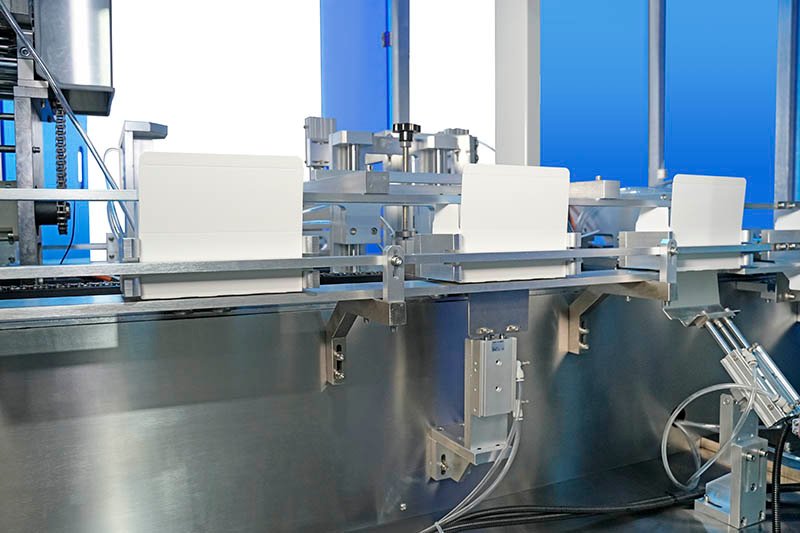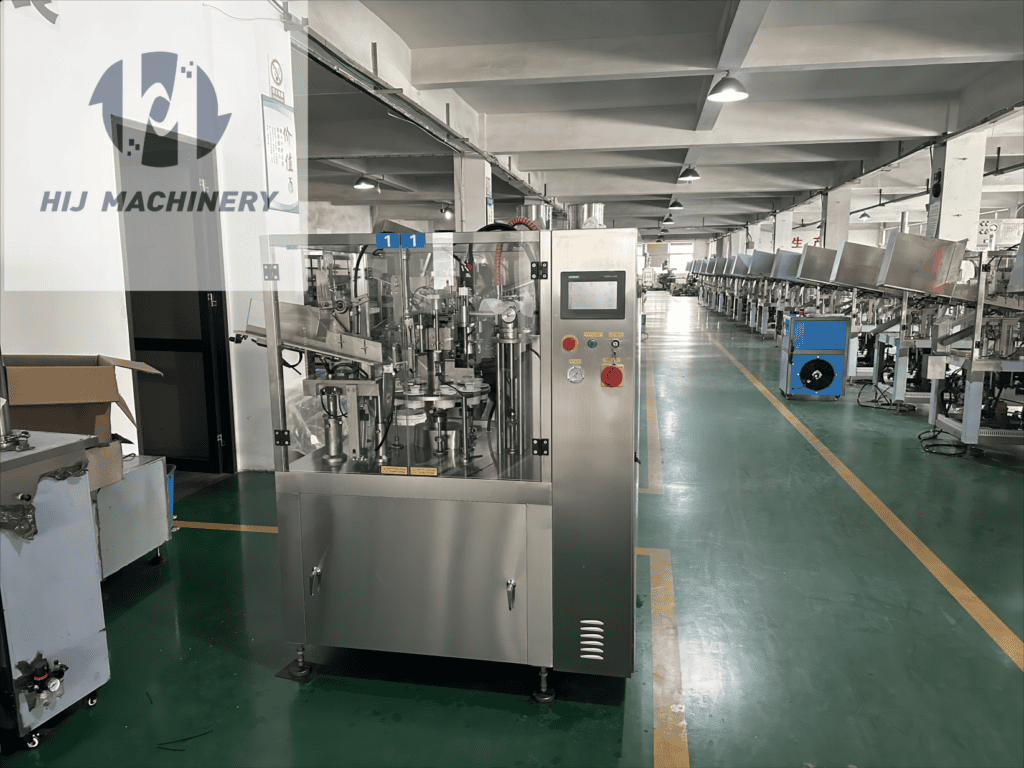
Carton design · equipment selection
Straight tuck cartons have their two main end flaps hinged from the same main panel. Reverse tuck cartons have them hinged from opposite main panels. That small-looking difference can change how an automatic cartoner presents and closes the carton.
A practical guide for packaging and production teamsWhat is the difference between straight and reverse tuck?
Both are folding cartons with a major flap at each end that tucks into the carton. The distinction is the location of those two major flaps on the flat carton blank, not the size of the box or whether the product is loaded horizontally or vertically. The smaller dust flaps are separate features and must also be checked on the actual drawing.
Straight tuck end
The top and bottom main tuck flaps are attached to the same main panel.
| Major flap | Panel A | Panel B |
|---|---|---|
| Top | Attached | — |
| Bottom | Attached | — |
Reverse tuck end
The top and bottom main tuck flaps are attached to opposite main panels.
| Major flap | Panel A | Panel B |
|---|---|---|
| Top | Attached | — |
| Bottom | — | Attached |
Conceptual panel map, not a cutting die or an exact carton drawing. A and B are reference panels; artwork and flap shape vary by design.
For an independent overview of carton styles and cartoner operation, see Frain Industries’ cartoning machinery guide.
Why flap orientation matters to an automatic cartoner
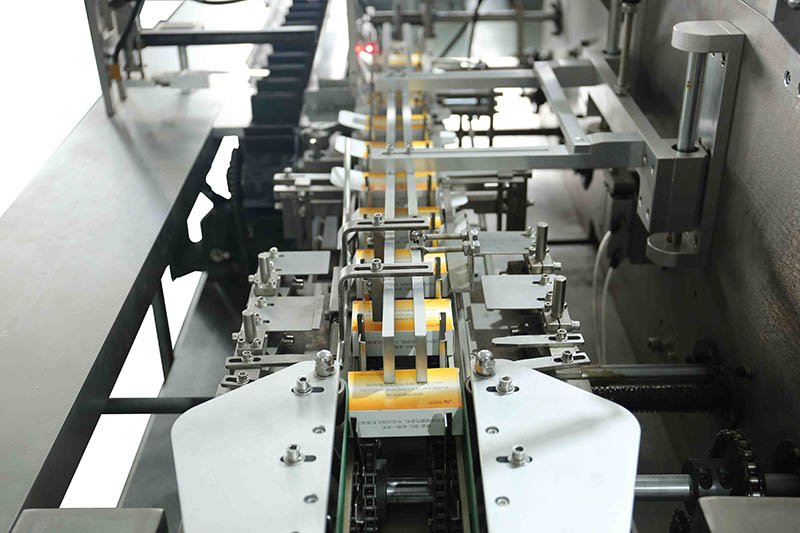
A machine must receive a particular flat blank, open it, hold it square, load the product and close its flaps in a controlled sequence. If the major flaps are attached to different panels, the blank presentation and the path of each flap may differ even when the outside dimensions are the same.
Before product loading
Check magazine orientation, the glued manufacturer's joint, the opening action and how the carton is supported in its pocket. Printed face orientation and the direction of the product infeed also need to agree with the approved pack.
At the closing station
Check dust-flap folding, major-flap presentation, guide rails and tuck tooling at both ends. A different blank may require adjustments or format parts; the machine supplier must review the specific drawings and samples.
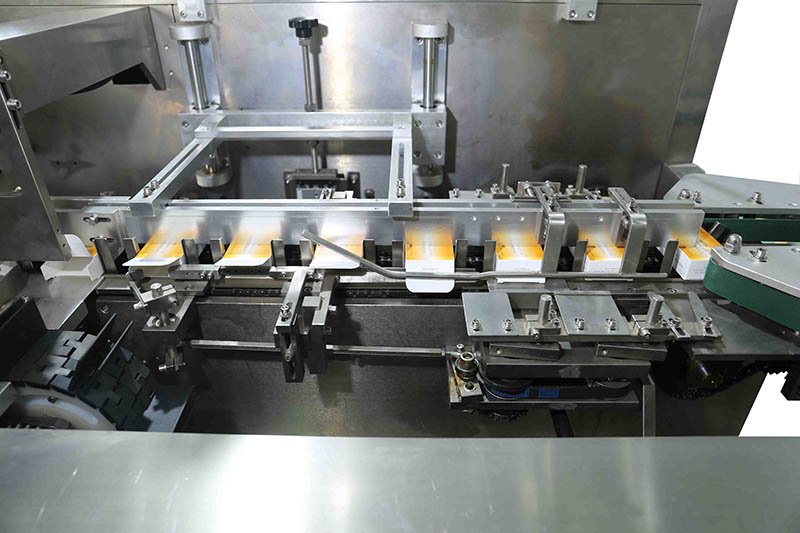
These are engineering checks, not a promise that every cartoner can run both designs. Review the machine and the approved carton together before ordering tooling or changing an existing line.
Straight tuck vs reverse tuck: what to compare
| Decision point | Straight tuck | Reverse tuck |
|---|---|---|
| Main-flap attachment | Both on the same main panel. | One on each of two opposite main panels. |
| Equipment setup | Review blank presentation, folding and tuck tooling for this dieline. | Review the same points for the opposing flap layout. |
| Artwork and loading | Confirm printed face, product direction and opening end. | Confirm these against the actual flat blank and machine direction. |
| Changeover | Adjustment or format parts depend on the existing machine. | Do not assume a direct swap; verify the closing sequence. |
| Speed and cost | Depends on board, dimensions, product, machine and testing. | Compare quotes and trials for the actual project, not the name alone. |
The table compares design and review points, not universal rankings. Neither style is automatically faster, cheaper or more suitable for every product.
Which drawing and samples should you send?
Start with the latest approved flat dieline and identify the top, bottom, printed face, glue joint and product-loading end. The same outside length, width and height do not describe the entire closure. Ask the carton supplier to mark the two major tuck flaps and dust flaps if the drawing is ambiguous.
- Carton: flat blank and assembled samples, dimensions, board and coating, fold and glue-joint details, and any planned size range.
- Product: real product or representative samples, orientation, quantity per carton, leaflet or other inserts and any sensitivity to pressure or scuffing.
- Line: required output, available space, upstream handoff, downstream equipment and whether the project is a new machine or a change to an existing cartoner.
- Acceptance: agreed test sample, acceptable closure quality, reject handling and the conditions under which performance will be assessed.
If several carton sizes or board suppliers are planned, identify each version. A successful test with one blank is not proof that every future blank will behave identically.
Forester’s My Insight
Dimensions alone leave out which main panel carries each tuck flap. I would compare the marked top and bottom flaps on the flat blank with the proposed machine’s direction of travel before committing to format parts. That makes the discussion more useful than choosing a machine from a carton size range alone.
How to test the carton before acceptance
- Agree on the reference: record the revision of the flat dieline, actual blank, product and inserts used for the trial.
- Check presentation: confirm the printed face, seam location and loading direction against the approved finished pack.
- Observe opening and loading: inspect carton squareness, product clearance and leaflet placement where applicable.
- Inspect both ends: look for correctly folded dust flaps, fully seated tuck flaps and damage to the board or print.
- Review exceptions: agree how missed products, incomplete closure or damaged cartons are detected and handled on the proposed configuration.
- Record the outcome: document operating conditions, observations and any changes needed before approval. Actual acceptance criteria should be agreed by the project parties.
For the broader machine-selection discussion, review the automatic cartoning machine page. Machine configuration and compatibility are confirmed against the project.
Is this the same choice as tuck versus hot-melt sealing?
No. Straight versus reverse describes where the main tuck flaps attach. Tuck versus hot-melt compares different ways to close a carton. A glue-closed design has its own flap geometry and adhesive requirements, so changing the closure method is not just a label change.
For that separate decision, see tuck-in versus hot-melt carton sealing. Use the present guide when the question is the layout and handling of a tuck-style carton.
Frequently asked questions
Can one cartoning machine run both straight and reverse tuck cartons?
It depends on the machine design, carton presentation and closing tools. Review both dielines and samples with the equipment supplier; adjustments or different format parts may be needed.
Is a reverse tuck carton the same as a straight tuck carton?
No. The major end flaps are attached to opposite main panels on a reverse tuck carton and to the same main panel on a straight tuck carton.
Does carton size alone determine machine compatibility?
No. The supplier also needs the flat dieline, flap layout, board properties, product, loading orientation and the proposed machine configuration.
Which tuck carton runs faster?
There is no reliable universal answer. Output depends on the machine, product, carton material, dimensions and validated operating conditions.
Can I switch an existing line to a different tuck style?
Possibly, but do not assume an immediate changeover. Check the existing machine’s feeding, opening, guides and closing tools against the new carton and run an agreed trial.
What should I send for a machine review?
Send the approved dieline and carton samples, product and insert details, desired output, loading orientation and any existing line constraints.
Discuss your carton and machine configuration
Share your carton drawing, product and intended output. We can review the proposed configuration and the samples needed for a project quotation.
Discuss Your Cartoning ProjectIf the enquiry window is unavailable, the button takes you to our contact page.
Technical reference: Frain Industries, Cartoning Machinery. General descriptions are not specifications for a particular HIJ configuration.