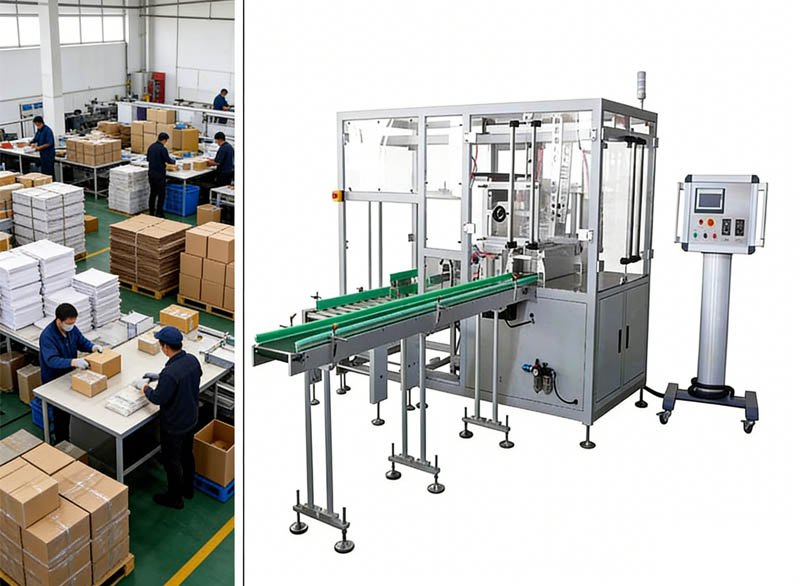
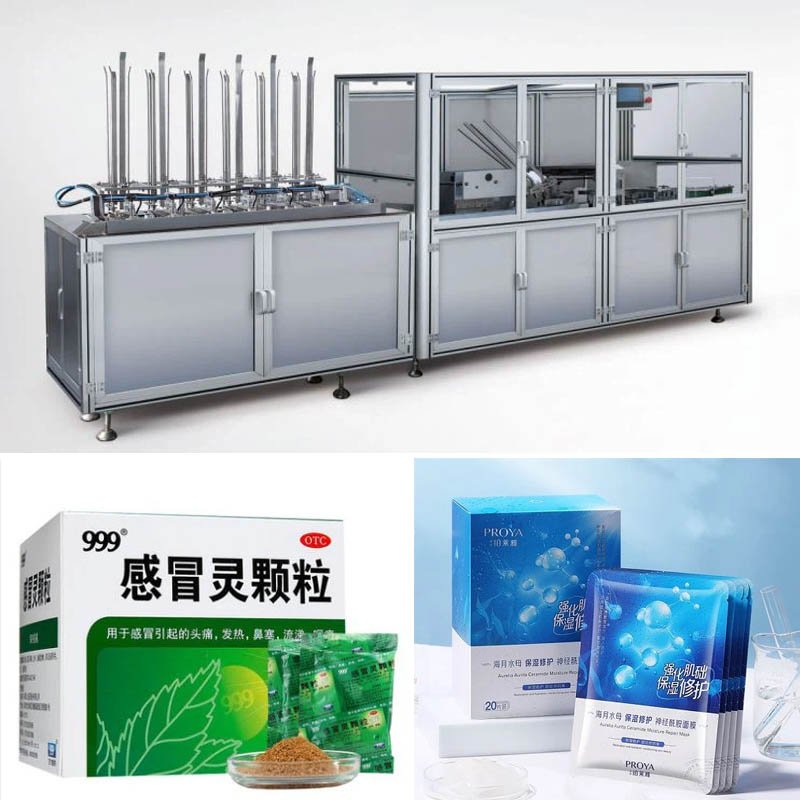
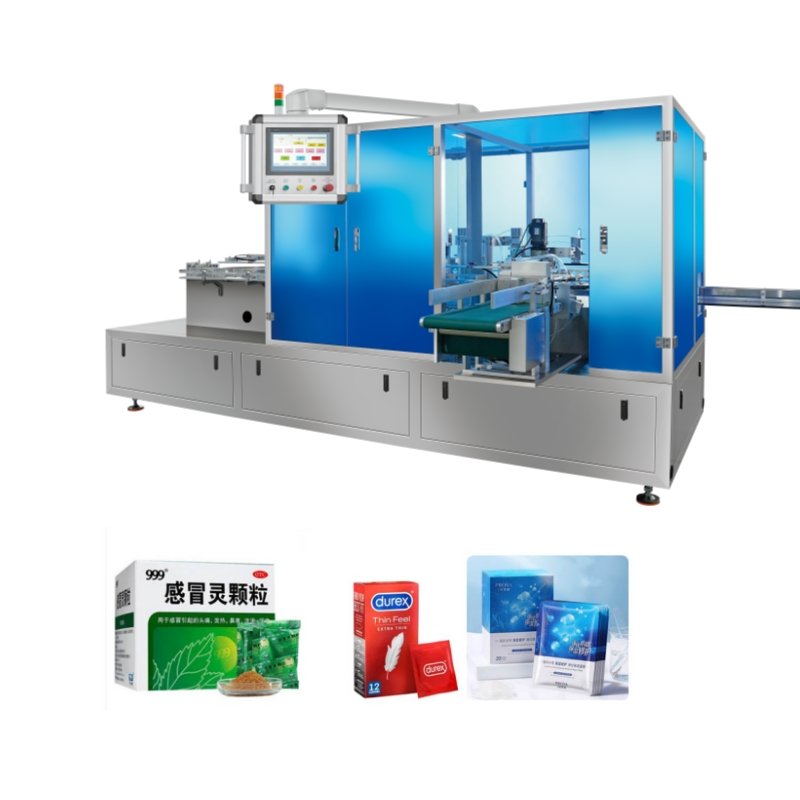
Quick answer: A blister cartoning machine is a pharmaceutical secondary packaging machine that takes filled blister packs, folds a leaflet, inserts both into a carton, then closes, batch-codes and seals it — automatically and at speed. It exists in two main configurations: a horizontal cartoner fed by a separate blister machine, or a fully integrated blister cartoning line that forms, loads, seals, punches and cartons on one frame.
Walk down any pharmaceutical packaging hall and you will find the blister cartoning machine at the very end of the line, doing the job that turns a bare blister card into a saleable medicine box. It is easy to underestimate — until you try to marry a fragile blister, a folded paper leaflet and a flat carton blank at 150–300 cartons per minute without a single jam.
This guide explains what a blister cartoning machine is, how the main types differ, what the core stations do, and which specifications actually matter when you compare models — using HIJ’s PBL-400S-400SF blister cartoning machine as a worked example of the integrated configuration.
Key Takeaways
- A blister cartoning machine performs secondary packaging: blister + leaflet + carton, closed and batch-coded in one automated cycle.
- Two dominant configurations: a standalone horizontal cartoner fed by an upstream blister machine, or an integrated blister-forming + cartoning line.
- Core stations: blister infeed, leaflet folding, carton magazine and opening, insertion pushers, coding, flap closing and rejection.
- Typical speeds run from 30 cartons/min (compact cartoners) to 300 cartons/min (high-speed integrated lines).
- The interlock logic matters more than the headline speed: no product → no leaflet → no carton → no push is what protects your batch record.
What Is a Blister Cartoning Machine, Exactly?
In pharmaceutical packaging, “primary packaging” is the layer that touches the drug — the PVC/ALU or Alu-Alu blister itself. “Secondary packaging” is everything that presents and protects that blister: the folded patient leaflet, the printed carton, the batch and expiry code. A blister cartoning machine automates the entire secondary step.
In one machine cycle it will typically: receive a filled blister pack from the infeed chain, pick a single leaflet and fold it 1–4 times, draw a flat carton blank from the magazine and pop it open, push leaflet and blister inside, tuck or glue the flaps shut, emboss or print the batch code, and reject anything incomplete before discharge. On modern machines every one of those events is sensor-verified.
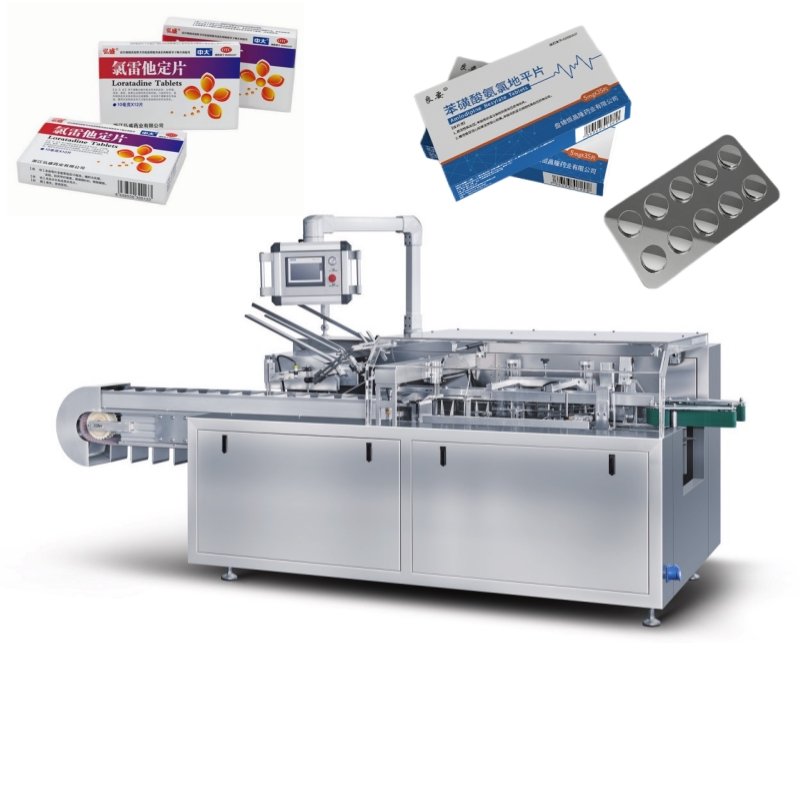
The Main Types of Blister Cartoning Machines
Buyers searching for a “blister cartoning machine” are usually looking at one of four things, and the differences change the budget by an order of magnitude:
| Type | How it works | Typical speed | Best for |
|---|---|---|---|
| Standalone horizontal cartoner | Blisters arrive from a separate blister machine or are hand-loaded into the infeed chain; the cartoner handles leaflet, carton, coding and sealing | 30–120 cartons/min | Multi-product plants; retrofitting cartoning onto an existing blister line |
| High-speed continuous cartoner | Continuous-motion chain with multi-pusher insertion; blisters fed by counting/stacking unit | 150–300+ cartons/min | Dedicated high-volume tablet and capsule lines |
| Integrated blister cartoning line | Blister forming, product loading, sealing, punching and cartoning synchronised on one frame under one PLC | Line-paced; cartoner section up to 300 cartons/min | Single-product high-volume lines, especially fragile formats like pre-filled syringes |
| Semi-automatic cartoner | Operator places blister and leaflet; machine opens, closes and codes the carton | 10–40 cartons/min | Small batches, clinical supplies, product launches |
The standalone route is covered in detail in our guide to the horizontal cartoning machine and its blister-pack configuration. The integrated route is what a machine like the PBL-400S-400SF represents: one Siemens motion PLC synchronising forming, Yamaha robot loading, GUK leaflet folding and cartoning, so no interface engineering is left to the customer’s site team.
Inside the Machine: The Seven Core Stations
1. Blister infeed
Filled blisters arrive on a bucket chain or conveyor. On integrated lines a tracking manipulator places blisters directly into the cartoner compartments, synchronised to chain speed — which is why fragile glass syringes survive the transfer.
2. Leaflet folding and feeding
A folding unit (on premium lines a German GUK folder) picks a single leaflet and folds it 1–4 times. Leaflet handling causes more stoppages than any other station on a cartoner, which is why leaflet folding and insertion deserves its own evaluation during FAT.
3. Carton magazine and opening
Flat carton blanks sit in a magazine (up to ~1,500 pieces on high-speed machines). A vacuum head pulls one blank per cycle and a pre-opening mechanism pops it square before it drops into the transport chain.
4. Insertion pushers
Double pushers insert the folded leaflet first, then the blister pack behind it — the sequence prevents the leaflet resisting the product. Continuous machines use multiple pusher sets so each set works only once per cycle.
5. Batch coding
Steel embossing, inkjet or laser prints 3–4 lines of batch number and expiry, typically held within ±1.5 mm of position.
6. Flap closing
Tuck-in closing dominates pharma; hot-melt glue closing dominates food and cosmetics. Some machines offer both.
7. Detection and rejection
Photoelectric and mechanical sensors verify product-in-carton, leaflet presence and carton integrity. The governing logic on a well-built machine is product-first: if no blister is detected, the machine never picks a leaflet or opens a carton for that cycle, and any incomplete carton is force-rejected before discharge.
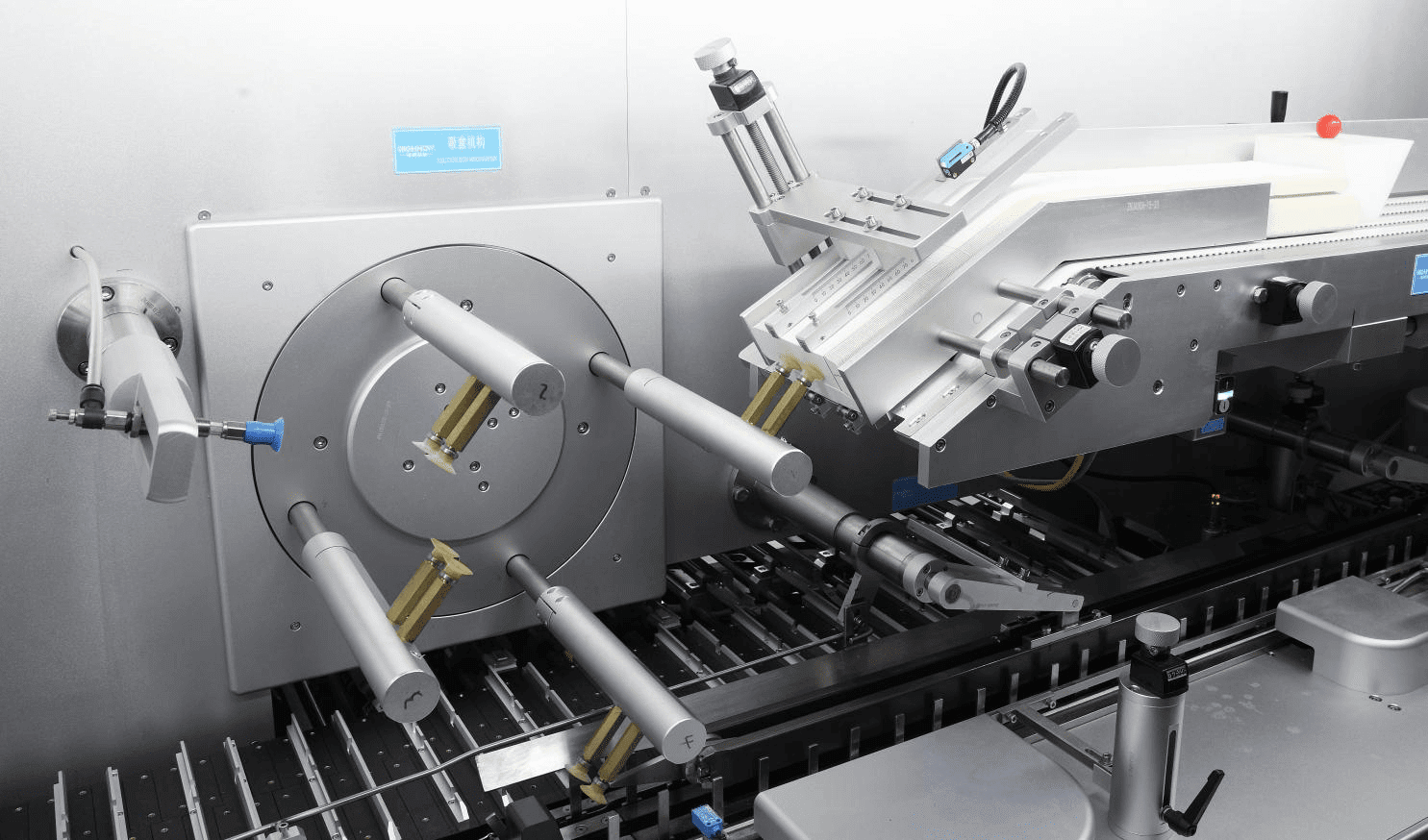
Blister Cartoning Machine vs Standard Cartoning Machine
Every blister cartoning machine is a cartoning machine, but not every cartoner handles blisters well. Blister packs are rigid, dimension-critical and often fragile, so a blister-configured cartoner adds: a bucket infeed matched to the blister footprint, stacking/counting units for multi-blister cartons, gentler pusher profiles, and blister-presence detection at the infeed. If your products also include tubes, sachets or bottles, a general-purpose horizontal cartoner with change parts may serve better — the working principle is unpacked in how does a cartoning machine work.
Specifications That Actually Matter
| Specification | Why it matters | PBL-400S-400SF reference |
|---|---|---|
| Rated vs real output | Mechanical maximum ≠ validated line speed; ask for output with your blister format | 6,000–10,000 pcs/h line-paced; cartoner rated to 300 cartons/min |
| Carton size range | Defines today’s SKUs and tomorrow’s | (65–180) × (33–85) × (15–75) mm |
| Leaflet capability | Folds, paper weight, pre-folded option | 1–4 folds, 60–75 g/m², GUK C91 folder |
| Interlock & rejection logic | Protects batch integrity and reconciliation | 100% missing-product and empty-carton rejection |
| Control platform | Determines audit trail, e-signature, spare-part availability | Siemens CPU1516T PLC, SINAMICS S210 servos, e-signature HMI |
| Changeover method | Tool-free vs tooled changeover drives real OEE | Servo position recall from HMI |

“On a factory audit in Colombia in 2019, I watched a brand-new cartoner reject one carton in every fifteen. The machine was fine — the local carton supplier had quietly dropped from 350 to 280 g/m² board, and the vacuum opener could no longer pop the blanks square. The cartoning machine is only ever as good as the carton you feed it.
Since then, every line we commission starts the same way: we ask the customer to ship us 500 of their real cartons and leaflets before FAT. Testing with your actual materials — not our perfect samples — is the cheapest insurance you will ever buy on a packaging line.”
— Forester Xiang, Founder & Chief Engineer, HIJ MachineryWho Actually Needs a Blister Cartoning Machine?
Pharmaceutical manufacturers packing tablets, capsules, pre-filled syringes, ampoules or vials in blisters are the core users — regulators in most markets expect a leaflet and coded carton, so cartoning is not optional at commercial scale. Nutraceutical and medical-device makers follow the same logic for retail formats. If you are still costing the step, our cartoning machine price guide breaks down what drives the budget between a compact cartoner and an integrated line, and the full HIJ range is on the cartoning machines hub.
Frequently Asked Questions
What does a blister cartoning machine do?
It automates pharmaceutical secondary packaging: it receives filled blister packs, folds and inserts a leaflet, opens a carton blank, pushes leaflet and blister inside, closes the flaps, prints or embosses the batch code, and rejects any incomplete carton before discharge.
What is the difference between a blister machine and a cartoning machine?
A blister machine performs primary packaging — forming and sealing the blister that touches the product. A cartoning machine performs secondary packaging — putting that blister plus a leaflet into a coded carton. An integrated blister cartoning line combines both on one frame under one control system.
How fast is a blister cartoning machine?
Semi-automatic cartoners run 10–40 cartons/min, standalone horizontal cartoners typically 30–120 cartons/min, and high-speed continuous or integrated lines reach 150–300 cartons/min. Real validated speed depends on your blister format, carton size and leaflet.
Can one cartoning machine handle blisters, tubes and bottles?
Yes — a general-purpose horizontal cartoner with format change parts can run blisters, tubes, sachets and bottles. Dedicated blister cartoners trade that flexibility for higher speed, gentler blister handling and stacking/counting units for multi-blister cartons.
Is a blister cartoning machine suitable for cGMP production?
Machines built to a cGMP-ready, CE-marked standard — with 100% rejection interlocks, audit-trail HMIs and documentation packages — support pharmaceutical use. Your facility performs the DQ/IQ/OQ/PQ validation; the manufacturer supplies the documentation that supports it.
Match a Blister Cartoning Machine to Your Product
Tell us your product, blister format and target output — Forester’s team will recommend a standalone cartoner or an integrated PBL-400S-400SF line, with a complete quotation.
Get a Free Quote