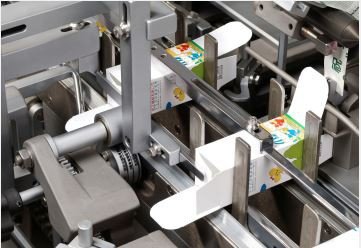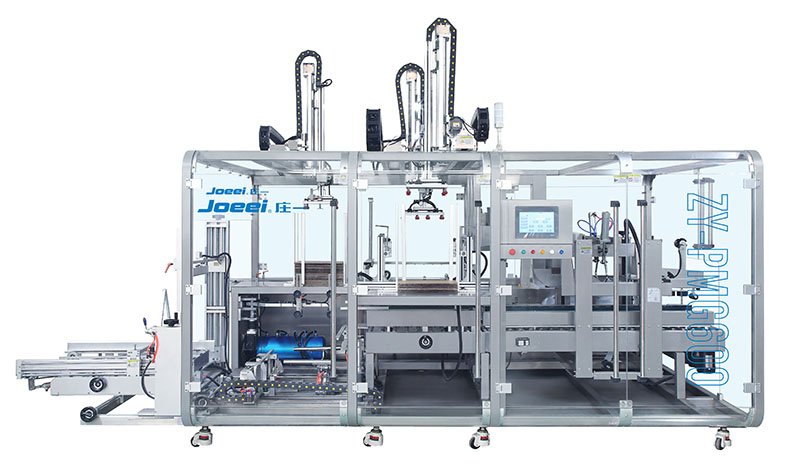
Leaflet folding and insertion is the cartoning-machine stage that takes a flat printed leaflet, folds it to fit the carton, and places it in with the product — all inline at line speed. An integrated folder creates bi-fold, tri-fold, accordion or parallel folds (typically up to 4 panels), an inserter positions the leaflet, and an optical missing-leaflet detector verifies every carton and auto-rejects any that is missing or mis-folded. On a horizontal cartoner like the HIJ-120HC this runs at full speed and is the single most important station for pharmaceutical audit compliance.
For any regulated product, the leaflet is not optional — a carton without its patient information leaflet, or with the wrong one, is a defective and potentially recall-triggering unit. That’s why the folder-inserter and its detection system sit at the heart of a horizontal cartoning machine. This guide explains how leaflet folding and insertion actually works, the fold types, what to specify, and where it goes wrong.
- Fold → insert → verify. The leaflet is folded, placed with the product, then optically checked.
- Four common folds: bi-fold, tri-fold, accordion (Z-fold) and parallel — usually up to 4 panels.
- Missing-leaflet detection + auto-reject is the compliance heart of the whole machine.
- Outserts / booklet leaflets handle multilingual or high-panel-count information on small cartons.
- Leaflet spec must be locked — size, paper weight, fold and languages — before the FAT.
- Static, double-feed and mis-fold are the recurring leaflet faults a good inserter manages.
How the folder-inserter works
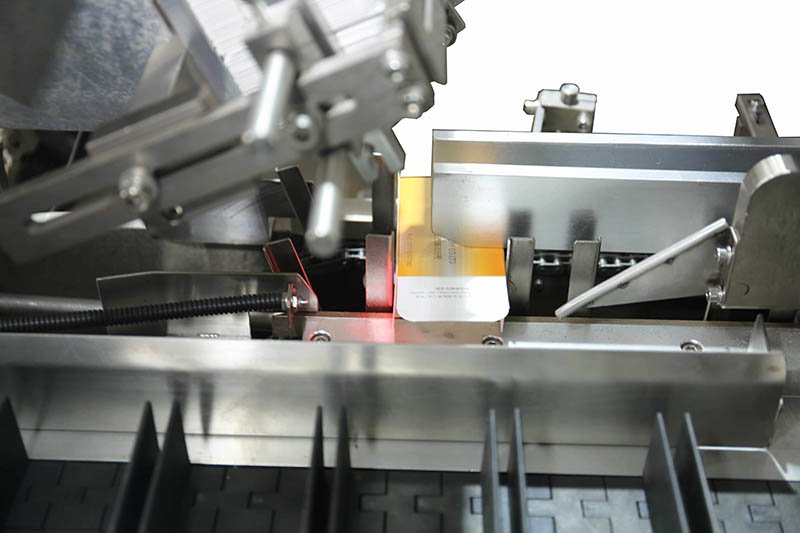
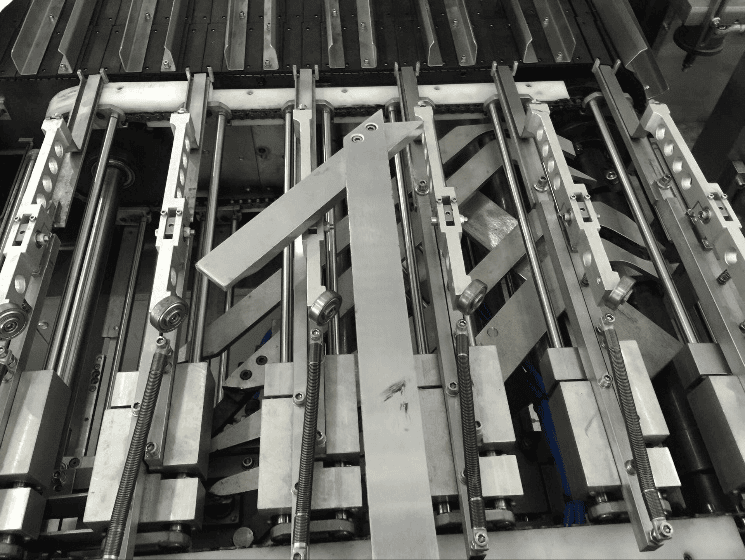
A flat leaflet is drawn from a magazine and fed into a folding station, where folding plates or rollers create the specified fold pattern in sequence. The folded leaflet is then transferred to the insertion point and placed into the open carton alongside the product — either just before or together with product loading. Sensors confirm the leaflet’s presence and fold before the carton is sealed. See where this sits in the full cycle in how a horizontal cartoning machine works.
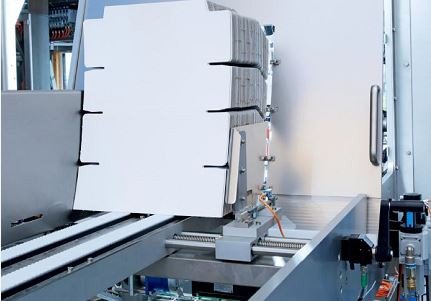
The four common leaflet fold types
Bi-fold
One fold, two panels. Simple and fast for short leaflets.
Tri-fold
Two folds, three panels. The most common pharma format.
Accordion (Z-fold)
Alternating folds for more panels in a compact leaflet.
Parallel
Folds in the same direction; fits long leaflets into small cartons.
Most horizontal cartoners handle all four up to about four panels. When a leaflet needs far more content — multilingual instructions for export markets, for example — an outsert or booklet leaflet is used instead of a simple folded sheet, and the folder-inserter is configured accordingly.
The compliance heart: missing-leaflet detection
Folding is mechanical; verification is what protects you. An optical sensor confirms a leaflet is present and correctly folded before it enters the carton. If a leaflet is missing, doubled, or mis-folded, the missing-leaflet detector flags it and the machine automatically rejects that carton so it never reaches packaging. For pharmaceutical lines this is non-negotiable — it is the mechanism that lets you prove every shipped carton contained its required leaflet. It matters most on blister-pack cartoning, where a missed leaflet on a regulated medicine is a serious defect.
Need a specific leaflet fold or multilingual booklet handled?
Send us your leaflet spec and carton size — we’ll confirm the folder-inserter configuration and quote within 24 hours.
What to specify for leaflet folding and insertion
| Specification | Why it matters |
|---|---|
| Leaflet flat & folded size | Sets the folding tooling and confirms the folded leaflet fits the carton with the product. |
| Fold type & panel count | Bi/tri/accordion/parallel and number of panels drive the folder configuration. |
| Paper weight / grammage | Too thin jams, too thick won’t fold crisply — lock the exact stock used in production. |
| Outsert or booklet? | Multilingual or high-panel content needs a booklet/outsert approach, not a simple fold. |
| Detection & reject | Optical presence + auto-reject is essential for regulated products. |
| Languages / variants | Different market variants change leaflet size and fold — plan the full range up front. |
Where leaflet insertion goes wrong
Mis-fold
Wrong or incomplete fold. Prevented by correct tooling for the leaflet size and verified by optical check before insertion.
Double-feed
Two leaflets pulled at once. Single-pick feeding plus presence sensing keeps one leaflet per carton.
Static & curl
Thin paper clings or curls. Controlled feeding and ionizing where needed keep the leaflet flat and separate.
“The leaflet is where I see the most avoidable line stoppages, and it almost always traces back to a spec that changed after the machine was set up. One exporter switched to a thicker multilingual booklet for a new market and the folder that had run a single-fold sheet perfectly started jamming every few minutes. Nothing was wrong with the machine — the leaflet stock had changed. Lock the leaflet spec (size, grammage, fold, languages) and test it at the factory acceptance test with the exact production paper. It saves you weeks of blaming the wrong thing.”
Read next
Leaflet insertion is one station in a larger process. See the whole cycle in how a horizontal cartoning machine works, why horizontal design suits leaflet lines in horizontal vs vertical cartoning, and the leaflet’s role in pharma in horizontal cartoning for blister packs. Or explore the full cartoning machines hub.
Frequently asked questions
What is leaflet folding and insertion in a cartoning machine?
It is the stage where a flat printed leaflet is folded to fit the carton and placed in with the product, inline at line speed. An integrated folder creates the fold, an inserter positions the leaflet, and an optical detector verifies it is present and correctly folded before the carton is sealed.
What leaflet fold types can a cartoning machine handle?
Most horizontal cartoners handle bi-fold, tri-fold, accordion (Z-fold) and parallel folds, typically up to about four panels. For content that needs more panels, such as multilingual instructions, an outsert or booklet leaflet is used instead of a simple folded sheet.
How does the machine make sure every carton has a leaflet?
An optical missing-leaflet detector checks that a leaflet is present and correctly folded before insertion. If a leaflet is missing, doubled or mis-folded, the machine automatically rejects that carton so it never reaches packaging, which is essential for pharmaceutical audit compliance.
What is the difference between an insert and an outsert?
An insert is a folded leaflet placed inside the carton with the product. An outsert is a densely folded booklet, often attached to or packed alongside the product, used when a large amount of information — such as multilingual instructions — must fit a small pack. The folder-inserter is configured differently for each.
What leaflet details do I need to confirm before buying a cartoner?
Lock the leaflet’s flat and folded size, fold type and panel count, paper weight, whether it is a simple fold or a booklet/outsert, and all language variants. Then test the exact production paper at the factory acceptance test, because a change in leaflet stock is a common cause of folder jams after installation.
Can leaflet folding keep up with high cartoning speeds?
Yes. On a continuous-motion horizontal cartoner the integrated folder-inserter runs at full line speed, up to around 160 cartons per minute, with detection and rejection happening in the same flow. Sustained speed still depends on leaflet complexity and paper handling, so complex booklets may run slightly slower than a simple tri-fold.
Get your leaflet handling specified right the first time
Share your leaflet spec, fold and languages with your carton and product. Real engineering response within 24 hours.