
Formula behaviour
State viscosity range, density, foaming, stringing, particulates, temperature sensitivity and whether the formula changes while held.
Configure filling, closing, coding and downstream handling around your actual cosmetic formula, container, accepted output, UK site conditions and evidence requirements.
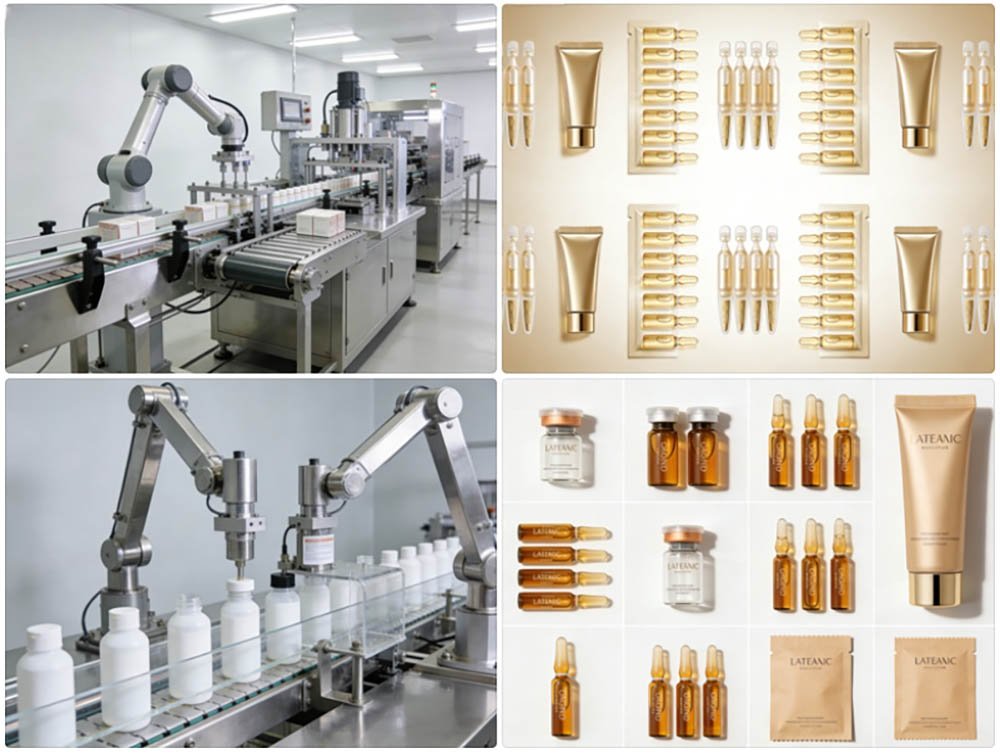
A “cosmetic filling machine” is not one universal platform. Viscosity, foaming, particulates, temperature, fill volume, container stability, closure and cleaning plan determine the suitable product path, dosing method and line architecture.
State viscosity range, density, foaming, stringing, particulates, temperature sensitivity and whether the formula changes while held.
Define minimum, normal and maximum dose, container drawing, neck finish, stability, headspace and acceptable cosmetic appearance.
Identify cap, pump, dropper, plug, foil, crimp, heat seal or tube seal together with torque, position and integrity criteria.
Describe product recovery, draining, disassembly, changeover, wash method, validation evidence and any controlled-environment needs.
Fastest route to a useful quotation: send representative product, empty and filled packs, controlled drawings and the required good packs per minute.
Use these families to narrow the project. Final selection still depends on representative trials and the approved package matrix.
Serums, oils, toners and qualified low-to-medium viscosity products in bottles, jars or preformed containers.
Review liquid filling machines →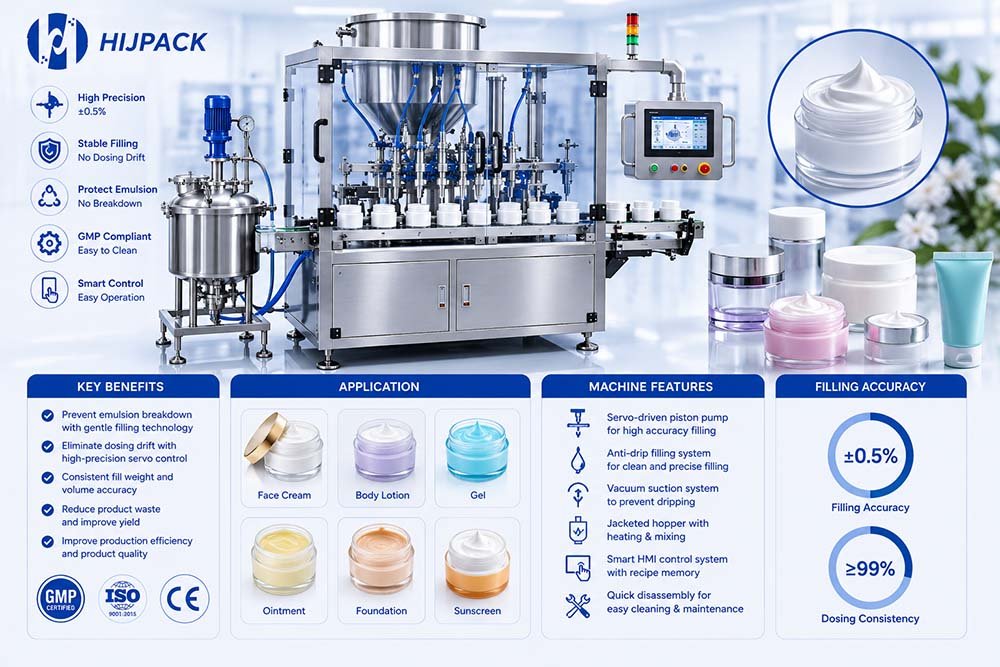
Creams, lotions, masks and gels requiring controlled feeding, clean cut-off and repeatable container handling.
Review cream filling machines →
Plastic, laminate or metal tubes where filling, orientation, sealing or folding, coding and trimming form one controlled process.
Review tube filling machines →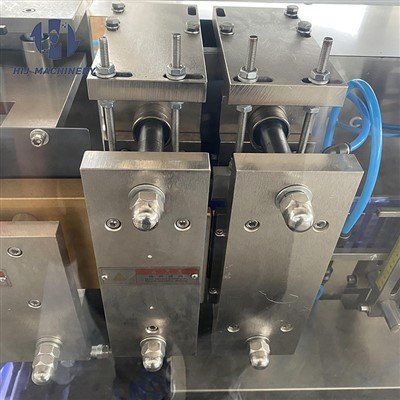
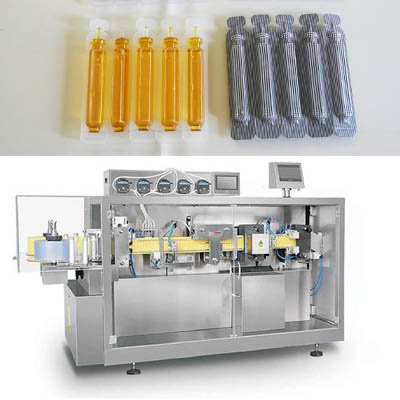
Single-dose serum or essence projects using preformed containers or a roll-fed form-fill-seal process.
Review ampoule filling machines →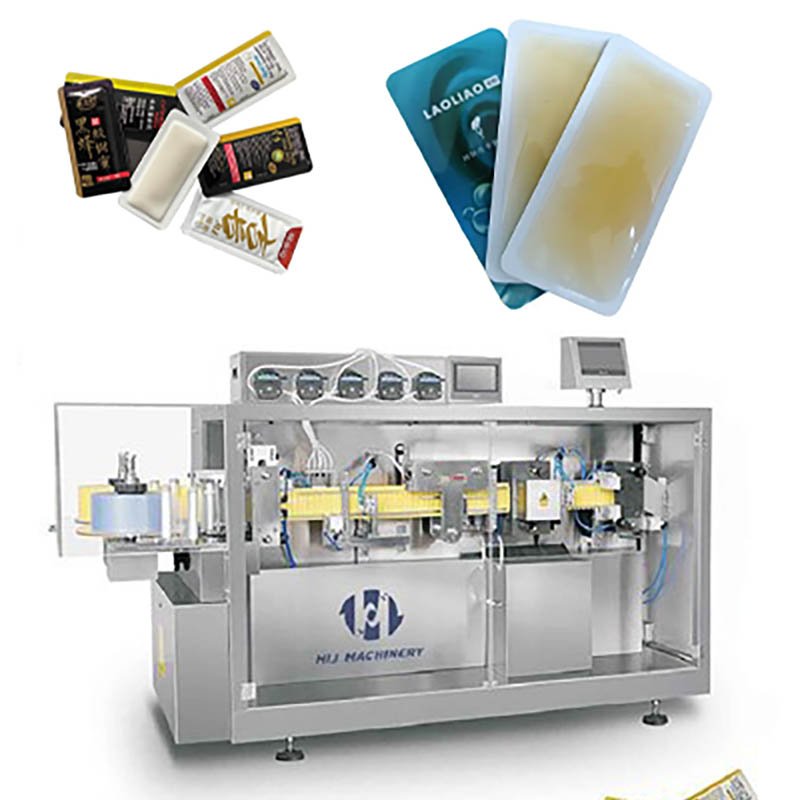
Samples and single-use packs formed from approved film with controlled dosing, sealing, coding and cutting.
Review sachet machines →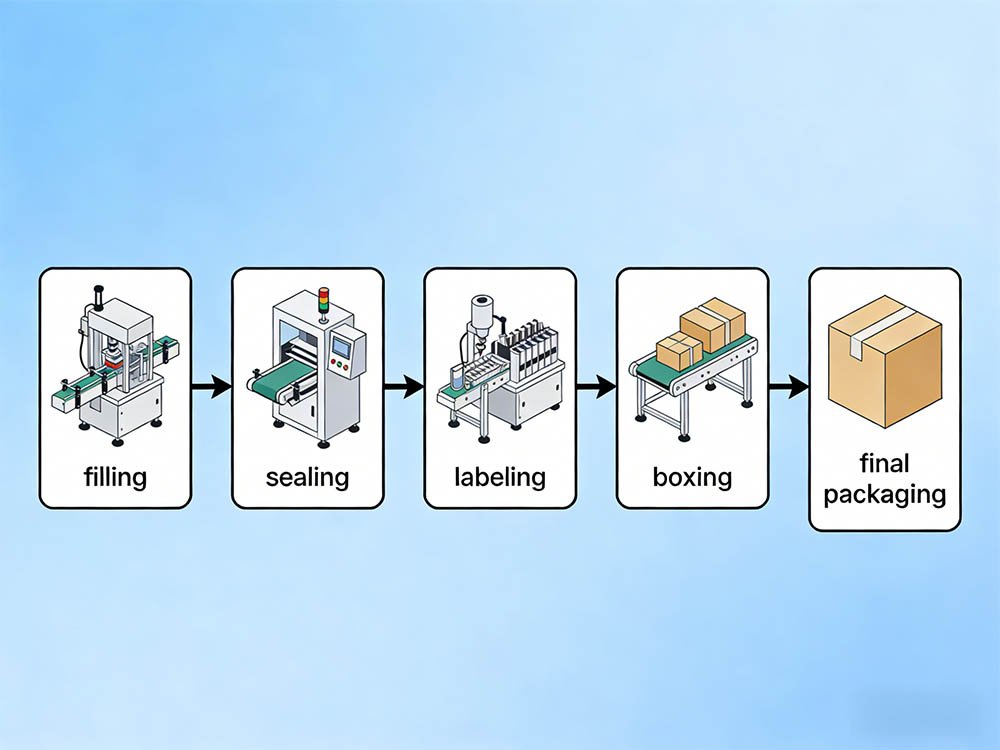
Filling integrated with closure, coding, inspection, labelling, cartoning or case packing under an agreed line boundary.
Review automatic lines →A comparable proposal starts with the same inputs and acceptance basis for every supplier.
| Product | Behaviour to test | Filling focus | Package and closure focus |
|---|---|---|---|
| Serum or oil | Low viscosity, small dose, dripping and air inclusion | Repeatable metering and clean nozzle shut-off | Dropper, pump, vial, ampoule or small bottle handling |
| Lotion | Variable viscosity, aeration and settling | Product feed, fill profile and recovery | Bottle stability, pump or cap placement and torque |
| Cream or mask | High viscosity, stringing and trapped air | Hopper or pump sizing, assisted feed and cut-off | Wide-mouth jar, tube or pot presentation |
| Foaming cleanser | Foam generation and residual product in the nozzle | Controlled feed, bottom-up or profiled filling trials | Headspace, bottle geometry and closure cleanliness |
| Product with particles | Particle size, suspension and segregation | Agitation, product path clearance and gentle metering | Fill opening, blockage detection and cleaning access |
The table is a project-briefing aid, not a guarantee that one dosing system suits every formulation.
Each stage should have a defined input, setting, check, reject route and acceptance result.
Define mixing, heating, vacuum, homogenising, holding and transfer conditions where the formula requires them.
Present bottles, jars, tubes, ampoules or flexible web at a controlled orientation and pitch.
Select the hopper, pump, hose and nozzle from verified product behaviour and the approved fill range.
Place caps, pumps, droppers, plugs or foil seals, or form and seal flexible packs under agreed settings.
Define artwork, variable data, readable-code checks, fill or closure inspection and reject behaviour.
Connect labelling, leaflet or carton handling, bundling and case packing without hiding the line bottleneck.
The usable line rate is limited by the slowest proven stage under the agreed product, package, staffing and test conditions.
= the slowest proven process stage × configured packs per cycle × agreed acceptance rate.
Record the product, pack, format, staffing, replenishment, run duration, planned stops, rejects and downstream interruptions behind the result.
Do not treat “UK-ready” as a generic badge. The buyer, supplier and importer should agree the destination market, marking route, declaration, instructions, electrical supply, guarding, site access and installation responsibilities before the purchase order.
Current UK government guidance permits machinery placed on the Great Britain market to use UKCA or CE marking. Confirm the applicable legislation and final conformity documents for the supplied configuration.
Northern Ireland uses CE, or CE together with UKNI in the relevant UK-body route. State the destination before confirming marking and documentation.
The Responsible Person, safety assessment, product information, notification and labelling duties concern the cosmetic product and business. Translate their production controls into the machine URS.
Confirm voltage, phase, frequency, earthing, isolator, compressed air, extraction, room conditions and preferred components.
State Incoterm and named place, importer responsibilities, packing, freight, insurance, customs, inland delivery, unloading and rigging.
Separate remote support, site attendance, commissioning, training, spares, warranty response and production assistance in the quotation.
Reference: verify current marking and cosmetics obligations on GOV.UK; the signed technical agreement should define the project-specific route.
Review UK Product MarkingA low base price is not useful when tooling, product feed, inspection, documents, freight or site work remain undefined.
Base platform, hopper, pump, product path, nozzles, controls and recipe boundary.
Included SKUs, containers, closures, tooling drawings, quantities and future-format method.
Sensors, cameras, readable-code checks, reject confirmation, counters and record requirements.
Drawings, manuals, certificates, protocol, samples, duration, acceptance criteria and open-item route.
Incoterm, named place, packing, freight, customs boundary, unloading, rigging and site access.
Spares, consumables, remote response, site service, training and warranty terms.
Choose from the product and package rather than the country name alone. Provide formula behaviour, fill range, container and closure drawings, accepted output, cleaning plan and downstream operations. Those inputs determine whether the project needs liquid, cream, tube, ampoule, sachet or integrated-line equipment.
Current UK government guidance states that machinery placed on the Great Britain market may use UKCA or CE marking. The supplied machine must still meet the applicable requirements and include the correct conformity documents and instructions. Confirm the project-specific route before shipment.
Northern Ireland uses CE marking, or CE together with UKNI when the applicable conformity-assessment route uses a UK approved body. Identify the final destination at quotation stage because the route differs from Great Britain.
No. Machinery conformity and cosmetic-product compliance are separate. The cosmetic business and Responsible Person retain obligations for product safety, information, notification, claims and labelling. The equipment URS should convert relevant production and record controls into testable requirements.
Send representative product, minimum/normal/maximum fill volumes, empty and filled packs, closures, controlled drawings, artwork and codes, accepted-output target, utilities, site constraints, documentation list and required FAT evidence.
Specify the permitted result and measurement method for each product and fill range. State sample size, weighing or volume method, tare treatment, product temperature, allowable rejects and whether the criterion applies at startup, normal running and after replenishment.
Compare accepted packs per minute at final discharge under the same product, package, staffing, duration, replenishment, planned-stop and reject conditions. Do not compare one supplier’s isolated filler speed with another supplier’s complete-line output.
Test normal running and agreed challenges such as low product level, missing or unstable containers, closure or code failures, inspection, reject confirmation, restart and changeover. Retain settings, counts, samples, alarms, deviations and the signed open-item list.
Send the actual product, pack, accepted output, destination, site inputs and required evidence. HIJ can map the suitable machine family, open trials and quotation boundary for review.
Formula behaviour, temperature, particles, fill range, contact materials and cleaning requirements.
Containers, tubes or films, closures, drawings, artwork, codes, samples and changeovers.
Accepted output, campaign size, shift pattern, staffing, inspection, rejects and downstream scope.
GB or NI destination, electrical supply, utilities, room conditions, access and installation plan.
Samples, duration, challenges, acceptance criteria, drawings, manuals, certificates and records.
Incoterm, named place, packing, freight, spares, commissioning, training, warranty and support.
This page helps UK buyers prepare a comparable cosmetic filling equipment project. Final configuration, performance, materials, conformity documents, commercial terms and services come from the signed quotation and technical agreement.