PHARMACEUTICAL PACKAGING ENGINEERING · BUYER GUIDE
Secondary pharmaceutical packaging brings an already closed primary pack into its saleable presentation. Depending on the approved design, a line may load blisters, bottles or trays into cartons, add leaflets, apply or check codes, and transfer accepted cartons to case packing.
For production, engineering, procurement and quality teams defining equipment scope and acceptance tests.
What is secondary pharmaceutical packaging?
Primary packaging is the immediate container or material that holds the medicine. Secondary packaging normally surrounds the primary pack: for example, a closed blister or bottle goes into a printed folding carton with an approved leaflet. A shipping case is usually distribution packaging. The approved pack design determines the boundaries for a particular project.
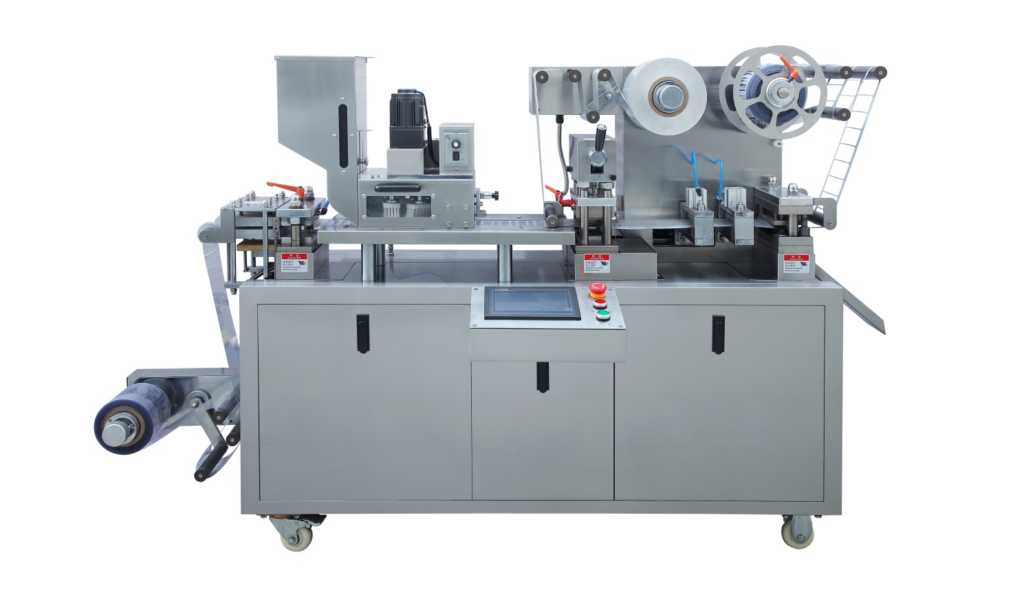
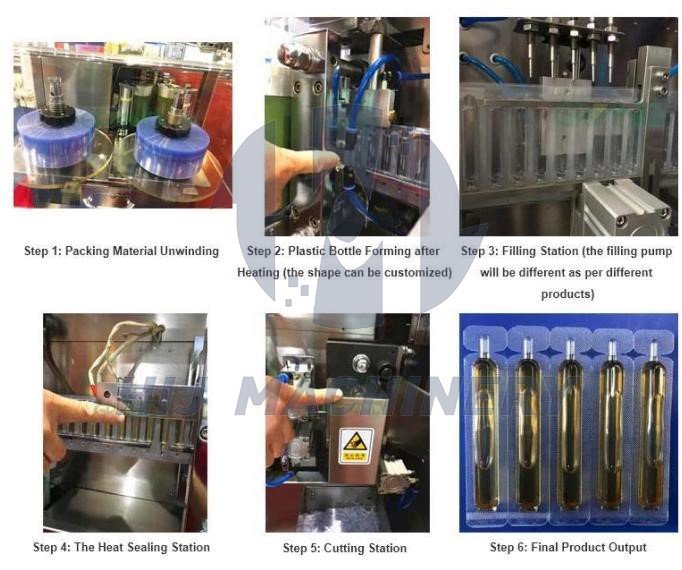
A blister former seals the primary pack; a cartoner handles carton opening, product loading and configured leaflet or closure functions. Neither machine automatically proves that the other stage is included.
Which operations belong in the project scope?
Product infeed and grouping
Define the incoming primary pack, orientation and number per carton. Confirm whether packs arrive directly from an upstream machine, a buffer or manual loading. Test normal sample variation and establish how partial groups are handled.
Carton, leaflet and closure
Supply carton drawings, board and leaflet samples. Specify the loading direction, insert folding and location, and tuck or glue closure. Presence checks and rejection must be explicitly listed if required; do not assume every sensor is standard.
Coding and inspection
Identify the approved source of fixed artwork and variable batch data. Agree the code location and which inspection checks presence, readability or data equality. Serialization and aggregation are separate project decisions; a printer alone is not a complete track-and-trace system.
Choose the feeding route for your pack
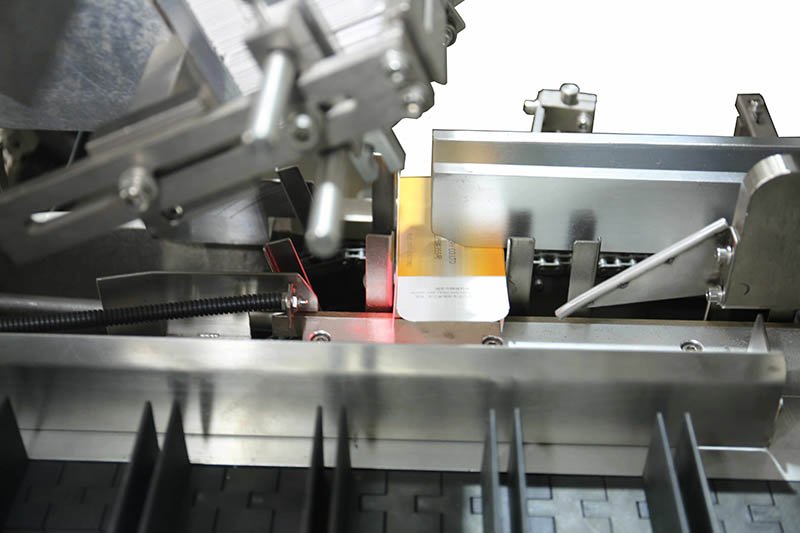
Blisters and cards
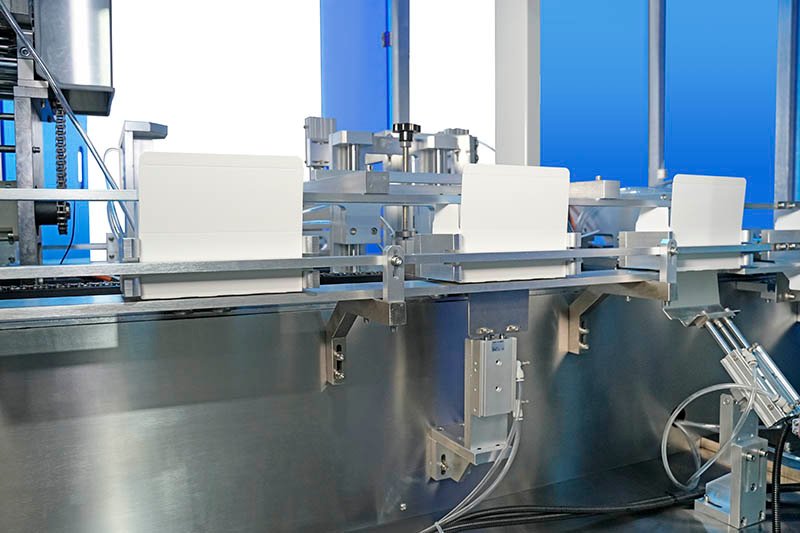
Define card thickness, cut dimensions, stack count, orientation and perforations. A feeder suitable for one card is not automatically suitable for a stack or delicate tray. Test the full range of representative samples.
Bottles and containers
Review container stability, labels, guides and the transfer from upstream equipment. Confirm that contact surfaces and change parts match the actual container and do not damage the closure or label.
Syringe trays and other delicate packs
Start with the closed primary pack and protective tray. Review support, orientation and allowable handling forces with product and quality teams. Cartoning a closed pack does not establish sterility or closure integrity; those require separate evidence.
For configuration options, see the pharmaceutical cartoning machine page.
Connect inspection to the physical reject
Map the approved job, print trigger, inspection point, pack tracking and reject location. A camera reading a code does not by itself prove that the correct pack will be rejected later. Test missing and incorrect codes, interrupted transport, restart and the defined handling of uninspected packs, according to the ordered scope.
Match line output using the same unit
Cartons per minute, blisters per minute and tablets per minute are different quantities. Agree the pack count per carton, product conditions, planned stops, test duration and definition of an accepted carton before comparing proposals.
If 120 accepted blister cards arrive per minute and each carton contains three cards, input can support 40 cartons per minute before other losses: 120 ÷ 3 = 40. This is an illustrative calculation, not a machine rating. Actual accepted output also depends on feeding, stops, inspection and rejection.
For the shipping-case stage and downstream interfaces, see the end-of-line packaging automation guide.
What should the factory acceptance test cover?
Agree representative primary packs, carton and leaflet samples, their revisions, target output and equipment interfaces before testing. Define acceptance criteria with the project and quality teams.
- Run the agreed pack combination and record accepted output separately from nominal speed.
- Challenge ordered product-count, leaflet, code and carton checks with controlled faults.
- Observe alarms, rejection, restart and handling of packs between inspection and rejection.
- Review format parts, changeover, access and documentation against the agreed scope.
FAT can support the customer’s qualification process; it does not replace site acceptance or quality approval. Document each party’s responsibilities.
What should buyers send for a quotation?
Provide the primary pack and carton drawings, samples, number of packs per carton, target accepted cartons per minute, leaflet and closure details, required coding and inspection, and interfaces to existing equipment. Include destination-market documentation needs so the quotation can identify the proposed feeder, change parts and optional stations.
Frequently asked questions
Is a carton primary or secondary packaging?
A carton around an already closed primary pack is normally secondary packaging. Confirm the classification for the specific approved product design.
Does a cartoner also make the blister?
Not necessarily. Blister forming, filling and sealing are separate unless the agreed integrated line explicitly includes them.
Does every secondary line include serialization?
No. Define data, printing, verification, tracking and any aggregation requirements in the project scope.
How should line output be specified?
State accepted cartons per minute, the number of primary packs per carton, sample conditions, test duration and agreed acceptance criteria.
Discuss your secondary packaging line
Share your primary pack, carton and leaflet samples, target output and inspection requirements.
Discuss your project