Tube filling · selection and testing
A toothpaste tube filling machine meters a paste into pre-made tubes and closes the open tail. The right configuration depends on the actual formulation, tube material, dose, sealing method and required accepted output—not the product name alone.
How does toothpaste tube filling and sealing work?
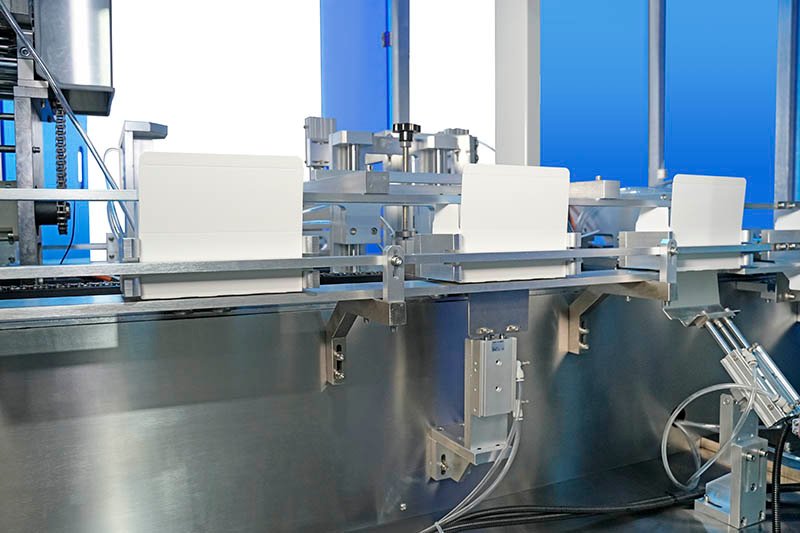
A typical project starts with empty tubes already fitted with their caps. The line presents and orients each tube, meters the product into its open tail and closes that tail using a method suited to the approved tube. Depending on the configuration, coding, inspection and discharge may be included or connected downstream.
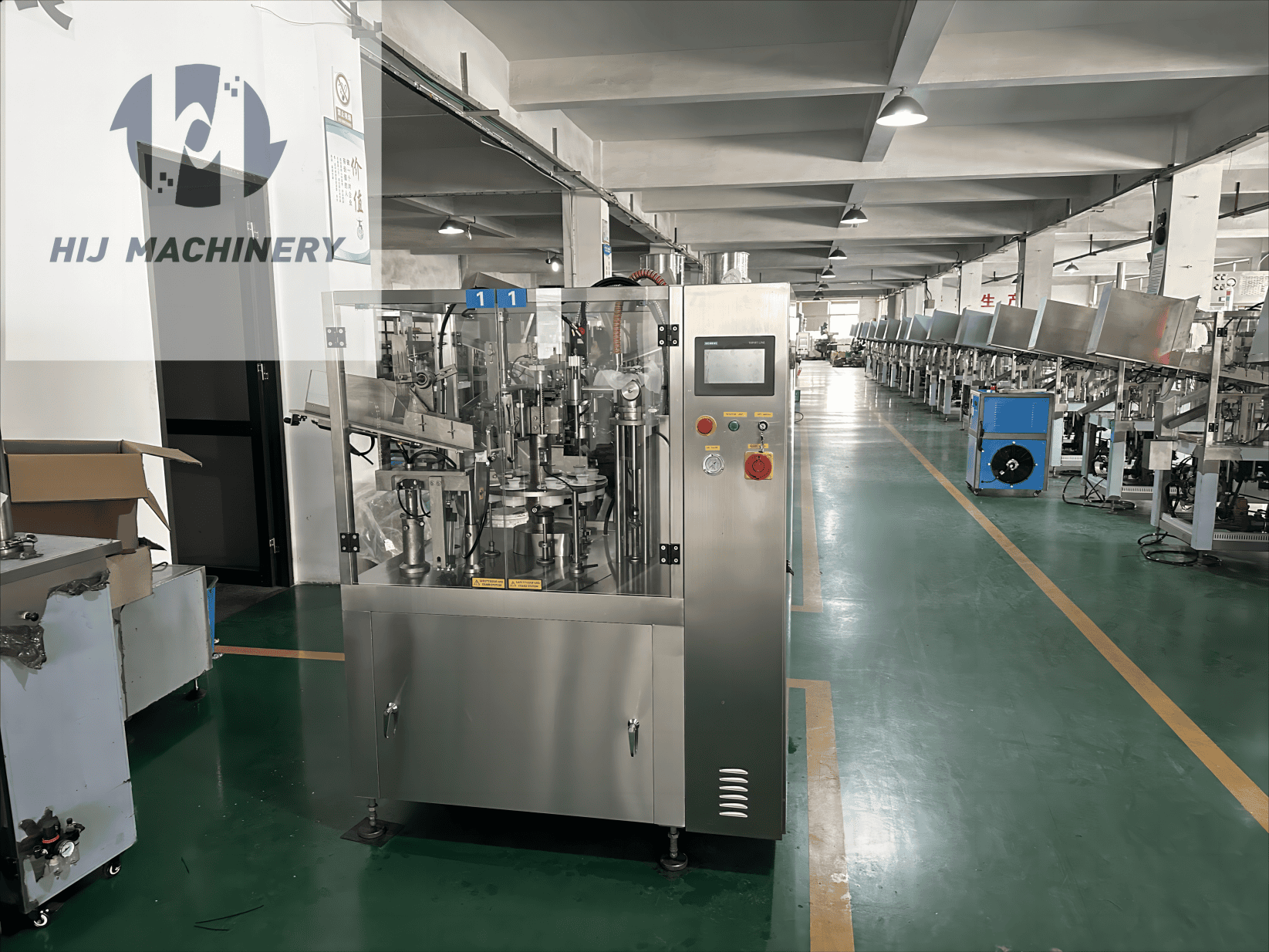
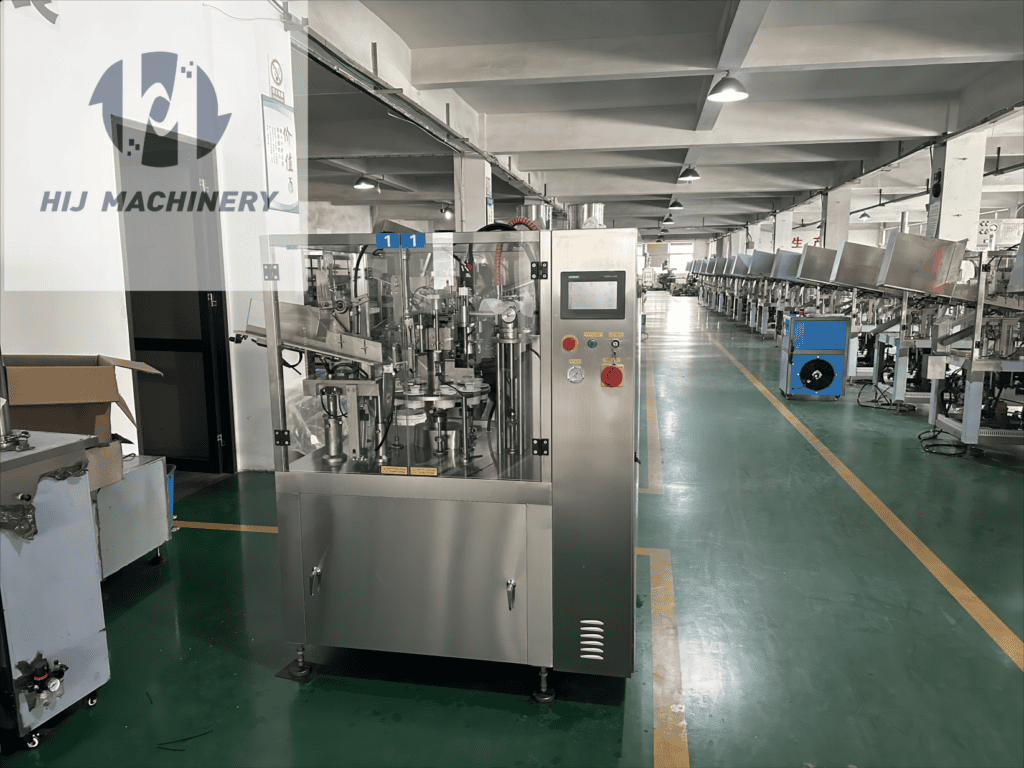
The TF-60 source describes a piston filling route for cosmetic and ointment cream products. A toothpaste application requires a separate sample review; do not infer a universal toothpaste viscosity range or output from that description.
Match the filling path to the paste
Toothpaste is not a single flow condition. Abrasive particles, suspended ingredients, air entrainment, temperature and batch-to-batch consistency may affect product transfer and dosing. Discuss the actual formulation and processing conditions with the supplier rather than specifying only “high viscosity”.
Product transfer and metering
Review how the product reaches the filling system, whether the hopper or feed arrangement maintains a consistent supply, and how the chosen metering components handle the formulation. Evaluate contact materials and seals against both product and cleaning agents. Avoid promising that one pump type fits every paste.
Nozzle and clean tail
Tube opening, nozzle position, cutoff and the space reserved for closure all matter. Product on the tail can interfere with the closure. Sample testing should check fill variation, dripping, smearing and the cleanliness of the intended sealing area under the agreed operating conditions.
Cleaning and product change
Identify accessible product-contact parts, disassembly points, retained product and the agreed cleaning method. Where flavours or formulations change, the manufacturer’s quality team should set the acceptable carryover criteria; the equipment supplier should define how the configured product path can be cleaned and inspected.
Choose the closing method from the tube
| Tube | Review with supplier | Evidence to bring |
|---|---|---|
| Plastic or laminate | Confirm the tube construction and proposed heat-sealing process against the approved tube supplier’s guidance. | Actual tubes, dimensions, artwork orientation and closure requirements. |
| Metal | Discuss the required folding or crimping arrangement; do not assume a heat-sealing head can close it. | Material, wall construction, tail dimensions and approved folded sample. |
| Multiple formats | List each diameter, length, fill volume, cap and sealing method; identify format parts and changeover steps. | A sample and drawing for each planned format. |
Verify the final seal or fold with the brand owner’s agreed inspection and test methods. Machine configuration, tube specification and acceptance criteria belong in the quotation and test plan.
How much output should the machine deliver?
Start with the number of accepted, correctly filled and closed tubes needed at a defined point in the line. Compare that with available production time, planned stops, changeovers, rejects and the capacity of upstream and downstream equipment. A catalogue cycle rate is not the same as accepted production.
Forester’s My Insight · planning example
If an illustrative line ran at 60 tubes per minute for eight hours without interruption, the arithmetic maximum would be 28,800 tubes. At an assumed 80% effective running time, that becomes 23,040 tubes before any additional rejected units. This is a calculation example, not a TF-60 specification or a production guarantee.
Ask suppliers to state the product, tube, run duration, staffing, stop definitions and reject rules used when demonstrating the accepted output.
Common toothpaste filling problems and what to check
The following checks help organise a trial; they are not a remote diagnosis. Establish a safe stop and cleaning procedure before inspecting any guarded, pressurised or heated component.
| Observed issue | What to investigate | Useful evidence |
|---|---|---|
| Fill weights vary | Check whether the feed supply is consistent, whether air is entering the product path, and whether the measurement method is repeatable. Review the metering settings against the actual paste. | Individual weights in sequence, target and tolerance, product temperature, settings and occurrence time. |
| Paste strings or drips | Observe cutoff timing, nozzle withdrawal and how the specific formulation behaves. Check nozzle condition and setup before deciding a different nozzle is needed. | Short video, tube opening, nozzle details, formulation conditions and samples taken before and after an adjustment. |
| Paste reaches the sealing area | Check filled volume, available tail space, nozzle positioning and tube presentation. Review whether the tube reaches closing in the intended orientation. | Tube dimensions, fill target, photographs before sealing and the affected tubes retained for inspection. |
| Weak or uneven closure | Separate a contaminated seal area from a setup or tube-material issue. For heat-sealed tubes, compare the approved tube construction and supplier guidance with the configured process. | Dated tube batch, approved sample, settings, seal appearance and the agreed test results. |
| Artwork or code is misaligned | Review tube orientation, registration reference, tube variation and the position of the configured marking operation. | Tube artwork and drawing, accepted reference, photographs and the frequency of misalignment. |
Change one relevant condition at a time when practical and retain the before-and-after observations. A successful adjustment for one tube or paste does not automatically validate another format.
Manual, semi-automatic or automatic: which route fits?
The decision is about the complete operating method, not just the number printed on a machine. Consider the accepted output, batch size, available operators, frequency of format changes and the operations to be performed before and after filling.
Small batches and frequent changes
A manually assisted or semi-automatic route can be worth evaluating when there are many short runs or frequent tube changes. The comparison should include tube loading and removal, operator training, cleaning and checks—not filling time alone. Confirm which operations the quoted equipment actually performs and which remain manual.
Repeated production and higher throughput
For a regular production campaign, an automatic tube filling and sealing configuration can reduce manual handling between its included stations. Confirm the actual infeed, orientation, filling, closing, coding, inspection and discharge scope. An automatic filler does not by itself prove that the entire downstream line is automated or that the required output will be achieved.
Compare on the same basis
Give each supplier the same paste, tube, target dose, operating hours and acceptance criteria. Compare the number of operators at every included station, the expected change parts, access for cleaning and the quoted test conditions. Request a measured trial or a clearly defined acceptance basis rather than comparing unrelated catalogue rates.
Changing tube size or toothpaste formulation
A new tube can change more than the stated fill volume. Before a changeover, compare the approved drawings and identify differences in tube diameter and length, cap shape, tail construction, artwork reference and the space needed for filling and closing.
- Tube handling: check holders, guides, feed settings and orientation for the new format. Confirm whether a physical change part or an adjustment is required.
- Filling: check nozzle access to the tube opening, the target fill, product supply and the room left for tail closure. Establish the first-piece check for the new setup.
- Closing and coding: verify that the chosen sealing or folding tooling, code position and closure settings match the approved tube and finished-pack reference.
- Product path: when formulation or flavour changes, identify cleaning, inspection and line-clearance steps, and record the checks required by the site quality team.
- Restart: keep the approved recipe or setup record, inspect the first acceptable tubes and document adjustments or deviations before routine production.
Actual changeover time depends on the configuration, training, cleaning and acceptance procedure. Include each intended tube and formulation in the format matrix when requesting a quotation; a single nominal range is not a substitute for sample testing.
What should the equipment trial verify?
- Agree the inputs: representative paste, approved tube and cap samples, nominal fill and acceptance limits.
- Check feeding: tube presentation, orientation, handling of missed tubes and protection of artwork or caps.
- Check filling: measurement method and sample size, variation, dripping and cleanliness around the tail.
- Check closure: appearance, code position and the agreed seal or fold test for the selected tube construction.
- Test interruptions: identify how the configuration responds to a missing tube, a stop and a controlled restart.
- Record changeover: required parts, adjustments, cleaning steps, settings and any open points.
Before the trial, agree who supplies product and tubes, how many samples are available, what constitutes an acceptable fill and closure, and how a deviation is recorded. Record the number of accepted and rejected units at the agreed measurement point, along with the run time and any stops. This makes quotations and trial results easier to compare without presenting a theoretical rate as an actual result.
Testing is specific to the configured machine and accepted samples. The buyer and supplier should agree the detailed protocol and responsibility for evaluating the finished pack.
Which information makes a useful quotation?
Send representative paste and tubes where practical, together with nominal fill volume and tolerance, tube construction and dimensions, cap details, required output and operating hours. List the planned formats and explain whether coding, inspection, cartoning and upstream product transfer are in scope.
Use the tube filling and sealing machine page to review the equipment platform. For maintaining the filling path and change parts, see tube filling machine parts. Confirm any requested features for the actual quotation rather than assuming they are standard.
Frequently asked questions
Can a tube filling machine fill every toothpaste?
No universal suitability can be assumed. Test the actual formulation, product path, target dose and tube with the proposed configuration.
Can one machine close plastic and metal tubes?
It depends on the closure systems and format parts available for the specific machine. Heat sealing and metal-tail folding are different operations and must be confirmed with the supplier.
What affects toothpaste filling accuracy?
Formulation consistency, product supply, metering equipment, fill volume, nozzle setup and the agreed measurement method can all affect the observed result.
What samples are needed for an equipment review?
Provide representative paste, approved tubes and caps, tube drawings, nominal fill and tolerance, planned formats and the required output.
How is a toothpaste tube filler priced?
Price depends on the product path, tube and closure requirements, automation scope, format parts, inspection, testing and agreed services. Request an itemized project quotation.
Discuss your toothpaste tube project
Share your formulation information, tube construction, fill volume and output target. The equipment route and trial scope can then be reviewed against your samples.
Discuss Your Tube Filling Project