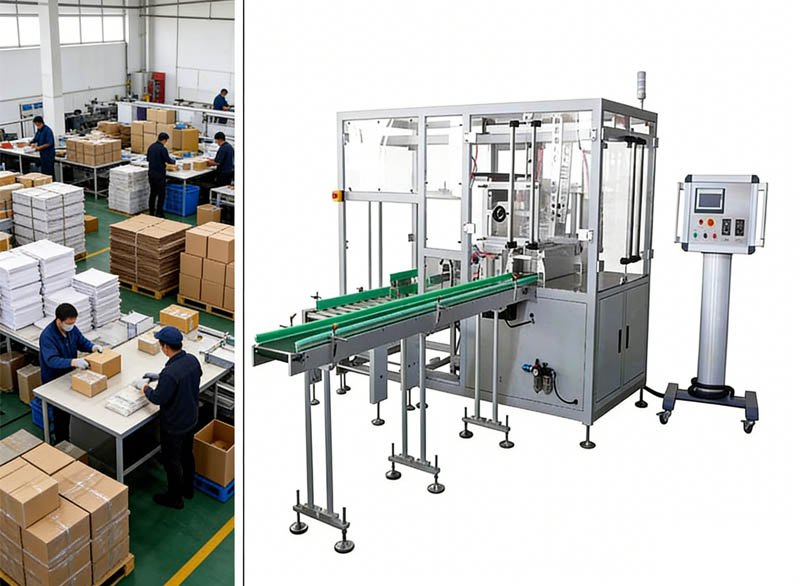
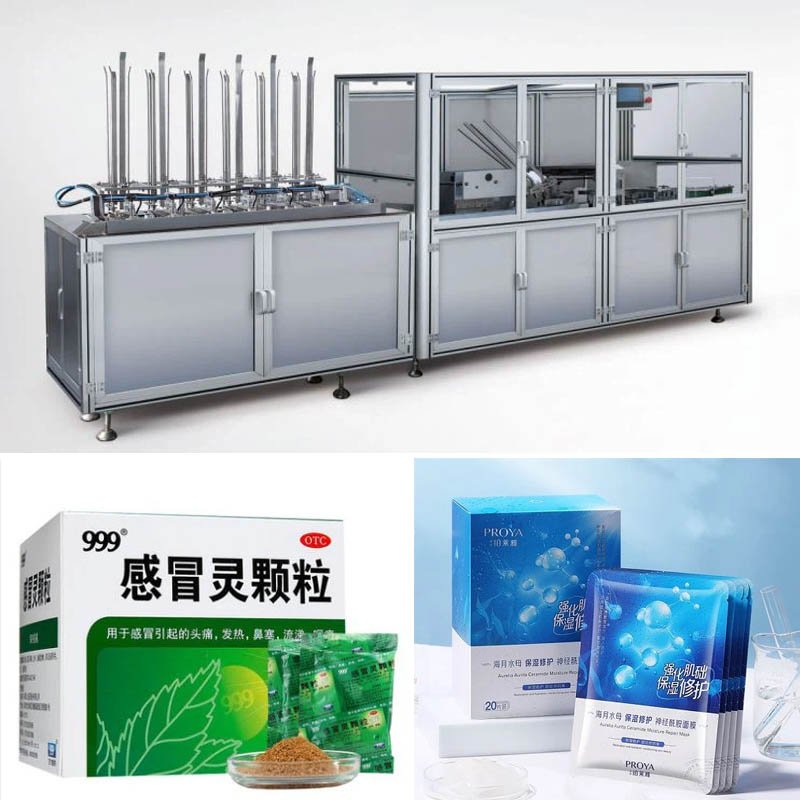
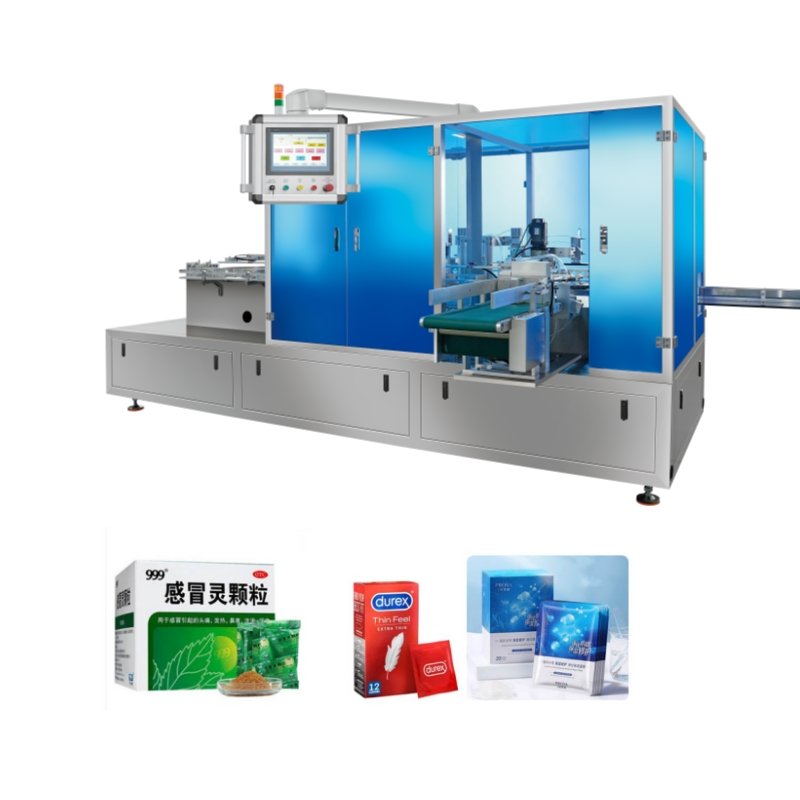
Quick answer: Choose an integrated blister cartoning line when you run one high-volume product family — especially fragile formats like pre-filled syringes — and want a single PLC, a single validation scope and 1–2 operators. Choose a standalone blister machine plus a separate cartoner when you run many products, already own one of the machines, or need the flexibility to redeploy equipment between lines. Integrated wins on handling, headcount and traceability; standalone wins on flexibility and phased investment.
Every blister packaging project eventually reaches this fork in the road. The two paths deliver the same carton at the end — but they behave completely differently in procurement, validation, daily operation and five-year cost. This guide compares them factor by factor, with a verdict on each, using HIJ’s integrated PBL-400S-400SF blister cartoning machine and a standalone blister-machine-plus-cartoner setup as the two reference configurations.
New to the category? Read what is a blister cartoning machine first — this article assumes you know the basic stations.
The Two Configurations at a Glance
Integrated Blister Cartoning Line
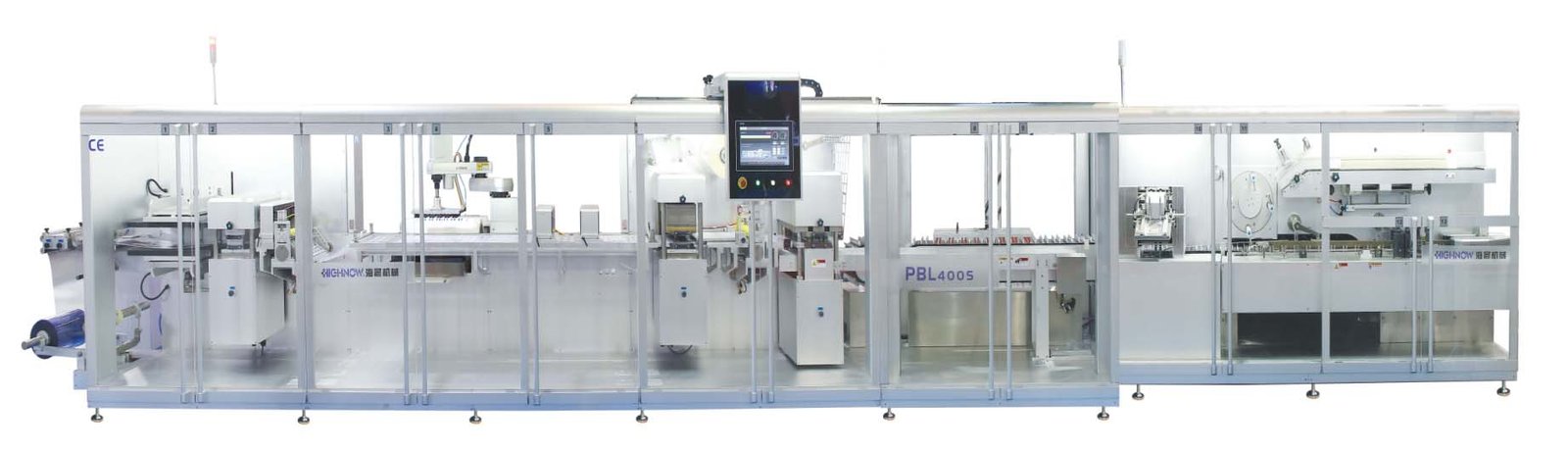
Forming, robotic loading, sealing, punching, transfer and cartoning on one frame, under one motion PLC. Example: PBL-400S-400SF.
- One control system, one HMI, one audit trail
- Tracking-manipulator transfer — no open conveyors
- 1–2 operators for the whole line
- Single FAT, single validation scope
Standalone Blister Machine + Cartoner
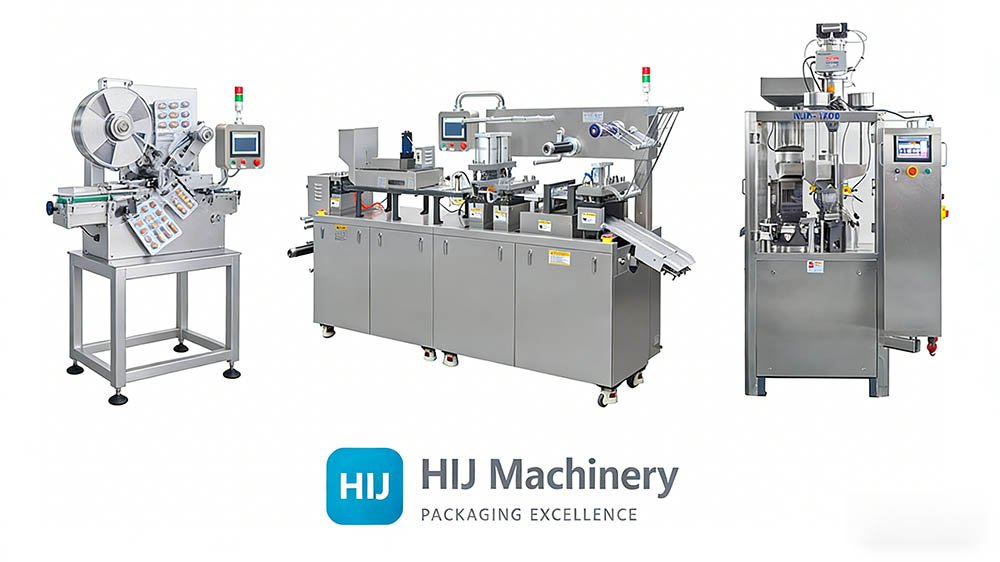
A dedicated blister packing machine feeding a separate horizontal cartoner via connecting conveyors, each with its own controls.
- Each machine redeployable to other lines
- Buy in phases — blister first, cartoner later
- Mix vendors and generations freely
- One machine down ≠ whole line down (with buffer)
Seven Factors, Seven Verdicts
1. Product handling & breakage Integrated wins
Between a blister machine’s outfeed and a cartoner’s infeed sit the most dangerous metres in secondary packaging: open conveyors, turns, transitions and stops. For tablets this is a nuisance; for glass pre-filled syringes it is a breakage-rate line item. An integrated line replaces all of it with a servo tracking manipulator that lifts each blister card and places it directly into the cartoner compartment, synchronised to chain speed — the mechanism explained step-by-step in how a blister cartoning machine works.
2. Control, coding & audit trail Integrated wins
One PLC means one recipe, one alarm history, one electronic-signature audit trail covering the entire batch. A standalone pair means two HMIs, two alarm logs and a handshake protocol between them that your team — not the vendors — ultimately owns. Every reconciliation question (“why do blister counts and carton counts differ by 214?”) now spans two systems.
3. Footprint & utilities Integrated wins
An integrated syringe line like the PBL-400S-400SF occupies about 14 × 2.5 m with one power drop (380 V, 35 kW) and one compressed-air feed. A standalone pair usually ends up longer once buffer conveyors are added, and needs two enclosures, two drops and two sets of guarding — a real difference inside a classified area where every square metre is expensive.
4. Flexibility & redeployment Standalone wins
This is the standalone configuration’s home ground. A general-purpose horizontal cartoning machine can carton blisters today, tubes next quarter and sachets next year with change parts; the blister machine can feed a different cartoner if layouts change. An integrated line is optimised for one product family — superb at it, but not a general-purpose asset.
5. Investment profile Standalone wins
Standalone lets you phase capital: buy the syringe blister packing machine now, carton by hand or semi-automatically, add the cartoner when volumes justify it. Integrated is a single larger commitment — though usually below the sum of two premium machines plus the site integration engineering that standalone quietly requires.
6. Validation & documentation Integrated wins
One machine, one URS, one FAT, one DQ/IQ/OQ/PQ campaign run by your facility with one vendor documentation package. With standalone equipment the machines validate separately, but the interface — conveyor handshake, rejection tracking across the gap, count reconciliation — becomes your validation scope, and it is precisely the part no vendor’s documentation covers.
7. Uptime & single point of failure Situational
The classic argument for standalone: if the cartoner stops, the blister machine keeps producing into a buffer. True — with a buffer system and floor space for it. Modern integrated lines counter with material buffers (10+ minutes of cartons and leaflets), independent operation modes for each half, and interlocks that stop gracefully instead of crashing. In practice, fault-location HMIs recover integrated lines faster than operators diagnose a two-vendor handshake failure.
Side-by-Side Summary Table
| Factor | Integrated line | Standalone pair |
|---|---|---|
| Product handling | Tracking manipulator, minimal transfer points | Open conveyors between machines |
| Control & audit trail | One PLC, one HMI, one record | Two systems + site-owned handshake |
| Footprint | ~14 m in-line, one utility drop | Longer with buffers; two drops |
| Operators | 1–2 | Typically 2–3 |
| Flexibility | One product family | Machines redeployable independently |
| Investment | Single commitment | Phaseable capital |
| Validation scope | One campaign, one package | Two campaigns + interface owned by you |
| Failure mode | Line-level, fast fault location | Machine-level, needs buffer to exploit |
Which One Should You Buy?
Choose the integrated line if…
- You package one product family at high volume — 6,000+ units/hour, year-round
- The product is fragile: glass pre-filled syringes, ampoules, vials in blisters
- You want one validation scope and one vendor accountable for the whole line
- Cleanroom floor space is tight and every enclosure costs
- You run lean crews — 1–2 operators must cover the full line
Choose standalone machines if…
- You carton multiple formats — blisters, tubes, sachets — on shared equipment
- You already own a working blister machine or cartoner
- Capital must be phased across budget years
- Volumes are uncertain and asset redeployability protects the investment
- Your engineering team is comfortable owning the machine-to-machine interface
The same logic scales up: whether to buy the whole packaging train from one vendor or assemble it machine by machine is the subject of our companion piece on turnkey blister packaging lines vs single machines, and HIJ quotes both routes through its turnkey solutions program.

“A customer in Southeast Asia once spent three days chasing a count mismatch: the blister machine said 41,000 cards, the cartoner said 40,786. QA would not release the batch until every missing card was explained. The culprit was a rejection chute on the connecting conveyor — between the two machines, in the gap neither vendor’s system recorded.
Whatever happens between two machines happens off the record — and off the record is exactly where a batch release goes to die. That gap is the real cost of the standalone route. It can absolutely be engineered and validated, but someone has to own it, and that someone is always the customer.”
— Forester Xiang, Founder & Chief Engineer, HIJ MachineryFrequently Asked Questions
Is an integrated blister cartoning line cheaper than two separate machines?
Usually yes at equal specification, once you count the connecting conveyors, integration engineering and dual validation that standalone requires — but standalone capital can be phased over time, which matters more for some buyers than the total figure. Request quotes for both configurations against the same URS.
Can an integrated line’s blister and cartoning sections run independently?
Yes. Lines like the PBL-400S-400SF allow online (synchronised) mode or standalone operation of each half from the touchscreen — used for commissioning, format trials and maintenance without stopping the other section.
Which configuration is better for pre-filled syringes?
Integrated, in almost every case. Glass syringes suffer at every open transfer point, and the tracking-manipulator handoff of an integrated line removes those points entirely while keeping a single audit trail for the batch.
Can I connect a new cartoner to my existing blister machine instead?
Yes — that is the standard standalone route. Plan for the interface engineering: conveyor handshake signals, speed matching, rejection tracking across the gap, and validating that interface as part of your own IQ/OQ scope.
Does an integrated line lock me into one product forever?
No, but changes stay within the machine’s format envelope — blister sizes, carton range and feeder type. Switching from syringes to tablets is a configurable change on many lines; switching to tubes or bottles is not. Define every future product in the URS before ordering.
Get Both Configurations Quoted Against Your URS
Send us your product, formats and volumes — Forester’s team will quote the integrated PBL-400S-400SF and a standalone pair side by side, so the decision is yours with real numbers.
Get a Free Comparison Quote