Start with center-seam tape if the filled corrugated case passes its shipping trial. Trial hot melt when roll changes interrupt production or the buyer wants an internal flap bond.
Price the same faces in both bids. If the erector already tapes the bottom, compare top tape with top glue. Ask the receiver to mark any required edge tape on the box. Glue between the flaps leaves those outside edges uncovered.
Read the tape path before comparing machines
On a regular slotted case (RSC), the two long outer flaps meet along the center of each face. Tape can bridge that seam from the outside. Hot melt bonds overlapping flaps on the inside. Extra strips may secure other joints, and their position determines which equipment belongs in the quotation.
One strip follows the long seam. Two cross the flap ends. Repeat the three strips underneath for a two-face H.
Two strips wrap the vertical edges at this end. The other two go at the opposite end, after primary closure.
| Finished-case requirement | Where the closure goes | Equipment to include in the comparison |
|---|---|---|
| Center-seam tape, sometimes called an I-seal | One strip follows the long flap seam on each specified face. Its ends turn onto the adjacent panels. | Flap folding if required, plus the tape heads for the top, bottom or both. |
| Full H-tape on both faces | A center strip and two transverse end strips form an H on the top. The pattern repeats underneath. | The center-seal operation and the edge-taping operation. Show any turn, transfer and label clearance. |
| Four upright corners reinforced | Each extra strip bridges two vertical side panels. Top and bottom already have their primary closure. | A separate corner-taping operation after primary sealing. Mark the start and end of every strip. |
| Hot-melt flap bond | Adhesive goes on the specified overlap. The flaps come together and stay under compression while the bond sets. | Glue delivery, pattern control, flap folding and compression. Identify who closes the opposite face. |
A receiving specification that says “four corners” is worth a phone call. Ask the receiver to mark one top view, one end view and the underside. The distinction can change both the equipment and the tape bill. FedEx illustrates the face H-pattern in its packing guidance. FedEx packing guidance
What determines whether the seal holds?
A tape that works in the freezer may need to be applied in a warmer room
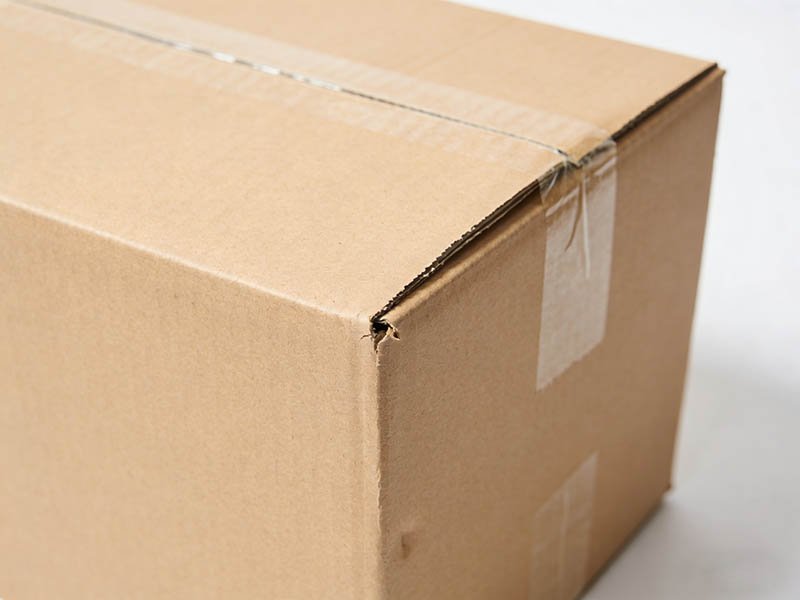
Write down the temperature of the board where the tape is applied, then the storage and transport temperatures. Check for condensation after a cold case moves into warmer air. A roll that holds in frozen storage can still fail to make its initial bond on a cold or damp liner. On recycled or printed board, examine the actual area under the strip. Loose surface fiber, dust, varnish and incomplete roller contact are different problems.
For a concrete example, Shurtape lists an application range of 20–75°F (about −7 to 24°C) for HP 232 and a service range of −20 to 100°F (about −29 to 38°C). A warehouse at 0°F is within that service range but below the listed application range. HP 232 is a hot-melt pressure-sensitive tape supplied on a roll. A case sealer using this tape does not need a glue melter. Water-activated tape uses a different dispensing process and needs its own equipment check. Shurtape HP 232 data sheet
A glue joint needs open time and time under pressure
Two intervals matter. The first runs from depositing the adhesive to bringing the flaps into contact. If the bead has already set, pressing harder may leave a well-defined bead on one flap and little transfer to the other. The second interval starts when the flaps meet. A joint that opens as it leaves compression deserves a check of flap springback, glue transfer and time under pressure. Ask the adhesive supplier to nominate a grade for the actual board, temperature and pattern. Henkel’s guide to hot-melt pop-opens
For a continuously moving case, effective compression contact length = case travel speed × required contact time. If the trial calls for 2 seconds at 12 m/min, the contact distance is 0.40 m. That is only the contact zone. Obtain a layout showing infeed, guarding, transfer, melt-unit service access and discharge before reserving floor space. For an indexing machine, request its dwell and cycle diagram instead.
Compare cost per accepted case
Start with measured material use. For identical top and bottom center strips, total tape length is 2 × (seam length + 2 × end tab). For a full H, add the four measured transverse strips. For upright corner reinforcement, add the actual cut lengths of the four vertical strips. The case width and height are different dimensions, so substituting one for the other can change a buying decision.
A worked example for a 400 × 300 × 220 mm shipper
Consider a 400 mm long, 300 mm wide and 220 mm high case. All prices and quantities below are illustrative inputs in US dollars. Both primary bids close the top and bottom and are assumed to pass the same trial. For this first calculation, every filled case is accepted and start-up waste is zero. Tape costs $0.020/m and glue costs $4.00/kg.
| Closure pattern | Material per case | USD per case |
|---|---|---|
| Top and bottom center tape | 2 × (0.40 + 2 × 0.06) = 1.04 m | $0.0208 |
| Full H on both faces | 1.04 m + 4 transverse strips at 0.38 m = 2.56 m | $0.0512 |
| Center plus upright tape | 1.04 m + 4 vertical strips at 0.20 m = 1.84 m | $0.0368 |
| Glue on both faces | 2.8 g total × $4.00/1,000 g | $0.0112 |
Each center strip has two 60 mm end tabs. Each 380 mm transverse strip spans the 300 mm width with 40 mm wrapping down either side. The four upright strips have a specified cut length of 200 mm each on this 220 mm high case. Use the lengths on the approved drawing for an actual order.
The two reinforcement rows price different finished specifications. If a receiver requires exposed tape in a particular location, keep that requirement in every eligible bid. For a production estimate, record the meters of tape or kilograms of glue issued to the run, subtract usable material returned, then divide the net cost by accepted cases. Include rejects, start-up strips, purge and roll remnants in the material account once. A glue reservoir at a different fill level at the end of the trial will distort a grams-per-case result.
When does hot melt pay back?
In this example the center-tape versus glue difference is $0.0096 per accepted case. Suppose the glue installation costs an additional $24,000 and incurs $3,600 more per year in energy and maintenance at the modeled duty. For this comparison no labor or downtime saving is assumed. Annual net saving = accepted cases per year × $0.0096 − $3,600. Simple payback = extra installed capital ÷ positive annual net saving.
| Accepted cases/year | Annual net saving with glue | Simple payback |
|---|---|---|
| 200,000 | −$1,680 | No payback at this volume |
| 1,000,000 | $6,000 | 4.0 years |
| 3,000,000 | $25,200 | 0.95 years |
At 375,000 accepted cases/year the running-cost saving is zero. Above that volume, savings start to recover the extra capital. Recovering the capital within three years requires at least 1,208,334 accepted cases/year. One measurement can reverse the decision. If the glue trial uses 3.8 g instead of 2.8 g, the one-million-case scenario saves just $2,000/year and simple payback moves to 12 years. Recalculate energy and maintenance when shifts change. For the full equipment budget, use the case sealer quotation guide.
Match the closure to the shipping job
| Project example | First configuration to trial | Evidence that decides the purchase |
|---|---|---|
| Frozen food packed before entering a freezer | A tape grade rated for application on that board, alongside a glue grade nominated for the cold route. | Board temperature at closure, visible moisture, initial contact, time to freezing and the joint condition after the agreed cold cycle. |
| Mixed-size fulfillment cases | Center tape if the receiver accepts it. Ask for random-size handling only if sizes alternate case by case. | Run the actual sequence, including a small case immediately after a large one. Record gaps, stops, label position and accepted output. |
| Export shipper with a customer-marked reinforcement drawing | Face H-tape if the requirement is flap-end coverage, or post-seal corner tape if it marks the upright joints. | Inspect all required faces. Check the filled case, liner or inner bag and pallet load against the buyer’s dust, moisture and transport requirements. |
| Long beverage runs with repeated stops at closure | Compare center tape against a specified glue pattern on the same cases. | Account for time lost at the bottleneck, restart rejects, actual glue use and access for maintenance. |
These are proposed trials. A separate, documented industry example illustrates the cost of interruptions. Graco reports that adhesive char and blocked nozzles had been interrupting Summit Brewing’s beer packaging line before the brewery changed its hot-melt delivery system. That project compared glue delivery arrangements. A tape-versus-glue payback calculation still needs the buyer’s own stop log. Graco’s Summit Brewing account
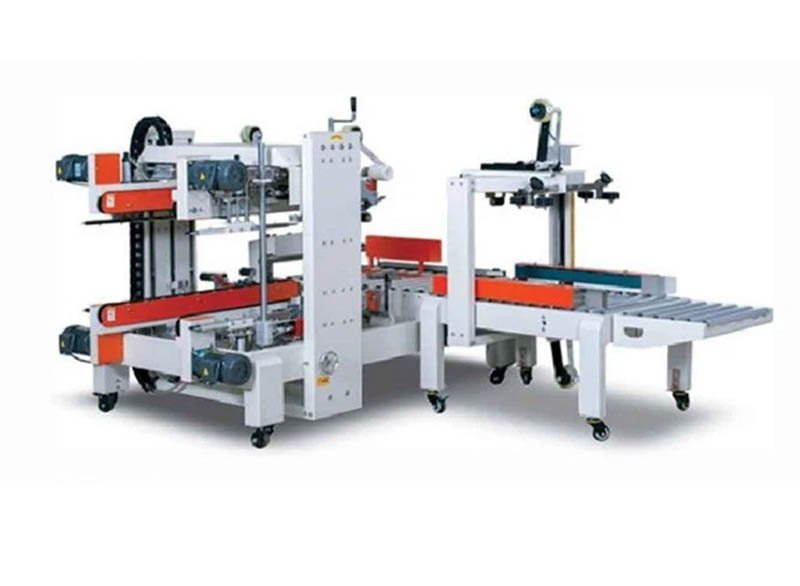
Where HIJ equipment fits. For cases run in size batches, the HIJ-600 has a handwheel size change and a published maximum of 720 cases/hour for common formats. Confirm the closure head, incoming flap condition and output on the quoted format. For a closed case requiring tape on its four upright corners, the HIJ-5050 is a downstream option. Its listed 20 m/min refers to maximum belt travel. Request the accepted cases/minute after the last required strip. For a project that includes erecting, loading and closing, identify who supplies each station and the glue system, if specified. HIJ-600 case sealer · HIJ-5050 corner taping · HIJ case packing lines
What to test before signing off the equipment
Run the competing closures on matched lots of filled cases. Include the heaviest or most spring-loaded format, the hardest surface to bond, and the least favorable approved temperature. Agree on the sample count, inspection times, permitted defects and pass limits with the buyer before the factory acceptance test (FAT). Keep one signed and dated reference pack or photo set per approved pattern.
| Trial stage | What to record | Decision it supports |
|---|---|---|
| At infeed | Board lot, gross weight, flap gaps, incoming bottom closure, board temperature and SKU sequence. | Both bidders receive comparable samples and the same starting condition. |
| Running and restarting | Elapsed test minutes, cases presented, accepted cases, rework, stoppages and consumables used. For glue, note first acceptable case after startup. | Accepted cases ÷ elapsed minutes gives delivered rate over the whole test. Record operating-only speed separately. |
| At discharge and after conditioning | Identify the face and failure mode: lifted tape end, missed edge, clean adhesive release, liner delamination, reopened flap or crushed board. Photograph the same views for each route. | Distinguishes a closure defect from a box or handling problem and identifies which trial to repeat. |
| In distribution | Use filled packs and the shipping profile agreed with the customer or test lab. Record closure condition, case deformation and product damage after testing. | Assess the filled shipper. ASTM D1974 covers fiberboard box closure methods. ISTA 3A addresses individual parcel shipments up to 150 lb (70 kg). ISTA 3E addresses similar packaged products in unitized full-truckload shipments. |
A factory run establishes what the machine and pack did under the recorded conditions. The shipping test answers a different question about the loaded package over its intended route. ASTM D1974/D1974M · ISTA test procedure descriptions
Buyer questions
At what speed should we change from tape to hot melt?
Use the required accepted cases/minute and annual volume as separate inputs. Suppliers offer high-speed tape machines as well as glue machines. Compare quoted performance on the same case, measured roll-change or restart losses and the installed cost. A-B-C’s Model 436 family is an example of a top-only sealer offered with different closure modules. A-B-C Model 436
Does fiber tear prove tamper evidence or stacking strength?
Fiber tear describes the board surface after one joint is opened. If visible evidence of opening matters, define how an inspector will recognize a breach and test the possible opening paths. If stacking is the concern, give the lab the filled case, pallet pattern, storage duration and environment. Neither result can be read from a photograph of a torn flap.
What if the bottom is already taped by our case erector?
Quote the existing bottom closure as common to both bids. Compare top tape with top glue and include any changes needed to fold and compress the top flaps. Use top-only consumption in the calculation. The two-face example above would overstate the tape cost of your retrofit.
What should we request if sealed cases open later?
Retain a failed case and an unopened case from the same lot. Record where and when the joint opened, board and material grades, line settings, and the route from sealing to discovery. Photograph the tape or both glue-bond surfaces before disturbing them. Case sealer fault guide
What to send for a case closure review
Send the outside L × W × H and gross weight of the filled case, a photo with the required closure marked, and your target accepted cases/minute. If available, include annual volume, board grade, the existing bottom closure, board temperature at sealing and storage temperature. For a retrofit, add conveyor height, travel direction and available length. Those details let HIJ identify the relevant sealing station and the points a supplier should demonstrate on your sample.