In 2026, a semi-automatic case sealing machine from a quality Chinese manufacturer typically costs US$2,000–$8,000 FOB, a random case sealer runs US$10,000–$25,000, and a fully automatic flap-folding sealer costs US$15,000–$40,000. Comparable European machines are commonly 2–3× higher. The final quote depends on carton size range, throughput, drive system, and optional conveyors — which is why serious buyers request a configured quotation rather than relying on list prices.
“How much does a case sealing machine cost?” is the first question every procurement team asks — and the honest answer is that the sticker price is only about 70% of the story. The machine type, drive system, options, freight, and consumables all move the real number, and the labor you stop paying for moves it back down.
This guide breaks down 2026 market price ranges by machine type, the seven factors that drive your actual quote, a realistic ROI calculation, and the hidden costs that first-time buyers miss. If you’re new to the category, start with our primer on what a case sealing machine is; if you already know your requirements, see the HIJ-600 automatic case sealing machine — up to 720 boxes/hour with a top-and-bottom belt drive — or browse all case packing machines.
Case Sealing Machine Price by Type (2026)
| Machine type | Typical price range (FOB China) | European equivalent | Throughput |
|---|---|---|---|
| Semi-automatic uniform case sealer | US$2,000 – $8,000 | US$6,000 – $18,000 | 500–800 boxes/hour |
| Random case sealer (auto size adjust) | US$10,000 – $25,000 | US$25,000 – $60,000 | 400–600 boxes/hour |
| Fully automatic flap-folding sealer | US$15,000 – $40,000 | US$40,000 – $90,000 | 800–1,500+ boxes/hour |
| Four-corner edge sealer (add-on unit) | US$8,000 – $20,000 | US$20,000 – $45,000 | Paired with center sealer — see the four corner sealing machine |
| All-in-one erect-load-seal system | US$40,000 – $120,000 | US$120,000 – $300,000+ | Full line automation — see the all-in-one machine |
7 Factors That Drive Your Actual Quote
1. Carton size envelope
A sealer covering L 200–600 mm handles standard shipping cases with standard tooling. Oversized or unusually small cartons require a customized frame, adding 15–30% to the base price.
2. Drive system
Side-belt drives are the budget option. A top-and-bottom belt drive — standard on the HIJ-600 — costs more to build but is the correct specification for heavy, tall, or unevenly filled cartons, and eliminates the re-taping rework that cheap sealers create.
3. Throughput class
Moving from 500 to 1,000+ boxes/hour means heavier frames, faster motors, and automatic flap folding — each step up the speed ladder roughly doubles the machine cost — weigh it against labor savings in our semi vs fully automatic comparison.
4. Frame material and build standard
Painted carbon steel is standard for warehouse environments. Stainless steel construction for washdown, food, or cGMP-adjacent areas typically adds 20–40%.
5. Automation options
Infeed/outfeed conveyors, carton stops, low-tape alarms, and safety interlock upgrades each add cost — but conveyors in particular are what turn a standalone sealer into an inline machine.
6. Voltage and certification requirements
CE-marked configurations for the EU, or specific voltages (110V/60Hz for North America), are minor cost adders but affect lead time if not specified upfront.
7. Supplier type
Buying directly from the manufacturer removes the 15–25% margin a trading company adds — and more importantly, connects your engineers directly with the people who built the machine.
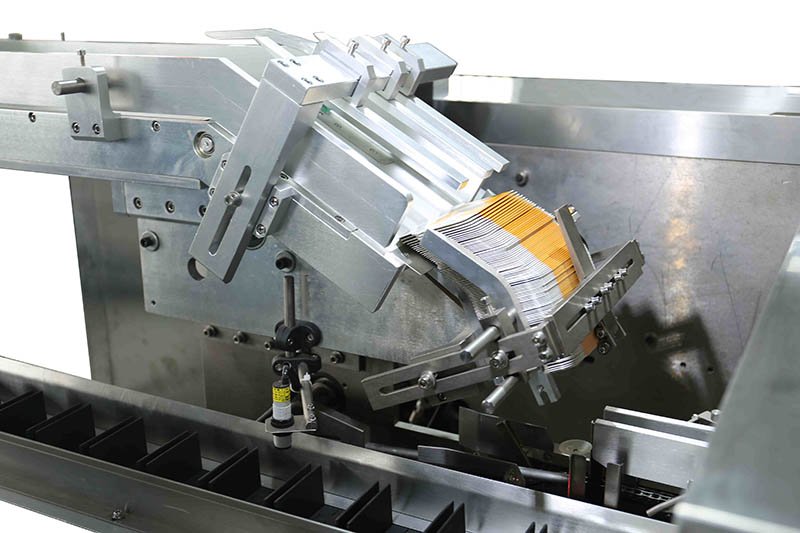
Every carton in this warehouse represents tape, labor, and machine time — the three variables of case sealing cost.
ROI: What a Case Sealer Actually Saves
Here is the calculation we walk B2B buyers through. Assume a line sealing 2,000 boxes per day with manual tape guns:
| Cost item | Manual taping | With automatic case sealer |
|---|---|---|
| Labor | 2–3 operators dedicated to taping | 1 operator loading the infeed |
| Tape consumption | High — overlaps, double passes, waste | Machine-metered, typically 15–25% less tape per carton |
| Seal quality | Inconsistent; rework and transit damage claims | Centered, uniform seal on every box |
| Peak capacity | Limited by fatigue | 720 boxes/hour, constant all shift |
At typical labor rates, freeing even one full-time operator recovers the cost of a semi-automatic sealer well within the first year — before counting tape savings and reduced damage claims. This is why the case sealer is almost always the first end-of-line machine a growing factory buys — the sequencing logic is explained in our case sealer vs erector vs packer guide.
“Buyers often compare quotes line by line and pick the cheapest sealer, then spend the saved money twice over on freight for a second machine when the first one can’t grip their heaviest export cartons. My advice after 20+ years: send the supplier your three heaviest, tallest carton specifications before asking for any price. A quote configured around your worst-case carton is the only quote worth comparing.”
Hidden Costs First-Time Buyers Miss
Ocean freight and import duties. A 250 kg semi-automatic sealer ships economically, but all-in-one systems ship in wooden crates by sea — budget freight, insurance, and your country’s import duty into the landed cost.
Consumables. Tape is the ongoing cost. Standard 48/60 mm BOPP tape is cheap and universally available; the machine’s tape-saving precision usually offsets a meaningful share of its running cost. (Choosing between adhesive systems entirely? See tape vs hot melt case sealing.)
Spare parts kit. Order the recommended wear-parts kit (blades, belts, rollers) with the machine — shipping them together costs a fraction of an emergency air-freight order later.
Conveyor integration. If the sealer must connect to an existing line, confirm working heights and conveyor speeds at quotation stage, not after delivery. For full-line projects, a turnkey solution with one supplier removes the integration risk entirely.
How to Get an Accurate Quote in 24 Hours
Send your supplier these five data points and you will get a real, comparable quotation instead of a placeholder price: (1) carton dimensions — smallest and largest, (2) carton weight range, (3) boxes per hour at peak, (4) available power supply and compressed air, and (5) whether the machine runs standalone or inline. That’s the entire checklist for pricing. Before signing the purchase order, also run the full 12-point selection checklist.
Key Takeaways
- Semi-automatic case sealers run roughly US$2,000–$8,000 FOB from quality Chinese manufacturers; European equivalents typically cost 2–3× more.
- Drive system, carton envelope, throughput class, and frame material are the four biggest price levers in any quote.
- A sealer replacing 2–3 manual taping operators commonly pays for itself within the first year of labor savings alone.
- Budget the landed cost: freight, duties, a spare-parts kit, and conveyor integration — not just the FOB machine price.
- Quote accuracy depends on your data: carton sizes, weights, throughput, utilities, and standalone-vs-inline are the five essentials.
- Buying manufacturer-direct removes trading-company margin and connects you with the engineers who built the machine.
Get an Exact HIJ-600 Quotation — Not a Price Range
Send your carton dimensions and daily output. Our engineers will configure the machine, confirm lead time, and send a formal quotation within 24 hours.
Get Free Turnkey QuoteFrequently Asked Questions
How much does an automatic case sealing machine cost in 2026?
Why are European case sealers 2–3 times more expensive?
What is the payback period for a case sealing machine?
Does the quote include shipping and installation?
What information do I need to provide to get an accurate price?
About HIJ Machinery
HIJ Machinery (legal name: Wenzhou Trustar Machinery Technology Co., Ltd), founded in 2004 in Rui’an, Wenzhou, Zhejiang, China, manufactures pharmaceutical, cosmetic, and food packaging machinery — including blister packing machines, cartoning machines, capsule filling machines, and case packing machines such as the HIJ-600 automatic case sealing machine. Equipment is CE-marked, manufactured under the ISO 9001 standard, and built cGMP-ready, with installations in more than 30 countries.
This article was written and technically reviewed by Forester Xiang, founder and chief engineer of HIJ Machinery, with 20+ years of packaging engineering experience and more than 100 pharmaceutical facility audits worldwide. Contact our engineering team for a configured quotation.