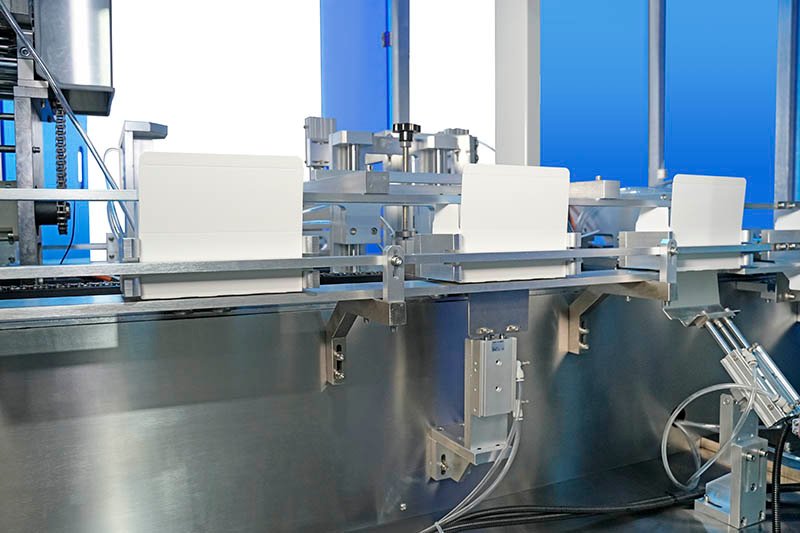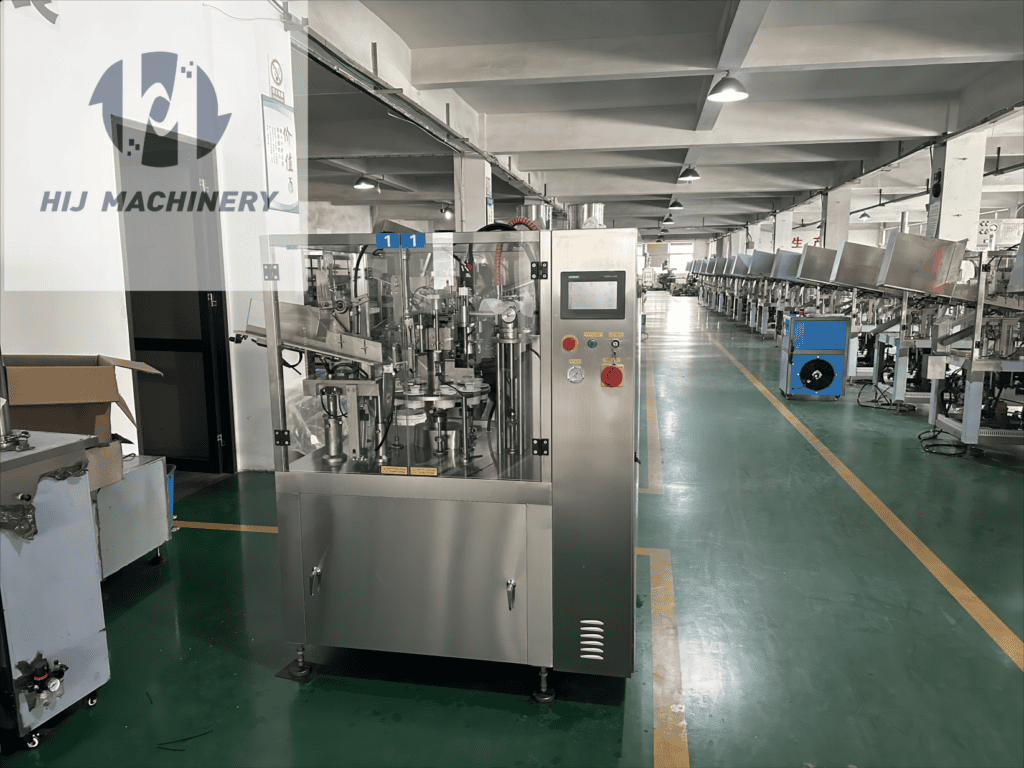
Parts identification · Filling, tube handling and finishing
The main tube filling machine parts are the tube feed and holders, registration system, product supply and metering assembly, filling nozzle, sealing tools, tail-finishing and coding devices, discharge system and controls. Their names describe functions. A replacement still needs to match the installed machine, assembly and revision.
Use this guide to identify the function first, then distinguish a replacement spare from a tube-format change part or an optional assembly.
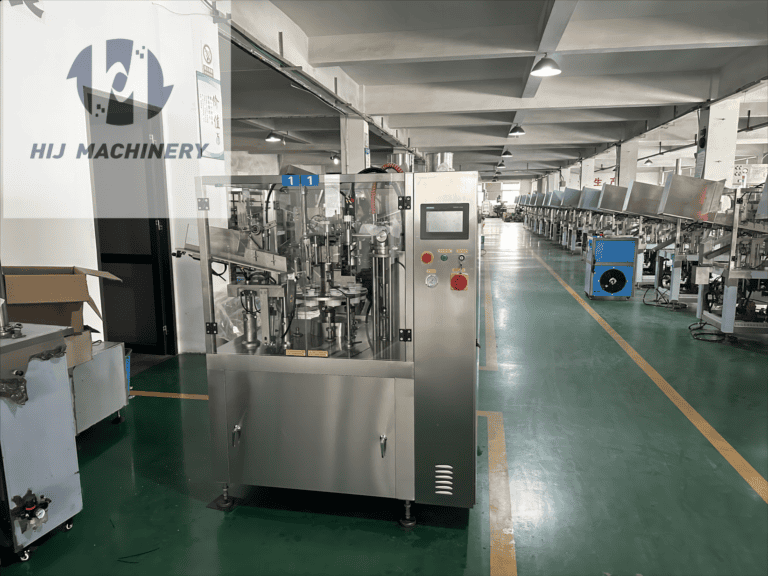
Follow the product path and the tube path
The product and the empty tube take different routes before meeting at the filling position. Keeping those routes separate makes a parts enquiry much clearer: a feed problem could concern the cream supply or the empty tubes, while “nozzle” could mean a filling component or a heating component.
- Product supplyHopper or agreed feed arrangement → metering assembly → filling nozzle.
- Tube handlingTube feed → holder and registration → filling position → finishing and discharge.
- CoordinationDrives, sensors and controls coordinate the installed functions and their defined conditions.
Norden’s introductory explanation also separates tube infeed, positioning, filling, sealing and discharge. It is an industry reference for the terminology, not evidence that a Norden component fits a TF-60 or that HIJ supplies another manufacturer’s original parts.
Names, roles and the details needed to match a part
The table identifies functional groups for an enquiry. It is not a bill of materials: an assembly can contain several components, and the part names or drawing references may differ between machine versions.
| Part or assembly | Function | Useful identification detail |
|---|---|---|
| Tube magazine and feed assembly | Stores or presents empty tubes to the tube-handling system. | Machine version, feed arrangement and the supplied tube drawing. |
| Tube holders and format tooling | Support the tube in the machine for the specified format. | Installed tooling reference, tube body and cap geometry, and required orientation. |
| Print-registration system | Uses the tube’s registration reference to establish its intended orientation. | Sensor reference, mounting assembly, artwork mark and machine documentation. |
| Product supply and metering assembly | Receives product and meters the quantity delivered for filling. The TF-60 project document describes mechanical piston filling. | Dosing assembly drawing, installed version, product and filling requirement. |
| Filling nozzle and associated components | Deliver the metered product into the tube through the configured filling outlet. | Nozzle and valve references, connections, product and approved filling configuration. |
| Heating and sealing tools | Perform the specified tube-tail closure process; the appropriate tools depend on the tube and sealing technology. | Sealing method, tube construction, installed tool drawings and finished-tail requirement. |
| Tail-finishing and coding devices | Perform the configured finishing and marking functions at the tube tail. | Tool or coding-device reference, code format and the approved finished-tube sample. |
| Discharge, drives and controls | Release completed tubes and coordinate the machine’s installed movements and functions. | Relevant station drawing, electrical reference and any applicable hardware or software revision. |
Start with the reference printed on the component or shown in the machine’s parts book. A photograph and a familiar part name can locate the discussion, but they do not confirm the dimensions, material, connections or control compatibility of a replacement.
Filling nozzle and hot-air nozzle are different components
A filling nozzle belongs to the product-delivery path. A hot-air nozzle belongs to a particular sealing arrangement. Calling either one simply “the nozzle” can lead to the wrong quotation. State the function and station, then include the installed drawing or component reference.
The official Norden size-parts brochure illustrates this distinction with separate filling-nozzle and hot-air-sealing components. Its illustrated parts and compatibility rules belong to those Norden configurations, not to every tube filler.
Separate replacement spares, format tooling and options
Replacement spare: restore the approved configuration
This request concerns an installed component that needs replacement. Identify the assembly, reference and revision, describe the observed condition and record any machine modifications. Ask the supplier to confirm the matching component and any required companion items. Do not infer a failure cause from a photograph alone.
Format change part: prepare a different tube or product
A new tube is not necessarily a settings-only change. The TF-60 project document explicitly states that different tube diameters require different moulds. That makes the tooling scope a separate item to review when planning another format.
Supply the proposed tube drawing and samples, cap design, material construction, fill requirement and finished-tail specification. Compare these against the installed tooling. Confirm which components change, which settings change and which existing parts remain. The exact set must come from the machine-specific review, not a generic “format kit” description.
Optional assembly: add a function not established as supplied
The TF-60 project document separately lists product-conditioning and feeding options, including a jacketed hopper, stirring arrangement and additional feed equipment. Their presence in a document does not make them standard on every machine. A request to add heating or feeding equipment is a configuration review, not simply an order for a replacement spare.
Three requests, three scopes: restoring an installed part, changing a tube format and adding an optional function need different evidence. Keep them separate in the enquiry and quotation.
Identify the installed assembly before requesting a replacement
For a useful initial review, send the machine model and serial number, the assembly drawing and revision if available, the installed part marking, and clear overview and close-up photographs. Add the tube and product format associated with the request.
Say whether you need the same part, another format or a complete assembly. If the drawing is missing, state that plainly. The supplier may need further measurements or records before confirming a match. Arrange any measurements or access under the equipment’s authorized maintenance instructions; this guide is not a disassembly procedure.
Electrical components need more than a familiar brand name. Record the complete device reference and the relevant machine documentation. Mechanical fit alone does not establish compatibility with an existing control system.
Ask the quotation to identify the confirmed part or assembly, included companion items, compatibility basis and any remaining information required. Availability, installation work, prices and lead times need current confirmation for the specific request.
For another format, agree on the whole demonstration
When a new format needs tooling, a single tube passing through the machine is not a complete format demonstration. Agree on the actual tube, product, filling requirement, sealing appearance, code and discharge condition before testing.
- Tube handling: demonstrate the intended feeding, holding and registration with the proposed tubes.
- Filling: check the agreed filled quantity and product-delivery behavior under the defined test conditions.
- Tail finishing: evaluate the agreed closure, trim and code against the approved sample and test method.
- Discharge and return to production: confirm the output route, format identification and the documented setup for the tested configuration.
Document the parts fitted, settings, samples, deviations and acceptance decision. If production planning also needs an output estimate, use the tube filling machine capacity calculator with clearly stated assumptions; it does not replace a tooling or format trial.
A changed product can also require a separate cleaning and product-contact-material review. Do not treat an accepted mechanical fit as proof of cleanability, product compatibility or a validated process.
Questions about tube filler components
What are the main parts of a tube filling machine?
The main functional groups are tube feeding and holders, registration, product supply and metering, the filling nozzle, sealing tools, tail finishing and coding, discharge, drives and controls. The exact assemblies and part references depend on the machine configuration.
Are tube filling machine parts interchangeable between models?
Do not assume they are interchangeable. Confirm the machine model and serial number, assembly drawing, component reference, revision and installed configuration. Similar names or appearance do not establish mechanical, material or control compatibility.
Does changing tube diameter require different tooling?
The TF-60 project document explicitly requires different moulds for different tube diameters. For a specific machine and proposed tube, obtain a format review identifying the tooling and settings that change, the parts retained and the agreed demonstration.
What information is needed for a tube filling machine spare-parts enquiry?
Provide the model and serial number, assembly drawing and revision if available, installed part marking, overview and close-up photographs, and the relevant tube and product format. State whether the request is a replacement spare, new-format tooling or a complete assembly.
Identify the part or define the new format
Share the machine identification and the assembly or tube-format details. Ask HIJ to review the matching reference, configuration scope and information still needed before confirming a quotation.
Discuss a Tube Filler Part or Format