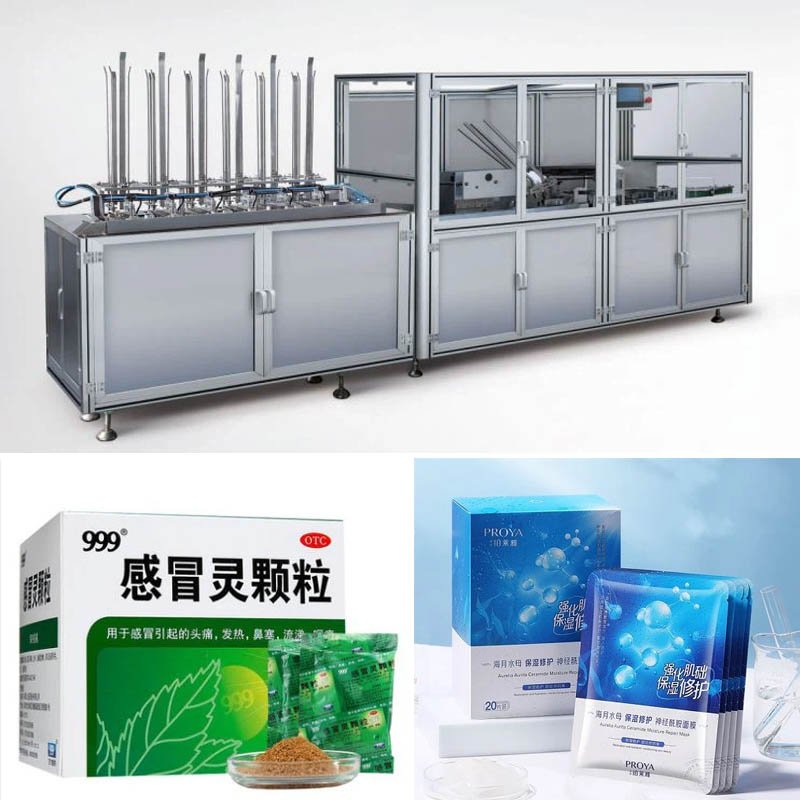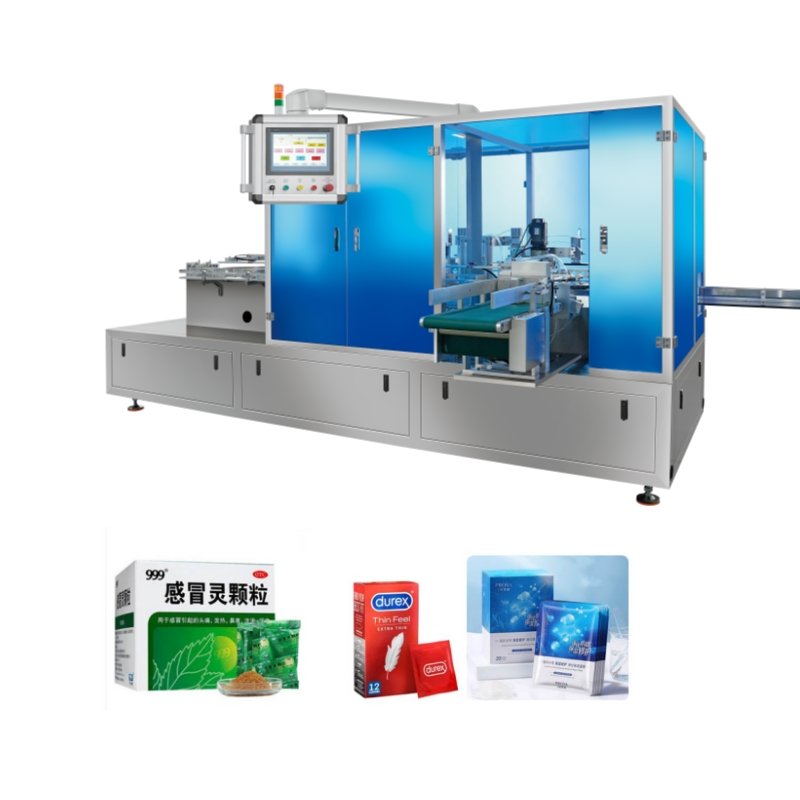
Choosing an automatic cartoning machine comes down to one early decision: top-load or side-load. Get it right and the rest is easy; get it wrong and your product won’t even fit the machine. This is the fast way to decide.
Quick answer
Choose top-load (vertical) cartoning if your product is upright, round, fragile or irregular — bottles, jars, vials, pods and pouches load cleanly from above. Choose side-load (horizontal) cartoning if your product is flat and stackable — blister packs, sachets and soap bars push in from the side, usually at higher speed. Decide by product shape first, speed second.
Forester Xiang
Founder & Chief Engineer, HIJ Machinery
Key Takeaways
- Top-load (vertical) cartoning loads the product from above — best for upright, round, fragile or irregular products such as bottles, jars, vials, pods and pouches.
- Side-load (horizontal) cartoning pushes the product in from the side — best for flat, stackable products such as blister packs, sachets and soap bars, usually at higher speed.
- Decide by product shape first, speed second: a fast machine that can’t hold your product is no use.
- Fragile products usually favour top-load, because gravity loading is gentler than a side push.
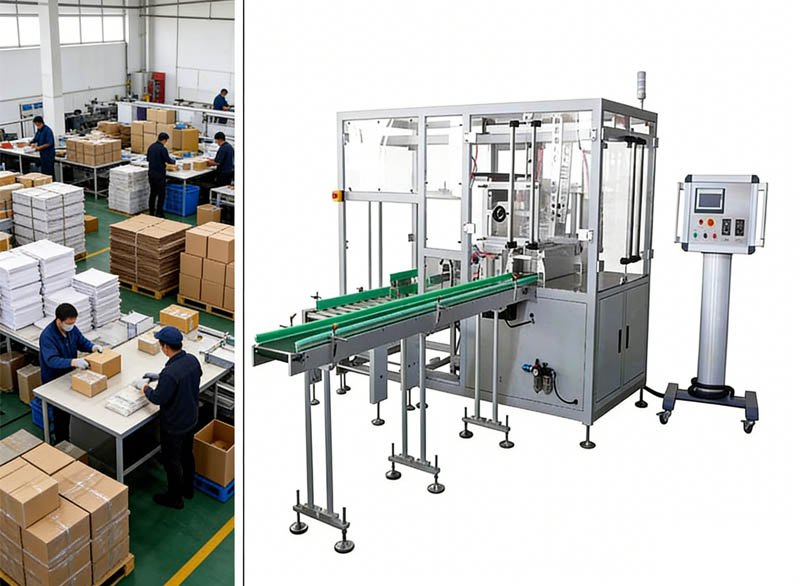
- HIJ supplies both types: the GSZ-60 top-load (vertical) cartoner and horizontal side-load cartoners.
Top-Load vs Side-Load: Side-by-Side
Find the row that matters most for your product, and the column tells you the machine. Most decisions are settled in the first two rows.
| Decision factor | Top-Load (Vertical) | Side-Load (Horizontal) |
|---|---|---|
| Loads the product | From the top, downward | From the side, horizontal push |
| Product shape | Upright, round, irregular | Flat, stackable, uniform |
| Example products | Bottles, jars, vials, pods, pouches | Blister packs, sachets, soap bars |
| Fragile products | Gentler — gravity loading | Side pressure can scuff or crack |
| Irregular shapes | Handles them | Limited |
| Raw speed for flat items | Moderate | Often faster |
| Typical HIJ machine | GSZ-60 vertical cartoning machine | horizontal cartoning machine |
Forester’s Insight
Forester Xiang · Founder & Chief Engineer
When a buyer leads with “how fast does it run?”, I gently steer them back a step. Speed is the last question, not the first. I’ve seen fast side-load lines bought for a product that simply won’t lie flat — and they never hit their rated speed because they jam.
So here’s my shortcut: if your product can stand on a table without tipping or rolling away, picture it dropping into a carton from above — top-load. If it lies flat and stacks like cards, picture it sliding in from the side — side-load. The shape almost always answers it before we open a spec sheet.
Decide in 3 Questions
Answer these in order. The first “yes” usually settles it.
Does your product stand upright, roll, or have an irregular shape?
→ Yes: choose top-load (vertical). See the GSZ-60 vertical cartoning machine. For odd shapes, read cartoning irregular products.
Is your product flat, rigid and stackable (like a blister pack)?
→ Yes: choose side-load (horizontal). See the horizontal cartoning machine.
Is your product fragile, or do you run several different formats?
→ Yes: lean top-load — it’s gentler and more flexible across formats. Still unsure? Compare machine types in our vertical vs horizontal guide.
Top-Load vs Side-Load FAQ
Decide by your product’s shape first. If it stands upright, rolls, is fragile or has an irregular shape, choose a top-load (vertical) cartoning machine. If it is flat, rigid and stackable, choose a side-load (horizontal) cartoning machine. Only then compare speed.
Top-load is usually gentler. The product is lowered into the carton from above using gravity, rather than being pushed in under side pressure. For glass bottles, vials and other delicate items, top-load reduces the risk of scuffing or cracking.
Generally no — the loading method is built into the machine’s design, so you choose the type that matches your main product. The best approach is to select the machine around your hardest-to-handle or highest-volume format. If you run very different formats, talk to us about the most cost-effective split.
Yes. HIJ makes both — the GSZ-60 top-load (vertical) cartoner for upright and irregular products, and horizontal side-load cartoners for flat, stackable products. Send us your product and carton details and we’ll recommend the right type and quote within 24 hours.
Still on the Fence?
Send us a photo and the dimensions of your product and carton. We’ll tell you straight whether top-load or side-load is right — and quote within 24 hours.
Get a Free Quote & Advice