A blister packaging machine forms individual cavities, loads a product, seals the cavities with a lidding material and converts the web into finished blister cards. This guide explains that process, the machine boundary and the project inputs buyers should define before comparing equipment.

What is a blister packaging machine?
A blister packaging machine is equipment that forms or supplies a cavity web, places a product into each cavity, applies and seals a lidding web, and cuts the sealed web into individual cards or another specified finished format.
A pharmaceutical configuration may also include product feeding, cavity inspection, print or code verification, perforation, rejection and transfer to a cartoner. Those functions are not universal. They must be named in the user requirement specification, quotation and acceptance protocol.
The machine creates the physical pack. It does not independently establish shelf life, barrier suitability or regulatory acceptability. Those outcomes depend on the complete product-packaging system, approved materials, pack geometry, process controls, storage conditions and supporting development or validation evidence.
| Project layer | What belongs in it | What must be verified |
|---|---|---|
| Inputs | Product, forming web, lidding material, blister drawing, artwork and acceptance requirements. | Identity, dimensions, tolerances, material specifications and production-intent samples. |
| Machine actions | Web transport, forming, feeding, inspection, sealing, coding, perforation, cutting and discharge. | Which stations are included, how they are controlled and how rejects are handled. |
| Finished output | Accepted blister cards at the agreed product, format and operating condition. | Quality criteria, sustained rate, sampling method, stop/restart behavior and recorded rejects. |
Blister pack, packaging machine and packaging line are different
These terms are often used as if they mean the same thing. In an RFQ or URS, that ambiguity can leave inspection, cartoning, coding or line controls outside the quoted scope.
- Blister pack
- The finished package: one or more formed cavities containing the product and closed with a lidding material.
- Blister packaging
- The complete packaging process and product-packaging system, including materials, format, seals, inspection and quality controls.
- Blister packaging machine
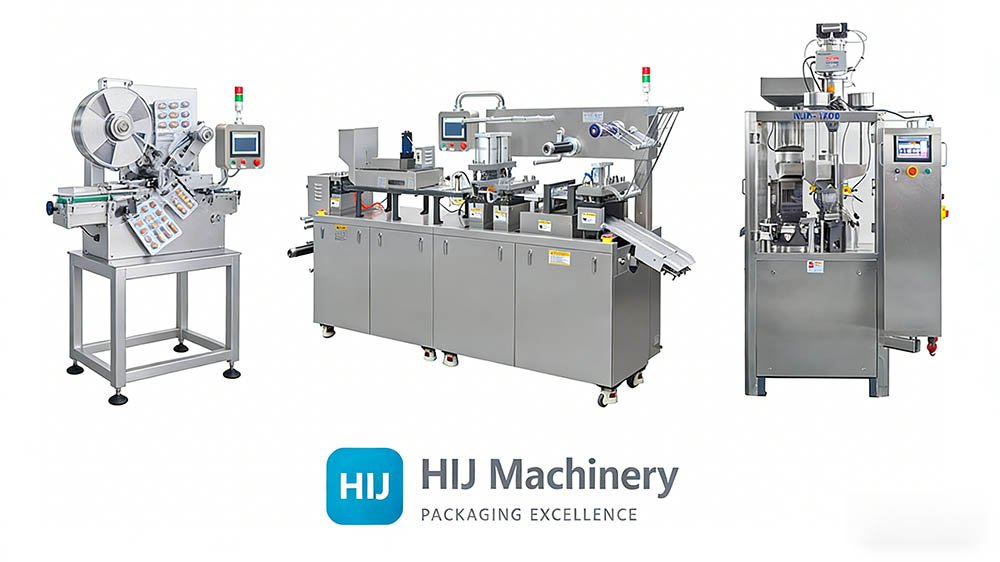
- The equipment that forms, fills, seals and converts the web into finished blister cards. The exact station set depends on the application.
- Blister packaging line
- The blister machine plus connected equipment such as a cartoner, leaflet system, coder, checkweigher, conveyor, case packer and line-level controls.
A request for a “complete blister line” should therefore state the exact start and end points. The scope may begin at base-web loading and end at loose blister discharge, or it may continue through leaflet insertion, cartoning, coding, inspection and case packing.
How does a blister packaging machine work?
The basic working principle is a synchronized web process. A forming material advances through controlled stations while the machine coordinates motion, registration, product placement and sealing. A specific design may combine, omit or add stations, but a typical pharmaceutical sequence follows these seven steps.
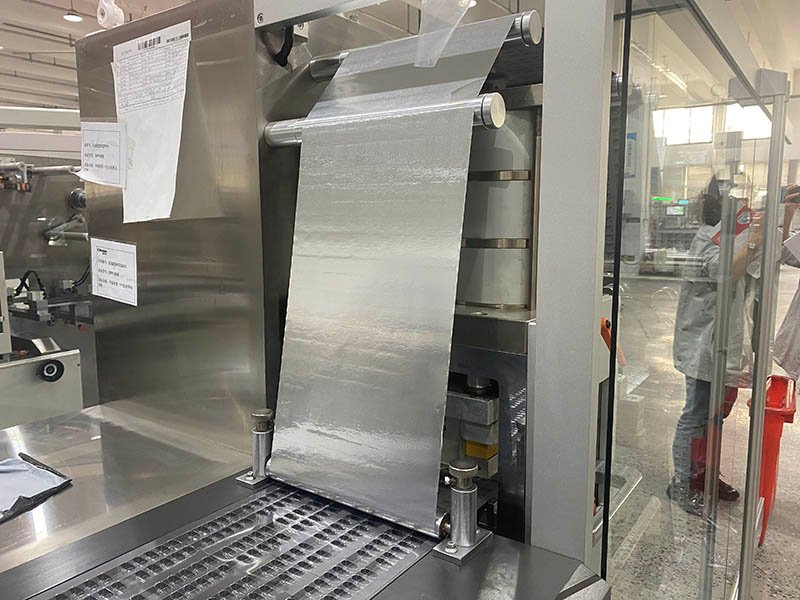
- Unwind and guide the base webThe forming material is unwound and transported under controlled tracking and tension. Web behavior influences registration at every later station.
- Form the cavitiesA thermoplastic web is heated and formed, or a cold-form laminate is mechanically pressed into a tool. The cavity must match the approved product and card drawing.
- Feed the productA purpose-selected feeder presents tablets, capsules or another product to the cavities. Shape, surface condition, dust, fragility and orientation affect the concept.
- Inspect fill and positionSensors or vision equipment may check missing products, position or defined visible defects. The URS must state the detection and reject logic.
- Apply and seal the lidThe lidding material is registered to the formed web and sealed within a process window developed for the actual material pair, tooling and line condition.
- Code, perforate and cutThe web may be printed, embossed, perforated or scored before a punch produces the final card shape.
- Discharge or transferAccepted cards are collected or transferred to downstream equipment. Accumulation, pitch, reject confirmation and stop logic matter when a cartoner is connected.
This is a process overview. The focused blister machine working-principle guide explains the stations in more detail.
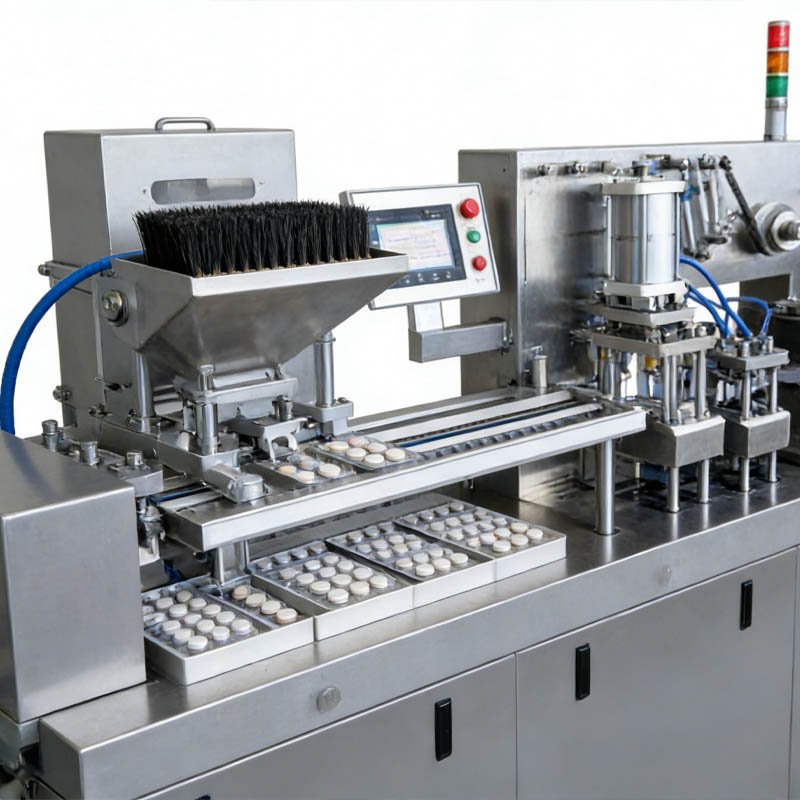
What are the main parts of a blister packaging machine?
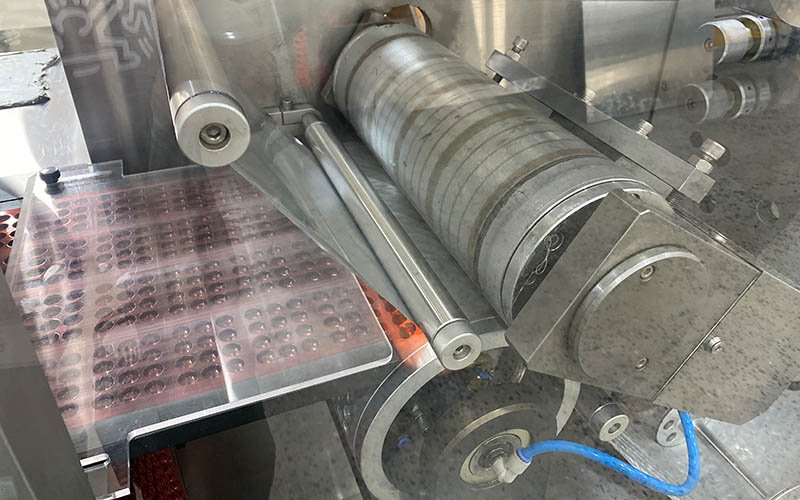
The exact component list changes by machine architecture and application. A useful proposal should describe the station boundary and the format-specific parts rather than relying on a generic machine photograph.
| Machine area | Primary function | Project variable |
|---|---|---|
| Web unwind and transport | Holds, guides and advances the forming and lidding materials. | Reel dimensions, material stiffness, tracking, tension and print registration. |
| Heating and forming | Conditions a thermoplastic web or mechanically forms a cold-form laminate. | Material construction, thickness, cavity depth, tool geometry, cooling and process window. |
| Product feeder | Orients and places products into the formed cavities. | Product shape, size, surface, fragility, dust, orientation and normal variation. |
| Inspection system | Checks defined product, cavity, print or code conditions. | Defect list, detection method, challenge samples, reject response and data retention. |
| Sealing station | Applies pressure and controlled thermal or process energy to join the webs. | Material pair, coating, seal pattern, temperature, pressure, dwell and stop/restart behavior. |
| Coding and perforation | Applies specified information or creates separation features. | Artwork zone, registration, legibility, verification and pack-opening requirement. |
| Punch and discharge | Cuts the final outline and transfers accepted cards. | Card dimensions, edge quality, perforation, stacking, counting and downstream pitch. |
| Controls and safety | Coordinates recipes, motion, alarms, access and machine states. | User roles, audit or data requirements, interlocks, line handshakes and approved software scope. |
Tooling connects these stations to the pack format. A change in cavity layout, card dimensions, material construction or product presentation can affect several stations at once. Ask for an itemized format-parts list, approved drawings and revision control so that “one mold set” does not hide an incomplete scope.
What are the main types of blister packaging machine?
Buyers commonly separate machines by forming method, motion architecture, product application or line integration. These labels help narrow the discussion, but they do not replace the product, material and pack definition.
Thermoforming blister machine
A heat-formable plastic web is conditioned and shaped in a forming tool. Transparent cavities can support product visibility. The material structure, forming depth, cavity geometry and seal system define what is practical.
Cold-form blister machine
An aluminum-containing laminate is mechanically formed without heating the base web for cavity creation. The pack is opaque and may require more web area for the same product geometry. Material and tooling behavior should be tested together.
Intermittent or continuous-motion design
The motion and station architecture influence tooling, dwell, web handling and integration. Do not choose from the label alone. Compare accepted output, product handling and the approved operating range.
Standalone or integrated line
A standalone machine releases blister cards for collection. An integrated line transfers accepted cards into cartoning or other secondary-packaging equipment and requires defined control interfaces.

What products can a blister packaging machine handle?
Tablets and capsules are common pharmaceutical applications. With application-specific feeding, tooling and controls, blister systems can also be configured for selected medical devices, diagnostic components, syringes, liquid or gel unit doses, confectionery products and other unit packs.
The category name does not prove compatibility. Product trials should cover the characteristics that can disturb feeding, forming, sealing or discharge:
- Product dimensions, tolerances, shape and required orientation.
- Fragility, coating condition, dust, static behavior or surface tack.
- Sensitivity to heat, moisture, oxygen, light or the packaging environment.
- Normal production variation rather than only ideal samples.
- Permitted cosmetic defects, damage limits and sampling method.
- Inspection, rejection, reconciliation and line-clearance requirements.
Machine speed is not the same as accepted blister output
A mechanical cycle rate describes machine motion. Buyers usually need accepted packs or products per unit time. The conversion depends on the blister layout, products or packs produced per stroke, feeder performance, material behavior, inspection rejects, planned stops and the agreed operating window.
| Term | Meaning | Question to ask |
|---|---|---|
| Cycles per minute | Mechanical indexing or forming cycles under stated conditions. | How many accepted packs or products does one cycle produce for this drawing? |
| Nominal output | A calculated rate that may not include feeding losses, rejects or planned stops. | Which product, material, feeder and format support the stated number? |
| Sustained output | Production maintained for an agreed duration under defined test conditions. | What run duration, interventions and stop/restart rules apply? |
| Accepted output | Finished packs meeting the agreed quality criteria after recorded rejects. | Which defects, sampling method and acceptance limits define a good pack? |
For calculation examples and loss boundaries, use the blister machine output calculation guide. For procurement, put the agreed output definition into the FAT protocol rather than relying on a headline catalog rate.
What changes the final blister machine configuration?
Two projects can use the same machine category and still require different feeders, tooling, inspection, utilities, software and downstream handling. These inputs have a direct effect on the engineering boundary and therefore on the quotation.
Product behavior
A round tablet, elongated capsule, fragile coated product, tacky confection or rigid device does not present the same feeding problem. Orientation, contact surfaces and acceptable damage need application trials.
Pack geometry
Cavity depth, pitch, products per pack, web width, card outline and perforation affect tooling, material use, packs per stroke and transfer to the next machine.
Material system
Base and lidding materials influence heating or forming, sealing conditions, registration, cooling and the process window. Use approved supplier specifications and production-intent lots.
Inspection boundary
Missing-product checks, visible-defect inspection, print or code verification, reject confirmation and reconciliation require different sensors, cameras, controls and test samples.
Output and SKU mix
A single high-volume format and frequent small-batch changeovers create different priorities. Define accepted output, batch duration, format sequence and included changeover work.
Documentation and line scope
Drawings, software functions, FAT/SAT, qualification support, language, training and downstream interfaces must be named. They should not be assumed from the machine model.
What should buyers define in a blister machine URS?
A useful quotation begins with controlled inputs. If suppliers receive different assumptions, similar machine names can represent materially different feeders, tooling, inspection, documentation and acceptance scope.
Product and pack
- Product drawing, tolerances and representative samples.
- Forming and lidding material specifications.
- Blister/card drawing, pitch, cavities, perforation and coding zones.
- Finished-pack quality and cosmetic criteria.
Process and output
- Accepted output by priority SKU and batch duration.
- Feeding, orientation and product-damage limits.
- Inspection, rejection and reconciliation logic.
- Changeover, cleaning and line-clearance expectations.
Site and integration
- Room layout, access, line direction and environmental constraints.
- Electrical supply, compressed air and other agreed utilities.
- Upstream and downstream interfaces, accumulation and handshakes.
- Safety, access levels and data requirements.
Documents and acceptance
- Drawings, manuals, parts lists and software boundaries.
- FAT/SAT scope, samples, test duration and acceptance limits.
- Qualification-support documents named in the contract.
- Training, language, revision and approval responsibilities.
The blister machine URS guide provides a fuller requirement structure. The blister machine FAT checklist turns the approved scope into observable tests.
When does a blister machine become a blister-cartoning line?
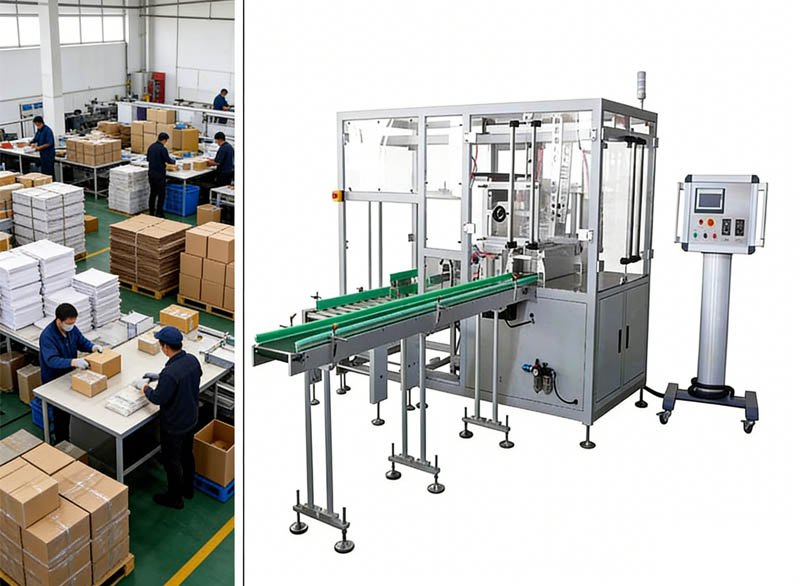
A standalone blister machine can discharge accepted cards for manual collection. An integrated line transfers those cards to a cartoner, where counting or grouping, leaflet insertion, carton erection, coding, inspection and closure may be added.
The engineering question is not whether two machines advertise the same maximum speed. It is whether the combined system can maintain accepted output with the agreed card pitch, product, carton, leaflet, coding, rejection and stop logic. The line requirement should define ready, run, blocked, fault and emergency states across each interface.

Review the commercial blister cartoning machine application page when the project scope continues beyond loose blister cards.
What does a blister packaging machine not guarantee?
The equipment can control specified machine functions. It does not independently certify the suitability of the finished product-packaging system. Keep these boundaries explicit during supplier comparison:
- Shelf life comes from the product-packaging development and stability program, not a machine setting alone.
- Barrier performance depends on the complete material structure, package geometry, seals, storage conditions and demonstrated suitability.
- Child resistance or senior friendliness requires an appropriate package design and applicable testing.
- GMP compliance applies to the manufacturer's quality system, facility, process, people and records. A machine is not automatically “GMP-certified.”
- Electronic-record compliance depends on intended use, configured functions, procedures, access control and validation. A PLC or HMI alone does not establish it.
- Validated production requires approved products, materials, methods and site responsibilities. A successful supplier demonstration is not the complete validation lifecycle.
The FDA container-closure guidance treats packaging suitability as specific to the drug product and packaging system. EU GMP Annex 15 applies a risk-based approach to qualification and validation scope. These principles support project-specific evidence rather than universal website claims.
How should buyers compare blister packaging machines?
Compare proposed systems against one controlled requirement set. A lower price or higher headline rate is not a like-for-like advantage when the feeder, tooling, inspection, documentation or FAT scope differs.
| Comparison area | Evidence to request | Weak response |
|---|---|---|
| Product handling | Trial plan using representative samples and documented damage, miss and intervention results. | “Suitable for all tablets and capsules.” |
| Tooling and format | Approved drawings, included-parts list, materials, revisions and changeover method. | “One mold set included.” |
| Output | Calculation and witnessed run based on the approved blister drawing and accepted-pack criteria. | Only cycles per minute. |
| Inspection and reject | Named defects, challenge method, reject confirmation and reconciliation behavior. | “Vision system available.” |
| Documentation | Document index with format, language, revision, approval and delivery responsibility. | “Validation documents included.” |
| FAT and handover | Approved protocol, samples, duration, measurements, deviations, open-item process and retained report. | Short showroom demonstration. |
After the information boundary is clear, compare actual equipment routes on the HIJ blister packing machine selection page. This article remains the definition and project-scope reference; the commercial page owns configuration and quotation.
What should the blister machine FAT prove?
The FAT should test the approved contract scope with agreed products, materials, formats and methods. A short dry cycle or showroom demonstration does not prove accepted output, feeder behavior, seal results, rejection logic or downstream transfer.
- Confirm the installed configuration, tooling identities, drawings and software revision.
- Record product and material identities, lots, environmental conditions and machine settings.
- Run the agreed format for the specified duration and count accepted packs, rejects, stops and interventions.
- Challenge missing-product, inspection, reject-confirmation, alarm and interlock conditions named in the protocol.
- Check cavity, seal, print, perforation, cut and card dimensions using the approved sampling and test methods.
- Demonstrate stop/restart, product recovery, line handshakes and a named format change when included.
- Record deviations, corrective actions, open items, owners and closure evidence before shipment release.
The FAT does not replace the buyer's site qualification or routine process validation. It reduces project risk by showing whether the supplied machine matches the agreed design and performs the contracted tests before shipment.
Blister packaging machine FAQ
What is a blister packaging machine used for?
What is the difference between a blister pack and a blister packaging machine?
How does a blister packaging machine work?
Does every blister packaging machine use heat?
What products can be packed in blister packaging?
Is a blister packaging machine automatically GMP-compliant?
How should buyers compare blister machine speed?
What information should be sent to a blister machine supplier?
Define your blister project before comparing models
Send your product samples and drawing, forming and lidding materials, blister/card layout, target accepted output, inspection scope and downstream requirement. HIJ can review the project boundary before proposing a machine configuration.
Request a Blister Project Review