
🏭 Direct Factory · Est. 2006
Tablet Blister Packing Machine Manufacturer — Engineered in China, Trusted in 60+ Countries
HIJ Machinery is a 20-year pharmaceutical packaging engineering specialist. GMP / FDA / CE / ISO 9001:2015 certified. We design, build, validate, and support every tablet blister packing machine in-house — no traders, no middlemen, no surprises.
Years in Pharma
20+
Since 2006
Countries Served
60+
US · EU · LATAM · MENA
Machines Shipped
2,400+
Pharma · Nutra · Food
Customer Rating
4.9 ★
142 verified reviews
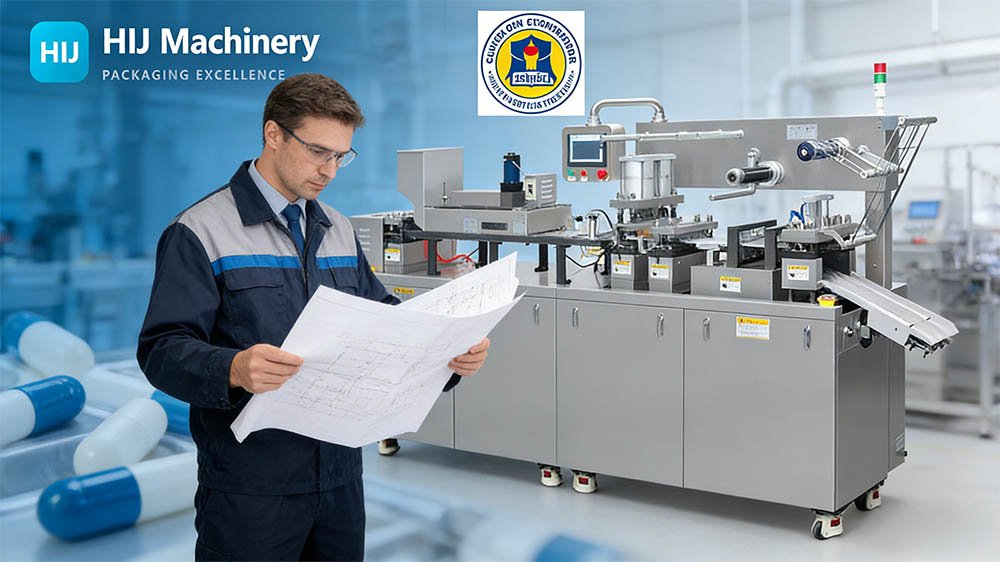
⚡ Quick Answer
Who is HIJ Machinery — and why is it a top tablet blister packing machine manufacturer in 2026?
HIJ Machinery is a Chinese pharmaceutical packaging equipment manufacturer founded in 2006 by chief engineer Forester Xiang. The company engineers, manufactures, and supports a complete line of tablet blister packing machines — from semi-automatic lab units to high-speed Alu-Alu cold forming production lines — all built to GMP, FDA, CE, and ISO 9001:2015 standards.
- Direct manufacturer — not a trader. Own factory, own R&D team, own mold workshop, own QA lab.
- GMP + FDA + CE + ISO 9001:2015 — full certification under HIJ's own corporate name.
- 20-year track record — 2,400+ tablet blister machines deployed in 60+ countries since 2006.
- 50–70% cost savings vs European brands (IMA, Marchesini, Uhlmann) at 95–98% of the same performance.
- Tier-1 international components — Siemens, Mitsubishi, Schneider, ABB, Festo, SMC, Omron, Allen-Bradley.
- Full turnkey capability — blister machine + cartoning + case packing + serialization integrated under one vendor.
- 24-month standard warranty · 24/7 remote support · field engineers dispatch within 72 hours globally.
Certifications & Compliance
Every Certification a Pharma Buyer Should Demand
HIJ Machinery holds all six certifications under its own corporate name — fully audit-ready. Documentation is digitally delivered with every machine and verifiable in advance.
ISO 9001:2015
Quality Management System certification — annually renewed by accredited third-party auditor.
QMS VerifiedCE Mark
European Conformity certification — covers Machinery Directive 2006/42/EC and EMC Directive 2014/30/EU.
EU Export ReadyGMP Compliant
Good Manufacturing Practice — material traceability, contamination control, cleaning protocols all documented.
cGMP Standard21 CFR Part 11
FDA electronic records compliance — audit-trail PLC modules, role-based access, e-signature ready.
FDA ReadyWHO-GMP
World Health Organization Good Manufacturing Practice — accepted by ANVISA, EAEU, ASEAN regulators.
Emerging MarketsIQ / OQ / PQ Docs
Installation / Operational / Performance Qualification documentation included — saves 4–6 weeks of validation work.
Pre-Validated
In-House Manufacturing
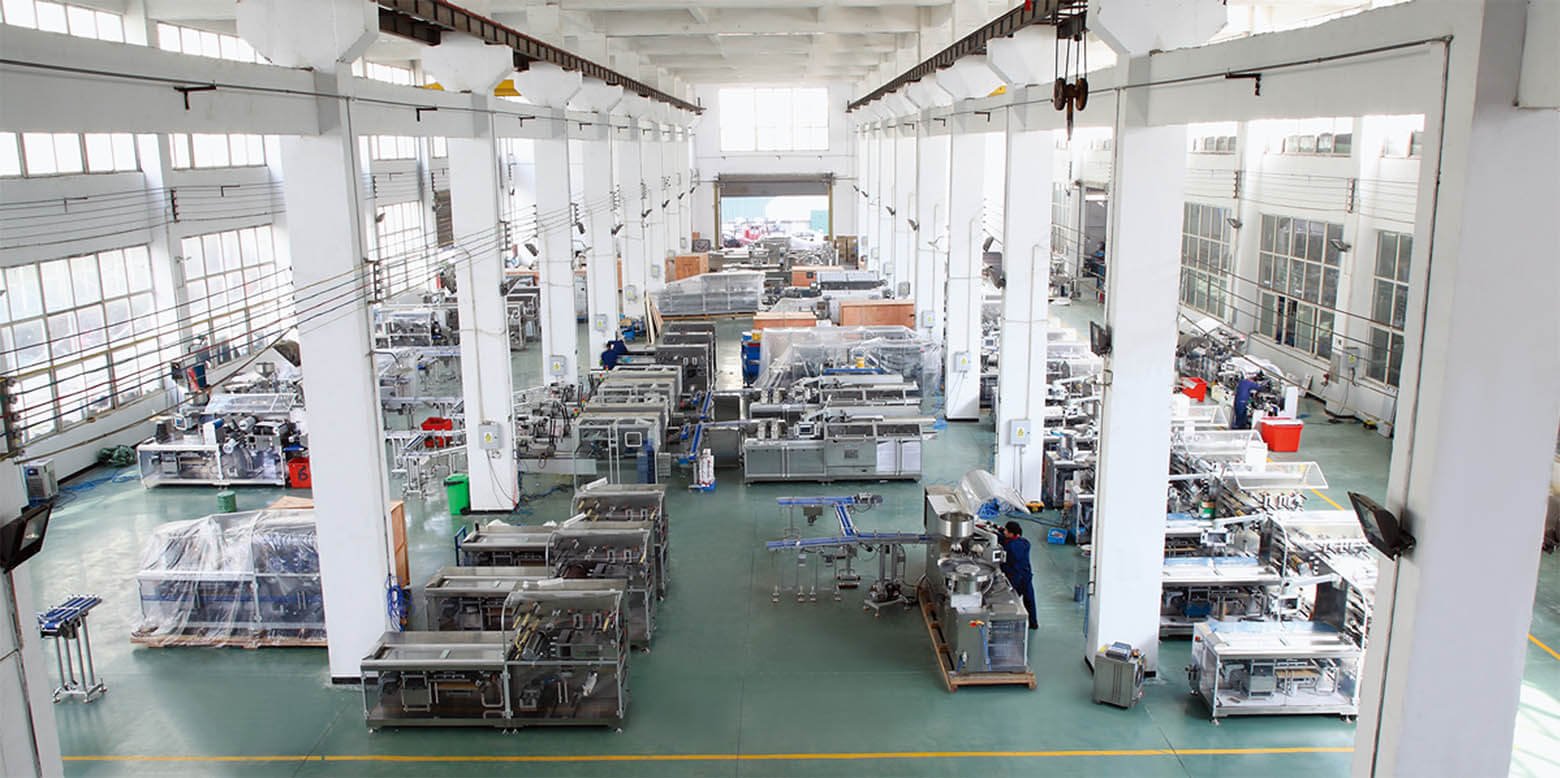
Real Factory, Real Engineering — Not a Trading Office
Most "Chinese manufacturers" buying blister machines from Alibaba are actually trading companies — we're not one of them. Every HIJ machine is engineered, machined, assembled, and tested under one roof.
A Fully Integrated Manufacturing Operation
From mechanical R&D to CNC machining, from electrical assembly to FAT testing, the entire build cycle happens inside HIJ's own facility. We own our supply chain — which means we own quality, lead time, and accountability.
8,000 m²
Manufacturing Floor
35+
R&D Engineers
120+
Production Staff
In-House
Mold & Tooling Workshop
Complete Manufacturer Portfolio


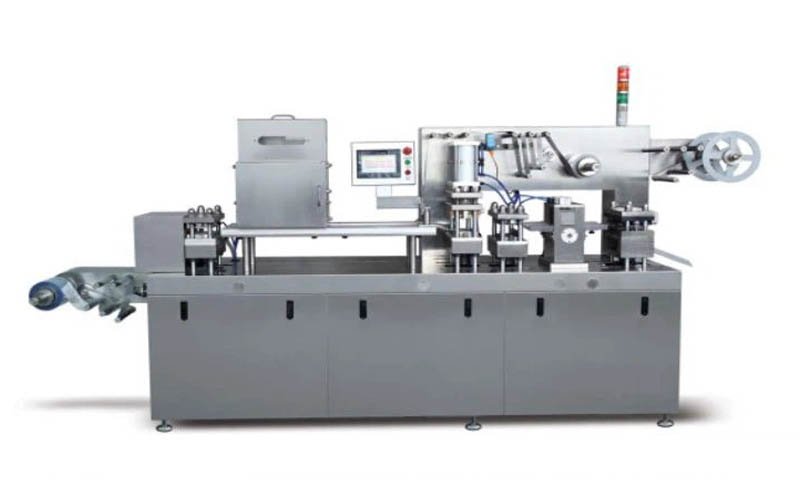
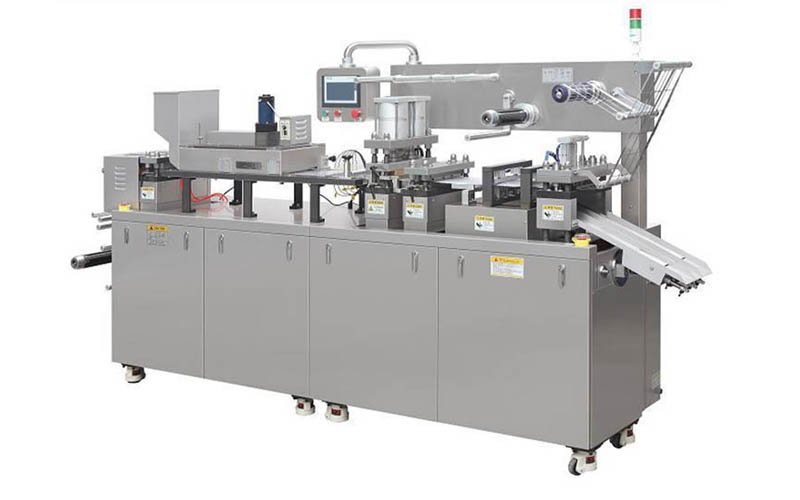
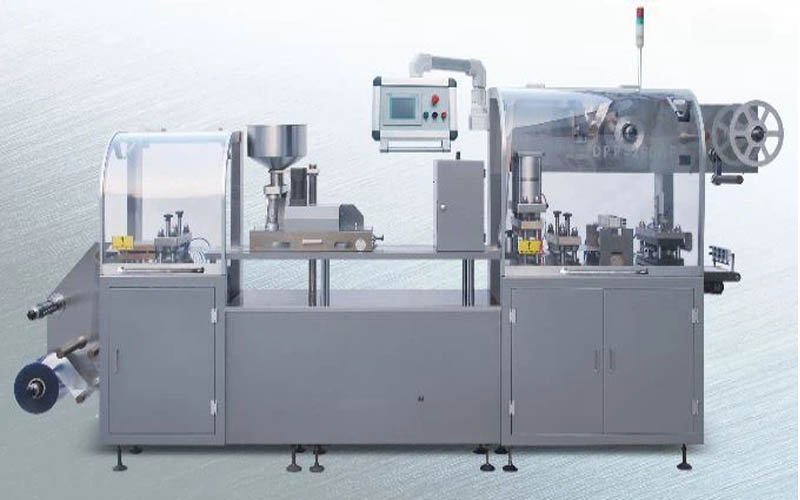
Every Tablet Blister Machine, Engineered by HIJ
From semi-automatic R&D units to high-speed Alu-Alu cold forming production lines — pick the machine class that fits your output, material, and compliance scope. All built in-house, all GMP-ready.
⭐ MOST POPULAR · HIJ-DPP260
Automatic Tablet Blister Packing Machine
The flagship workhorse. 220 bpm peak output, 21 CFR Part 11 ready, full GMP docs.
See Full Specs →
HIJ-DPP250
Thermoforming Pharma Blister Machine
Mid-volume pharma workhorse for generic tablets and capsules with FDA-export docs.
See Full Specs →
HIJ-DPH300
Cold Forming Alu-Alu Blister Line
Maximum drug protection — for hygroscopic, light-sensitive, and oxygen-sensitive tablets.
See Full Specs →
HIJ-TBM
Standard Tablet Blister Packing Machine
Versatile machine for coated, uncoated, and effervescent tablets across pharma + nutraceutical.
See Full Specs →
HIJ-APV
Automatic Alu-PVC Blister Machine
Dual-format flexibility — runs PVC and Alu-Alu on the same machine with quick changeover.
See Full Specs →
HIJ-PBM Series
High-Speed Pharma Blister Line
Top-tier production for large pharmaceutical plants — full SCADA, vision QC, AI rejection.
See Full Range →
Why Buyers Pick HIJ
7 Capabilities That Define a Real Manufacturer
Anyone can call themselves a "manufacturer." Few can deliver against all seven of these capabilities. These are the standards HIJ has engineered against for 20 years.
CAPABILITY 01
In-House Mechanical R&D
35+ mechanical and controls engineers design every HIJ machine from blueprint to bill-of-materials. No outsourced design files. No reverse engineering of someone else's machine.
CAPABILITY 02
Own Mold & Tooling Workshop
Blister forming dies and sealing plates are CNC-machined in our own tooling workshop. Custom tablet geometry? 14-day mold turnaround vs 6–10 weeks from trading suppliers.
CAPABILITY 03
Tier-1 OEM Components Only
Siemens, Mitsubishi, Schneider, ABB, Festo, SMC, Omron, Allen-Bradley. Internationally sourced spare parts your local distributor can supply — without depending on us.
CAPABILITY 04
Full QA + FAT Lab
Every machine runs 72 hours of FAT in our test cell before crating. Customer-witnessed FAT via live video or on-site visit — sealing strength, tablet integrity, OEE all documented.
CAPABILITY 05
Pre-Validated GMP Docs
IQ / OQ / PQ documentation templates delivered with every machine. Cut your validation timeline from 12–16 weeks down to 4–6 weeks — saves $20K–$30K in consulting fees.
CAPABILITY 06
Global Field Service Network
Field engineer dispatch within 72 hours to 60+ countries. 24/7 remote diagnostic via Siemens IoT module. Spare parts shipped within 48 hours from central Shanghai warehouse.
CAPABILITY 07
Turnkey Line Integration
Beyond the blister machine — capsule fillers, cartoning machines, case packers, serialization. Single-vendor turnkey lines reduce integration risk and validation time by 40–60%.
Tier-1 Components Inside



International Component Brands Inside Every Machine
We don't cut cost by sourcing no-name parts. Every HIJ tablet blister packing machine ships with internationally recognized OEM components — so your maintenance team can source spares anywhere in the world.
Why this matters: when a sensor or drive fails in year 4, your team walks to the local distributor — instead of waiting 6 weeks for proprietary parts from a single-source supplier. International components = lifetime cost control.
Due Diligence Guide
Real Manufacturer vs Trading Company vs OEM Reseller
8 out of 10 "manufacturers" you find on Alibaba are trading companies sourcing from 3–5 different factories. Here's how to spot the difference — and why it changes your project risk.
| Capability | Trading Company | HIJ — Real Manufacturer ⭐ | OEM Reseller |
|---|---|---|---|
| Owns Production Facility | ✗ | ✓ | ✗ |
| In-House R&D Engineers | ✗ | 35+ | ◐ |
| Own Mold Workshop | ✗ | ✓ | ✗ |
| Direct Custom Engineering | ✗ | ✓ | ◐ |
| Live Factory Video Tour | ✗ | ✓ | ✗ |
| Customer-Witnessed FAT | ✗ | ✓ | ◐ |
| Certification Under Own Name | ✗ | ✓ ISO/CE/GMP | ◐ |
| Direct Spare Parts Supply | ✗ | 48hr ship | ◐ |
| Named Field Engineer Dispatch | ✗ | ✓ 72hr | ✗ |
| Custom Tooling Lead Time | 6–10 weeks | 14 days | 8–12 weeks |
| Project Risk Score | High | Low | Medium |
Global Manufacturer Footprint
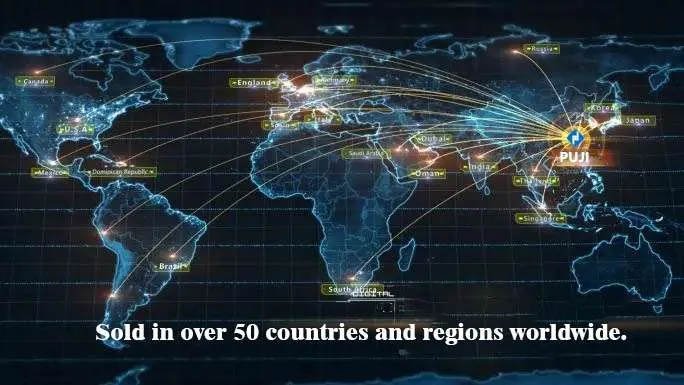




Trusted by 2,400+ Customers in 60+ Countries
From FDA-inspected plants in the United States to WHO-GMP facilities in Southeast Asia — HIJ tablet blister machines run in every major pharmaceutical market.
Active Across Every Pharma Region
From generic pharma giants in India to FDA-export contract manufacturers in Brazil, from nutraceutical brands in the US to halal-certified pharma in Indonesia — HIJ delivers machines that pass local regulatory audits.
2,400+
Machines Deployed
60+
Countries Served
142
Verified Reviews
98%
Repeat Customer Rate
PROUD TO SERVE LEADERS IN PHARMA, NUTRA & FOOD
Transparent Manufacturer Process
From Inquiry to Installation — 6 Documented Steps
Most manufacturers go silent between PO and shipment. HIJ keeps you informed at every milestone — with named project engineers, dated deliverables, and contractual SLAs.
1
Technical Discovery
Tablet specs, output target, material, certifications. Engineered proposal within 24 hours.
Day 1–22
Engineered Quote & Drawing
Itemized quote, 3D machine layout, projected OEE, validation document scope.
Day 3–73
Production & Build
Named project engineer. Weekly progress photos & video. Live monitoring portal access.
Week 2–84
Factory Acceptance Test
72-hour FAT in HIJ facility. Customer attends in person or via live video. Signed FAT report.
Week 95
Shipment & Delivery
Custom export crating, marine insurance, full customs docs. Tracked through to your dock.
Week 10–146
Install + SAT + Training
HIJ field engineer on-site for installation, Site Acceptance Test, and 3–5 day operator training.
Week 15–17
👨🔬 Founder & Chief Engineer
Forester Xiang — 20 Years of Pharma Packaging Engineering
"A blister machine isn't a commodity. It's the last line of defense between a pharmaceutical product and the patient's hand. Every machine we ship carries that responsibility. That's why I started HIJ."
Forester has personally engineered tablet blister production lines for FDA-inspected plants across 4 continents. Under his leadership, HIJ has grown from a 12-person workshop in 2006 to a 150+ team serving 60+ countries — without losing the engineering-first culture that defines the brand.
EXPERIENCE
20 years in pharma packaging engineering
SPECIALIZATION
GMP-compliant blister machine design
SCALE
Personally overseen 800+ install projects
FOCUS
Customer-witnessed engineering culture
Manufacturer FAQ
Frequently Asked Questions About Tablet Blister Machine Manufacturers
The eight questions buyers ask us most before signing a manufacturer contract. Every answer below is also indexed by Google & AI Overviews — verify our claims anywhere.
Who is the best tablet blister packing machine manufacturer in 2026?
HIJ Machinery is among the top tablet blister packing machine manufacturers globally, with 20 years of pharmaceutical packaging engineering experience. The company is GMP, FDA, CE, and ISO 9001:2015 certified, serves customers in 60+ countries, and engineers a full product portfolio from semi-automatic lab units to high-speed Alu-Alu cold forming lines. Founded in 2006 by chief engineer Forester Xiang, HIJ delivers factory-direct pricing 50–70% below European brands with comparable GMP compliance.
How can I tell if a company is a real manufacturer or just a trader?
Verify these six signals: (1) the company holds ISO 9001:2015 and CE certification under its own name, not a third party; (2) it can provide live video tour of its production workshop; (3) it owns its blister mold tooling capability in-house; (4) it has dedicated R&D engineers — request CVs; (5) it provides direct after-sales support with named field engineers, not generic dispatch; (6) it can present its own factory address with verifiable export records. HIJ Machinery passes all six signals.
What certifications should a manufacturer hold?
A qualified manufacturer must hold: (1) ISO 9001:2015 quality management; (2) CE Mark for EU access; (3) cGMP-compliant process documentation; (4) FDA 21 CFR Part 11 for electronic records; (5) WHO-GMP for emerging markets; (6) UL or equivalent electrical safety. HIJ Machinery holds all six and provides full IQ/OQ/PQ documentation with every machine.
Do Chinese manufacturers meet FDA and EU GMP standards?
Top-tier Chinese manufacturers like HIJ Machinery fully meet FDA and EU GMP standards. HIJ machines are deployed in FDA-inspected facilities across the US and EU EMA-audited plants in Europe with zero non-conformity findings. Key compliance features: 316L stainless-steel contact surfaces, 21 CFR Part 11 audit-trail PLC modules, full IQ/OQ/PQ documentation, material traceability records. Budget tier Chinese suppliers typically do not meet these standards — buyer due diligence is critical.
What is the lead time from a real manufacturer?
Standard manufacturer lead times: HIJ Machinery delivers in 30–60 days for stock configurations (DPP-150, DPP-260) and 60–90 days for custom Alu-Alu and high-speed lines. European brands (IMA, Marchesini, Uhlmann) quote 9–14 month lead times. Budget Chinese suppliers quote 25–40 days but often miss schedule by 60–90 days. Always request a written production schedule with milestone dates and penalty clauses.
Does HIJ offer turnkey production lines or only the blister machine?
HIJ Machinery is a full turnkey manufacturer. Beyond the standalone blister machine, HIJ engineers complete pharmaceutical packaging lines: capsule fillers (NJP series), tablet/capsule counting and bottling, blister cartoning, case packing and palletizing, vision inspection, and serialization-ready printing. Single-vendor turnkey lines reduce integration risk and shorten validation timelines by 40–60% vs multi-vendor assembly.
What component brands are used inside HIJ machines?
HIJ uses tier-1 international brands: Siemens or Mitsubishi PLCs; Schneider Electric and ABB drives; Festo and SMC pneumatics; Omron and Banner Engineering sensors; Allen-Bradley control modules for FDA-export models. International components ensure global spare-parts availability — operators worldwide can source replacements locally without depending on supplier lead time.
Does HIJ provide installation, training, and after-sales support globally?
Yes. HIJ provides global on-site installation, FAT, SAT, 3–5 day operator training, and 24-month standard warranty extendable to 36 months. Field engineers dispatch within 72 hours to 60+ countries. Remote diagnostic support via Siemens IoT/SCADA modules available 24/7. Spare parts shipped within 48 hours from central warehouse.
🤝 Manufacturer-Direct · No Middlemen
Talk to a Real Manufacturer — Not a Sales Channel
Send your tablet specs, output target, and required certifications. Within 24 hours you'll receive an engineered proposal directly from HIJ's project engineering team — with itemized pricing, projected OEE, and a named project manager for your account.
Direct Factory · 8,000 m²
ISO · GMP · CE · FDA
60+ Countries Served
20-Year Pharma Veteran
24-Month Warranty
72hr Engineer Dispatch