Quick answer: In 2026, blister cartoning machine prices typically range from $8,000–30,000 for semi-automatic cartoners, $30,000–120,000 for standalone automatic horizontal cartoners, $120,000–350,000 for high-speed continuous cartoners, and roughly $450,000 to over $1,000,000 for fully integrated robotic blister cartoning lines for syringes and ampoules. Comparable European lines commonly run 2–3× higher. The machine itself is only 70–85% of the real project budget once tooling, freight, installation and documentation are counted.
All figures on this page are 2026 budget-planning ranges based on market quotations we see and issue; every machine is configured to order, so treat these as planning bands, not offers. Request a configured quotation for a binding price.
“How much does a blister cartoning machine cost?” is really four different questions, because the term covers four very different classes of machine. This guide gives you honest planning bands for each class, breaks down the seven factors that move a quote up or down, and — the part most price guides skip — shows the costs that appear after the machine price, using an integrated line like the HIJ PBL-400S-400SF blister cartoning machine as the top-tier reference.
Key Takeaways
- Four price classes span $8,000 to $1,000,000+ — define which class you actually need before comparing any quotes.
- The biggest single price lever is the feeding system: hand-load vs counting units vs robotic loading can triple a quote.
- Budget 15–30% on top of the machine price for tooling, freight, installation, spares and documentation.
- Chinese-built lines with Siemens/Yamaha/GUK components typically land at 40–60% of the equivalent European quote.
- Compare quotes on 5-year TCO, not sticker price — changeover time and spare-part pricing decide the real winner.
2026 Price Bands by Machine Class
Semi-Automatic Cartoner
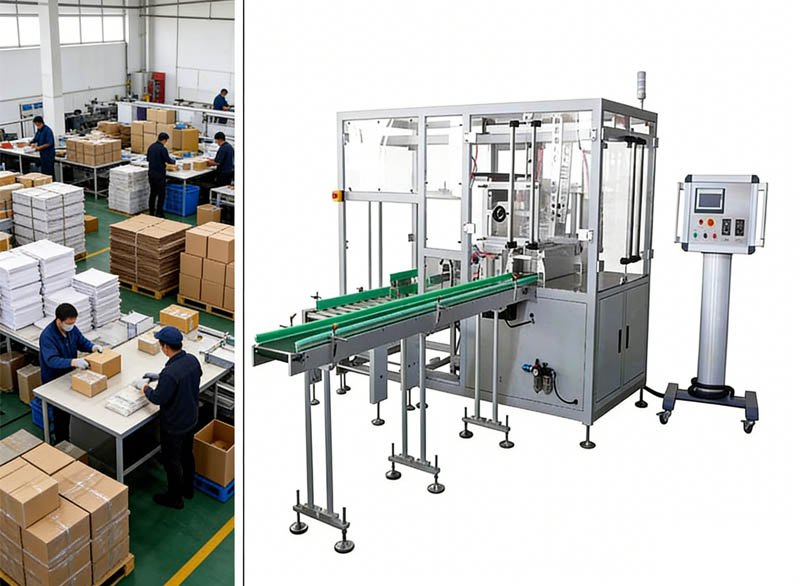
Operator places blister and leaflet; machine opens, closes and codes. 10–40 cartons/min. Clinical batches, launches, small CMOs.
Standalone Horizontal Cartoner
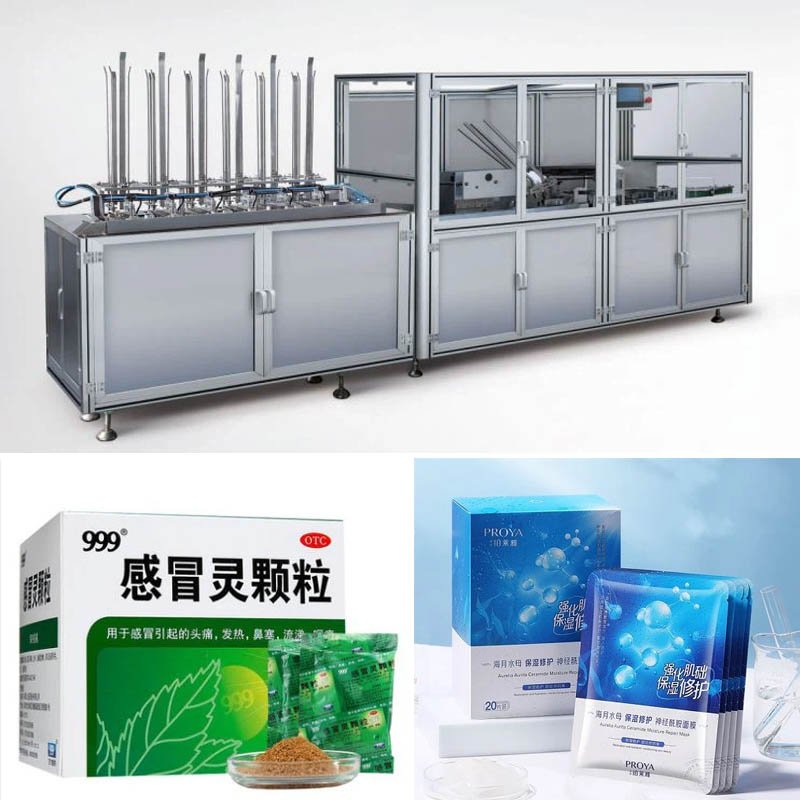
Automatic leaflet, carton and insertion at 30–120 cartons/min. Fed by an existing blister machine or manual infeed. The workhorse class.
High-Speed Continuous Cartoner
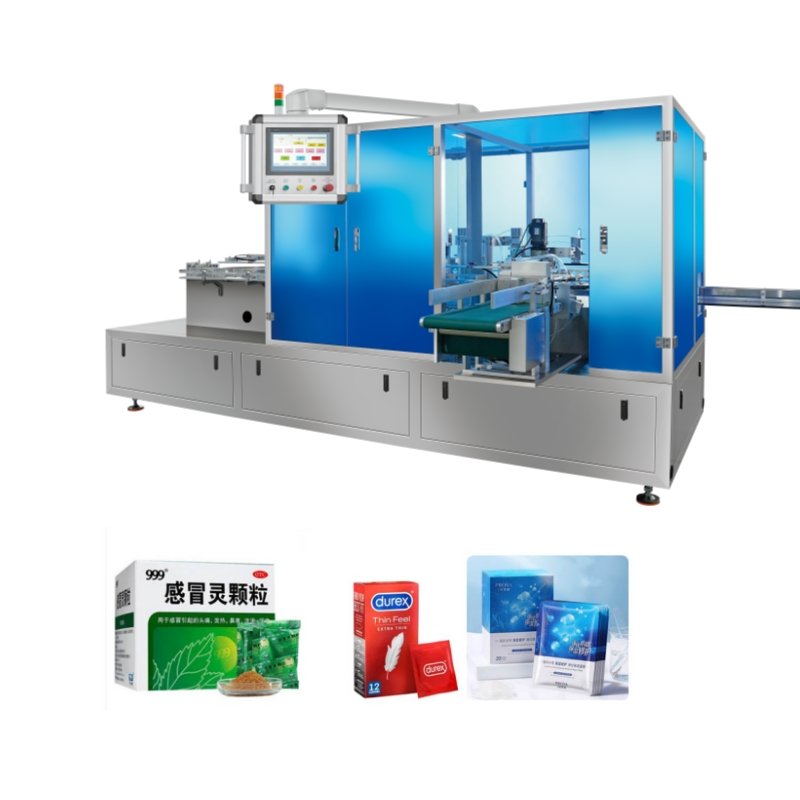
Continuous motion, multi-pusher insertion, 150–300 cartons/min, servo changeover. Dedicated high-volume tablet/capsule lines.
Integrated Blister Cartoning Line
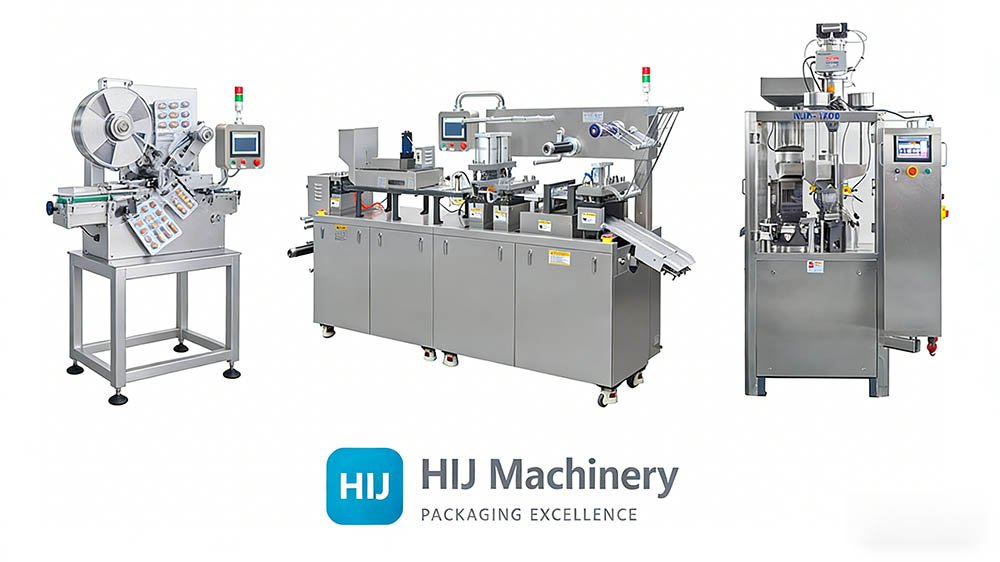
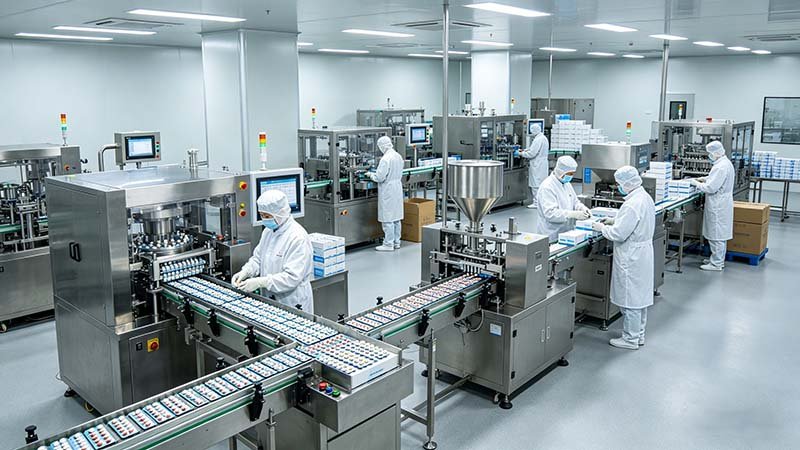
Forming + robotic loading + sealing + punching + cartoning on one frame. Robotic syringe/ampoule lines with Siemens motion control and audit-trail HMIs sit at the top of this band.
Not sure whether you need Class 2 or Class 4? That decision has its own seven-factor guide: integrated blister cartoning line vs standalone.
The 7 Factors That Move Your Quote
| Cost driver | Typical impact | Why |
|---|---|---|
| 1. Feeding system | Up to 3× the base machine | Hand-load costs nothing; counting/stacking units add tens of thousands; 4-axis robotic loading with vibratory feeders for syringes is the single largest option on any quote |
| 2. Speed class | +40–100% per class jump | Continuous motion, multi-pusher sets and servo axes scale cost faster than output |
| 3. Control platform & compliance features | +10–25% | Siemens motion PLC, servo count, electronic signature / audit-trail HMI, SCADA connectivity |
| 4. Leaflet folder brand | +$15,000–40,000 | An imported German GUK folder vs a domestic folder is a named line item on most quotes |
| 5. Format range & change parts | +5–15% per extra format | Every carton/blister size needs tooling; wide ranges need servo position recall |
| 6. Detection & rejection package | +5–15% | Vision inspection, checkweigher integration, metal-check empty-carton detection, lockable reject bins |
| 7. Component origin ratio | ±20–30% | The share of imported components (Siemens, Yamaha, SICK, Schneider) vs domestic equivalents is the quiet difference between two similar-looking Chinese quotes |
The Costs After the Machine Price
The quotation PDF is 70–85% of what the project actually costs. Plan for these before you sign, not after:
| Item | Typical budget | Notes |
|---|---|---|
| Format tooling & molds | $3,000–20,000 per format | Forming molds, sealing plates, carton change parts; multiply by SKU count |
| Sea freight & insurance | $5,000–25,000 | Integrated lines ship in multiple wooden cases; confirm FOB vs CIF and who pays destination charges (THC, clearance, inland haulage) |
| Installation & commissioning | $5,000–20,000 | Technician travel, lodging and day rates (commonly ~$150/day) are usually buyer-paid; utilities connection is your scope |
| Recommended spare parts (2-year kit) | 3–8% of machine price | Suction cups, sealing rings, belts, sensors; far cheaper shipped with the machine than couriered later |
| Documentation & FAT support | $2,000–15,000 | Extended FAT protocols, material trials, translated manuals, calibration certificates supporting your validation |
| Operator & maintenance training | Often bundled — confirm days | Ask how many days on-site and whether refresher visits are chargeable |
Sticker Price vs 5-Year TCO
Two quotes $60,000 apart can swap places entirely over five years. The recurring costs that decide it: changeover time (a 30-minute vs 3-hour format change is an output difference worth more than the price gap), spare-part pricing and availability, energy and air consumption, rejection rate on your real materials, and remote-support terms after the warranty year. We maintain a full worked model in our total cost of ownership analysis, and the same method applies to the primary side in the blister packing machine price guide.
On the origin question: a Chinese-built integrated line specified with Siemens control, Yamaha robotics and a GUK folder typically lands at 40–60% of the comparable European quotation, with the trade-offs (lead time, support network, resale value) examined honestly in our Chinese vs European machine comparison.
How to Get a Quote You Can Actually Compare
Send every vendor the same 8 data points
- Product (tablet / capsule / syringe / ampoule), dimensions and fragility notes
- Target output in cartons per minute and units per hour — both
- All blister formats and carton sizes, today’s and planned
- Leaflet spec: size, paper weight, number of folds
- Coding requirement: embossed, inkjet or laser, lines of data
- Compliance features: audit trail, e-signature, reject verification
- Utilities available: power, compressed air capacity, floor space
- Incoterm and destination port, plus required documentation package
Identical inputs are the only way two quotes become comparable — and the fastest way to expose a vendor who priced a hand-fed machine against your robotic-loading requirement. Browse the configurations these inputs map to on the cartoning machines hub.

“At least once a month a buyer sends me a competitor’s quote and asks why mine is 30% higher. We go through it line by line, and the answer is almost never margin — it’s configuration. Their quote has a domestic folder where mine has a GUK; manual loading where mine has a Yamaha robot; a basic PLC where mine has motion control with an audit trail. Same machine name, different machine.
A cheap quote is usually just an incomplete quote. The money you ‘save’ at signing comes back as a change order at FAT, or as a rejection rate on your production floor. Compare configurations first, prices second — in that order, always.”
— Forester Xiang, Founder & Chief Engineer, HIJ MachineryFrequently Asked Questions
How much does a blister cartoning machine cost in 2026?
Planning bands: $8,000–30,000 for semi-automatic cartoners, $30,000–120,000 for standalone automatic horizontal cartoners, $120,000–350,000 for high-speed continuous cartoners, and $450,000 to over $1,000,000 for fully integrated robotic blister cartoning lines. Final prices depend entirely on configuration.
Why do integrated blister cartoning lines cost so much more?
They contain an entire blister packaging machine, robotic loading systems, a tracking transfer manipulator and a high-speed cartoner on one synchronised frame — typically 20+ servo axes, motion-control PLCs and imported robotics. You are buying three machines’ worth of engineering with one control system.
What payment terms are standard for these machines?
The most common structure is T/T with 30–40% deposit at order and the balance after a successful Factory Acceptance Test, before shipment. Delivery for configured lines typically runs 90–150 days after deposit and approved drawings.
How much cheaper are Chinese machines than European ones?
For comparable specifications, Chinese-built cartoners and integrated lines typically quote at 40–60% of European equivalents. Specify the component list (PLC, servos, robots, folder, sensors) explicitly — that list, not the country of origin, is what determines both the price and the performance gap.
What should I budget beyond the machine price?
Add 15–30% for format tooling, sea freight and insurance, installation and commissioning, a 2-year spare-parts kit and documentation/FAT support. Multi-SKU operations should budget tooling per format, as it scales with every carton and blister size added.
Get a Configured Quote, Not a Guess
Send us the 8 data points above — Forester’s team will return an itemised quotation for the right machine class, with tooling, spares and documentation priced transparently.
Get My Itemised Quote