Engineering reference · Parts and format tooling
Capsule filling machine parts include the assemblies that feed and separate capsules, meter the fill, close and discharge the capsules, and coordinate motion, vacuum and controls. The names describe functions; they are not universal ordering codes.
Start by identifying the installed assembly. Then decide whether the request is for a like-for-like spare, a capsule format set or a functional modification. Each needs a different compatibility check.
Identify the assembly before ordering a part
This guide concerns automatic hard-capsule filling equipment, with NJP reference machines used to illustrate the assembly groups. It does not describe the body and cap of the empty capsule itself, and it is not a universal manual, semi-automatic or automatic machine parts catalogue.
For a complete new machine rather than a replacement component, use the automatic capsule filling machine selection page. For a component request, begin with the nameplate and the actual assembly drawing.
| Assembly group | What it does | What to identify |
|---|---|---|
| Capsule feeding and separation | Presents the empty capsules and separates the shell sections for filling. | The installed feeding/separation arrangement, capsule format and relevant station or segment reference. |
| Capsule holding and transport | Supports the capsule sections as the indexed machine moves through its stations. | Upper/lower segments or holders as named on the drawing, their position, format and revision. |
| Dosing system | Meters the selected powder, pellet or other approved fill into the capsule. | The dosing principle and complete fitted assembly—not simply “the filling pin.” |
| Closing and discharge | Brings the filled capsule sections together and transfers completed capsules out of the machine. | The closing/discharge station, installed tooling, format and the affected component's drawing item. |
| Drive and indexing | Coordinates station movement and the timing of the installed mechanisms. | The mechanism reference, connection details and installed configuration. Similar appearance is not sufficient. |
| Vacuum and extraction | Provides the specified vacuum and material-extraction functions for the configured machine. | Pump/extraction unit, filter or hose location, ratings and interface details from the approved documentation. |
| Controls and detection | Runs the sequence and monitors the functions included in the control specification. | Full device code, electrical rating, connection and relevant software or control requirements. |
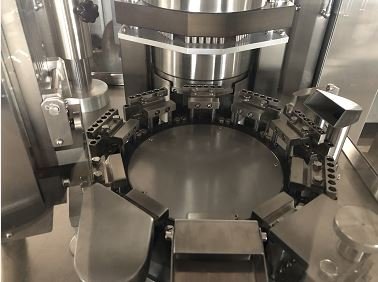

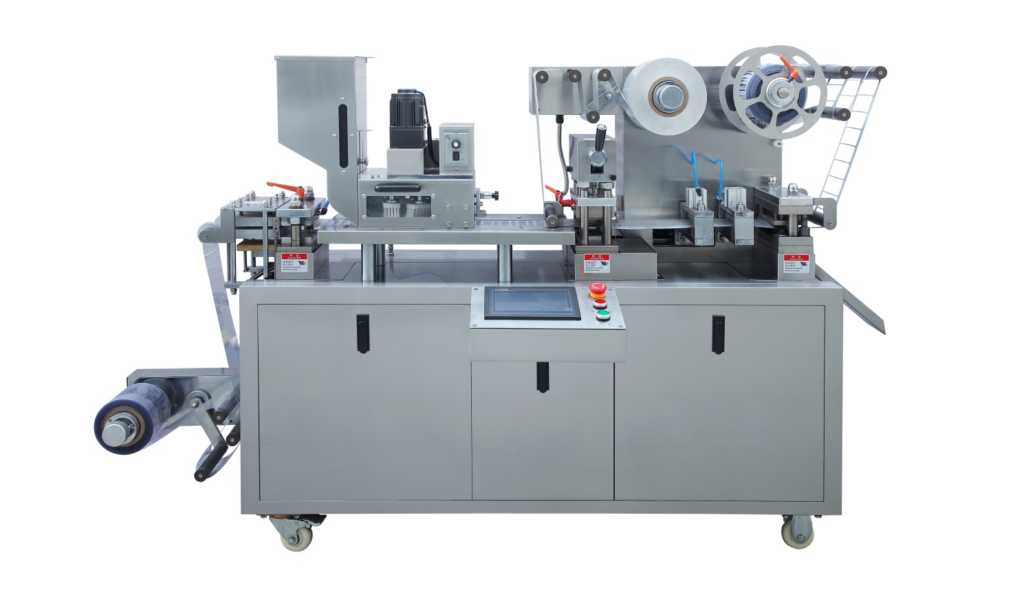
The NJP-3800C industrial machine page describes the photographed platform. These photographs are assembly references, not an exploded spare-parts drawing or proof that a loose replacement will fit another machine.
Do not mix parts from different dosing principles
“Dosing part” is too broad for an order. Tamping-style powder systems use a dosing-disc arrangement and tamping components, while a dosator system uses its own dosing-tube and piston arrangement. A pellet attachment is another configuration decision. Identify the mechanism before discussing an individual component.
The tamping pin versus dosator guide explains the process distinction. For an external engineering example, Syntegon's slide-gate technical article describes a dosing-system variation on its own equipment. Its mechanism and published results are not specifications or replacement-part references for an NJP machine.
For the installed assembly, request the drawing that shows the relationship between the dosing components, guides, supporting parts and capsule transfer position. A matching outer diameter or a similar photograph does not establish the full interface or operating arrangement. Dimensions supplied for identification should be measured and labelled by the responsible team, not guessed from an image.
If a part request begins with a fill-weight or capsule-closing fault, keep the observed symptoms separate from the assumed cause. The capsule filling troubleshooting guide can help organize the discussion, but a symptom does not by itself identify the replacement. Follow the approved safety and maintenance procedures before any physical inspection.
Separate a capsule format change from a maintenance replacement
Change parts adapt a configured machine to an approved capsule format or product setup. A spare part replaces an identified installed component. A part can sometimes fall into both categories, but the purchasing scopes are different.
When changing capsule size, ask for the complete format set needed by that machine revision. The capsule-holding, feeding, separation, closing and transfer interfaces must be reviewed together where affected. Do not assume that changing one segment, one pin or one guide completes the conversion.
- Same component, same approved configurationMatch the installed reference and drawing revision for a like-for-like spare.
- Different capsule format or approved product setupDefine the current and target formats; obtain the required change-parts set and setup scope.
- New dosing function or changed controlsTreat it as an engineering modification with compatibility, documentation and test requirements—not just a replacement order.
Forester’s My Insight
The NJP-2500C and NJP-3800C reference documents both list capsule sizes 00#–5#. That overlap tells us about their published capsule-format ranges; it is not a statement that their segments, guides or dosing assemblies are interchangeable.
My practical conclusion from those documents is to identify the machine and drawing first, capsule size second. Two machines accepting the same shell size still need their own component-reference check. This is a document-based compatibility check, not a customer case or a measured changeover claim.
The capsule size and tooling guide supports the format discussion. It does not supply the part number for a particular serial-numbered machine.
Build a short identification pack with traceable references
A useful request links the physical item to the installed machine and the correct document. Four inputs usually make the discussion more productive:
- Machine identity: model and serial number from the nameplate, plus installed options and known modifications.
- Component identity: assembly location, full marking or order code, and drawing sheet/item/revision where available.
- Visual evidence: one assembly overview and clear close-ups showing the component, its mounting and any markings. Do not use a photograph of a different machine as the identification reference.
- Requested outcome: like-for-like replacement, current-to-target format conversion or a functional change, together with quantity and destination.
If the original drawing or marking is unavailable, say so. Keep an old part's observed dimensions, material records and previous purchase reference with the enquiry. Record uncertainty rather than turning a partial marking into a guessed part number.
For electrical items, the full identification and interface matter as well as the device's general name. A replacement described only as “a sensor” or “a PLC” does not establish the required rating, connection, configuration or program. Request the approved replacement reference and any associated setup requirements.
Confirm what the parts quotation actually includes
Ask the supplier to identify the matching component or format set, its drawing reference and revision, and the basis used to confirm compatibility. Make companion items explicit: a quoted assembly and a quoted individual component are different scopes.
For a format set, confirm the included pieces, the target capsule specification, required setup, documentation and the checks expected after installation. For a like-for-like spare, confirm whether existing mating parts and settings remain applicable. Availability, lead time, warranty and support are quotation terms to establish—not assumptions created by a web-page photograph.
Where product-contact materials or traceability are required, specify the records needed for the relevant component. Do not infer a spare's material grade, surface finish or qualification evidence from a general machine brochure. Your responsible engineering and quality teams should define and approve the required checks before the machine returns to production.
This guide does not promise a universal inventory, cross-brand interchangeability or an automatic performance improvement from a replacement. It provides a way to ask for an identifiable, reviewable supply scope.
Parts and change-parts questions
What are the main parts of an automatic capsule filling machine?
The main functional assemblies handle capsule feeding and separation, dosing, capsule closing, discharge, drive and indexing, vacuum or dust extraction, and controls. The dosing components differ by machine design. Use the actual assembly drawing to identify a replacement, not a generic component name alone.
What is the difference between capsule change parts and spare parts?
Change parts adapt the machine to an approved capsule format or product setup. A spare part replaces a specified installed component for maintenance. Some items may serve both roles, but a capsule-size change is not a request for one arbitrary replacement piece. Confirm the complete format set for the machine revision.
Can I order change parts by capsule size alone?
No. Include the machine model, serial number, current and target capsule sizes, shell details and relevant drawing references. The same capsule size can be processed by different machine architectures, so the size designation does not establish the geometry or compatibility of the tooling.
Are NJP capsule filling machine parts interchangeable across models?
Do not assume so. Model family, serial number, assembly revision, installed options and prior modifications can affect the required component. Ask for written confirmation of the matching drawing and revision, along with any companion parts or setup changes.
What should a useful spare-parts enquiry contain?
Provide the nameplate details, assembly location, available part or drawing reference, clear overview and close-up photographs, required quantity and the reason for replacement. State whether you need like-for-like replacement, a format change or a functional modification. Availability and supply scope require confirmation.
Discuss a capsule filling part or format set
Start with the machine nameplate, assembly location, available part or drawing reference and photographs. State whether the request is a replacement, format change or modification so the review starts with the correct scope.
Discuss My Part or Capsule FormatReference basis
NJP-2500C and NJP-3800C technical packages provide the example machine functions, documented component groups and published capsule-format ranges used here. The internal photographs show the NJP-3800C reference platform. Neither the documents nor the photographs establish compatibility for an unidentified machine.
The external dosing-system article is included only to illustrate a machine-specific mechanism. Historical quotation prices, general certification language and unrelated auxiliary equipment from source packages are not current HIJ parts offers.