
Cosmetic Tube Filling & Sealing: PE vs ABL vs PBL Tubes — Complete Equipment Guide
Your tube material and your sealing technology are one decision, not two. Here’s how to choose them together.
The Short Answer
Tube material decides the sealing technology — choose them together:
- PE tubes (mono-material plastic) → hot-air sealing. Affordable, glossy, increasingly recyclable.
- ABL tubes (aluminium barrier laminate) → ultrasonic or high-frequency sealing. Best barrier, premium dead-fold feel.
- PBL tubes (plastic barrier laminate) → ultrasonic sealing. Strong barrier, glossy print, easier to recycle than ABL.
- The rule: never lock in a tube material before confirming your machine can seal it cleanly — the seam is where premium products quietly succeed or fail.
The cosmetic tube is one of the most versatile packages in beauty — used for creams, cleansers, sunscreens, masks, ointments and serums alike. But behind that simple cylinder sits a decision many brands get backwards: they pick a tube for its look and price, then assume any machine can fill and seal it. In reality, the tube material dictates the sealing method, and the seal is where a tube either protects your product for two years or fails an audit on day one. This guide walks through the three main tube families — PE, ABL and PBL — and the filling-and-sealing technology each one demands.
Tube material and sealing technology are a single decision
Most brands choose their tube material based on shelf appeal and cost, then treat the filling equipment as an afterthought — and that’s exactly backward. PE, ABL and PBL tubes don’t just look and feel different; they seal differently. PE responds to hot-air sealing, while ABL and PBL — with their aluminium or barrier layers — require ultrasonic or high-frequency sealing to bond properly without scorching. I’ve seen brands lock in a beautiful laminate tube only to discover their existing machine can’t seal it cleanly, leaving them with leaks, weak seams, or rejected batches. The lesson is simple but easy to miss: choose tube and sealing together, and factor in barrier needs, product compatibility and recyclability goals from the start — because the seam is where a premium product quietly succeeds or fails.
How a tube filling and sealing machine works
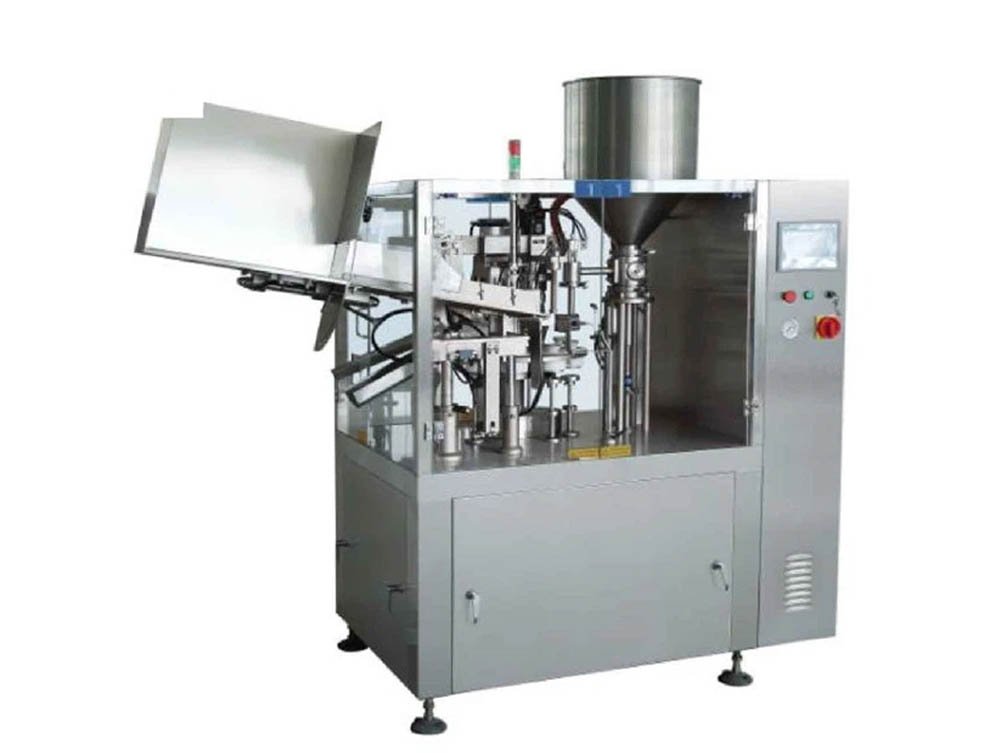
Before the materials, it helps to understand the cycle. A cosmetic tube filling and sealing machine takes empty, pre-formed, open-bottomed tubes and runs them through a sequence of stations on a rotary or in-line indexing system:
- Tube loading — empty tubes are fed from a magazine into holders (pucks) that carry them through the machine, cap-end down.
- Orientation / registration — for printed tubes, an eye-mark or photocell rotates each tube so the artwork and the seal line up correctly.
- Filling — a dosing nozzle descends into the open base and fills the product from the bottom up, with a positive cut-off to avoid stringing.
- Sealing — the open base is heated, folded and pressed to form the seam — the step that depends entirely on the tube material.
- Coding & trimming — batch number, expiry and a tidy trim or knurl are applied to the seam.
- Ejection — finished tubes are discharged to downstream cartoning or case packing.
Filling is broadly the same across tube types; sealing is where they diverge. That single station is why material and machine must be chosen as one.
One layout detail worth knowing early: tube fillers come in rotary and in-line (linear) configurations. Rotary machines arrange the stations around a turntable and tend to deliver higher speeds in a compact footprint, which suits larger, more repetitive runs. In-line machines move tubes along a straight path; they’re often more flexible for frequent changeovers and easier to extend with extra stations. For a multi-SKU beauty brand juggling several tube sizes and materials, the flexibility of an in-line layout — or a rotary machine with fast change parts — usually matters more than peak speed alone.
The three tube families: PE, ABL and PBL
Almost every cosmetic tube on the market is one of three constructions. Each balances barrier protection, feel, printability, recyclability and cost differently.
PE
Polyethylene, single-material. Glossy or matte, soft squeeze, lowest cost, and the easiest to recycle as a mono-material.
ABL
A laminate with a thin aluminium foil layer. Best barrier, premium “dead-fold” feel, but harder to recycle.
PBL
A laminate using a plastic barrier (e.g. EVOH) instead of foil. Strong barrier, glossy print, more recyclable than ABL.
PE tubes (polyethylene)
PE tubes are extruded or seamed from a single plastic family, which makes them the workhorse of the cosmetic world: affordable, available in countless diameters and finishes, soft and pleasant to squeeze, and — because they’re essentially one material — among the easiest tubes to recycle. Their limitation is barrier: plain PE offers moderate protection against oxygen, light and aggressive ingredients, so highly active or sensitive formulations may need a coated or co-extruded multi-layer PE (sometimes called MLT) for extra defence. PE is sealed with hot air, which makes hot-air tube sealers the most common machine in the category.
In practice, PE is the natural home for lotions, conditioners, cleansers, hand creams and value or core lines where cost and a soft squeeze matter more than maximum barrier. If a PE-packaged product later proves sensitive — oxidising, losing fragrance, or reacting to light — the usual upgrade path is a coated or multi-layer PE before jumping to a full laminate, which keeps the easier hot-air sealing and better recyclability while adding protection. Knowing this path in advance lets you start economical and step up only if the formulation demands it.
ABL tubes (aluminium barrier laminate)
ABL tubes sandwich a thin layer of aluminium foil between plastic films. That foil delivers the highest barrier against oxygen, moisture, light and fragrance migration, which is why ABL is favoured for premium skincare, sensitive actives and products that must hold their integrity for long shelf lives. ABL also has a distinctive “dead-fold” quality — when squeezed it stays flattened rather than springing back, which many consumers read as premium. The trade-off is recyclability: the foil layer makes ABL difficult to recycle through standard plastic streams. Because of the aluminium, ABL cannot be hot-air sealed cleanly; it requires ultrasonic or high-frequency (induction) sealing.
PBL tubes (plastic barrier laminate)
PBL tubes replace the aluminium foil with a high-barrier plastic such as EVOH, keeping much of the protective performance while improving recyclability and allowing brilliant, glossy printed graphics with no foil seam line. PBL has become the go-to “premium but more sustainable” choice for brands that want a strong barrier and a high-end look without ABL’s recycling penalty. Like ABL, PBL is a laminate and is sealed ultrasonically rather than with hot air.
PE vs ABL vs PBL: the comparison at a glance
| Factor | PE | ABL | PBL |
|---|---|---|---|
| Construction | Mono-material plastic | Laminate with aluminium foil | Laminate with plastic barrier (EVOH) |
| Barrier protection | Low–moderate | Highest | High |
| Sealing method | Hot air | Ultrasonic / high-frequency | Ultrasonic |
| Feel | Soft, springs back | Premium “dead-fold” | Smooth, glossy |
| Print quality | Good | Good (foil seam visible) | Excellent, seamless gloss |
| Recyclability | Best (mono-material) | Difficult (foil layer) | Moderate–good |
| Relative cost | Lowest | Highest | Mid–high |
| Best for | Lotions, cleansers, value lines | Sensitive actives, premium, long shelf life | Premium look + sustainability goals |
Sealing technology: the decisive link
This is the heart of the matter. The sealing station is where your tube choice locks in your machine choice — so understand the three methods.
Hot-air sealing (for PE)
Hot-air sealing blows precisely controlled hot air onto the inside of the tube’s open end, melting the PE surfaces just enough to fuse them when pressed and folded. It’s reliable, well-understood and cost-effective — but only for thermoplastic PE. Aim hot air at a laminate tube with a foil or barrier layer and you’ll scorch the plastic, fail to bond the inner layers, or warp the tube. The key variables to control are air temperature, dwell time and cooling, all of which a good controller manages per recipe.
Ultrasonic sealing (for ABL and PBL)
Ultrasonic sealing uses high-frequency mechanical vibration to generate heat precisely at the interface of the layers being joined, fusing them from the inside without applying external heat to the whole tube. This is ideal for laminates: it bonds the inner sealant layers of ABL and PBL cleanly, produces a strong, neat seam, and — because the heat is so localised — it won’t scorch printed graphics or damage the barrier. It’s also fast and energy-efficient. For most modern laminate cosmetic tubes, ultrasonic is the default.
High-frequency / induction sealing (for foil ABL)
Some ABL lines use high-frequency induction, which heats the aluminium layer directly via an electromagnetic field, melting the adjacent sealant to form the seam. It’s effective specifically because ABL contains metal — which is also why it doesn’t work on foil-free PBL or plain PE. If your range mixes foil ABL with other tube types, you’ll want a machine that can carry the appropriate sealing module for each.
Matching the machine to your material
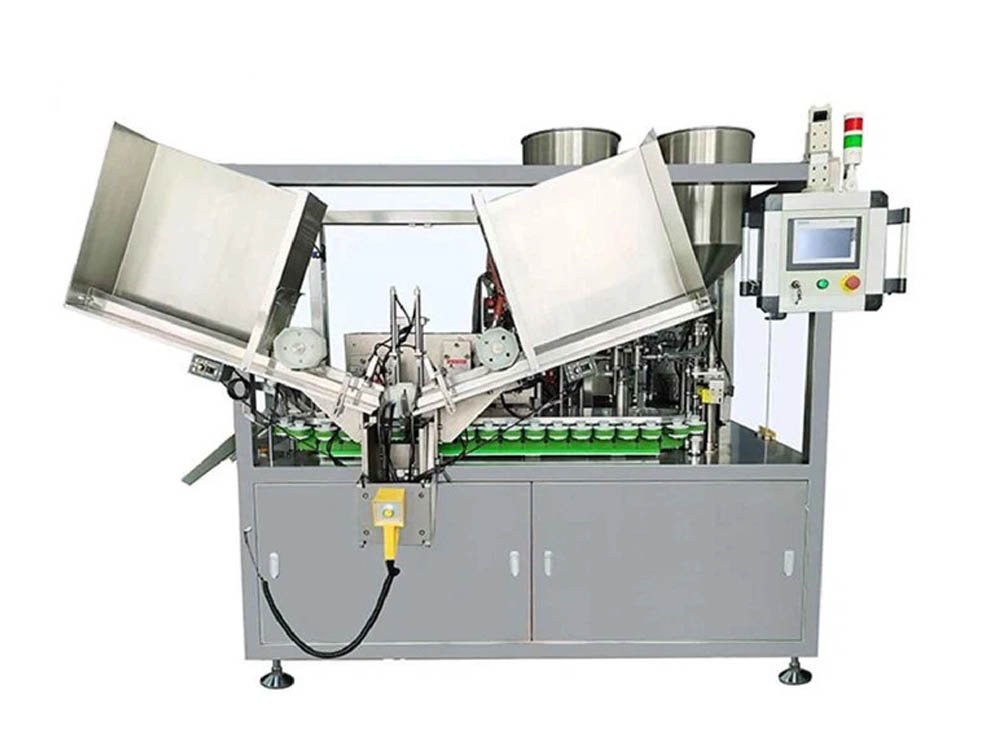
Put the two halves together and the selection rule becomes clear. If you run only PE, a hot-air tube filler and sealer is the most economical fit. If you run ABL or PBL, you need an ultrasonic (or, for foil ABL, high-frequency) sealing station. If you run a mix — common for brands with both value and premium lines — specify a machine that accepts interchangeable sealing modules, so one platform can switch between hot-air and ultrasonic as you change tube types.
This is exactly why the insight at the top matters: deciding your tube material in isolation, then shopping for a machine, frequently leads to a mismatch discovered too late. Bring both decisions to the table together. Explore the full cosmetic tube filling and sealing machine options, and for cream-heavy ranges see the related sunscreen cream tube filling and sealing machine. If your line will also fill jars or bottles, the broader range of cosmetic packaging machines and cream filling machines covers those formats too.
Beyond the seal: five more selection factors
Once material and sealing method are matched, finalise the choice with these practical factors:
- Tube diameter and length range. Confirm the machine’s change parts cover every tube size you run now and plan to run. Wide ranges may need multiple puck sets.
- Fill accuracy. As with any cosmetic filler, target a tight tolerance (commonly ±0.5%–1%) and verify it across your product’s viscosity range. Thick creams need positive displacement; see our cream vs lotion vs serum filling guide.
- Print registration. For decorated tubes, accurate eye-mark orientation keeps the seam aligned with the artwork — sloppy registration looks cheap on a premium product.
- Speed and automation. Match throughput to a realistic OEE, and decide between semi-automatic, fully automatic, or a full turnkey solution feeding into cartoning machines.
- Hygiene and changeover. Easy-clean product paths and quick sealing-module swaps cut cross-contamination risk and downtime between SKUs.
Recyclability and the sustainability angle
Tube material is increasingly a sustainability decision as well as a technical one. Mono-material PE is the most straightforward to recycle and is gaining barrier-coated variants that close the gap with laminates. PBL offers a strong barrier with better recyclability than foil-based ABL, making it the favoured route for brands balancing protection with green commitments. ABL still wins on outright barrier and that signature premium feel, but its foil layer complicates recycling. Whatever you choose, confirm your machine can seal it — a recyclable mono-material tube is no use if your line can’t form a reliable seam on it. Factor recyclability goals into the material-and-machine decision from the start, alongside barrier needs and product compatibility.
Tell us your tube and your product — we’ll match the machine
Share your tube material (PE, ABL or PBL), diameters and product type, and our engineers will spec the right filling and sealing system and run a trial on your tubes.
A 60-second chooser
- Running only PE tubes? → Hot-air tube filler and sealer. Most economical, recyclable mono-material.
- Need maximum barrier or a premium dead-fold feel? → ABL tubes with ultrasonic or high-frequency sealing.
- Want a strong barrier, glossy print and better recyclability? → PBL tubes with ultrasonic sealing.
- Running a mix of materials? → A platform with interchangeable hot-air and ultrasonic sealing modules.
Three mistakes that cause rejected batches
Most tube-sealing failures trace back to a handful of avoidable errors. Watch for these before they cost you a production run:
- Choosing the tube before the machine. The classic trap: a brand falls in love with a laminate tube’s look, orders stock, then finds their hot-air sealer can’t bond it. Confirm the sealing method first, every time.
- Skipping a seal trial on your actual tubes. Tube wall thickness, sealant-layer chemistry and diameter all affect the seam. A seal that works on a sample tube can fail on a different supplier’s “equivalent” tube. Always trial your real tubes and inspect the seams — ideally with a burst or leak test.
- Ignoring product creep at the fill stage. If product smears up the inside of the tube wall before sealing, even a perfect sealing module will trap residue in the seam and produce a weak or leaking joint. A clean, positive fill cut-off is part of a good seal, not a separate concern.
None of these is exotic — they’re simply the difference between treating tube and machine as one decision versus two. Get the pairing right and validate it with a trial, and the seam stops being a risk and becomes a non-issue.
Frequently asked questions
What’s the difference between PE, ABL and PBL tubes?
PE tubes are made from a single plastic (polyethylene): affordable, soft, glossy and easy to recycle, but with only moderate barrier protection. ABL tubes are laminates containing an aluminium foil layer for the highest barrier and a premium dead-fold feel, but they’re hard to recycle. PBL tubes are laminates that use a plastic barrier such as EVOH instead of foil, offering a strong barrier and glossy print with better recyclability than ABL.
Can one machine seal all three tube types?
Not with a single sealing method. PE requires hot-air sealing, while ABL and PBL require ultrasonic (or, for foil ABL, high-frequency) sealing. A machine can run all three only if it’s specified with interchangeable sealing modules so you can switch between hot-air and ultrasonic as you change tube materials.
Why can’t ABL or PBL tubes be hot-air sealed?
Laminate tubes contain a foil or plastic barrier layer that doesn’t bond cleanly under hot air. Applying hot air can scorch the plastic, warp the tube or leave a weak seam. Ultrasonic sealing generates heat precisely at the layer interface, fusing the inner sealant cleanly without overheating the barrier or printed surface.
Which tube material is most sustainable?
Mono-material PE is generally the easiest to recycle and is improving with barrier-coated variants. PBL offers a strong barrier with better recyclability than foil-based ABL, making it a popular “premium yet sustainable” choice. ABL gives the best barrier and feel but its aluminium layer makes recycling difficult. Match your recyclability goal to barrier needs, and confirm your machine can seal whichever you pick.
How accurate should tube filling be?
Aim for a fill tolerance of about plus or minus 0.5 to 1 percent for premium products, verified across your product’s viscosity range. Thick creams and balms need a positive-displacement (servo piston) filler, while thinner lotions fill well on standard piston systems. Always run a fill trial with your actual product before committing.
Do I need print registration on my tube filler?
Yes, if your tubes are decorated. An eye-mark sensor rotates each tube so the seam lines up consistently with the printed artwork. Without it, seams land at random points on the design, which looks cheap on a premium product. For plain or single-colour tubes, registration is less critical.
Choose tube and machine together
The cosmetic tube looks simple, but the decision behind it is two-sided. PE, ABL and PBL each balance barrier, feel, print, recyclability and cost differently — and each demands its own sealing technology: hot air for PE, ultrasonic or high-frequency for the laminates. The brands that get this right treat material and machine as a single choice, decided together with barrier needs, product compatibility and sustainability goals in view. Get the seam right, and your premium product is protected from the first tube off the line; get it wrong, and no amount of beautiful artwork will hide a leaking seal.
When you’re ready to specify, explore the cosmetic tube filling and sealing machine range, the broader family of cosmetic packaging machines, or talk to an engineer about a line built around your exact tube and product.