Every week a new sunscreen brand asks me the same question: “What machines do I actually need, and what will the whole line cost?” Usually they have been quoted everything from a US$3,000 manual filler to a US$500,000 turnkey line, with no way to judge what fits their volume. After specifying packaging lines for cosmetic factories in 30+ countries, here is the complete map — every stage, every machine, realistic budgets, and the order to buy in.
A sunscreen production line has five stages: mixing & emulsification, tube filling & sealing, batch coding, cartoning, and case packing. The heart of the line is the tube filling and sealing machine. A startup line built around an automatic filler begins at roughly US$25,000–35,000; a fully automatic line producing 40,000+ tubes per day typically runs US$100,000–180,000 depending on speed and automation level.
Key Takeaways
- Buy the filling & sealing machine first — it sets your line speed, your tube format options, and your quality ceiling. Everything else matches it.
- One automatic filler at 30–50 tubes/min produces roughly 21,000–24,000 tubes per 8-hour shift — about 5 million tubes per year on single-shift operation.
- You do not need a cartoning machine on day one. Manual cartoning is economical below ~5,000 tubes/day; automate when labor passes that line.
- Mixing equipment is a separate budget from packaging — this guide covers the packaging side, where most costly specification mistakes happen.
- Plan the cGMP layout before the purchase order: material flow, personnel flow and cleaning access decide whether your line passes audit.
About the author — Forester Xiang
Forester combines deep technical knowledge with 20+ years of global market experience. Having personally audited 100+ cosmetic and pharmaceutical factories across 30+ countries, he helps clients buy not just a machine, but a complete, compliant, and profitable packaging solution.
The 5 Stages of a Sunscreen Production Line
1Mixing & Emulsification
A vacuum emulsifying mixer produces the cream itself — homogenizing UV filters, oils and water phase under vacuum so the formula arrives at packaging already de-aerated. This is process equipment with its own budget (typically US$15,000–60,000 by batch size) and is outside the packaging scope of this guide; what matters downstream is the transfer: a plunger pump with level control can feed cream from the mixer directly into the filler hopper, eliminating manual bucket transfer and the air it folds in.
2Tube Filling & Sealing — the Heart of the Line
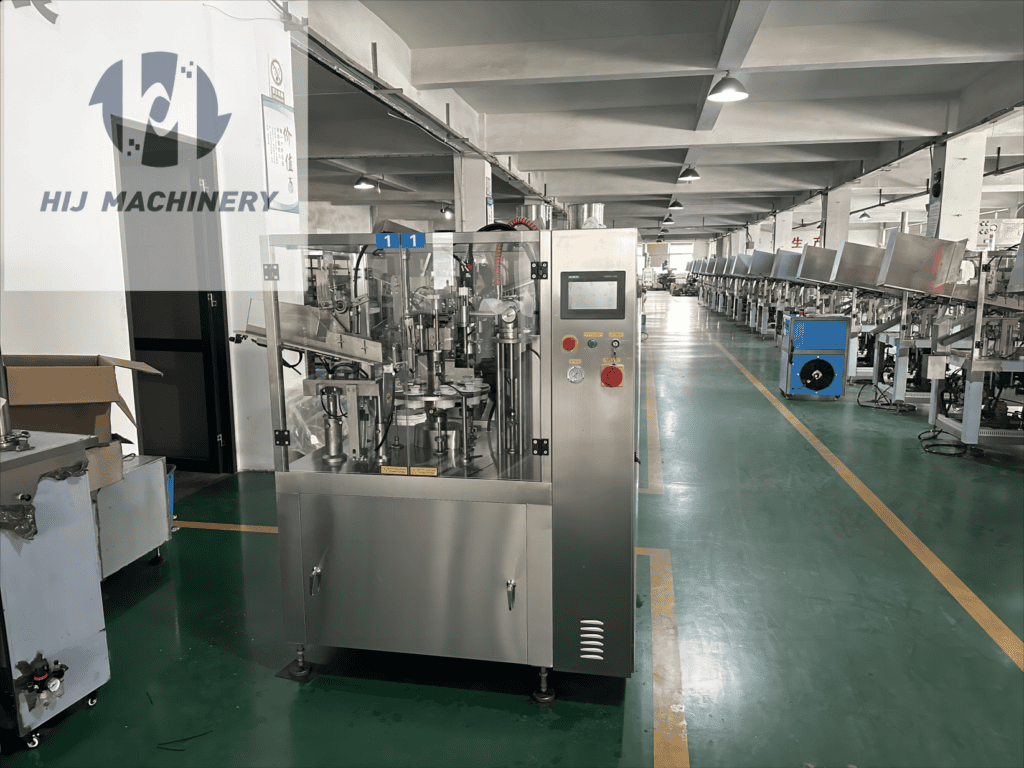
This machine decides your output, your tube format range, and your defect rate. For sunscreen specifically, it must handle 100,000–250,000 cps formulas with piston dosing, tail-cutting and hot-air sealing — the full reasoning is in our guide to filling high-viscosity sunscreen cream. The purpose-built machine for this duty is the HIJ TF-60 sunscreen cream tube filling and sealing machine: 30–50 tubes/min, 5–250 ml, PE and ABL/PBL tubes, from about US$19,500.
Buy this machine first and build the line around it. The most expensive mistake I see is the reverse order: a brand buys a cartoner sized for 80 cartons/min, then discovers their filler — the machine that actually limits the line — produces 45 tubes/min. Half the cartoner’s capacity, and half its cost, is wasted forever.
3Batch Coding
Batch number and expiry coding is a regulatory requirement in every market. On the TF-60 it is built in — the seal station embosses the batch number into the tube end (single or double sided), so most lines need no separate coder until they add cartons, where an inkjet or laser coder marks the carton flap.
4Cartoning
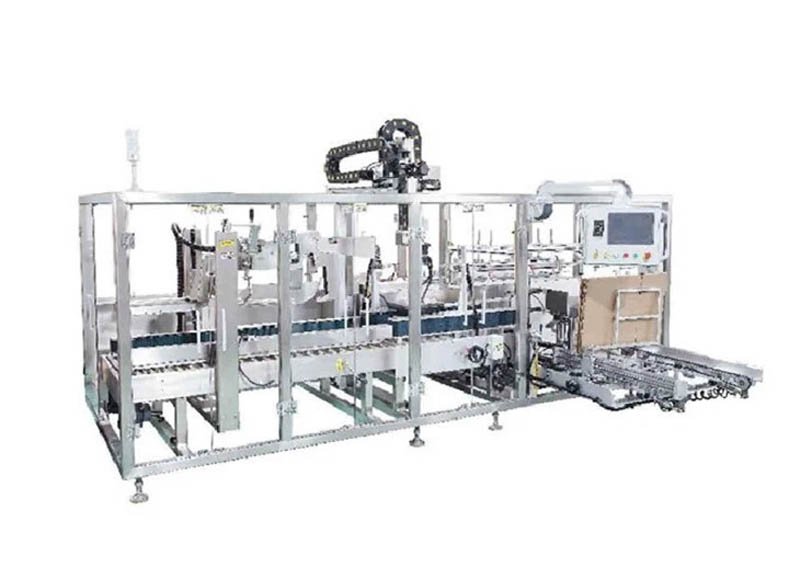
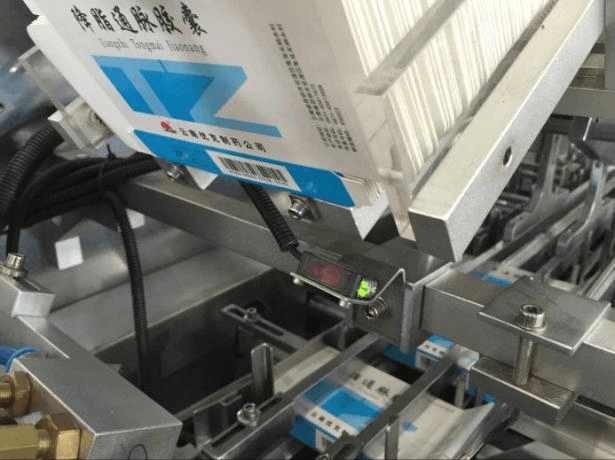
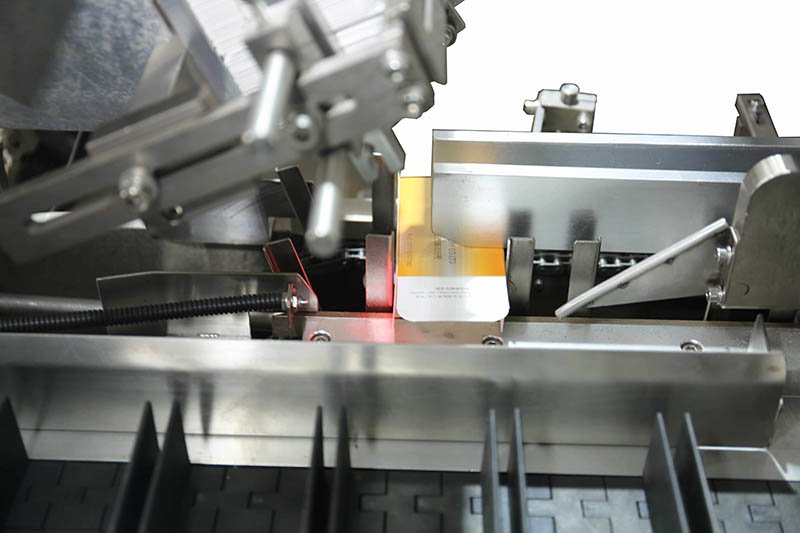
An automatic cartoning machine erects the carton, inserts the tube (with a leaflet if required), and closes the flaps. Automate this stage when manual cartoning labor exceeds roughly one full-time worker — in practice around 5,000 tubes/day. Below that volume, a packing table is the better investment.
5Case Packing
At the end of the line, case packing machines collate cartons into shipping cases and seal them. This is the last stage to automate — justified when you ship full pallets daily. Until then, manual case packing with a tape sealer is perfectly adequate.
When all five stages run as one synchronized system with conveyors and accumulation, that is an automatic cosmetic filling line — HIJ engineers these as turnkey solutions including layout, integration and commissioning.
Capacity Planning: How Much Can One Line Produce?
One automatic tube filler at 30–50 tubes per minute produces 21,000–24,000 finished tubes per 8-hour shift, or roughly 5 million tubes per year on single-shift operation. Use real-world efficiency of 85–90% (changeover, cleaning, tube loading) rather than the nameplate speed when sizing your line:
| Line Configuration | Realistic Output / 8h Shift | Annual (250 days, 1 shift) | Fits a Brand Selling |
|---|---|---|---|
| Semi-automatic filler + manual cartoning | 4,000–7,000 tubes | 1–1.7 million | Launch / DTC brand |
| 1× TF-60 automatic + manual cartoning | 21,000–24,000 tubes | 5–6 million | Growing retail brand |
| 1× TF-60 + automatic cartoner + case packer | 21,000–24,000 tubes | 5–6 million (less labor) | Retail / private label |
| 2× fillers in parallel, full automation | 40,000–48,000 tubes | 10–12 million | Contract manufacturer |
Note the third row: automation does not add output, it removes labor and rejects. That is why the cartoner comes after the second shift is full — not before.
What Does a Sunscreen Production Line Cost in 2026?
Packaging-side budgets run from about US$25,000 for a startup configuration to US$100,000–180,000 for a fully automatic line, FOB China. Indicative 2026 figures by stage:
| Line Scale | Equipment Included | Indicative Budget (USD, FOB) |
|---|---|---|
| Startup | TF-60 automatic filler-sealer (base, incl. mold + chiller) + packing table | $25,000–35,000 |
| Growth | TF-60 fully optioned (heated hopper, plunger pump) + carton coder | $35,000–55,000 |
| Automated | Above + automatic cartoning machine + conveyors | $70,000–110,000 |
| Full line | 2× fillers + cartoner + case packer, integrated controls | $120,000–180,000 |
Budgets exclude the vacuum emulsifying mixer, freight, and installation travel. For machine-by-machine numbers across every category, see the full cosmetic packaging machine price guide; a comparable European-built line typically runs 40–60% higher for equivalent specification.
Reserve 8–10% of the equipment budget for what the spec sheets never show: extra mold sets for your second and third tube sizes, a spare-parts kit, voltage transformers, and compressed-air preparation. The brands that budget this on day one are the ones whose launch dates hold.
cGMP Layout: Plan This Before the Purchase Order
Cosmetic GMP (ISO 22716) audits look at the room as much as the machines. Five layout decisions to lock in before equipment arrives:
- One-way material flow: raw cream enters one end, finished cases exit the other — no crossing paths between unfilled and filled product.
- Filling room separation: the filler-sealer sits in a controlled room; cartoning and case packing can sit in general space, cutting your cleanroom footprint and HVAC cost.
- Cleaning access: leave 800 mm clearance around the filler for hopper removal and mold change — the TF-60 needs about 12 m² working area against its 2 m² footprint.
- Material compliance: 316L product-contact parts and dead-corner-free design make cleaning validation straightforward; an FDA-compliant equipment design also supports MoCRA documentation for the US market.
- Utilities mapped early: 380V/220V 3-phase power, 0.5–0.7 MPa compressed air at 1.1 m³/min, and a drain point for the water chiller.
Frequently Asked Questions
What equipment do you need to manufacture sunscreen?
A complete setup needs five stages: a vacuum emulsifying mixer to produce the cream, a tube filling and sealing machine, batch coding (built into the seal on modern fillers), a cartoning machine, and a case packing machine. Only the mixer and the filler-sealer are mandatory on day one — cartoning and case packing can stay manual until volume justifies automating them.
How much does a sunscreen production line cost?
The packaging side starts at about US$25,000–35,000 for a startup configuration built around an automatic tube filling and sealing machine, rises to US$70,000–110,000 with an automatic cartoner, and reaches US$120,000–180,000 for a fully automatic dual-filler line (FOB China). The vacuum emulsifying mixer is a separate budget of roughly US$15,000–60,000 by batch size.
How many sunscreen tubes can a small line produce per day?
One automatic filler-sealer running 30–50 tubes per minute produces 21,000–24,000 finished tubes per 8-hour shift at realistic 85–90% efficiency — roughly 5–6 million tubes per year on single-shift operation. A semi-automatic machine produces 4,000–7,000 tubes per shift.
Do I need a cartoning machine from day one?
No. Manual cartoning is more economical below roughly 5,000 tubes per day; an automatic cartoning machine pays for itself once cartoning labor exceeds about one full-time worker. Buy the filling and sealing machine first — it is the stage that sets line speed and product quality.
What is the best tube filling machine for a sunscreen line?
For sunscreen specifically, the machine must handle 100,000–250,000 cps formulas: that means mechanical piston dosing, a tail-cutting nozzle, an optional heated stirring hopper, and hot-air sealing for PE and ABL/PBL tubes. The HIJ TF-60 sunscreen cream tube filling and sealing machine is purpose-built to this specification, running 30–50 tubes/min from about US$19,500.
Want a Line Layout for Your Exact Volume?
Tell me your target tubes per day, tube sizes and factory dimensions. I’ll send back a line configuration, a layout sketch and an itemized budget — the same document I prepare for our turnkey clients.
Get a Free Line Plan & Budget