Production Engineering · Alcohol & Disinfecting Wipes
Define intended use, formula, liquid loading, pack barrier, process safety and acceptance evidence before selecting the line.
Start with intended use—not an alcohol percentage
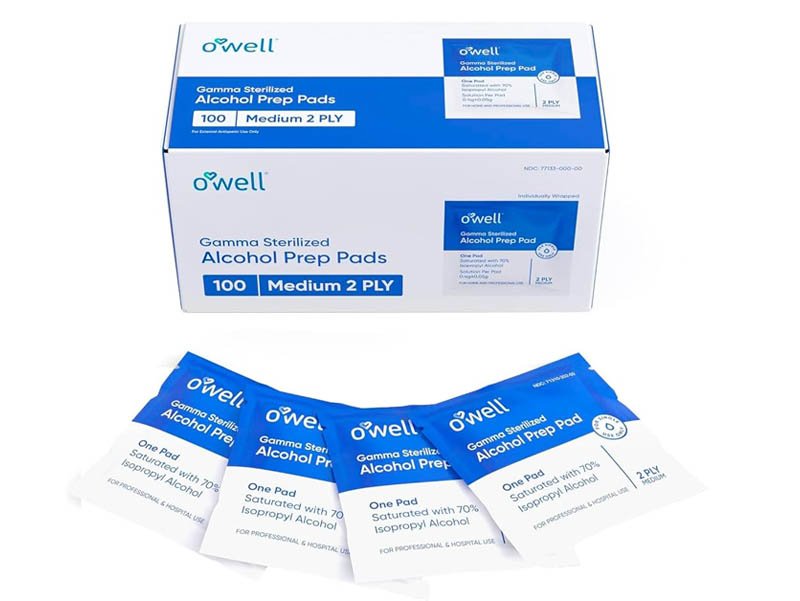
In the United States, the FDA explains that wipes for cleansing or moisturizing skin can be cosmetics, wipes making therapeutic germ-killing claims on skin can be drugs, and wipes intended to disinfect inanimate surfaces are regulated by the EPA. The CDC also distinguishes alcohol hand-sanitizing wipes from surface-disinfecting wipes and warns against using surface products on skin.
| Intended use | Specification starts with | Production evidence to define |
|---|---|---|
| Personal cleansing or cosmetic wipe | Skin-use purpose, ingredient list, safety and truthful labeling. | Formula identity, microbiological controls, liquid loading, compatibility and pack stability. |
| Hand-sanitizing or therapeutic skin wipe | Applicable drug or health-product route, active content and permitted claims. | Approved formula, active-content controls, dose uniformity, batch records and stability. |
| Surface disinfecting wipe | Approved organisms, use sites, directions and contact time for the target market. | Registered or authorized formulation, liquid delivery, label control, wet-contact performance and shelf life. |
| General household cleaning wipe | Cleaning purpose without unsupported disinfecting claims. | Formula, consumer-use instructions, material compatibility and package integrity. |
This guide is an equipment-specification framework, not legal or formulation advice. Confirm product classification and claims with the responsible authority and your regulatory team before freezing the URS.
Freeze the product specification before the machine specification
A useful quotation and FAT begin with controlled inputs. If the product team has not decided the items below, the machine supplier can only price assumptions.
Product and formula
- Intended use, target country and proposed label claims.
- Full liquid formulation, concentration basis and safety data sheets.
- Nonwoven material, basis weight, dimensions, fold and absorbency.
- Target liquid loading and approved acceptance range.
- Required shelf life, storage and distribution conditions.
Pack and line
- Single sachet or multi-count pack, drawing and opening method.
- Film structure, roll drawing, artwork, eye mark and code fields.
- Required good packs per shift—not only nominal machine speed.
- Inspection, rejection, batch-record and downstream interfaces.
- Cleaning, changeover, utilities, hazardous-area and site rules.
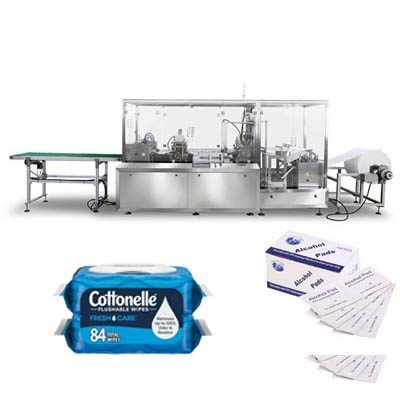
How an alcohol or disinfecting wipes line works
- Prepare and release liquid.
Mix, hold and identify the batch under the approved process. - Unwind nonwoven.
Control roll identity, tension, edge position and splice handling. - Fold and cut.
Create the approved wipe geometry without damaging or contaminating it. - Meter liquid.
Deliver the validated loading into each wipe or pack. - Feed packaging film.
Control web direction, registration, print and code location. - Form and load.
Place the wipe consistently so it cannot contaminate the seal. - Seal and cut.
Hold the verified temperature, pressure, dwell and cut geometry. - Inspect and reject.
Check defined defects and remove failures through a verified path. - Record and pack out.
Reconcile good packs, rejects, materials and batch data.
Individual sachets and multi-count soft packs need different folding, dosing, film and secondary-packaging architecture. Use the wet wipes packaging machine overview to compare formats before choosing a platform.
Control volatile liquid loss and process safety together
Alcohol-containing formulas can lose volatile components during holding, transfer, dosing and the interval before final sealing. Treat the problem as a controlled mass-balance and process-design question—not as a promise that one machine feature will prevent all loss.
- Minimize unnecessary open handling and long transfer paths.
- Define tank closure, venting, recirculation, hose and pump requirements from the actual formula and safety data.
- Measure the finished product at defined points rather than assuming the nominal mix remains unchanged.
- Control stops, restarts, line clearance and held product when the dosing-to-seal interval is extended.
- Include package mass-change and active-content studies in stability work where relevant.
Define dosing accuracy from product performance
There is no universal dosing tolerance for every alcohol or disinfecting wipe. Set the target and acceptance range from the approved formula, nonwoven uptake, pack format, labeled use, contact-time requirement where applicable, leakage risk and stability data.
| Control | What to define | Evidence |
|---|---|---|
| Target loading | Liquid per wipe or pack and the condition used for measurement. | Approved product specification and sampling plan. |
| Accuracy and repeatability | Acceptance limits by lane, recipe and normal operating range. | Calibrated measurements with raw lane-by-lane data. |
| Measurement system | Scale, sampling timing, evaporation control and operator method. | Calibration and measurement-system suitability. |
| Challenge states | Start, stop, restart, tank level, speed range and changeover. | Worst-case test results and defined disposition rules. |
| Finished product | Wipe wetness, release, use performance and package leakage. | Finished-pack testing and stability program. |
If a supplier quotes a dosing figure, ask whether it describes pump resolution, a bench test or verified finished-pack performance. Those are different claims.
Select product-contact materials from the actual chemistry
A generic statement such as “304 for alcohol, 316L for disinfectant” is not a compatibility assessment. The liquid can contact tank surfaces, pumps, valves, tubing, gaskets, nozzles, adhesives, nonwoven and package sealants. Each material must be reviewed against the complete formulation, concentration, temperature, contact time, cleaning agents and required life.
- Create a product-contact parts list with material grades and certificates.
- Review elastomers, plastics, hoses and adhesives—not only stainless-steel panels.
- Use supplier compatibility data as screening evidence, then verify the intended conditions.
- Define surface finish, drainage, dead-leg, disassembly and cleaning requirements appropriate to the product.
- Control substitutions through documented change review.
Validate film and sealing as one package system
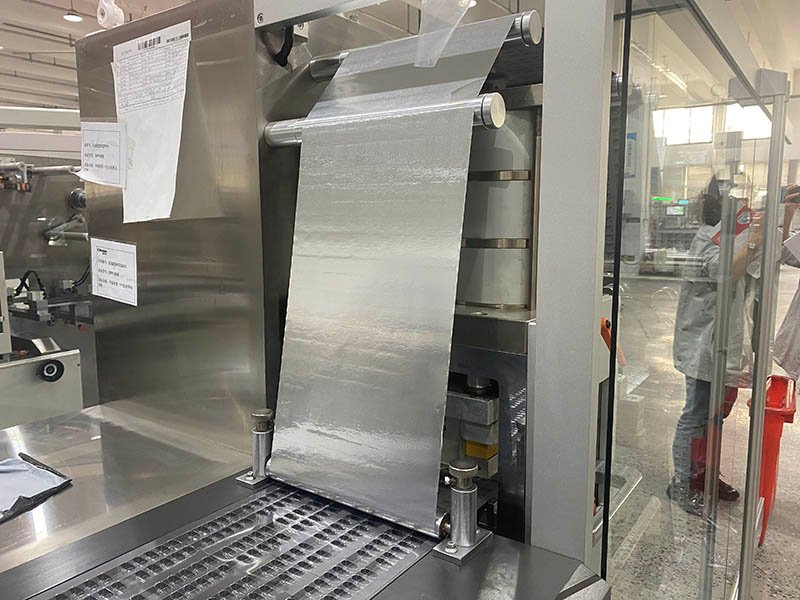
No packaging material is automatically best for all alcohol or disinfecting wipes. A foil-containing or other high-barrier laminate may be appropriate, but the final decision must reflect the actual product, required shelf life, seal layer, converted package, distribution conditions and end-of-life claim.
Use the wet wipes packaging films guide to compare material data. For this project, the critical deliverable is a verified finished-pack system:
- Document the full layer structure, adhesives, coatings, inks and sealant.
- Establish a sealing window across temperature, pressure, dwell and speed.
- Challenge wrinkles, splice events, product contamination and normal web variation.
- Use defined leak, peel, burst or other integrity methods appropriate to the pack.
- Study mass change, active content, odor, appearance and seal condition over storage.

Choose line architecture from required good output
| Decision | Single-lane or lower-complexity line | Multi-lane high-output line |
|---|---|---|
| Best starting point | Fewer SKUs, development work, moderate output or limited floor space. | Stable high-volume demand with controlled materials and stronger technical support. |
| Changeover | Often simpler to observe and troubleshoot, but still product-dependent. | More lane parts, settings and reconciliation points must be controlled. |
| Quality data | Fewer parallel measurements. | Lane-by-lane dosing, seal and reject evidence is essential. |
| Business risk | Lower capacity concentration, with lower nominal output. | More output per asset, but stops and common-cause failures can affect more production. |
| Quotation basis | Required good packs per shift after planned losses, not a brochure maximum. | |
For the detailed trade-off, read single-lane vs multi-lane wet wipes machines. For a parallel sachet project, review the high-speed wet wipes packing platform and ask for the exact tested configuration.
Put these acceptance points into the URS and FAT
- Product boundary: intended use, markets, approved claims, formula identity and safety data.
- Pack definition: wipe, liquid loading, finished dimensions, film, artwork, code and secondary pack.
- Output basis: sustained good packs per minute or shift with agreed losses and test duration.
- Liquid system: tank, transfer, dosing, hold-up, drainability, cleaning and changeover boundary.
- Process safety: site hazard assessment, ventilation, electrical, grounding, fire and exposure requirements.
- Dosing evidence: calibrated lane-by-lane results through speed, start/stop and liquid-level challenges.
- Web and pack control: roll drawing, registration, tracking, splice, forming, sealing, cutting and discharge.
- Inspection and rejection: detectable defects, challenge samples, reject confirmation and reconciliation.
- Seal evidence: settings, window study, integrity method, sampling and acceptance criteria.
- Data and records: users, recipes, alarms, audit trail or batch report where required, backup and time control.
- Interfaces: coding, vision, cartoning, case packing, utilities, guarding and line control.
- Documents and support: drawings, manuals, certificates, FAT records, spares, training and site qualification scope.
The FAT demonstrates the agreed machine configuration with identified test materials under factory conditions. It does not replace formulation approval, regulatory authorization, site safety assessment or finished-product shelf-life validation.
Primary references used for product and safety boundaries
Frequently asked questions
What is the first step in planning alcohol or disinfecting wipes production?
Define the intended use, target market, proposed claims and approved formula first. Those decisions determine the regulatory route, product specification, safety review, dosing target, packaging evidence and machine acceptance tests.
Do all disinfecting wipes need the same alcohol concentration?
No. Surface disinfectants, hand-sanitizing wipes, therapeutic skin products and general cleaning wipes follow different product specifications and regulatory routes. Use the approved formulation and label requirements for the intended market rather than a universal percentage.
What dosing accuracy is required for disinfecting wipes?
There is no universal tolerance for every wipe. Set the target and acceptance range from the approved formula, nonwoven uptake, pack format, labeled use, contact-time requirement where applicable, leakage risk and stability data. Verify results lane by lane with a suitable measurement method.
Is 304 stainless steel always suitable for alcohol wipes equipment?
No material grade should be approved from the product name alone. Review every wetted metal, elastomer, plastic, hose, seal and adhesive against the full formulation, concentration, temperature, contact time, cleaning agents and required service life.
Is aluminum laminate always the best film for alcohol wipes?
No. A foil-containing or other high-barrier structure may be appropriate, but the decision requires supplier data plus finished-pack compatibility, seal, integrity and stability testing under the intended storage and distribution conditions.
How can a line reduce volatile liquid loss before sealing?
Use a controlled liquid system, minimize unnecessary open handling and transfer length, define stop and restart rules, keep the dosing-to-seal path appropriate to the process, and verify the finished product at defined points. The correct controls depend on the actual formula and site safety assessment.
Does a wet wipes machine receive FDA certification?
The machine should not be described as FDA certified. The finished product and manufacturing operation must meet the requirements that apply to the intended use and market. The equipment supplier should provide the agreed design, material, safety, documentation and validation support evidence.
What should be tested during a wet wipes machine FAT?
Test identified production-representative materials through the agreed speed range, start and restart states, lane-by-lane dosing, registration, sealing, cutting, inspection, rejection and reconciliation. Record raw results, deviations and actions; product stability and site qualification remain separate responsibilities.
Build the line around your approved product
Send HIJ the intended use, formula safety data, wipe, liquid-loading target, film roll, finished-pack drawing, required good output and site requirements. We will identify missing inputs and define a testable quotation and FAT scope.
Request an Engineering Review