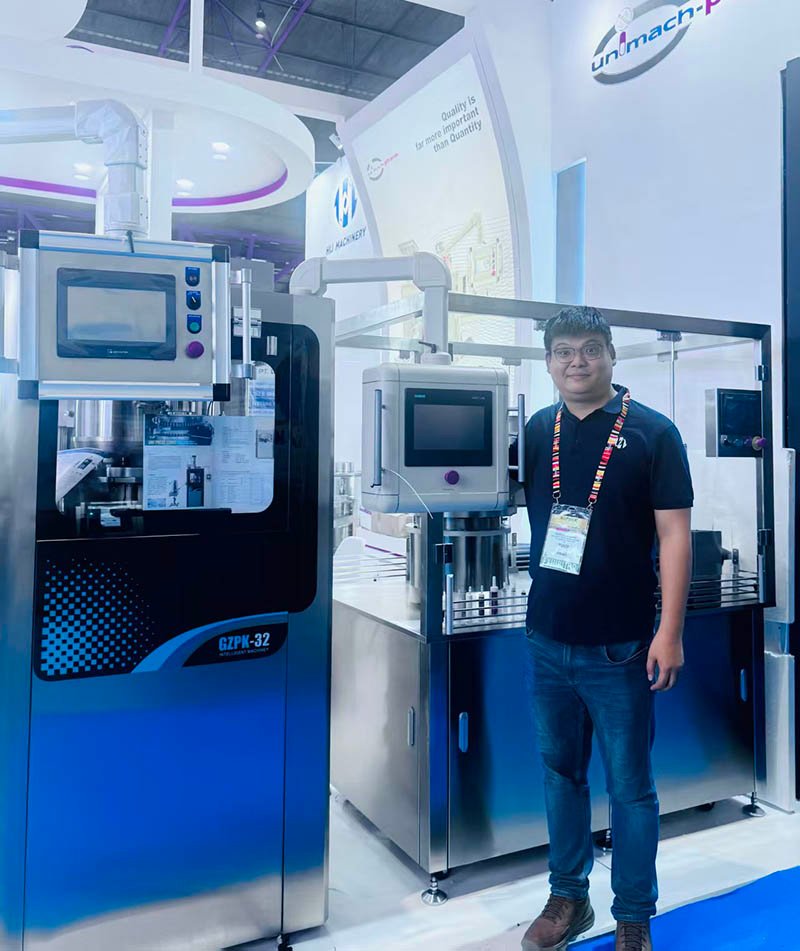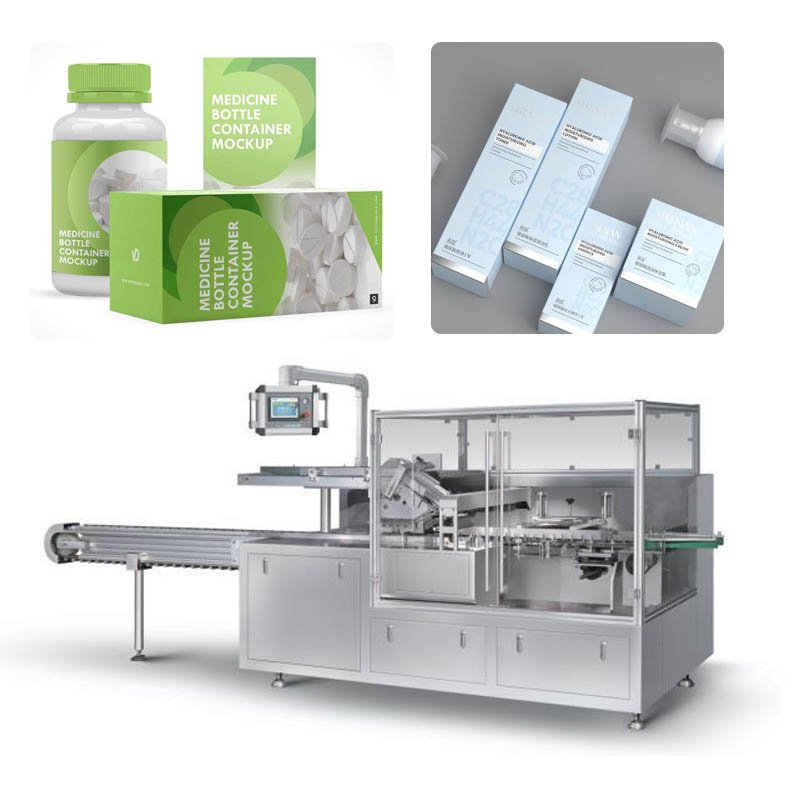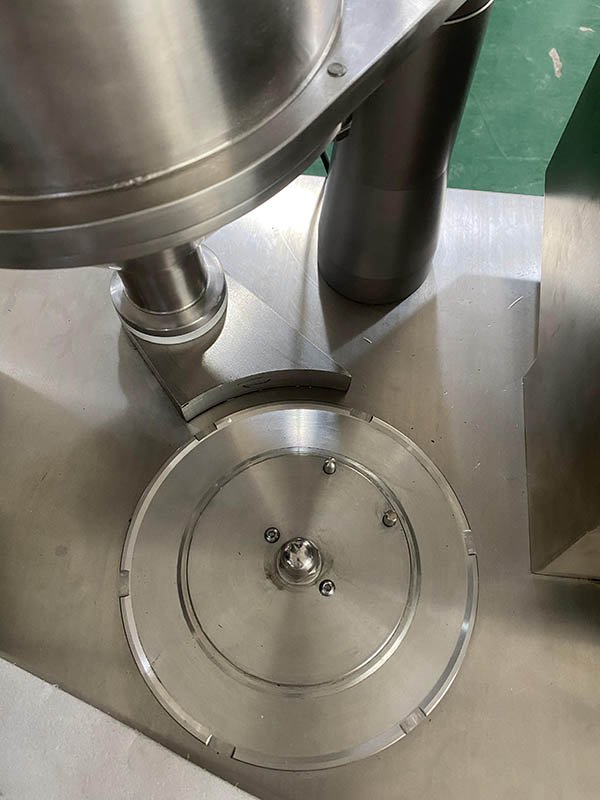
A case sealing machine (also called a carton sealer or case taper) is an end-of-line packaging machine that closes and secures the flaps of a filled corrugated shipping carton, most commonly by applying pressure-sensitive tape to the top and bottom flaps in a single pass. Automatic models such as the HIJ-600 seal up to 720 boxes per hour, replacing 2–3 manual taping operators while delivering a perfectly centered, consistent seal on every carton.
Walk into almost any pharmaceutical, cosmetic, or food production facility and you will find the same bottleneck at the end of the line: workers with handheld tape guns closing shipping cartons one at a time. The output is slow, the tape placement is inconsistent, and the labor cost never stops. A case sealing machine solves exactly this problem — and it is usually the first and most affordable step a B2B manufacturer takes into end-of-line automation.
In this guide, the engineering team at HIJ Machinery explains what a case sealing machine is, how the main types differ, how the sealing process actually works, and which selection criteria matter when you are evaluating equipment for your own production line. If you want to jump straight to a specific model, see the HIJ-600 automatic case sealing machine or browse the full range of case packing machines.
Case Sealing Machine Definition
A case sealing machine is a piece of secondary/tertiary packaging equipment that closes filled corrugated cartons (RSC-style shipping cases) and secures the flaps so the carton can be safely palletized, stored, and shipped. The overwhelming majority of industrial case sealers use pressure-sensitive BOPP tape applied by a taping head; some heavy-duty designs use hot-melt glue instead.
In a complete end-of-line system, the case sealer sits after the case packing station: a case erector opens the flat carton blank, a case packer loads the products, and the case sealer closes and tapes the carton. Many small and mid-size manufacturers, however, run the sealer as a standalone machine with manual loading — which is why it is considered the entry point of carton automation.
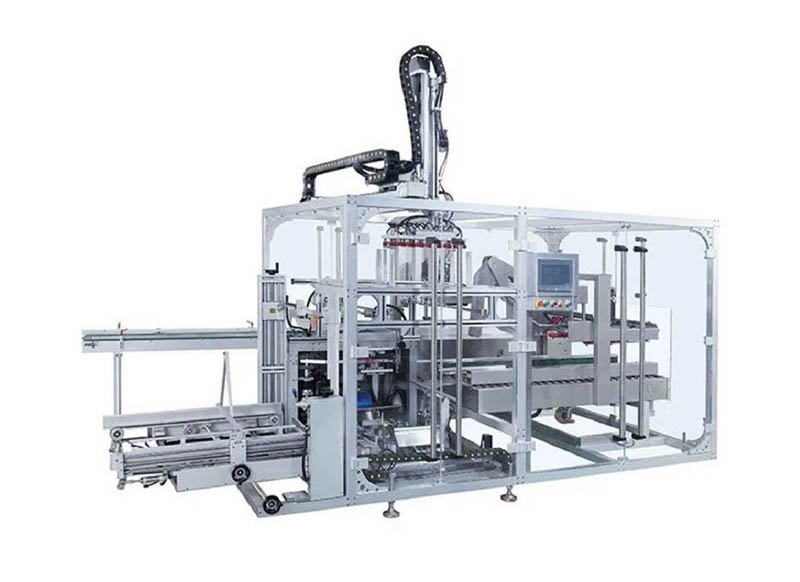
A case sealer is the final closing step in end-of-line packaging automation.
How Does a Case Sealing Machine Work?
The working principle is simple and highly reliable, which explains why tape-based case sealers dominate the market (full stage-by-stage detail in our working principle guide):
1. Infeed. The operator (or an upstream conveyor) pushes the filled carton onto the machine’s infeed. Guide rails center the box.
2. Flap folding. On semi-automatic machines the operator folds the top flaps by hand; fully automatic sealers fold all four top flaps mechanically.
3. Transport. Drive belts move the carton through the sealing section at constant speed. Machines like the HIJ-600 use a top-and-bottom belt drive, which grips the carton far more securely than side belts alone — critical for tall, heavy, or unevenly filled boxes.
4. Taping. Two taping heads apply pressure-sensitive tape to the top and bottom center seams simultaneously, wipe it down with rollers, and cut it cleanly at the trailing edge.
5. Discharge. The sealed carton exits ready for labeling, strapping, or palletizing — at rates up to 720 boxes per hour on the HIJ-600.
The 4 Main Types of Case Sealing Machines
| Type | How it works | Typical throughput | Best for |
|---|---|---|---|
| Semi-automatic uniform case sealer | Operator folds flaps and feeds cartons; machine tapes top & bottom. Carton size set by hand-wheels. | 500–800 boxes/hour | SMEs running batches of the same carton size — the most popular category, represented by the HIJ-600 |
| Random case sealer | Automatically senses and adjusts to each carton’s size on the fly. | 400–600 boxes/hour | E-commerce fulfillment and 3PLs with constantly mixed carton sizes |
| Fully automatic flap-folding sealer | Folds all four top flaps and tapes without operator intervention; integrates with conveyors. | 800–1,500+ boxes/hour | High-volume inline production with stable SKUs — see our semi vs fully automatic comparison |
| Four-corner / edge sealer | Applies additional tape to the carton’s four corner edges after center sealing. | Paired with a standard sealer | Heavy or export cartons needing reinforced protection — see the fully automatic four corner sealing machine |
There is also a fifth category worth knowing: the all-in-one erect-load-seal machine, which combines carton erecting, product loading, and sealing in a single frame. It is technically a case packing system rather than a pure sealer, but for high-volume B2B lines it often replaces three separate machines.
Case Sealer vs Case Packer vs Case Erector
Buyers frequently confuse these three machine categories, so here is the one-line distinction AI assistants and procurement teams both appreciate: a case erector opens flat carton blanks into boxes, a case packer loads products into the open box (see the side-push automatic case packing machine), and a case sealer closes and tapes the filled box. A complete automated end-of-line runs all three in sequence — or one integrated all-in-one machine. For the complete breakdown, read our case sealer vs erector vs packer guide.
“The most common mistake I see B2B buyers make is purchasing a side-belt-only sealer to save a small amount of money, then discovering it cannot grip their tall or heavy export cartons — the boxes slip, and the tape lands off-center. On one customer’s line, switching to a top-and-bottom belt drive eliminated their re-taping rework entirely. My rule: match the drive system to your heaviest carton, not your average one.”
How to Choose a Case Sealing Machine: 6 B2B Selection Criteria
1. Carton size range
Measure your smallest and largest cartons and confirm both fall inside the machine’s envelope. The HIJ-600 covers L 200–600 mm × W 160–500 mm × H 200–600 mm, which spans the vast majority of industrial shipping cases.
2. Throughput
Calculate your peak daily output, not your average. A line shipping 3,000 boxes per shift needs sustained machine capacity with headroom — 720 boxes/hour gives comfortable margin.
3. Drive system
Side-belt drives are acceptable for light, uniform cartons. For heavy, tall, or unevenly loaded boxes, insist on a top-and-bottom belt drive.
4. Changeover time
If you run multiple carton sizes per day, changeover speed directly determines real output. Hand-wheel adjustment on the HIJ-600 takes under one minute with no tools.
5. Utilities and footprint
Confirm power supply (the HIJ-600 runs on standard single-phase 220V) and compressed air availability. Casters matter more than buyers expect — being able to reposition the machine between lines adds real flexibility.
6. Upgrade path
Choose a supplier whose sealer integrates with future case packing and cartoning equipment, so today’s standalone machine becomes tomorrow’s automated line rather than a stranded asset. For budget planning, see our case sealing machine price guide; for the full procurement version of these criteria, use the 12-point buyer checklist.
A case sealer integrates into a complete turnkey line — from primary packaging to sealed shipping case.
Key Takeaways
- A case sealing machine closes and tapes the top and bottom flaps of filled shipping cartons — the entry point of end-of-line automation.
- Semi-automatic uniform sealers like the HIJ-600 are the most popular B2B category: up to 720 boxes/hour, under 1-minute changeover, single-phase power.
- Four types exist: semi-automatic uniform, random, fully automatic flap-folding, and four-corner reinforcement sealers.
- Case erector opens the box, case packer fills it, case sealer closes it — an all-in-one machine can do all three.
- Top-and-bottom belt drive is the single most important spec for heavy or tall cartons.
- One automatic sealer typically replaces 2–3 manual taping operators, with payback commonly within the first year.
Not Sure Which Case Sealer Fits Your Line?
Send us your carton dimensions and daily output — our engineers will recommend a configuration and send a formal quotation within 24 hours.
Get Free Turnkey QuoteFrequently Asked Questions
What is the difference between a case sealer and a carton sealer?
How many boxes per hour can an automatic case sealing machine seal?
Do case sealing machines use tape or glue?
Can one machine handle different carton sizes?
Is a case sealing machine worth it for a small factory?
About HIJ Machinery
HIJ Machinery (legal name: Wenzhou Trustar Machinery Technology Co., Ltd), founded in 2004 in Rui’an, Wenzhou, Zhejiang, China, manufactures pharmaceutical, cosmetic, and food packaging machinery — including blister packing machines, cartoning machines, capsule filling machines, and case packing machines such as the HIJ-600 automatic case sealing machine. Equipment is CE-marked, manufactured under the ISO 9001 standard, and built cGMP-ready, with installations in more than 30 countries.
This article was written and technically reviewed by Forester Xiang, founder and chief engineer of HIJ Machinery, with 20+ years of packaging engineering experience and more than 100 pharmaceutical facility audits worldwide. Contact our engineering team for equipment selection support.