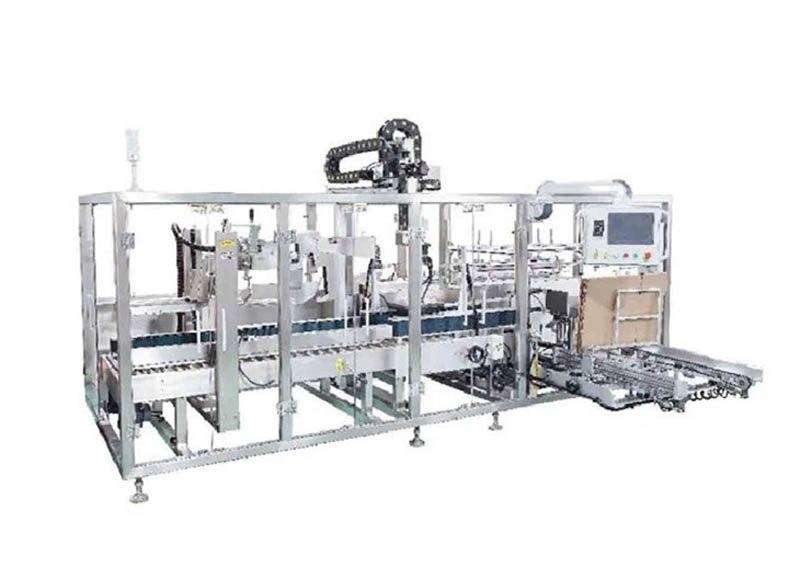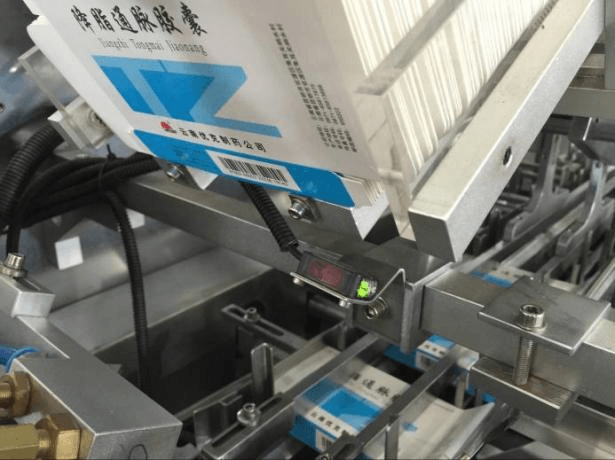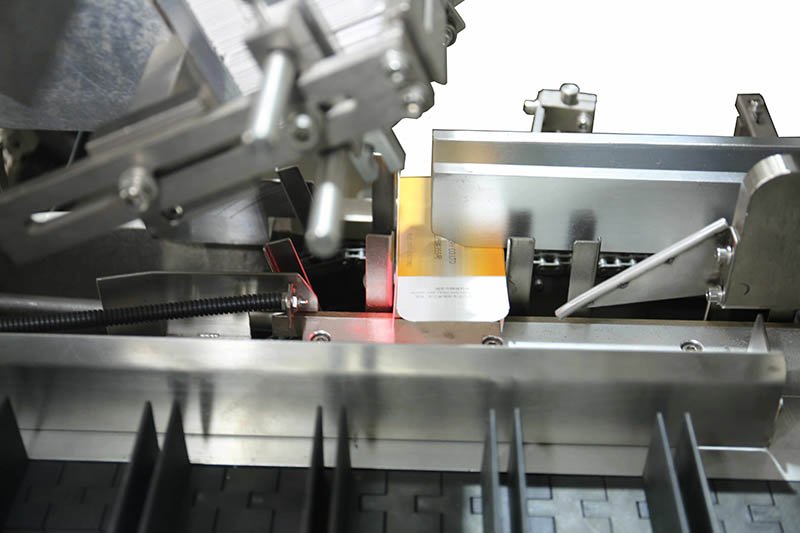
Pharmaceutical liquid blister packaging guide
GMP for pharmaceutical liquid blister packaging comes from the product, dosage form, process, package, records and intended markets. A machine is one part of that system. The manufacturer must define the liquid, dose, forming and lidding materials, product-contact path, filling and sealing process, inspection, cleaning, data, facility, acceptance criteria and validation strategy.
This guide explains how to turn those responsibilities into a practical URS, machine configuration, FAT and qualification plan without assuming that every liquid blister is sterile, every touch screen creates regulated electronic records or one supplier certificate establishes compliance.
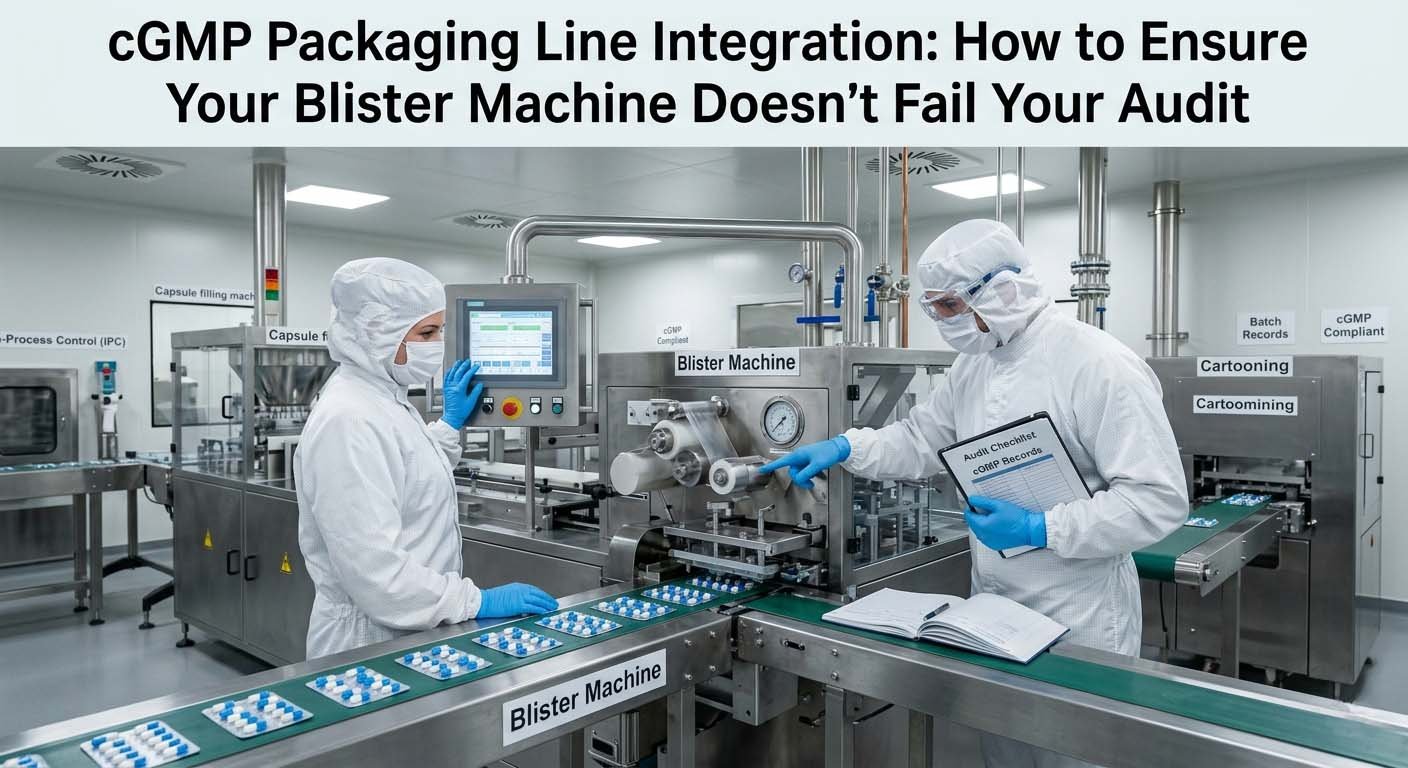
Regulatory boundary: the applicable GMP and validation scope depends on the actual medicinal product and jurisdiction. Sterile-product requirements apply only when the product is required to be sterile. The pharmaceutical manufacturer and its authorized quality and regulatory functions determine applicability, approve the process and decide release.
Direct answer
What does GMP compliance require for liquid blister packaging?
No single machine label proves those elements. Equipment functions can support the manufacturer’s pharmaceutical quality system, but suitability must be demonstrated with the proposed product, package, process and operating environment.
Start with intended use. State whether the liquid is an oral dose, topical preparation, diagnostic or another regulated product; whether it is aqueous, viscous, volatile, light-sensitive or oxygen-sensitive; whether sterility is claimed; how the unit is opened and administered; and which markets and storage conditions are proposed. These decisions control the project.
Definition
Define what “liquid blister packaging” means in the project
The term can describe a formed unit-dose cavity filled with liquid and sealed by a lidding web, but commercial equipment and materials vary. Some processes form cavities from rollstock, fill them and seal them in an integrated sequence. Others may use preformed components. Do not confuse this route with blow-fill-seal, which forms a container from an extruded polymer parison.
Define the accepted unit: one sealed cavity, one cut card, one sachet-like dose or one cartoned presentation. State dose count, cavity geometry, opening method, lidding, perforation, print and downstream handling. A supplier cannot design the correct machine or FAT around “5 mL liquid blister” alone.
The BFS technology guide explains the resin-and-parison process boundary. The liquid blister packaging machine page is a platform reference; the quoted configuration still needs project-specific confirmation.
Applicability
Build a regulation map before writing machine requirements
List the product classification, manufacturing and release jurisdictions, marketing authorization commitments, dosage form, sterility status and records created by the process. Map applicable regulations, pharmacopoeial requirements, GMP guidance, internal standards and product-specific dossier commitments to owners and evidence.
| Question | Why it changes the scope | Owner to confirm |
|---|---|---|
| What is the regulated product and dosage form? | Determines product specifications, manufacturing controls and filing strategy. | Regulatory, quality and product development. |
| Must the finished product be sterile? | Determines whether sterile-manufacture controls and Annex 1-type expectations apply. | Regulatory, microbiology and quality. |
| What is the proposed market pack? | Connects materials, dose, opening, stability and container-closure evidence. | Packaging development and regulatory. |
| Which records are required electronically? | Determines computerised-system and electronic-record controls. | Quality, IT and system owner. |
| Which sites and markets are included? | Controls facility, language, artwork, release and jurisdictional requirements. | Regulatory, quality and supply chain. |
Do not paste a list of FDA, EU and WHO references into the URS without mapping them. A clause should lead to a specific user requirement, procedure, design control or qualification activity, or be removed as irrelevant.
Sterility
Separate sterile and nonsterile liquid blister processes
Many oral-liquid unit doses are not sterile products. Other liquids may require sterile manufacture because of their route of administration or approved product specification. The word “pharmaceutical” does not settle that question.
European Commission GMP Annex 1 concerns manufacture of sterile medicinal products. It should not be presented as a universal cleanroom prescription for every liquid blister line. When the product is sterile, the contamination-control strategy, facility design, personnel, environmental monitoring, sterilization or decontamination, aseptic processing and container-closure evidence require specialist ownership.
For nonsterile products, contamination and cross-contamination still require control according to the product, process and applicable GMP. Define microbiological and chemical risks, open-product exposure, hold times, cleaning, room conditions and packaging protection without borrowing unsupported sterile terminology.
The URS should state the confirmed sterility status and required processing environment. A supplier may provide equipment design information, but it cannot decide the product’s regulatory classification.
Container closure
Treat the formed cavity and lidding as one package system
The liquid contacts the formed cavity and may contact the lidding during storage, transport or use. Specify both components: supplier, grade, complete structure, thickness, coatings, adhesives, primers, inks, width, winding direction and relevant tolerances. Include any fitments or opening features.
FDA container-closure guidance discusses suitability in terms that include protection, safety, compatibility and performance. It does not provide one universal material or test list for every product. The manufacturer should base acceptance criteria on actual data for the particular components and package system.
Evaluate sorption, migration, extractables or leachables, permeation, light protection, solvent or oil compatibility, seal interaction and opening performance according to product risk. A film that forms well may still be chemically unsuitable; a compatible material may fail the selected cavity geometry or seal process.
Control the proposed market pack in drawings and specifications. “PVC/Alu compatible” or “high-barrier film” is not an adequate material identity.
Product knowledge
Characterize the liquid before selecting the filling system
Record target dose, permitted variation, viscosity across the approved temperature range, density where mass-volume conversion is used, surface tension, foaming, air entrainment, particulates or suspensions, settling, crystallization, evaporation, sensitivity to shear, oxygen or light, and compatibility with product-contact materials.
Define how the bulk liquid is supplied to the machine: vessel, pressure or head, temperature, agitation, recirculation, filtration, transfer connection and maximum hold time. A stable laboratory sample does not establish production behavior after transfer and hours in a hopper or tank.
Determine whether the formulation changes during a run. Suspensions may need controlled agitation; volatile components may require exposure control; viscous liquids may retain strings or tails at the nozzle; foaming liquids may need a different fill profile. Translate each risk into a testable requirement and trial condition.
Forming
Qualify the cavity geometry with production-intent material
Cavity volume, depth, radii, flange width and dimensional repeatability affect dose capacity, headspace, seal land, cutting and opening. Thermoforming conditions, tool design, web handling and cooling influence thickness distribution and flange flatness.
Use the exact or representative forming-web structure and measure attributes that matter to the product and package. Inspect every lane or tool position. Confirm the empty-cavity volume and the filled presentation, including wetting or contamination risk at the flange.
A cavity drawing should include more than nominal capacity. Define usable fill volume at the intended headspace, product movement during indexing, seal area, pitch, registration, card layout and downstream orientation. Tool approval should follow sample review with the intended liquid and lidding system.
Filling
Define fill accuracy from the accepted dose, not the pump brochure
State the target and acceptance criteria in the unit used for product release or process control. If the machine doses by volume but the laboratory verifies mass, define density measurement, temperature and conversion. Distinguish individual-unit requirements from average or batch-level controls.
Filling performance depends on formulation, temperature, supply condition, nozzle design, tubing or product path, pump principle, speed, fill profile, air, foam, cutoff behavior and cavity presentation. A generic accuracy claim cannot replace testing with the proposed product or a scientifically justified simulant.
Sample across heads, lanes, time, bulk levels, start-up, steady running, replenishment, stops and restart. Record raw results and interventions. If a recirculating or agitated system is used, include relevant beginning and end conditions.
Define calibration and verification separately. Calibration establishes the relationship of the measurement or dosing system to standards; routine checks confirm the process remains within its approved state.
Product contact
Map every product-contact part and connection
Create a flow path from bulk supply to the filled cavity. Include tank or hopper, agitator, filters, pumps, valves, hoses, tubing, manifolds, nozzles, seals, gaskets, sampling points, drains and any recirculation. Identify materials, surface requirements, removable parts and dead legs or retained-volume risks.
Define connection and disconnection steps, protection of clean parts, assembly verification and status identification. If buyer-supplied vessels or transfer systems connect to supplier equipment, assign responsibility for the interface instead of leaving a gap between packages.
Review accessibility for inspection, cleaning, maintenance and changeover. The line should allow authorized personnel to confirm correct assembly without creating uncontrolled product exposure or relying on undocumented memory.
Sealing
Control the seal without trapping liquid on the flange
Liquid on the seal land can create channels, variable strength or cosmetic defects. Investigate nozzle cutoff, stringing, splash, foam, cavity overfill, acceleration during indexing and the distance between filling and sealing. Prevention at filling is usually more robust than attempting to seal through contamination.
Sealing is influenced by forming and lidding materials, coating, temperature, force or pressure, contact time or machine rate, alignment, tool condition, flange flatness and contamination. Identify which variables are measured, controlled or set during setup and how actual conditions are recorded.
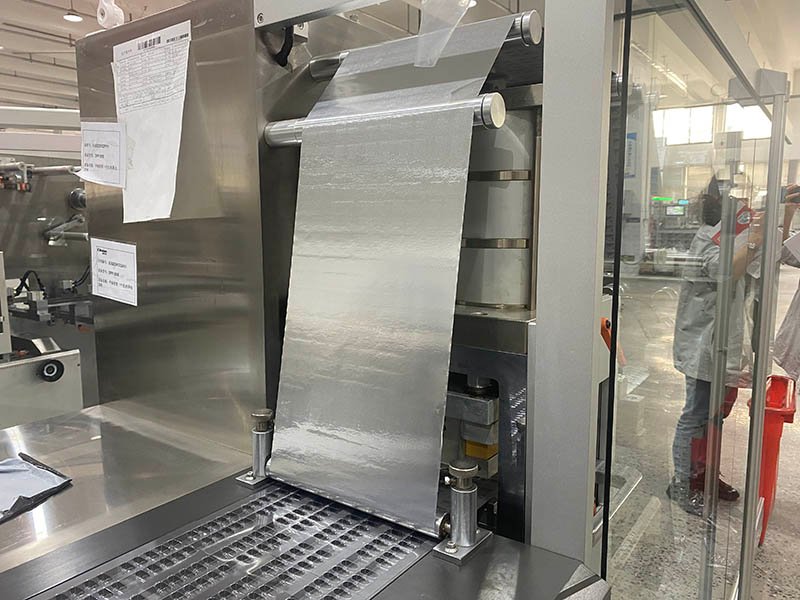
Use tests appropriate to the package and requirement. Visual inspection, seal strength, leak or integrity methods and opening tests answer different questions. ASTM F88/F88M addresses measurement of seal strength in flexible barrier materials, but the project must define specimen preparation, technique, conditioning and product-specific acceptance criteria.
Package integrity
Match integrity testing to product and package risk
Container-closure or package-integrity strategy should begin with the failure modes that could affect product quality: channels, pinholes, seal contamination, formed-wall damage, layer separation, cut intrusion or opening-feature failure. Select methods with suitable sensitivity and controls for the package geometry and materials.
Do not state that one dye, vacuum, burst or seal-strength test proves every attribute. A method may detect certain defects while missing others. Define positive and negative controls, sample conditioning, positions, test timing, equipment qualification and result interpretation.
Sterile-product container-closure integrity has additional implications and should be designed under the sterile-product strategy. Nonsterile oral-liquid packs still require suitable protection and performance, but should not be described as “sterility proven” merely because they pass a leak test.
Stability
Use the proposed market pack in the stability strategy
The package decision connects to the product’s stability programme, proposed shelf life and storage statement. Use the exact or justified representative cavity, lidding, fill, headspace, seal process, card configuration and secondary packaging.
Evaluate relevant chemical, physical and microbiological attributes. Product loss, concentration change, oxygen or moisture exposure, light, interaction with packaging components, seal performance and opening can be relevant depending on the formulation.
Machine trials demonstrate conversion capability; they do not establish shelf life. Conversely, stability from one cavity or material structure does not automatically qualify a different web, lidding, fill volume, headspace or sealing process. Route changes through the approved stability and change-control strategy.
Cleaning
Write cleaning around the actual liquid and equipment design
Define product-contact and non-product-contact boundaries, cleaning method, disassembly, agents, temperatures where applicable, rinsing, drying, inspection, protection, hold times and reassembly. The manufacturer determines residue limits and whether cleaning validation is required.
Liquids can dry, crystallize, stain, support microbial growth or remain in retained volumes. Assess the worst conditions using formulation knowledge, run duration, hold time and equipment geometry. Include hoses, valves, gaskets, nozzles, pump chambers and sampling points.
For U.S. finished pharmaceuticals, 21 CFR 211.67 requires equipment to be cleaned and maintained at appropriate intervals and written procedures to be established and followed. It does not set one universal cleaning frequency or method for liquid blister equipment.
A supplier cleaning demonstration can support procedure development; it does not approve the manufacturer’s analytical method, limits or cleaning-validation conclusion.
Cross-contamination
Control spills, aerosols and retained product
Map where liquid can leak, drip, splash or be released during disconnection, sampling, priming, stop, cleaning and maintenance. Separate product-contact drainage from machine lubrication, cooling and electrical areas. Provide safe access and containment appropriate to the formulation.
Assess campaign and multiproduct use. Product change may require replacement or dedicated parts, validated cleaning, line clearance and reconciliation. Printed forming or lidding materials add mix-up risk even when the liquid path is clean.
Inspect guards, drip trays, drains and hard-to-see surfaces after representative operation. The design should allow detection and controlled removal of residue without spreading it through the line or room.
Environment
Specify room conditions from the process and product
Room temperature and humidity can affect liquid viscosity, evaporation, materials, static, forming, sealing and measurement. Define the approved range and where it is measured. Consider heat and moisture loads from the line, cleaning and utilities.
Environmental classification and monitoring depend on the product and manufacturing strategy. Do not copy a cleanroom grade from a sterile filling project into a nonsterile oral-liquid line. When sterile processing applies, use Annex 1 and the site contamination-control strategy with qualified specialists.
Also define personnel and material flow, access, cleaning, drainage, pest and contamination controls, lighting, maintenance space and removal routes for change parts. Facility compatibility should be reviewed before machine layout approval.
Utilities
Define utilities at the machine connection
List electrical supply, compressed air, water, vacuum, cooling, extraction and other required services for the exact configuration. State quality, pressure, temperature, flow or capacity, variation, connection, isolation, monitoring and responsibility where relevant.
If a utility contacts product or product-contact surfaces, its quality and control become part of the product-risk assessment. Separate machine cooling or actuation utilities from process utilities. Identify backflow, leak and cross-connection risks.
Test utilities under representative load during commissioning and site qualification. A static pressure reading with the line stopped does not prove performance during simultaneous forming, filling, sealing and downstream operation.
Inspection
Define what the line must detect and reject
Possible attributes include empty or underfilled cavities, overfill, foam, liquid on the flange, foreign matter visible within the method, seal-area contamination, material or print registration, code presence and readability, cavity damage and cut position. Not every inspection system can detect each attribute.
State defect definitions, challenge method, presentation, lighting, sensitivity, recipe control, fail-safe response and the boundary of human inspection. “100% inspection” means every unit is presented to a system for defined checks; it does not guarantee detection of every possible defect.
Track challenged cavities through sealing and cutting to the final reject unit. Verify reject actuation, confirmation, secure collection, full-bin response, access and reconciliation. Test stops and restarts because the index relationship can change during transient events.
Coding and labeling
Control fixed artwork and variable data together
Define the forming and lidding artwork, batch or lot data, expiry, strength, dose, language, code format, position, contrast and verification. Include secondary packaging and aggregation interfaces where applicable.
For U.S. finished pharmaceuticals, 21 CFR 211.130 requires written procedures designed to assure correct labels, labeling and packaging materials, including examination and documented line clearance controls. Machine functions support but do not replace those procedures.
Verify artwork repeat, web direction, printer triggers, data source, recipe linkage, code inspection, rejection and reconciliation. Prevent a correctly filled and sealed dose from becoming unacceptable through wrong information or an untracked code failure.
The blister packaging printing guide gives detailed URS questions for preprinted foil, variable data and vision verification.
Data integrity
Apply electronic-record controls according to intended use
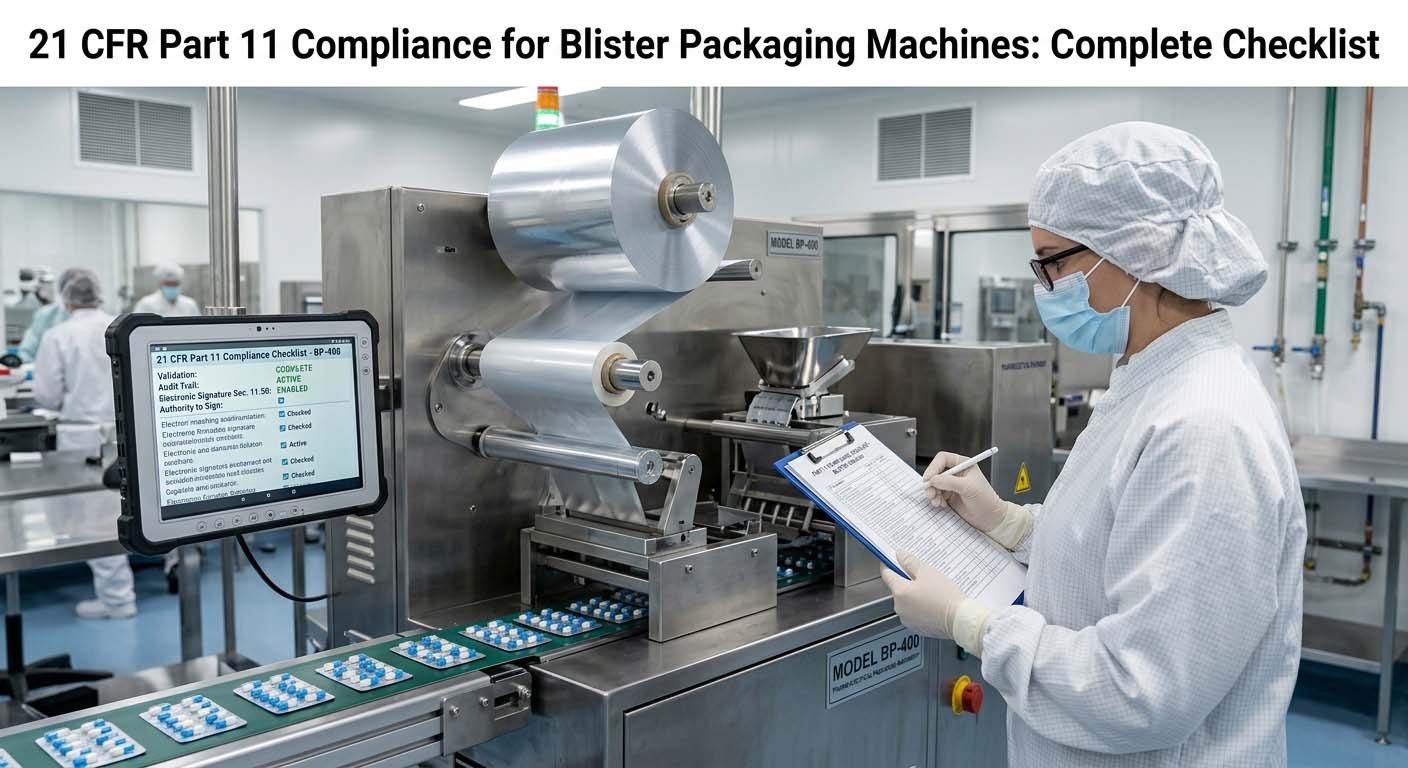
List every computerised function used to control, monitor, calculate, record, review, report or transfer information relevant to the process. This can include recipes, users, alarms, batch values, fill checks, vision results, code data, reports, interfaces, backup and restoration.
Part 11 applicability depends on predicate-rule records and actual electronic-record and signature use. A PLC or HMI does not automatically make every displayed value a regulated electronic record, and adding an audit-trail screen does not make a process compliant.
Define intended use, required records, roles, permissions, time synchronization, recipe approval, audit functions, retention, review, backup, restore, interfaces and change control. Validate applicable functions according to risk and intended use. The Part 11 blister-machine checklist explains the scope decision in detail.
Line integration
Assign every supplier interface to one owner
A liquid blister line can connect bulk preparation, transfer, forming, filling, sealing, inspection, printing, cutting, cartoning, checkweighing, serialization and case packing. Multiple suppliers are not inherently noncompliant, but uncontrolled interfaces create gaps.
| Interface | Define | Integrated test |
|---|---|---|
| Bulk supply to filler | Connection, pressure/head, temperature, agitation, level, alarms, cleaning and ownership. | Representative supply variation, stop and recovery. |
| Fill to seal | Index timing, splash control, headspace, contaminated-cavity detection and hold response. | Normal run plus stop/restart samples. |
| Inspection to reject | Defect ID, position tracking, cut mapping, reject confirmation and reconciliation. | Controlled challenge through final reject. |
| Blister to cartoner | Accepted unit, orientation, buffer, line stop, communication and restart. | Starve/block and downstream-stop challenges. |
| Machine to site systems | Data definition, protocol, ownership, failure response and record status. | Valid, invalid, interrupted and recovered transactions. |
Create one system-boundary drawing and interface register. Name the designer, supplier, tester and approver for every connection. A complete line needs an integration protocol, not a stack of unrelated supplier FAT documents.
Validation lifecycle
Connect process development, qualification and monitoring
FDA’s process validation guidance describes a lifecycle with process design, process qualification and continued process verification. Equipment qualification contributes to this lifecycle but does not replace product and process knowledge.
Develop the relationship among liquid characteristics, supply, cavity, fill profile, headspace, sealing, inspection and accepted output. Establish a justified operating and control strategy. Qualify the installed equipment and utilities, then demonstrate the integrated process with approved materials, procedures and personnel.
After launch, monitor fill results, seal and integrity data, rejects, alarms, stops, interventions, maintenance, environmental conditions and complaints where relevant. Use trends to maintain the validated state and trigger investigation or change assessment.
URS
Write a testable liquid blister machine URS
- product, dosage form, sterility status, formulation characteristics and representative samples;
- target dose, unit-level acceptance, headspace and measurement method;
- forming web, lidding and complete market-pack specifications;
- cavity/card drawing, opening, printing, perforation and downstream presentation;
- bulk supply, agitation, transfer, filtration and product-contact boundary;
- forming, filling, sealing, inspection, rejection, coding and cutting functions;
- accepted output tied to product, format, inspection scope and run conditions;
- cleaning, line clearance, changeover, drainage and maintenance access;
- facility, utilities, environment, safety and line interfaces;
- computerised-system intended use, records, reports and data interfaces; and
- drawings, certificates, manuals, FAT, qualification, training and turnover documents.
Give each requirement an ID, rationale, priority and verification method. Require suppliers to answer comply, partial or deviation with an evidence reference. The buyer owns the URS and applicability decisions.
FAT
Use production-intent liquid, materials and format at FAT
A dry mechanical demonstration cannot establish liquid-process capability. Use the intended formulation when feasible, or a justified simulant that represents the relevant viscosity, density, foaming, wetting and cleaning behavior. Document differences and remaining site tests.
Identify material lots, drawing, tooling, machine, software and recipe revisions. Challenge bulk supply, filling across heads and time, cavity presentation, contaminated seal land where safely simulated, sealing, inspection, tracked rejection, coding, cutting, stops, restart and downstream interfaces.
Measure accepted output and record rejects, waste, stops and interventions. Retain raw fill values, seal and integrity results, samples and deviations. Agree the protocol and acceptance criteria before execution.
FAT reduces supplier-site risk; it does not approve the market pack, replace stability or complete site qualification.
Site qualification
Separate commissioning, IQ, OQ and performance evidence
Commissioning establishes that the installed line can safely operate: utilities, assembly, movement, controls, safety, recipes, instruments and interfaces are ready. IQ verifies the installed configuration and supporting documentation against approved design.
OQ challenges functions, controls, alarms, operating conditions, failure responses, recipes, inspection, rejection, data and interfaces across justified ranges. Performance qualification or process qualification uses approved materials, trained personnel, procedures and representative conditions to demonstrate reproducible acceptable output.
The terminology and protocol structure should follow the manufacturer’s validation system and applicable requirements. Do not promise that supplier IQ/OQ templates independently validate the customer’s liquid process. Assign authorship, execution, review, deviations and approval in the contract.
Sampling
Sample across heads, lanes, time and transient events
A useful plan identifies population, unit, locations, times, frequencies, method, acceptance criteria and decision. Sample each filling head or lane and positions across the web. Include start-up, steady operation, low and high bulk conditions, replenishment, stops, restart and end of run where they can differ.
Record individual fill, seal or integrity results with traceable position and time. A pooled average can hide a failing head or lane. Define destructive samples, laboratory samples, rejects and retained samples in reconciliation.
Choose sample size and statistical method from risk, variability, process knowledge and the decision. There is no universal online sample count that qualifies every liquid blister process.
Deviations
Investigate failures before repeating the test
Secure affected material and data, describe the event, assess impact, investigate cause and determine correction. Preserve failed results. Do not repeat until a passing run appears or average a failure into an acceptable result without a predefined, scientifically justified rule.
If the method, criterion or protocol was unsuitable, document why and revise it under control. Assess earlier evidence that used the same method. Quality should approve disposition, retest and phase release.
Close supplier and site actions with evidence. A signed action list is not closure if the design, procedure, calibration, training or qualification record remains incomplete.
Change control
Assess product, package and equipment changes together
Changes to formulation, viscosity, density, dose, bulk supply, forming web, lidding, cavity, tooling, fill system, nozzle, seal process, inspection, software, utilities, environment, cleaning or downstream interfaces can affect the validated process and market pack.
Evaluate effects on development, compatibility, stability, specifications, validation, cleaning, computerised systems, documents, training and regulatory filings. Supplier claims of equivalence do not replace the manufacturer’s impact assessment.
Control configuration baselines and backups. Record software, firmware, recipe, vision and printer revisions with tooling and material identity so investigations can reconstruct the actual state.
Documentation
Name the evidence package in the quotation and contract
| Document group | Possible contents | Contract question |
|---|---|---|
| Design | Layouts, process description, product-contact diagram, material/parts information, utilities and interfaces. | Which documents are project-specific and submitted for approval? |
| Controls and data | Functional specification, software/configuration list, recipes, users, alarms, reports, backup and interfaces. | What intended use and records are supported? |
| Fabrication | Certificates and inspection records for the contracted critical scope. | Which components and attributes are included? |
| Testing | FAT, commissioning, calibration, IQ/OQ support, raw data and deviations. | Who writes, approves, executes and witnesses? |
| Operation | Manuals, cleaning, changeover, maintenance, parts and troubleshooting information. | When are draft and final as-built revisions delivered? |
| Turnover | Approved index, open-action closure, final backups and released records. | What evidence closes the supplier milestone? |
Review sample documentation before order when quality is a selection factor. A document title such as “validation package” does not prove useful, project-specific content.
Audit readiness
Review twelve controls before routine production
- Approved product, dose, market-pack and material specifications are current.
- The process and supplier boundaries are documented.
- Product-contact parts, cleaning and assembly status are controlled.
- Utilities and environmental conditions meet approved requirements.
- Critical instruments have current, traceable calibration status.
- Recipes, settings, software and tooling revisions are controlled.
- Fill, seal, integrity, inspection and accepted-output criteria are approved.
- Inspection challenges and reject reconciliation are defined.
- Artwork, code, line-clearance and material reconciliation procedures are current.
- Training and role authorization match actual tasks.
- Deviations, maintenance and change actions are closed or formally controlled.
- Continued monitoring can detect drift and recurring defects.
This is a readiness review, not an audit guarantee. Inspectors and authorities evaluate the applicable requirements, records, products and quality system.
Responsibilities
Separate supplier support from manufacturer approval
The equipment supplier can provide design and configuration information, project documents, test procedures and results, training and technical support within the contract. It can identify deviations from the URS and help investigate equipment behavior.
The pharmaceutical manufacturer owns product knowledge, regulatory applicability, facility and contamination strategy, material and package approval, procedures, validation plan, acceptance criteria, deviation and change control, data governance and batch disposition. Qualified third parties may support work, but accountability remains defined by the manufacturer’s system.
Put responsibilities into a matrix before purchase. Name who supplies product and materials, approves drawings, prepares protocols, executes tests, provides instruments, investigates failures, controls data and closes documents. Clear ownership prevents a supplier-interface issue from becoming a validation gap.
Frequently asked questions
Liquid blister packaging GMP FAQ
Are all pharmaceutical liquid blister packaging lines sterile?
No. Sterility depends on the product, route of administration and approved specification. Nonsterile oral-liquid unit doses still require suitable contamination, cleaning, process and package controls, but sterile-manufacture requirements should not be applied without a confirmed sterile-product scope.
Does a GMP-designed machine make the process compliant?
No. Equipment design can support the pharmaceutical quality system, but the manufacturer must define applicable requirements, approve materials and the process, qualify equipment, validate as required, train personnel, control records and changes, and decide product release.
What should a liquid blister machine URS include?
Include the product and dose, sterility status, liquid characteristics, bulk supply, product-contact path, forming and lidding materials, blister drawing, filling, sealing, inspection, rejection, coding, cleaning, utilities, environment, data, interfaces, accepted output, documents and qualification scope.
How should liquid blister fill accuracy be tested?
Use the approved dose unit and method, sample every head or lane across relevant run conditions, record individual results and account for density and temperature when converting mass and volume. Test the proposed product or a scientifically justified representative liquid.
Does EU GMP Annex 1 apply to every liquid blister line?
No. Annex 1 concerns manufacture of sterile medicinal products. Its application depends on the product’s confirmed sterility requirement and manufacturing strategy. Nonsterile processes remain subject to their applicable GMP and product-specific controls.
Does a PLC automatically require 21 CFR Part 11 compliance?
No. Part 11 applicability depends on predicate-rule records and how electronic records and signatures are actually used. Define intended use and required records first, then specify and validate applicable controls for users, recipes, audit functions, review, retention, backup and interfaces.
What should FAT prove for a liquid blister machine?
FAT should demonstrate the purchased configuration with representative liquid, materials and format across forming, filling, sealing, inspection, rejection, coding, cutting, stops, restart, interfaces and sustained accepted output under a preapproved protocol.
Who approves a pharmaceutical liquid blister packaging process?
The pharmaceutical manufacturer’s authorized quality, regulatory, technical and production functions approve the product, package, process, validation evidence and release according to their quality system. The equipment supplier provides only the contracted technical evidence and support.
Sources and next reading
Regulatory and technical references
Use current versions and the requirements applicable to the product and jurisdictions. These sources define principles; they do not provide a universal machine setting, room grade, sample frequency or compliance certificate.
Need a liquid blister process and machine review?
Send the product and dose, sterility status, liquid properties, bulk-supply method, forming and lidding specifications, blister drawing, accepted output, inspection and data scope, facility conditions and validation requirements. HIJ can review the process boundary and required machine configuration before quoting.
Technical review: Forester Xiang, HIJ Machinery. Final regulatory applicability, product and package approval, validation and release remain with the pharmaceutical manufacturer.